
Bedroom Workspace: Boost or Barrier to Productivity?
Uncover whether setting up a workspace in your bedroom enhances focus or undermines rest and efficiency in hybrid work eras.
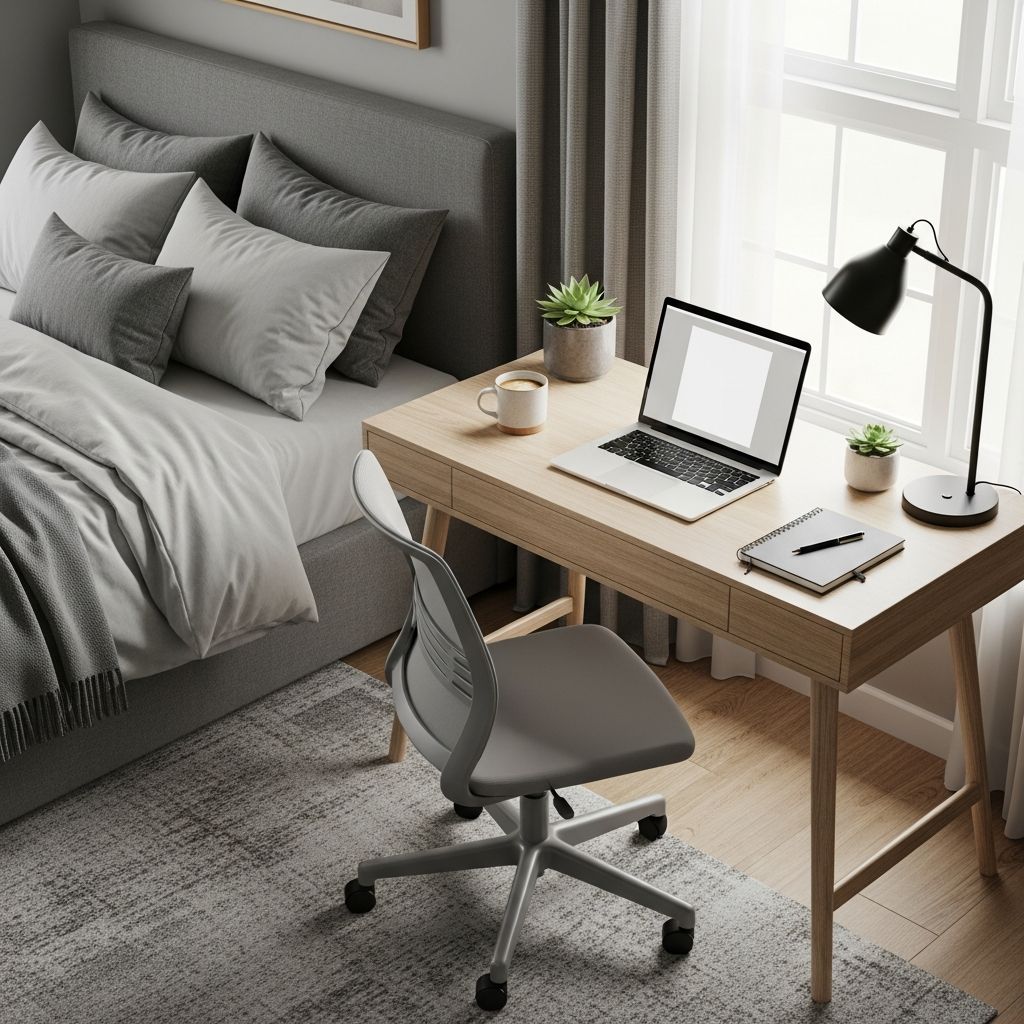
In an era of widespread remote work and compact living spaces, many professionals and students grapple with where to establish their daily grind. The bedroom often emerges as a default choice for a home office, promising convenience and privacy. Yet, this decision carries profound implications for mental well-being, sleep cycles, and overall efficiency. Drawing from sleep science and workspace psychology, this article delves into whether integrating work into your sleep sanctuary truly serves your best interests or subtly erodes your performance.
The Rise of Multifunctional Bedrooms in Modern Homes
Urbanization and rising housing costs have shrunk living areas, pushing bedrooms to multitask beyond rest. A study from UNSW Sydney revealed that nearly 40% of people repurpose their bedrooms as living or work zones, despite 61% preferring them solely for sleep. This trend intensifies among students, share-house residents, and studio dwellers, where quiet corners are scarce.
Remote work’s boom, accelerated by global shifts, exacerbates this. Without office commutes, homes become hubs for professional duties, but blending domains blurs essential boundaries. The result? A cognitive tug-of-war between deadlines and downtime, often favoring neither effectively.
Advantages of a Bedroom-Based Work Setup
Despite drawbacks, bedroom offices offer tangible upsides, particularly in constrained environments.
- Space Efficiency: In tiny apartments, a bedroom desk maximizes square footage, freeing communal areas from clutter and fostering organization.
- Privacy Haven: Escaping family noise, kids’ play, or TV blare provides uninterrupted focus—crucial for calls or deep tasks.
- Flexible Scheduling: Odd hours suit night owls or early birds, allowing work without rousing household members.
- Temperature Control: Personal climate adjustments at home can sharpen concentration, unlike rigid office settings.
These perks make bedroom setups appealing for short-term fixes, especially when alternatives vanish.
Hidden Costs: How Bedroom Workstations Disrupt Sleep and Focus
Convenience fades against science-backed pitfalls. Your brain thrives on environmental cues, associating rooms with activities via classical conditioning. Introducing work into the bedroom reprograms it from rest oasis to stress zone.
| Aspect | Bedroom Workspace Impact | Evidence |
|---|---|---|
| Sleep Onset | Delayed by 20-30 minutes | Blue light exposure suppresses melatonin |
| Mental Associations | Room linked to anxiety | Visual reminders trigger work mode |
| Rest Quality | Fragmented, less restorative | Clutter elevates cortisol |
| Daily Output | Reduced by up to 15% | Boundary blur causes fatigue |
Blue Light and Circadian Chaos
Screens emit blue wavelengths mimicking daylight, tricking your suprachiasmatic nucleus—the body’s master clock—into alertness. Evening sessions in bed prolong wakefulness, compounding with natural light cues for insomnia risks.
Visual and Psychological Clutter
Papers, cables, and glowing monitors bombard the retina, sustaining beta brain waves of vigilance. This ‘mental noise’ infiltrates dreams, with reports of work-themed nightmares rising among bedroom workers. Feng Shui principles echo this, warning that desk visibility from bed fosters stagnation and unease.
Energy Drain and Boundary Erosion
Users recount depleted vitality; one relocated their setup post-bedroom trial, noting restored sleep and vigor. Without spatial divorce, ‘off’ switches falter, inviting burnout as home equals hustle perpetually.
Productivity Paradox: Short-Term Gains, Long-Term Losses
Bedroom desks promise quick access but undermine sustained output. Designated zones cue ‘flow states,’ slashing setup time and distractions. Studies link dedicated spaces to heightened focus, as brains toggle modes seamlessly.
Conversely, multifunctional rooms scatter attention—leisure items tempt procrastination, while work invades repose. Remote workers in optimized setups report 20% productivity lifts, underscoring location’s leverage.
Smart Strategies for Bedroom-Confined Workers
No dedicated room? Mitigate harms without relocation.
- Physical Dividers: Curtains, screens, or foldable partitions segment zones, signaling transitions.
- Evening Rituals: Stash gear in bins or closets pre-bed; dim lights to reclaim serenity.
- Ergonomic Tweaks: Neutral tones, plants, and comfy chairs blend utility with calm.
- Time Blocks: Strict schedules—work 9-5, then ‘close shop’—train neural boundaries.
- Mobile Solutions: Lap desks or rolling carts enable room-hopping sans permanence.
These hacks preserve sleep sanctity while honoring spatial limits.
Alternative Home Office Localities and Hacks
Reclaim your bedroom by scouting elsewhere.
- Corner Carve-Outs: Underutilized living room nooks with fold-down units save space.
- Kitchen Command: Bar-height counters double as standing desks, energizing blood flow.
- Closet Conversions: Murphy-style hideaways tuck away post-use.
- Porch or Attic: Natural light and separation amplify inspiration.
For micro-dwellings, multi-use furniture like ottoman desks morphs with needs.
Legal and Professional Angles for High-Stakes Careers
Attorneys and consultants face amplified stakes: client calls demand poise, yet bedroom backdrops risk unprofessionalism. Confidentiality breaches loom if files mingle with linens. Firms increasingly counsel distinct zones to safeguard focus and ethics, mirroring wellness mandates in hybrid policies.
Long-Term Wellness: Prioritizing Boundaries
Sustainable success hinges on holistic health. Chronic sleep deficits from workspace bleed correlate with 30% higher error rates and mood dips. Investing in separation—via reconfiguration or rentals—yields dividends in clarity and creativity.
Track your setup’s toll: journal energy, output, and rest weekly. Adjust iteratively for equilibrium.
Frequently Asked Questions (FAQs)
Can a bedroom desk ever enhance productivity?
Short-term, yes—for privacy in chaos. Long-term, no; sleep suffers, dragging efficiency. Opt for alternatives first.
How quickly does the brain associate bedroom with work?
Within 1-2 weeks of consistent use, per conditioning studies. Early intervention prevents entrenchment.
What if my apartment has zero other space?
Use dividers, strict pack-away rules, and circadian lighting. Monitor sleep; relocate if unrest persists.
Does Feng Shui really matter for workspaces?
It highlights energy flow: desks facing beds amplify stress dreams. Practical separation trumps mysticism.
Any data on remote workers’ health from bedroom offices?
Yes—blurred boundaries link to anxiety spikes and 15% output drops. Dedicated spots reverse this.
References
- Can I Keep a Desk in my Bedroom? Or Elsewhere in the Home? — Amerisleep. 2023-05-15. https://amerisleep.com/blog/desk-in-the-bedroom/
- Is a Home Office in Your Bedroom a Bad Idea? — Coohom. 2024-02-10. https://www.coohom.com/article/is-a-home-office-in-your-bedroom-a-bad-idea
- Is it good to sleep and work in the same room? — Blackmores. 2023-11-20. https://www.blackmores.com.au/stress-relief/is-it-good-to-sleep-and-work-in-the-same-room
- Is it Okay to Have Your Office in Your Bedroom, According to Feng Shui? — Jazzed at Home. 2022-08-05. https://jazzedathome.com/office-in-your-bedroom-feng-shui/
- Pros/cons of master bedroom home office — Houzz. 2021-03-12. https://www.houzz.com/discussions/6463497/pros-cons-of-master-bedroom-home-office
- How physical home workspace characteristics affect mental health — PMC (NCBI). 2023-10-25. https://pmc.ncbi.nlm.nih.gov/articles/PMC10657703/
Similar Articles








Read full bio of Sneha Tete


