
Battle of the Forms: UCC Rules Explained
Master the UCC's approach to conflicting contract terms in goods sales and avoid costly disputes.
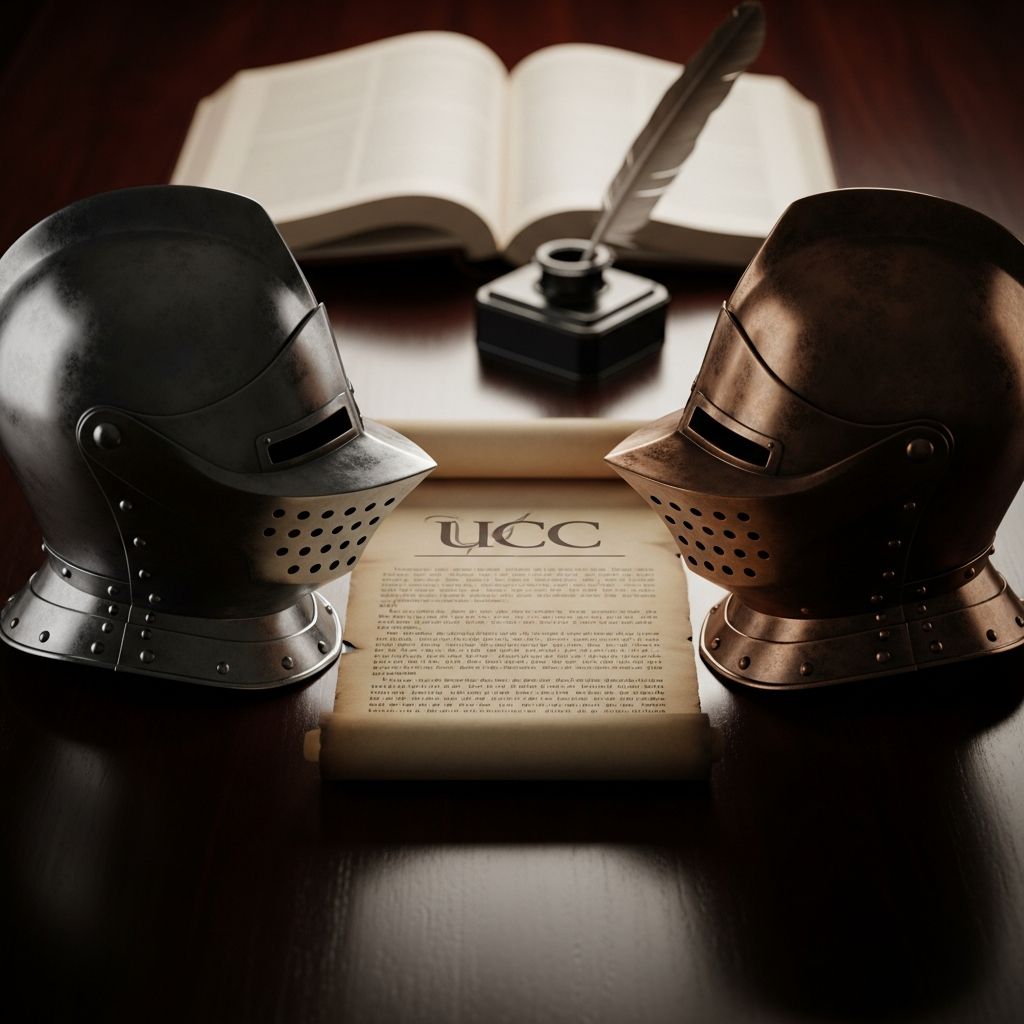
In commercial transactions for goods, parties often exchange standard forms like purchase orders and sales acknowledgments containing mismatched terms. This phenomenon, known as the battle of the forms, is addressed by UCC § 2-207, which allows contract formation despite discrepancies, unlike rigid common law principles.
Understanding Contract Formation Basics
Traditional common law requires a “mirror image rule” for contract formation: an acceptance must precisely match the offer, or no contract forms. Any deviation creates a counteroffer needing further acceptance. This strict approach suits services or real estate but fails in fast-paced goods sales where forms clash routinely.
UCC Article 2 governs movable goods sales, prioritizing practical business conduct over formalities. A contract forms via offer and acceptance or conduct recognizing agreement (UCC § 2-104). This flexibility accommodates battles of the forms, where parties proceed despite form conflicts.
Key Distinction: Merchants vs. Non-Merchants
UCC defines merchants as those dealing in goods of the kind or holding themselves out as experts (UCC § 2-104). Businesses regularly buying or selling goods qualify; casual buyers do not. Merchant status triggers different rules under § 2-207.
- Between merchants: Additional terms in acceptances typically become part of the contract unless materially altering it, objected to, or acceptance is conditional.
- One or both non-merchants: Additional terms are mere proposals, needing express acceptance to bind.
| Scenario | Rule Applied | Outcome for Additional Terms |
|---|---|---|
| Merchant-Merchant | UCC § 2-207(2) | Included unless material, objected, or conditional |
| Merchant-Non-Merchant | UCC § 2-207(2) exception | Proposals only |
| Non-Merchant-Non-Merchant | Common law overlay | No automatic inclusion |
UCC § 2-207 Breakdown
Section 2-207 has three subsections resolving form battles.
Subsection (1): Formation Despite Discrepancies
A timely acceptance forms a contract even with added or different terms, unless expressly conditional on assent to extras. “Expressly conditional” demands clear language like “subject to your agreement to these terms.” Mere disclaimers fail.
Example: Buyer sends PO with 30-day payment; seller’s acknowledgment adds 15-day terms without conditioning. Contract forms under (1).
Subsection (2): Additional Terms Between Merchants
For merchants, extra terms in acceptance or confirmation join the deal unless:
- Acceptance limits to original offer terms.
- They materially alter (surprise or hardship, e.g., warranty changes, arbitration, liability limits).
- Offer explicitly limits acceptance.
- Offeror objects promptly.
Material alterations shift risk unexpectedly, like added indemnity or exclusive remedies.
Subsection (3): No Acceptance, But Conduct Forms Contract
If no acceptance under (1) (e.g., conditional), but parties ship/receive goods, a contract forms via conduct. Terms: agreed ones + UCC gap-fillers (reasonable price, delivery).
This prevents “last shot” dominance where the final form (often invoice) controls.
Common Pitfalls in Form Battles
Disputes arise over:
- Merchant status: Courts assess regular dealings.
- Materiality: Fact-specific; courts evaluate surprise risk.
- Objections: Must be seasonable; silence often waives.
- Knockout rule: Some jurisdictions cancel conflicting terms, applying UCC defaults.
In Icelene Foods v. L & R Distribs., differing warranty terms knocked each other out, invoking gap-fillers.
Practical Strategies to Win the Battle
Avoid uncertainty:
- Use clear language: Make acceptances expressly conditional.
- Object promptly: Respond to unwanted terms in writing.
- Negotiate key terms: Agree explicitly on price, quantity, warranties upfront.
- Include battle clauses: State “this document controls” or reference master agreements.
- Confirm post-performance: Send final confirmations merchants treat as binding.
For international sales, consider CISG, which mirrors UCC flexibility but varies on additional terms.
Real-World Examples
Merchant-Merchant: Widget Co. (merchant) orders from Gear Supplier (merchant) with no warranty limit. Supplier acknowledges adding 1-year limit (non-material). Term enters contract absent objection.
Merchant-Non-Merchant: Consumer buys tool; seller adds arbitration. Term is proposal, needs consumer assent.
Conduct-based: Seller’s conditional ack ignored; goods shipped/accepted. UCC fills gaps.
Frequently Asked Questions
What triggers UCC Article 2?
Sales of movable goods over $500; hybrid goods/services prorate.
Does the last form win?
No; UCC rejects “last shot” for merchants, using agreed terms + gap-fillers.
How to prove merchant status?
Show regular goods dealings or expertise.
What if forms conflict directly?
Different terms may knockout, applying UCC defaults.
Applies internationally?
CISG similar for U.S. exports; specify governing law.
Conclusion
UCC § 2-207 modernizes contract law for commerce, favoring deals over formalities. Businesses thrive by drafting thoughtfully and objecting swiftly.
References
- Battle of the Forms Under the UCC — Nolo. Accessed 2026. https://www.nolo.com/legal-encyclopedia/battle-of-the-forms-under-the-ucc.html
- Whose Terms Govern? An Introduction to the Battle of the Forms — BuildSmart Bradley. 2025-05. https://www.buildsmartbradley.com/2025/05/whose-terms-govern-an-introduction-to-the-battle-of-the-forms/
- Battle of the Forms Definition — LSD.Law. Accessed 2026. https://lsd.law/define/battle-of-the-forms
- The “Battle of the Forms” Under UCC 2-207 — Law School Toolbox (YouTube). 2023-04-23. https://www.youtube.com/watch?v=yhZ2kstWsc4
- Winning the Battle of the Forms Under Section 2-207 of the UCC — Aronberg Goldgehn. 2014-05. https://www.agdglaw.com/FFDBF8/assets/files/lawarticles/Winning%20the%20Battle%20of%20the%20Forms.pdf
- The Battle Of The Forms | Losing the Battle Is Losing the War — TK Magazine. 2023-05-17. https://tkmagazine.com/blog/2023/5/17/the-battle-of-the-forms-losing-the-battle-is-losing-the-war
Similar Articles








Read full bio of Sneha Tete


