
Battle for Flores: Advocates Fight New Detention Rules
Advocates battle federal efforts to strip immigrant youth protections.
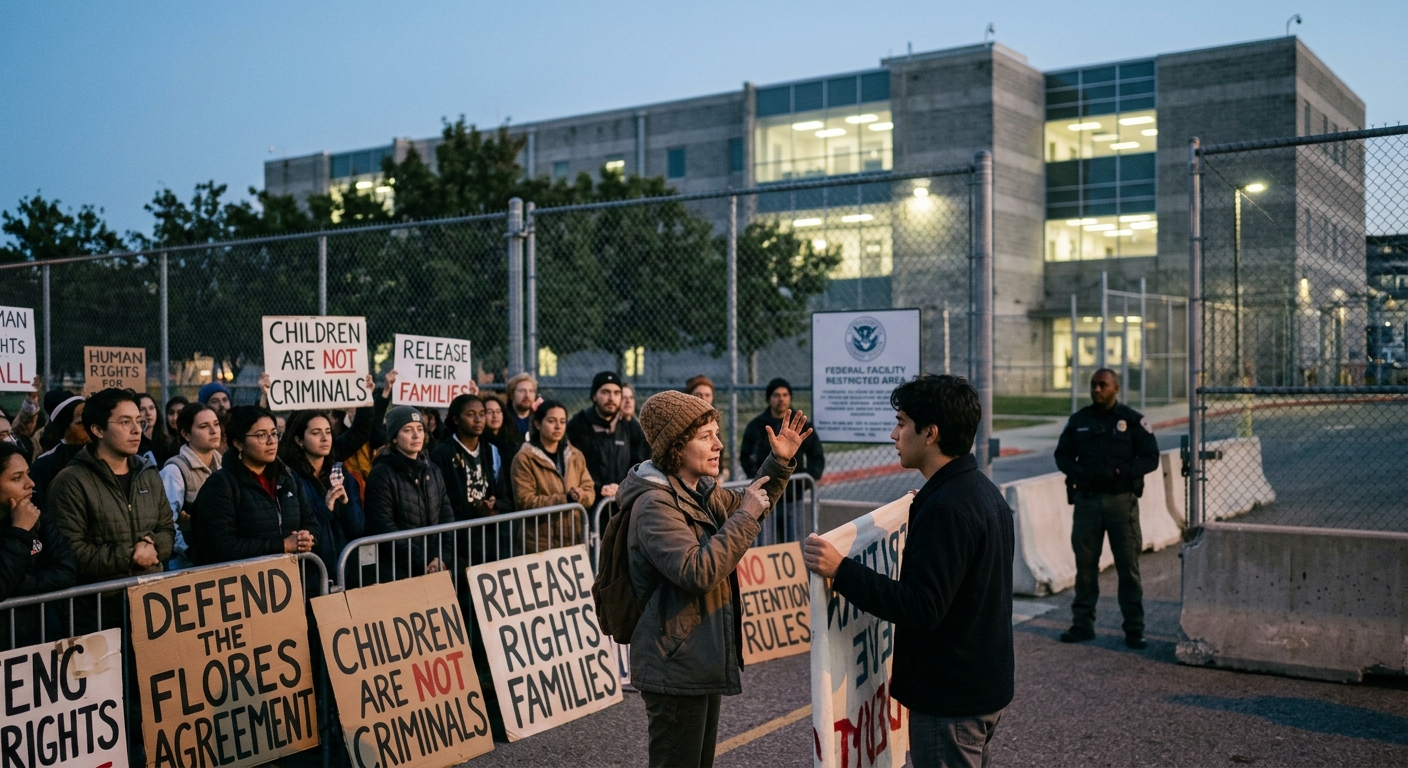
Over the past several decades, the United States has grappled with the complex and deeply consequential issue of how to treat immigrant youth and families who enter federal custody. At the center of this legal and moral debate stands the Flores Settlement Agreement, a landmark court consent decree that has served as the bedrock of protection for migrant children since 1997. However, recent years have witnessed persistent efforts by the federal government to implement new administrative regulations designed to supersede and ultimately terminate this historic agreement. In response, a coalition of child rights organizations, legal advocates, and human rights defenders has mounted fierce legal challenges to prevent the dismantling of these essential safeguards.
These advocacy groups argue that the proposed administrative rules fall dangerously short of the basic standards of care established by the courts. The ongoing confrontation highlights a fundamental tension between executive immigration enforcement policies and the judiciary’s mandate to uphold the constitutional and human rights of vulnerable youth. This comprehensive analysis delves into the history of the Flores agreement, the nature of the government’s latest regulatory maneuvers, the robust legal counter-offensives led by advocacy organizations, and the broader implications for families detained at the border.
The Origins and Pillars of the Flores Settlement Agreement
The origins of the current legal battle date back to the 1980s. The litigation began on behalf of Jenny Flores, a teenage girl from El Salvador who fled civil war and was subsequently placed in a secure juvenile detention facility by federal authorities. During her detention, she was subjected to arbitrary strip searches, housed with adult strangers, and denied access to education and recreation. Following a prolonged legal struggle that eventually reached the United States Supreme Court, the federal government agreed to negotiate a settlement, which was formalized by the Clinton administration in 1997.
The Flores Settlement Agreement established strict national standards for the detention, release, and treatment of all children in immigration custody. Its core pillars include the following directives:
- Prompt Release: A strict mandate requiring federal immigration agencies to release minors to qualified sponsors—preferably family members, legal guardians, or other vetted adults—without unnecessary delay.
- State-Licensed Facilities: A requirement that children who cannot be immediately released must be housed in non-secure, state-licensed facilities designed specifically for the care of dependent youth, rather than in rigid, prison-like environments.
- Time Limitations: A widely recognized judicial interpretation that generally restricts the detention of children in unlicensed federal facilities to a maximum of 20 days.
- Humane Standard of Care: The guarantee of essential daily provisions, including adequate food, clean drinking water, immediate medical assistance, proper sanitation, and access to educational services.
Importantly, the settlement was originally envisioned as a temporary bridge. It contained a specific legal stipulation that it would remain active only until the federal government promulgated its own comprehensive administrative regulations that accurately mirrored the agreement’s strict standards. The failure of successive administrations to faithfully codify these exact protections has kept the agreement—and its necessary judicial oversight—alive for decades.
Timeline: The Legal History of Immigrant Youth Detention
To understand the current regulatory battles, it is essential to trace the legal milestones that have shaped the detention of migrant children over the past four decades.
| Year | Key Event | Significance |
|---|---|---|
| 1985 | Flores v. Meese Lawsuit Filed | The ACLU and other legal advocates sued the government over the strip-searching and indefinite detention of 15-year-old Jenny Flores, initiating the decades-long legal saga. |
| 1997 | Flores Settlement Agreement Signed | Established foundational standards for the prompt release of children and minimum humane conditions while in federal immigration custody. |
| 2019 | DHS and HHS Publish New Joint Rule | The Trump administration attempted to override the agreement, seeking to permit the indefinite detention of migrant families and bypass state licensing requirements. |
| 2020 | Ninth Circuit Court Ruling | Federal appellate judges blocked major portions of the 2019 administrative rule, preserving vital protections against prolonged secure detention for minors. |
| 2024 | HHS Publishes Final Rule | The Biden administration formalized regulations for unaccompanied children, leading to new legal disputes over whether the rule contains sufficient independent oversight. |
Federal Attempts to Override Judicial Protections
The fundamental conflict currently playing out in federal courts stems from recent executive attempts to finally replace the Flores settlement with internal agency regulations. By publishing finalized rules, the government argues it has fulfilled its obligation to codify the necessary standards, thereby nullifying the need for continued court supervision.
In 2019, the Trump administration introduced a sweeping regulatory rule that sought to effectively end the Flores settlement. This proposal aimed to eliminate the 20-day cap on the detention of accompanied children and sought to alter the licensing requirements so that family detention centers could be subjected to federal “self-licensing” rather than independent state-level oversight. Legal experts and advocacy groups warned that this would permit the indefinite detention of families in environments fundamentally unsuited for child development.
More recently, the Biden administration published its own finalized regulations in April 2024, governing the care of unaccompanied minors under the Department of Health and Human Services (HHS). While this rule codified several critical protections, advocates quickly pointed out significant gaps in transparency and enforcement. Shortly after its publication, the government moved to terminate the Flores agreement’s application to HHS entirely, asserting that the new rule was legally sufficient to stand on its own without external judicial watchdogs.
The Advocacy Backlash: Demanding Accountability
The government’s persistent push to replace the settlement with regulatory frameworks has been met with immediate and forceful litigation from children’s rights organizations and the original Flores counsel. These groups act as a necessary vanguard, utilizing the judicial system to block regulations that they argue actively dilute constitutional protections.
Advocates strongly contend that the federal regulations fail the “substantial compliance” test required to legally terminate the agreement. Their primary concerns are multifaceted. First, they argue that allowing federal agencies to self-license detention facilities removes critical independent, third-party oversight. This creates a dangerous closed-loop system where the government polices its own compliance. Without independent state-level child welfare inspectors, advocates fear a rapid deterioration in living conditions and an increase in unchecked abuse.
Furthermore, legal organizations emphasize the inherent dangers of creating separate standards for “accompanied” versus “unaccompanied” children. The 2019 regulations, for instance, attempted to drastically lower protections for children arriving with parents, effectively justifying prolonged family detention as a punitive deterrent to future migration. Advocates successfully argued before federal judges that a child’s fundamental right to safety and due process does not simply vanish because they are accompanied by a parent. Courts have repeatedly validated these concerns, going so far as to label administrative attempts to bypass the agreement as “Kafkaesque” and maintaining strict injunctions against rules that threaten youth welfare.
The Psychological Toll of Indefinite Detention
Beyond complex legal and constitutional arguments, advocacy organizations heavily ground their challenges in the irrefutable medical and psychological consensus regarding child detention. Pediatricians, child psychologists, and international human rights experts have extensively documented the severe harm inflicted on minors placed in restrictive custody environments.
The foremost concern is the development of toxic stress. Prolonged detention triggers a continuous physiological stress response in children, which actively disrupts normal brain architecture and leads to long-term cognitive and emotional damage. Furthermore, children held in institutionalized federal settings exhibit significantly higher rates of clinical depression, severe anxiety, and suicidal ideation compared to their peers in community-based settings.
Finally, experts report widespread developmental regression among detained youth. Younger children often experience the loss of previously achieved developmental milestones—including the sudden loss of speech, mutism, and a return to bedwetting—which are directly correlated to the intense trauma of confinement.
By fighting to preserve the Flores agreement, advocates are not just debating legal technicalities in a courtroom; they are actively working to prevent state-sponsored developmental harm. The 20-day limit and the push for rapid placement with family sponsors are treated by advocates as essential medical interventions just as much as they are legal mandates. When federal regulations attempt to stretch these timelines or lower the standard of care, the immediate victims are children who are already deeply traumatized by their arduous journeys and the harrowing circumstances they fled.
A Cycle of Litigation and the Path Forward
The ongoing battle over the Flores Settlement Agreement resembles a perennial fixture on the federal court docket. Every time a presidential administration issues a new regulation aiming to terminate the agreement, advocacy organizations immediately file emergency injunctions, leading to prolonged appellate battles. For instance, in mid-2026, the U.S. Court of Appeals for the 9th Circuit once again heard oral arguments regarding the government’s attempts to dissolve these decades-old protections, with appellate judges expressing notable skepticism toward the government’s legal posture.
While judicial intervention has been largely successful in preserving these vital safeguards, relying solely on court orders is a precarious long-term strategy for child welfare. The original 1997 settlement was never designed to be the permanent governing law of the land. The ultimate, durable solution requires decisive congressional action. Immigration policy experts and child rights defenders unanimously agree that the United States needs comprehensive legislative reform that permanently outlaws the indefinite detention of children, guarantees legal representation for all minors navigating immigration proceedings, and mandates independent, trauma-informed child welfare oversight at the border.
Until the legislature enacts laws that genuinely prioritize the best interests of the child, advocacy organizations will remain the vital line of defense. Their ongoing, tireless challenges to federal regulations ensure that the government cannot easily strip away the fundamental human rights of the youngest and most vulnerable immigrants.
Frequently Asked Questions (FAQ)
What exactly is the Flores Settlement Agreement?
The Flores Settlement Agreement is a binding legal consent decree finalized in 1997 that sets strict national standards for the treatment, detention, and release of immigrant children in federal custody. It mandates that children must be held in safe, sanitary conditions, released to qualified sponsors without unnecessary delay, and placed in state-licensed child welfare facilities if prolonged custody is required.
Why is the federal government continually trying to end the agreement?
The 1997 agreement includes a specific clause stating it will remain active only until the government implements its own comprehensive regulations that faithfully mirror the settlement’s standards. Successive administrations have attempted to publish these regulations to dissolve the court’s oversight, arguing that doing so grants them more operational flexibility in managing immigration and border enforcement logistics.
Why do advocacy groups adamantly oppose the new federal regulations?
Advocacy organizations argue that the new regulations proposed by the government often water down the core protections of the Flores agreement. They oppose provisions that allow for indefinite family detention, bypass independent state licensing of facilities through “self-licensing” loopholes, and lower the basic standard of care, arguing these changes directly violate children’s constitutional due process rights and threaten their well-being.
What happens if the Flores Settlement is officially terminated?
If terminated without adequate legislative or strict regulatory replacements, federal immigration agencies could potentially hold immigrant children and families in unlicensed, restrictive, prison-like facilities for indefinite periods without independent judicial oversight. Experts warn this could severely compromise the physical health, psychological safety, and legal rights of migrant youth.
Who represents the children in these ongoing legal battles?
A dedicated coalition of legal advocates, commonly referred to collectively as the “Flores counsel,” represents the children’s interests. This coalition includes prominent non-profit advocacy organizations such as the Center for Human Rights and Constitutional Law, the National Center for Youth Law, Children’s Rights, and the National Immigration Law Center.
References
- Unaccompanied Children Program Foundational Rule — Department of Health and Human Services. 2024-04-30. https://www.federalregister.gov/documents/2024/04/30/2024-08636/unaccompanied-children-program-foundational-rule
- Flores v. Rosen, No. 19-56326 — United States Court of Appeals for the Ninth Circuit. 2020-12-29. https://cdn.ca9.uscourts.gov/datastore/opinions/2020/12/29/19-56326.pdf
- ‘There’s no constitutional problem there?’: DOJ lawyer faces skeptical appeals court in Trump admin bid to terminate agreement that protects detained immigrant children — Law & Crime. 2026-06-03. https://lawandcrime.com/immigration/theres-no-constitutional-problem-there-doj-lawyer-faces-skeptical-appeals-court-in-trump-admin-bid-to-terminate-agreement-that-protects-detained-immigrant-children/
- The Trump Administration’s War on the Flores Settlement Agreement Renewed Amid COVID-19 Pandemic — Children’s Legal Rights Journal, Loyola University Chicago. 2021. https://lawecommons.luc.edu/clrj/vol41/iss1/11/
- There are rules protecting children in immigration detention. Trump’s tax law seeks to override them. — The 19th News. 2025-07-17. https://19thnews.org/2025/07/flores-settlement-immigrant-children-detention-rules/
Similar Articles








Read full bio of Sneha Tete




