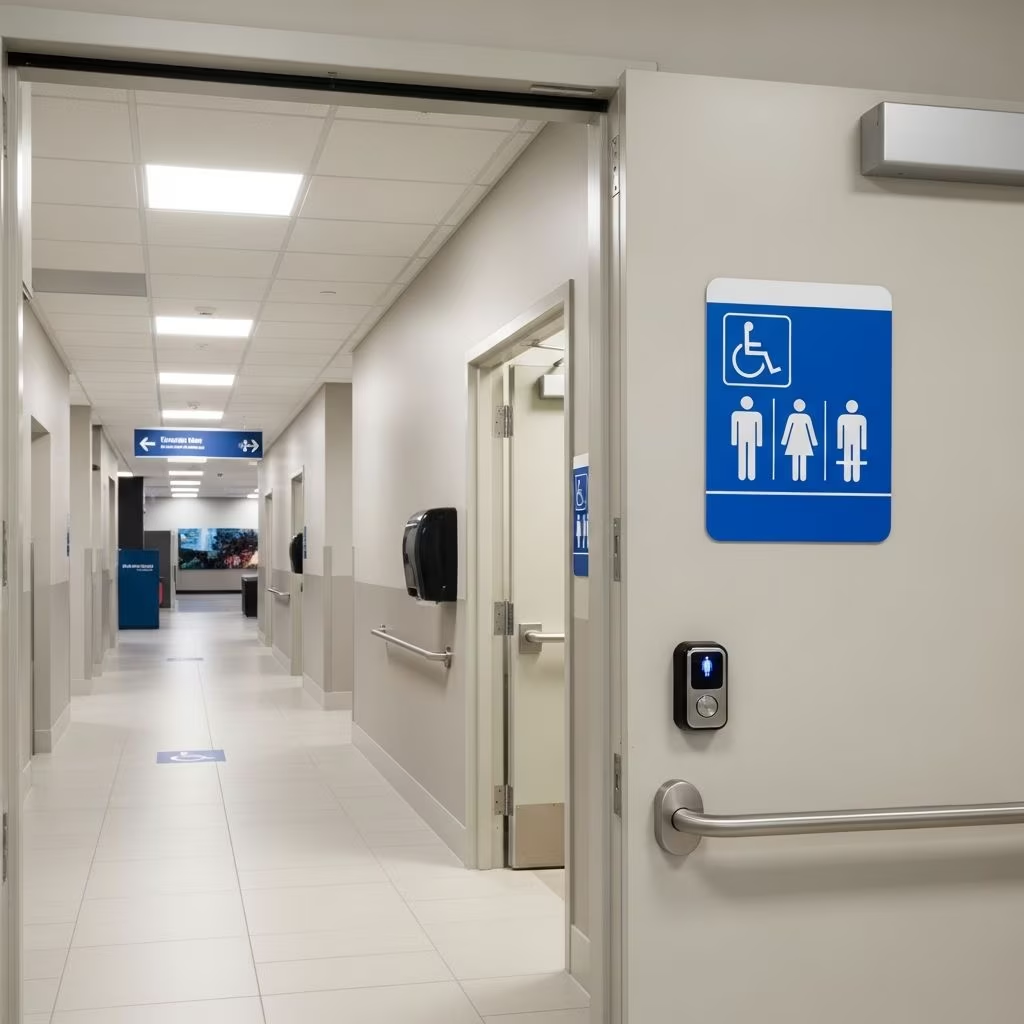
Understanding Bathroom Obligations in Commercial Operations
The question of whether businesses must provide bathroom facilities—and to whom—sits at the intersection of federal workplace safety regulations, state consumer protection laws, and local building codes. While many business owners assume this is a straightforward matter, the reality involves multiple layers of legal requirements that vary significantly depending on the type of establishment, geographic location, and the individuals seeking access. This comprehensive guide explores the legal landscape surrounding bathroom access in commercial settings, helping business owners understand their obligations and avoid costly compliance violations.
Federal Workplace Standards and OSHA Requirements
The foundation of bathroom requirements in American businesses rests on federal law, specifically the Occupational Safety and Health Administration (OSHA) standards. These regulations establish mandatory minimum requirements for workplace sanitation and restroom facilities. OSHA’s approach prioritizes employee health and safety, recognizing that access to functional bathroom facilities is essential for worker welfare and productivity.
Employee Toilet Facility Standards
OSHA mandates specific numbers of toilet fixtures based on workforce size. For workplaces employing fifteen or fewer workers, a single toilet facility suffices. As employee count increases, the requirement scales proportionally. Facilities with sixteen to thirty-five employees must maintain at least two separate toilet fixtures. For establishments with thirty-six to fifty-five employees, three fixtures become necessary, and this pattern continues with every additional twenty employees requiring one additional facility. This tiered approach ensures that growing businesses adjust their sanitation infrastructure accordingly.
Beyond simple toilet counts, OSHA imposes strict specifications on bathroom construction and maintenance. When multiple toilets exist in a single facility, each must have its own enclosed compartment with a locking door to ensure privacy. Restrooms must remain accessible during all working hours, preventing employers from restricting access or forcing employees to wait unreasonably. The facilities must include hot and cold running water, hand soap or similar cleansing agents, and either warm air dryers or individual hand towels for drying hands. These detailed requirements reflect OSHA’s understanding that inadequate bathroom facilities contribute to workplace illness and reduced productivity.
Accessibility and Reasonable Distance Standards
OSHA recognizes that bathroom facilities must be genuinely accessible to employees throughout their shifts. For typical office and retail environments, restrooms should be located within a reasonable distance of work areas. Mobile work crews and employees in remote locations face modified standards; employers must ensure these workers can access toilet facilities within a ten-minute walk from their work location. In construction and outdoor work settings, the proximity requirement becomes even more stringent, with facilities needing to be within approximately a quarter-mile or five-minute walk from active work areas. This requirement acknowledges the practical reality that employees cannot simply hold biological needs for extended periods without suffering health consequences.
Distinguishing Employee Rights from Customer Access
A critical distinction in bathroom law separates mandatory employee access from optional customer access. Federal OSHA standards focus exclusively on protecting employees, establishing their absolute right to use bathroom facilities during working hours. This right cannot be denied or substantially restricted by employers. However, the legal landscape for customer bathroom access differs markedly and varies considerably across jurisdictions.
General Customer Access Principles
In the absence of specific state or local regulations, most businesses have no legal obligation to provide bathroom access to customers or members of the general public. OSHA regulations do not extend to non-employees, leaving customer access largely to individual business discretion. A retail store, coffee shop, or small office building may legally refuse customer requests to use bathrooms, just as they might refuse other requests. This reflects the principle that business owners retain substantial autonomy over facility use policies, subject to other legal constraints.
Local health codes and building regulations may modify this general rule. Establishments serving food, such as restaurants and cafes, frequently face municipal requirements to provide customer restrooms as a condition of operating licenses. Similarly, large retail establishments and public entertainment venues may be required by local ordinance to maintain public bathroom facilities. Business owners should review local building codes and health department regulations to understand jurisdiction-specific requirements that may apply to their particular operation.
The Rise of Restroom Access Acts and Medical Accommodations
Beginning in the 2000s, states began enacting consumer protection legislation focused on bathroom access for individuals with medical conditions. Known collectively as Restroom Access Acts or informally as “Ally’s Law,” these state-level statutes represent a significant evolution in bathroom access law. As of 2024, at least twenty U.S. states have adopted versions of this legislation, reflecting growing recognition that certain medical conditions create urgent restroom needs that cannot be safely ignored by businesses.
Eligible Medical Conditions
These state laws target individuals living with gastrointestinal and related medical conditions that create urgent and sometimes unpredictable restroom needs. The canonical list of covered conditions includes Crohn’s disease, ulcerative colitis, irritable bowel syndrome, inflammatory bowel disease, and celiac disease. Additionally, individuals utilizing ostomy devices are universally included in these protections. Some states have expanded their definitions to include other medical conditions requiring urgent restroom access, such as pregnancy-related conditions in certain jurisdictions. The underlying principle is that individuals with these conditions face genuine health risks if denied timely bathroom access.
Documentation and Verification Requirements
To utilize protections under Restroom Access Acts, customers typically must present documentation from a licensed medical professional confirming their eligible condition. This documentation requirement serves dual purposes: it prevents fraudulent claims while protecting individuals’ medical privacy by not requiring verbal disclosure of sensitive health conditions. Some states, including Oregon and Tennessee, accept identification cards issued by national advocacy organizations focused on specific conditions, streamlining the verification process. Business employees should be trained to recognize these forms of documentation without demanding extensive medical details.
Conditions and Limitations on Restroom Access Rights
State Restroom Access Acts are not absolute requirements; they include careful balancing provisions that protect both customer medical needs and business interests. Understanding these conditions helps business owners comply legally while maintaining appropriate facility management.
Four-Part Compliance Framework
Connecticut’s statute, effective since 2009, establishes a model framework now adopted in various forms across multiple states. Businesses must satisfy four specific conditions before granting access:
- The customer must have written documentation from a licensed healthcare provider confirming an eligible medical condition
- No public restroom must be immediately accessible to the customer in the business vicinity
- At minimum, three employees of the retail establishment must be working at the time of the access request
- The employee restroom must be located in an area that does not present obvious health or safety risks to the customer or obvious security risks to the business
These conditions require individual assessment. The question of what constitutes “immediately accessible” public facilities remains somewhat subjective, as does the definition of “obvious” security risks. Prudent business operators should develop clear written policies addressing these gray areas before customer requests arise. Documenting the location of nearby public facilities and any security concerns associated with employee restroom access helps establish reasonable business judgment if disputes emerge.
Scope of Required Accommodations
Importantly, these laws only mandate access during normal business operating hours. Businesses need not provide access outside regular hours or during times when the establishment is closed. Additionally, facilities must be maintained in a reasonably safe and sanitary condition; they need not be luxurious, but they must meet basic health standards. The law balances customer needs against business obligations, recognizing that accommodations require practical limitations.
Construction Sites and Specialized Work Environments
Certain work settings face heightened bathroom requirements beyond standard OSHA minimums. Construction sites exemplify this principle. Federal law mandates that one toilet facility be provided for every twenty or fewer employees on construction job sites, with the requirement scaling upward as crew size expands. Construction workers cannot reasonably travel to distant commercial facilities during work hours, making on-site bathrooms essential. These facilities must be located within a reasonable distance—typically defined as a quarter-mile or five-minute walk from active work areas—ensuring workers can access facilities without abandoning their work zones for extended periods.
Other industries may face similar specialized requirements. Food processing facilities, manufacturing plants, and outdoor work sites often have location or operational characteristics that necessitate dedicated restroom facilities on premises. Business owners in specialized industries should consult industry-specific OSHA guidance and relevant technical standards to understand their particular obligations.
Common Scenarios and Legal Analysis
Retail Store Operations
Retail stores absolutely must provide bathroom facilities for employees under federal law, as OSHA standards apply to all private employers. Whether public restroom access is required depends on state law and local building codes. Large retail chains may face municipal requirements to provide customer facilities, while small independent retailers may have discretion to restrict bathrooms to employees only, subject to state Restroom Access Act obligations. Retail businesses should maintain employee restroom facilities in good working order and establish clear policies for handling customer requests, particularly from individuals with medical documentation under Restroom Access Acts.
Restaurant and Food Service Establishments
Restaurants typically must provide restrooms for both employees and customers to maintain operating licenses. Health departments routinely impose this requirement as a condition of food service permits. Additionally, restaurants fall under Restroom Access Act provisions in most states that have adopted this legislation, obligating them to accommodate qualified individuals with medical conditions during business hours. The combination of health code requirements and state accommodation laws makes bathroom provision essentially mandatory for food service businesses.
Small Office Businesses
Small office businesses with fewer than fifteen employees need only provide a single toilet facility to satisfy OSHA standards. These businesses have discretion over whether to permit customer bathroom use absent specific state or local requirements. However, they must accommodate employees’ restroom needs during all working hours and maintain facilities in sanitary condition.
Compliance Violations and Consequences
Failing to comply with bathroom requirements carries serious consequences beyond financial penalties. OSHA violations can result in substantial fines, but the broader impact often proves more damaging. Employees unable to access adequate restroom facilities may file complaints with regulatory agencies or pursue legal action for workplace condition violations. Inadequate facilities contribute to illness, reduced productivity, and employee turnover. Reputational damage from publicized violations can harm business relationships and customer loyalty.
Additionally, non-compliance creates liability exposure for health-related claims. Employees or customers suffering health consequences from inadequate facilities may pursue negligence or premises liability lawsuits. Discrimination claims may arise if bathroom access restrictions disproportionately impact individuals with disabilities or protected characteristics. The cumulative legal and operational risks make compliance a sound business investment rather than an optional expense.
Best Practices for Business Compliance
Successful bathroom management involves several practical steps. First, identify your business type and jurisdiction to understand applicable requirements. Consult local building codes, health department regulations, and relevant state statutes. Second, conduct a facility audit to ensure current bathrooms meet OSHA standards for your employee count. Third, develop written policies addressing customer access, particularly procedures for honoring Restroom Access Act accommodations in states where applicable. Fourth, train employees to implement these policies consistently and respectfully. Finally, schedule regular maintenance to ensure facilities remain clean, functional, and compliant with sanitation standards.
Frequently Asked Questions
Q: Can a business refuse to let customers use the bathroom?
A: In most cases, yes, unless specific laws apply. However, under state Restroom Access Acts like Ally’s Law, businesses must accommodate customers with documented medical conditions, provided the four-part framework is satisfied.
Q: How many bathrooms must a business have for employees?
A: OSHA requires one toilet for 1-15 employees, two for 16-35 employees, three for 36-55 employees, and one additional fixture for each additional twenty employees.
Q: Are restaurants required to provide public bathrooms?
A: Most restaurants must provide customer bathrooms to comply with local health codes and operating licenses, though specific requirements vary by jurisdiction.
Q: What is Ally’s Law?
A: Ally’s Law, formally called the Restroom Access Act, is legislation adopted by at least twenty states requiring retail establishments to allow customers with documented eligible medical conditions to use employee restrooms under specific circumstances.
Q: Can employees be denied bathroom access?
A: No. Federal OSHA standards guarantee employee access to functioning restroom facilities during all working hours. Employers cannot deny or unreasonably restrict this access.
Q: Do construction sites need bathrooms?
A: Yes. OSHA requires one toilet facility per twenty employees on construction sites, with facilities located within a quarter-mile or five-minute walk from work areas.
References
- Restrooms and Sanitation Requirements — Occupational Safety and Health Administration (OSHA). https://www.osha.gov/restrooms-sanitation
- Connecticut Public Act 09-129: An Act Concerning Customer Access to Restrooms in Retail Establishments — Connecticut General Assembly. 2009. https://www.cga.ct.gov/2009/ACT/PA/2009PA-00129-R00HB-06328-PA.htm
- Restroom Requirements for Businesses: What You Need to Know — Berls Law. https://www.berls.com/blog/restroom-requirements-for-businesses
- Restroom Access Act — Wikipedia. https://en.wikipedia.org/wiki/Restroom_Access_Act