
When the Bar Exam Meets a Medical Emergency
How bar exam pressure, disability law, and high-stakes policies collide when serious health crises strike during the test.
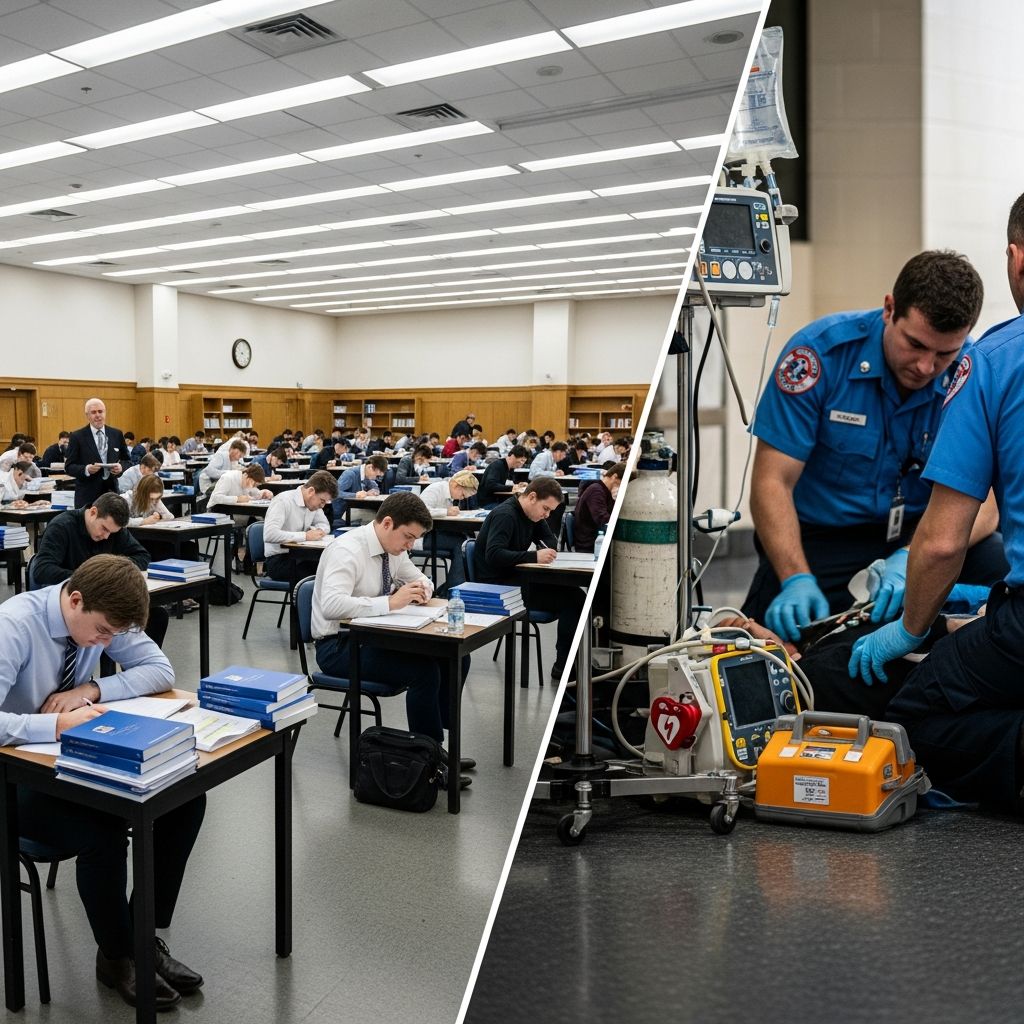
High Stakes and Hard Lines: When Health Crashes Into the Bar Exam
The bar exam is designed to be a rigorous gateway into the legal profession, but sometimes life intrudes in extreme ways, including serious medical emergencies in the middle of testing. Stories of examinees pushing through chest pain, fainting, or other crises raise difficult questions about how far exam authorities should go in insisting that testing proceed and what obligations they have to protect candidates’ health and legal rights.
This article explores what can happen when a bar applicant faces a medical emergency during the exam, how disability and accommodation rules fit into that picture, and what steps examinees can take to prepare for unexpected health issues without sacrificing their well-being.
Understanding the Bar Exam as a High-Pressure Gatekeeper
The bar exam is not just another standardized test; it is a professional licensing requirement that controls entry into legal practice in almost every U.S. jurisdiction. It typically features long testing days, strict security rules, and high stress, all of which can magnify underlying health issues.
Key characteristics of most modern bar exams include:
- Length and intensity: The Uniform Bar Exam (UBE), used in New York and many other jurisdictions, generally spans two full days of testing, mixing essays, performance tests, and multiple-choice questions.
- Strict timing: Each session is tightly timed, with no unscheduled breaks; leaving the room may cost you valuable minutes or, in some cases, the entire session.
- Security restrictions: Most jurisdictions prohibit personal items, food, and even many medical devices unless they have been preapproved as accommodations.
- Single high-stakes outcome: Failing usually means waiting several months to retake the exam, which can delay employment, bar admission, and income.
In this environment, examinees may feel intense pressure to keep working, even when they face symptoms that would ordinarily send them straight to the emergency room.
Disability Law and Bar Exams: What the ADA Requires
Medical emergencies often bring up questions about disability rights. While not every acute health problem qualifies as a disability, many chronic or serious conditions do. Under the Americans with Disabilities Act (ADA), state licensing bodies must provide reasonable accommodations to qualified individuals with disabilities so that their performance on the exam reflects their knowledge, not the limitations imposed by their conditions.
In New York, for example, the Board of Law Examiners (BOLE) explicitly states that it will provide nonstandard test accommodations at no additional cost to qualified applicants with disabilities, so long as the accommodations are:
- Reasonable and not unduly burdensome
- Consistent with the nature and purpose of the examination
- Necessitated by the applicant’s disability
Common accommodations, depending on the documented condition, may include additional testing time, small-group or private rooms, permission to bring food, medication, or medical devices, or extra breaks.
How Accommodations Differ From Emergency Situations
Accommodations are planned in advance. A medical emergency that arises unexpectedly on exam day is fundamentally different from a disability that has been documented and approved ahead of time.
| Feature | Preapproved Accommodations | Unplanned Medical Emergency |
|---|---|---|
| Timing | Requested and reviewed weeks or months before the exam | Occurs suddenly during or right before testing |
| Documentation | Requires comprehensive medical or psychological records ahead of time | Often based on immediate symptoms and emergency medical evaluation |
| Decision-makers | Board of Law Examiners or similar authority applies written policies and rules | Proctors, security staff, and emergency medical personnel act in real time |
| Outcome | Modified conditions (e.g., extra time, devices, breaks) but exam proceeds as scheduled | May require suspension of testing, hospital care, and later petitions for relief or retesting |
Because most bar exam rules are rigid and oriented around test security, there is often no written, detailed protocol for what happens when a candidate experiences a sudden health event mid-exam. That ambiguity can leave examinees feeling caught between protecting their health and preserving their one shot at the test.
Inside New York’s Approach: Accommodations, Not Do-Overs
New York’s bar exam policies illustrate the broader tension between equal access and exam integrity. The Board’s Nonstandard Test Accommodations Handbook emphasizes several key points:
- Equal access, not advantage: The stated goal of accommodations is to “alleviate the impact” of a disability so that the exam measures knowledge and skills, not the impairment, but without giving the applicant an unfair edge over others.
- No guarantee of success: The Board makes it explicit that accommodations help candidates better demonstrate their mastery but do not guarantee completion of the exam or a passing score.
- Case-by-case review: Each request is evaluated individually, and the burden is on the applicant to prove a qualifying disability and the need for each requested accommodation.
These principles reflect a strong institutional focus on consistency, fairness to all candidates, and exam security. They also reveal why exam authorities can be hesitant to grant exceptions after an exam session has already started, even when the request is triggered by a serious health crisis.
Medical Emergencies During the Exam: Practical and Legal Tensions
When an examinee experiences symptoms like severe chest pain, shortness of breath, loss of consciousness, or neurological changes during the test, two sets of interests collide:
- The candidate’s urgent health and potentially life-or-death medical needs
- The exam authority’s duty to preserve the security, uniformity, and integrity of a high-stakes licensing exam
From a practical perspective, proctors are rarely medical professionals. Their training typically focuses on security rules: preventing cheating, enforcing time limits, and protecting exam materials. They may not be equipped—and are not authorized—to definitively diagnose or dismiss a possible emergency.
Legally, exam authorities must avoid discrimination under the ADA and similar laws, but they are not insurers of every risk and cannot be forced to ignore exam rules entirely. When an emergency arises, they often respond with a mix of:
- Immediate safety steps (calling emergency services, escorting the candidate out)
- Documenting what happened (incident reports)
- Informing the candidate later about options like score invalidation, partial credit, or retaking at a future administration where such options exist
Cases where candidates feel pressured to stay and finish, despite clear medical warning signs, illustrate how the culture of high-stakes testing can discourage people from prioritizing their own health.
Reasonable Accommodation vs. Risk-Taking: Where Should the Line Be?
Under the ADA, a reasonable accommodation is one that provides meaningful access without fundamentally altering the nature of the exam or imposing an undue burden on the administering entity. In the context of emergencies, several questions frequently arise:
- Is allowing a candidate to pause and complete the exam later in the day a fundamental alteration?
- Would granting a make-up exam for a single candidate compromise security or fairness?
- Should a serious health episode be treated analogously to a disability, at least for purposes of future testing opportunities?
Many jurisdictions resolve these questions through rigid bright-line rules: for example, stating that if a candidate leaves the room for any reason (other than an approved scheduled break), they may not re-enter that session, and incomplete work will be graded as-is. While this approach is administratively simple and predictable, it also risks incentivizing dangerous behavior when examinees believe that leaving means sacrificing months of preparation and delaying their legal careers.
Preparing Before Exam Day: Health, Documentation, and Contingency Plans
Although no one can fully control whether a medical emergency strikes on exam day, bar applicants can take concrete steps to reduce risk and to protect their rights.
1. Identify and Document Existing Conditions Early
Many law schools urge students to start accommodation requests several months before the bar exam to avoid last-minute issues and missed deadlines.
- Review your health history with your physician or specialist well before applications are due.
- Determine whether any chronic conditions—such as cardiac disease, diabetes, epilepsy, or psychiatric disabilities—might impair your ability to sit for a two-day exam under standard conditions.
- Gather comprehensive, current documentation that explains the diagnosis, functional limitations, and recommended accommodations in the specific testing context.
2. Learn Your Jurisdiction’s Rules
Each state sets its own procedures and deadlines for requesting accommodations. New York’s Board of Law Examiners, for example, provides detailed guidance and forms through its official site and handbook.
- Read the official ADA/accommodations page for your jurisdiction carefully.
- Note application deadlines, which may be earlier than the exam application itself.
- Understand what types of accommodations are commonly granted and what documentation is required.
3. Coordinate With Your Law School
Many law schools maintain bar exam accommodation support resources, tip sheets, or dedicated staff in student affairs or disability services.
- Ask your school for a letter documenting prior accommodations you received during law school or earlier exams, as some boards request such evidence.
- Use law school counseling, wellness, or disability offices to plan for exam stress, medication management, and logistics.
4. Plan for Emergency Scenarios
Even if you are healthy, it is wise to consider what you would do if you experienced warning signs of a serious condition during the exam, such as chest pain, sudden dizziness, or intense shortness of breath.
- Decide in advance that your health takes precedence over any exam outcome.
- Know how to quickly alert proctors if you need immediate help.
- If you have a known condition, discuss specific “red flag” symptoms with your doctor and what instructions you should follow if they occur under stress.
What to Do If a Medical Emergency Happens Mid-Exam
If an emergency arises despite all planning, your immediate priority should be safety. After that, careful documentation can help you seek appropriate relief from the exam authority.
Step-by-Step Actions
- Stop and seek help: Notify a proctor immediately. Do not push through severe or escalating symptoms.
- Accept medical evaluation: If emergency services are called, cooperate fully with their assessment and follow their recommendations.
- Collect records: Obtain copies of emergency room records, discharge papers, diagnostic results, and physician statements that explain what happened.
- Request incident documentation: Ask whether an incident report was filed with the exam authority and, if permissible, request a copy or confirmation.
- Consult counsel if needed: If you believe you were unfairly pressured to keep testing or later denied reasonable relief, speak with an attorney experienced in education or disability law.
Long-Term Implications: Health, Career, and Ethics
Choosing to continue a bar exam while experiencing symptoms consistent with a serious medical event is not only medically risky; it can also have professional and ethical implications.
- Physical consequences: Delayed treatment of conditions such as myocardial infarction (heart attack) or stroke can substantially worsen prognosis and long-term health outcomes, according to established medical research and public health guidance.
- Mental health impact: Experiencing a health crisis under high-stakes conditions can be traumatic and may lead to anxiety or avoidance around future testing or professional responsibilities.
- Ethical perspective: Lawyers are expected to exercise sound judgment, including in assessing risk. Choosing to gamble with one’s life to complete an exam may reflect problematic norms in legal culture about overwork and self-neglect.
For bar authorities, stories of candidates who tried to push through medical emergencies can be a signal to re-evaluate whether policies and training adequately emphasize safety and humane treatment alongside exam security.
Policy Ideas: Building a Safer, Fairer Exam System
Jurisdictions seeking to avoid tragedies and legal disputes might consider reforms that preserve exam integrity without forcing examinees into dangerous trade-offs.
- Clear emergency protocols: Publish explicit written procedures for handling medical crises, including who can call emergency services, under what conditions a candidate may resume testing, and what options exist for rescheduling.
- Limited emergency retest rules: Allow narrowly tailored make-up opportunities or partial re-exams when a serious, documented medical event interrupts testing, with safeguards for exam security.
- Proctor training: Incorporate basic recognition of medical red flags and clear authority to stop testing and summon help when necessary.
- Candidate education: Provide pre-exam materials explaining that health and safety come first, along with instructions on what to do if someone becomes ill during the exam.
Such measures acknowledge that while the bar exam is crucial, it is not more important than an examinee’s life or long-term health.
Frequently Asked Questions (FAQs)
Q: If I have a chronic health condition, should I always request bar exam accommodations?
Not necessarily, but you should discuss your condition with a healthcare professional and review your jurisdiction’s rules. If your condition could substantially limit major life activities under standard testing conditions—for example, if prolonged sitting, stress, or strict timing significantly worsen symptoms—then a formal accommodation request is often appropriate and may be necessary to ensure equal access.
Q: Can I get accommodations approved after a medical emergency occurs during the exam?
Accommodations are generally meant to be requested and approved before exam day. If an emergency arises mid-exam, you may be able to seek relief afterward, such as voiding your score or reapplying with new documentation, but boards typically require fresh applications and do not automatically treat an emergency as a retroactive accommodation request.
Q: Will asking for accommodations hurt my chances of bar admission?
No. Under the ADA, you are entitled to reasonable accommodations, and bar exam authorities separate testing accommodations from character and fitness evaluations. Law schools and bar-related guidance materials emphasize that using accommodations does not count against you in the admission process.
Q: What if I ignore symptoms and finish the test, then learn I had a serious medical event?
You may still seek medical documentation and consult the bar authorities about options, but it can be harder to argue that the event prevented you from testing if you completed all sessions. More importantly, delaying treatment can increase the severity and long-term consequences of many conditions, which health agencies strongly warn against.
Q: Where can I find official information about New York bar exam accommodations?
The New York State Board of Law Examiners maintains an official page on test accommodations for applicants with disabilities, along with a detailed Nonstandard Test Accommodations Handbook, both of which outline eligibility, documentation standards, and application procedures.
References
- Test Accommodations for the New York State Bar Exam and the New York Law Exam — New York State Board of Law Examiners. 2025-03-01. https://www.nybarexam.org/ada/ada.htm
- Disabilities Accommodations — University at Buffalo School of Law. 2024-01-10. https://www.law.buffalo.edu/current/barExam/accommodations.html
- Accommodation Resources for Law Students — Columbia Law School. 2022-01-15. https://www.law.columbia.edu/sites/default/files/2022-01/Accommodation%20Resources%20Updated.pdf
- Nonstandard Test Accommodations Handbook — New York State Board of Law Examiners. 2025-03-01. https://www.nybarexam.org/Docs/NTAHandBook.pdf
- Bar Accommodation Process — NYU School of Law. 2024-02-01. https://www.law.nyu.edu/recordsandregistration/barexams/baraccommodationprocess
- Bar Exam Accommodation Information — Harvard Law School. 2023-11-01. https://hls.harvard.edu/dos-ceeb/overview-of-bar-admission/bar-exam-accommodation-information/
- Requesting Accommodations at BLS & on the Bar Exam — Brooklyn Law School Library Guides. 2023-08-15. https://guides.brooklaw.edu/course_bar_prep/accommodations
- Heart Attack: Symptoms and Causes — Mayo Clinic. 2024-04-30. https://www.mayoclinic.org/diseases-conditions/heart-attack/symptoms-causes
Similar Articles








Read full bio of medha deb


