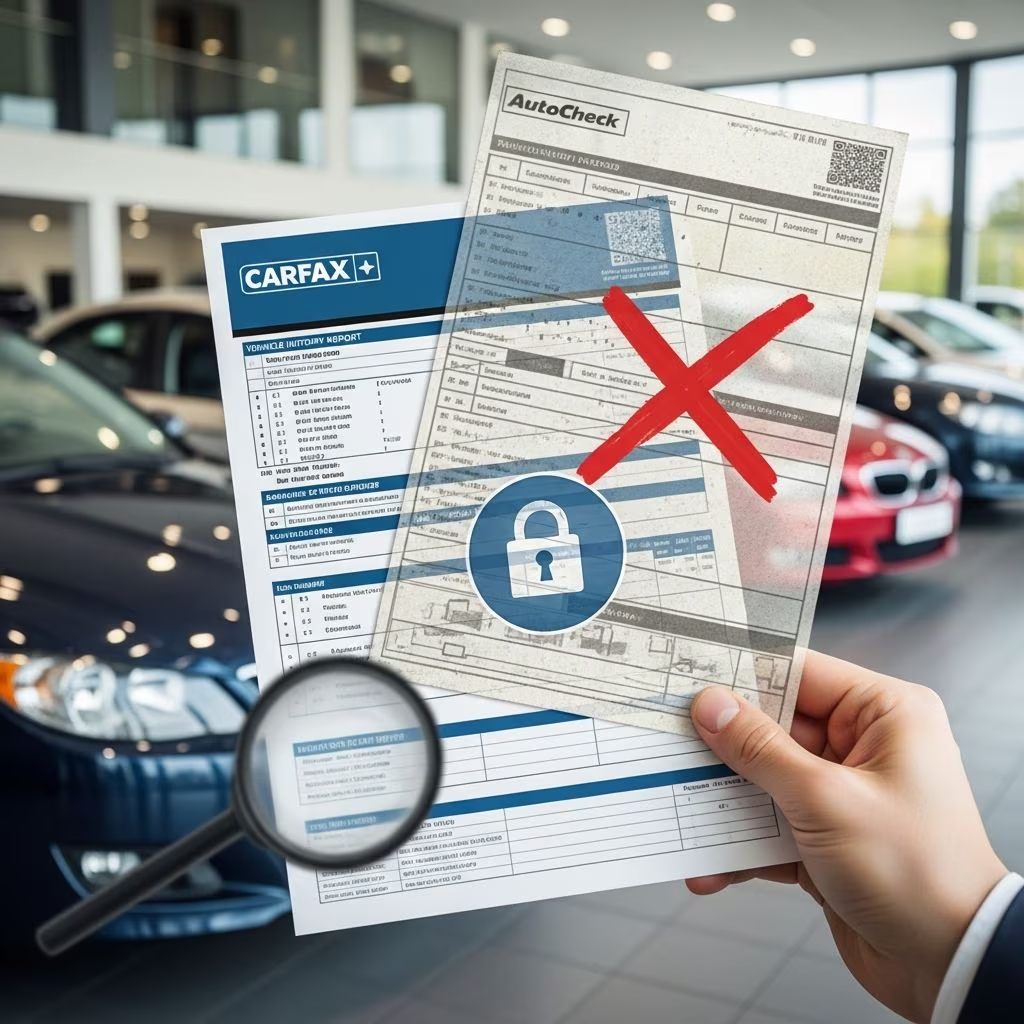
When you sell a car online, questions about its past accidents, title status, and mileage are normal. Many serious buyers want a vehicle history report before they commit. Scammers know this and have turned this perfectly reasonable request into a way to steal money, credit card numbers, and personal information from unsuspecting sellers.
This guide explains how vehicle history report scams work, what red flags to watch for, how to respond safely, and what to do if you have already paid a fraudulent site.
What Is a Vehicle History Report?
A vehicle history report is a document that compiles data on a car’s past using its Vehicle Identification Number (VIN). Reputable providers pull information from state motor vehicle departments, insurance companies, police accident records, and other databases such as the National Motor Vehicle Title Information System (NMVTIS).
Depending on the provider, a legitimate report may include:
- Title status (clean, salvage, rebuilt, flood, lemon, etc.)
- Odometer readings and mileage verification
- Major accidents and structural damage reported to insurers or police
- Records of theft or recovery
- Prior sales, ownership changes, and some registration details
- Open safety recalls and sometimes service or inspection history
Because the report can influence a buyer’s decision and the price, it has become a key tool in the used car market—and a tempting target for fraudsters.
How the Vehicle History Report Scam Targets Sellers
The scam described by consumer protection authorities follows a similar pattern, most often on platforms like online classifieds or person-to-person marketplaces.
Typical Step-by-Step Scenario
- You list your car for sale online. Your ad includes photos, a description, and usually your phone number or messaging handle.
- A “buyer” contacts you. They may use text, in-platform messaging, or email and appear genuinely interested. They might ask basic questions about mileage, condition, or maintenance.
- They insist on a report from a specific website. The buyer says they want a vehicle history report but tells you that they will only trust one particular site you have never heard of. They may send a clickable link.
- You are asked to pay by credit card. The site asks for your VIN, personal details, and a fee—often around $15–$30—for the report.
- You never hear from the buyer again. After you pay and share the supposed report, the “buyer” disappears. In many cases, no real report is ever delivered.
The goal is not to buy your vehicle; it is to collect your payment card information and other data, or to profit from overcharging you for a low-value report.
What the Scammers Actually Want
- Credit card numbers and security codes to attempt unauthorized charges or sell your data to other criminals.
- Personal information (name, phone, address, email) that can be used for identity theft or resold for marketing lists by so-called “lead generators.”
- Small payments at scale, such as a $20 report fee collected from many sellers, which can add up quickly even if individual amounts are low.
Other Vehicle History Report–Related Scams
While the targeted seller scam is common, there are other ways vehicle history reports can be misused when you are buying or selling a car.
| Scam Type | How It Works | Who Is Targeted |
|---|---|---|
| Fake report site for sellers | Buyer demands a report from a specific, unknown website that collects your card data and may not deliver a report. | Private sellers |
| Outdated or partial report | Seller provides an older or incomplete report that does not show recent accidents or title changes. | Buyers |
| Altered or forged report | Information is edited, removed, or “cut and pasted” to hide damage or odometer issues. | Buyers |
| Overpriced reseller | Site buys a low-cost legitimate report but charges consumers far higher prices and collects extra data. | Buyers and sellers |
Red Flags That Signal a Vehicle History Report Scam
Scammers depend on urgency and the appearance of legitimacy. Knowing the signs makes it much easier to walk away safely.
1. You Are Told to Use One Specific Website
A request for a history report is reasonable, but a demand that you must use one particular site—especially one you do not recognize—is a major warning sign.
- The buyer refuses to accept a report from reputable sources or to buy their own report.
- They send a direct link and pressure you to use that link rather than visiting a known provider on your own.
2. Suspicious Domain Names and Branding
Fraudulent sites often try to look official while avoiding trademarks of well-known companies.
- Domain names that include “vin” or similar terms solely to appear related to vehicle identification numbers.
- Websites with no clear company name, physical address, or contact details.
- Logos that resemble major brands but with slightly altered names or designs.
3. Poor Transparency About Who Runs the Site
Legitimate businesses clearly identify themselves. Scam sites may have vague “About” pages or none at all.
- No clear privacy policy or terms of service, or pages filled with generic text.
- No explanation of where the data in the report comes from (for example, no mention of state motor vehicle records or NMVTIS).
- Contact forms only, with no verifiable phone number or business address.
4. High-Pressure Tactics and Urgency
Fraudsters often try to rush you into a decision before you can research the website.
- Buyer claims they are ready to purchase “today” but only if you buy the report immediately.
- Messages suggesting there are other buyers waiting, to push you into paying quickly.
5. Requests for Extra Personal Data
To generate a legitimate report, a provider typically needs the VIN and payment details. Be wary if a site demands significantly more information.
- Social Security number or full date of birth (unnecessary for a history report).
- Copies of your driver’s license or other identity documents.
- Multiple payment methods with unclear security information.
Safe Ways to Handle Vehicle History Report Requests
You do not have to reject every buyer who wants a vehicle history report. The key is to control where the report comes from and protect your financial information.
Best Practices for Sellers
- Offer the VIN openly. Share the VIN with potential buyers so they can purchase a report themselves from any trusted provider.
- Use only reputable report providers. If you choose to buy a report to include with your listing, use well-known companies or providers approved by NMVTIS.
- Politely decline unknown sites. If a buyer insists on a specific site you do not know, say you are not comfortable entering your card details there and suggest they obtain their own report instead.
- Do not share extra personal data. Never provide your Social Security number or identity documents just to generate a report.
- Watch the buyer’s reaction. A legitimate buyer may prefer a certain brand but should not disappear or become hostile if you suggest a reputable alternative. A scammer is likely to vanish once you refuse their link.
Best Practices for Buyers
- Generate the report yourself when possible. Buying your own report ensures it is current and unaltered.
- Check the report date and VIN. Make sure the report is recent and matches the vehicle’s VIN exactly.
- Compare details carefully. Confirm that mileage, accident history, and title status align with what the seller has told you.
- Use the report as one tool, not the only one. A clean report does not guarantee the car is perfect; some accidents or repairs may not be reported.
How to Choose a Legitimate Vehicle History Report Provider
While this article does not endorse any particular brand, there are clear signs that a provider operates legitimately.
- Connection to official data sources. Reputable providers describe their data sources, such as state motor vehicle agencies and NMVTIS, which was created by U.S. law to combat title fraud and unsafe vehicles.
- Clear business identity. Look for a real company name, physical address, and customer service contact details.
- Transparent pricing. Legitimate sites disclose costs upfront and do not add surprise charges at checkout.
- Recognizable web security. Pages where you enter payment details should use encrypted HTTPS connections and show familiar browser security indicators.
- Consistent reputation. Check reviews or warnings from official consumer protection organizations such as the Federal Trade Commission or Better Business Bureau for any patterns of complaints related to the site.
What to Do If You Already Paid a Suspicious Report Site
If you suspect you have entered your card information on a fraudulent vehicle history report site, act quickly to limit the damage.
- Contact your card issuer immediately. Ask to block the card, dispute unauthorized charges, and monitor your account for further suspicious activity.
- Change passwords. If you used the same password on other sites, change it and enable multi-factor authentication where possible.
- Watch for signs of identity theft. Review bank, credit card, and loan statements carefully. In the United States, you can check your credit reports regularly for unexpected accounts or inquiries.
- Report the scam. File a report with your national or regional consumer protection authority (for example, the Federal Trade Commission in the U.S.) and with the platform where you met the buyer.
- Warn others. If you feel comfortable, share your experience in appropriate forums or with friends and family so others can avoid similar traps.
Frequently Asked Questions (FAQs)
Q: Is it normal for a buyer to ask for a vehicle history report?
Yes. Many serious buyers want to see a vehicle’s background before purchasing. The red flag is not the request itself, but when a buyer demands that you purchase a report from one specific, unknown site and refuses any alternative.
Q: Can I safely share my VIN online?
In general, yes. The VIN is visible on the car itself and is routinely shared in listings. The main risk comes not from sharing the VIN, but from entering your credit card and personal data on untrustworthy websites.
Q: Are all vehicle history report websites that look unfamiliar scams?
No. Some smaller providers operate legitimately, especially those connected to official databases like NMVTIS. However, before you pay any unfamiliar site, research the company, read its privacy policy, and look for clear information about data sources and ownership.
Q: If I already bought a report from a suspicious site but see no strange charges, am I safe?
Not necessarily. Criminals sometimes wait before using or selling stolen data. It is still wise to contact your card issuer, monitor accounts closely, and consider replacing the card used for the transaction.
Q: How can I reassure buyers if I refuse to use their suggested website?
Explain that you are happy to provide the VIN so they can order a report from any reputable provider, or offer to purchase a report yourself from a well-known service. A good-faith buyer should accept this compromise, while a scammer is likely to disappear.
References
- Steering clear of vehicle history report scams — Federal Trade Commission. 2018-10-25. https://consumer.ftc.gov/consumer-alerts/2018/10/steering-clear-vehicle-history-report-scams
- Buyer and Seller Beware! How Vehicle History Report Scams Work — Ephrata National Bank. 2021-03-09. https://www.epnb.com/insights/buyer-and-seller-beware-how-vehicle-history-report-scams-work/
- Vehicle History Report Scams and How to Avoid Them — NerdWallet. 2023-06-21. https://www.nerdwallet.com/auto-loans/learn/vehicle-history-report-scams
- Beware of This Vehicle History Scam When Selling Your Car — Bitdefender. 2022-06-03. https://www.bitdefender.com/en-us/blog/hotforsecurity/beware-of-this-vehicle-history-scam-when-selling-your-car
- Be alert for car scams — Better Business Bureau. 2023-05-01. https://www.bbb.org/all/auto/car-problems-and-scams