
Avoiding REAL ID Scams: Why the DMV Is Your Only Safe Bet
Learn how REAL ID really works, why scammers target it, and how to protect yourself by only dealing with your official DMV.
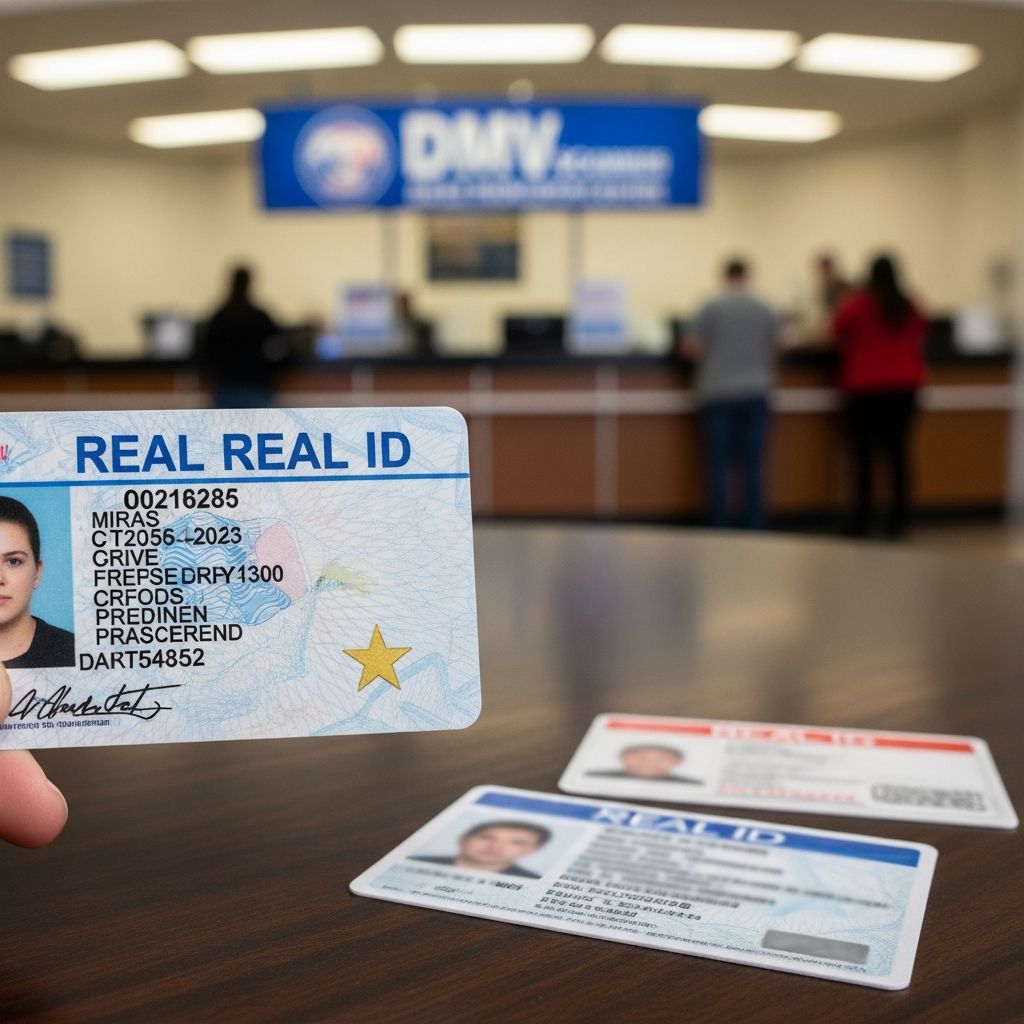
The federal REAL ID rules are changing how people board planes and enter certain federal facilities, and scammers are taking advantage of the confusion. Understanding what REAL ID is, who can legally issue it, and how scammers operate is the best way to protect your money and your identity.
This guide explains how REAL ID works, why going directly to your state Department of Motor Vehicles (DMV) or equivalent agency is the only safe way to get a REAL ID-compliant card, and how to recognize and avoid scams that misuse the REAL ID name.
REAL ID in Plain Language
The REAL ID Act is a federal law that sets minimum security standards for state-issued driver’s licenses and identification cards. Beginning May 7, 2025, only IDs that meet these standards (or specific alternative IDs) will be accepted for certain federal purposes, such as boarding U.S. domestic flights or entering secure federal buildings.
What REAL ID Does and Does Not Do
- Does set nationwide standards for how states verify your identity and secure your license or ID.
- Does determine which IDs can be used for particular federal purposes, like:
- Boarding commercial flights within the United States
- Entering certain secure federal facilities and military bases
- Does not replace your driver’s license for driving — state rules for driving remain the same.
- Does not create a national ID card — states still issue and manage their own licenses and IDs.
- Does not mean you must get a REAL ID card if you have another acceptable federal ID, such as a U.S. passport.
How to Recognize a REAL ID-Compliant Card
REAL ID-compliant state licenses and IDs have a special symbol printed on the front, usually in the upper right corner. In many states it is a star, sometimes set inside a circle or another shape. If your card lacks this mark, it will not be accepted for REAL ID federal purposes after enforcement begins.
| Feature | REAL ID-Compliant License/ID | Non-Compliant License/ID |
|---|---|---|
| Marking on card | Star or similar DHS-approved symbol on the front | No star or special REAL ID mark |
| Use for domestic flights after May 7, 2025 | Yes, accepted at TSA checkpoints | No, unless you show another acceptable ID |
| Use for driving, banking, voting | Yes, according to state law | Yes, but not for REAL ID federal purposes after enforcement |
| Who issues card | Your state DMV or equivalent agency | Also only your state DMV – never private companies |
Who Can Legally Issue REAL ID-Compliant Cards?
This is the key point scammers hope you do not understand: only your state driver licensing agency – typically known as the DMV, Department of Public Safety, or Motor Vehicle Division – can issue a REAL ID-compliant license or identification card.
Authorized Sources
You can only apply for REAL ID through:
- Your state DMV (or equivalent agency responsible for driver licensing and ID cards)
- Authorized DMV websites operated by state government domains, usually ending in .gov
- Occasionally, approved DMV partner offices such as certain county clerk or tax offices, clearly identified on the state’s official website
No federal agency issues REAL ID driver’s licenses or state ID cards. The federal government sets standards but does not directly issue these state IDs.
Alternative IDs That Meet Federal Rules
You are not required to get a REAL ID card if you have other federally accepted identification. According to the Department of Homeland Security (DHS) and the Transportation Security Administration (TSA), alternatives for air travel and federal facility access include:
- U.S. passport or U.S. passport card
- U.S. Department of Defense (DoD) ID, including dependent IDs
- DHS trusted traveler cards (Global Entry, NEXUS, SENTRI, FAST)
- State-issued Enhanced Driver’s License from participating states
For most people, however, a REAL ID-compliant license or ID card is the most convenient option for domestic air travel.
Why REAL ID Confusion Creates a Perfect Scam Opportunity
The enforcement date, the technical rules, and the star marking have created widespread confusion. Scammers exploit that confusion by:
- Charging people to “reserve” or “upgrade” a REAL ID card online
- Pretending to be from the DMV or a government agency
- Collecting sensitive personal data and payments through fake websites or phone calls
Because people are worried about being turned away at airport security, they might rush to fix the problem and be less careful about who they are dealing with. The more urgent the message sounds, the more suspicious you should be.
Common REAL ID Scam Tactics
Fraud schemes vary, but most follow a few predictable patterns. Recognizing the patterns makes them easier to avoid.
1. Fake Websites and Search Ads
Scammers set up websites that look like official DMV pages. They may:
- Use state names or DMV-related phrases in the domain
- Copy colors, logos, or layouts similar to your state’s real website
- Appear as sponsored results at the top of search pages
Once you are on the site, they may ask you to pay a “processing fee” or enter personal information such as your Social Security number, date of birth, and driver’s license number. At best, they might sell you an unofficial form-filling service; at worst, they steal your money and identity.
2. Phishing Emails and Text Messages
Phishing messages often pretend to be urgent notices from the DMV, TSA, or DHS. Warning signs include:
- Messages claiming your license will be cancelled immediately if you do not click a link
- Emails from free webmail domains instead of .gov addresses
- Links that do not go to a government site when you hover over them
- Requests to “confirm” your full Social Security number, bank details, or login passwords
Government agencies do not demand that you send sensitive data by email or text to keep your license active.
3. Phone Calls Demanding Immediate Payment
Some scammers call and claim to be from “the DMV” or a “federal REAL ID office.” Red flags include:
- Demands for payment over the phone, especially via gift cards, wire transfer, or peer-to-peer payment apps
- Threats of fines, arrest, or license revocation if you do not comply immediately
- Refusal to let you hang up and call back using a verified number
If someone pressures you to act before you can verify who they are, treat the call as suspicious.
4. Social Media “Helpers” and Unofficial Fixers
On social platforms, you may see offers like “REAL ID appointment services” or people promising to “upgrade” your license quickly for a fee. At best, these services may simply book an appointment you could schedule yourself for free; at worst, they are stealing your personal information or selling counterfeit documents.
Only your state DMV can process your REAL ID application, confirm your documents, and issue the card.
Why You Must Go Through the DMV
Because of the strict federal standards, states must physically examine and verify your documents before issuing a REAL ID-compliant card. That means no one can complete the full REAL ID process for you online or by phone.
What the DMV Is Required to Verify
Under the REAL ID Act, states must collect and verify certain information before approving a compliant license or ID. This typically includes:
- Identity and date of birth (e.g., U.S. birth certificate, U.S. passport, or Permanent Resident Card)
- Social Security number (e.g., Social Security card, W-2 form, or pay stub with full number)
- Lawful status in the United States (e.g., passport, immigration documents)
- State residency (often two documents, such as a lease, mortgage, utility bill, or bank statement)
States also must validate the authenticity of these documents and add security features to the cards, which can only be done through official channels.
What You Can (and Cannot) Do Online
Depending on your state, you may be able to:
- Check whether your current license is already REAL ID compliant
- Review a checklist of required documents
- Use an online tool to confirm which documents will be accepted
- Schedule or reschedule an appointment
- In some states, request a duplicate if you already have a compliant card and just need a replacement
But you cannot:
- Complete the entire REAL ID process through a private company
- Get a genuine REAL ID license shipped to you from a non-government website
- Skip document verification at the DMV or its official partners
Practical Steps to Stay Safe and Get a REAL ID the Right Way
1. Confirm the Official Website
Before anything else, make sure you are dealing with your state’s official driver licensing agency:
- Look for a .gov domain on the website
- Navigate to the site from your state government’s main portal instead of through ads
- Use bookmarks or type the URL yourself rather than clicking links in unsolicited emails or texts
2. Use Government Tools to Prepare Documents
Many official sites provide online checklists or document guides so that you can bring the right papers to your appointment. These tools often let you:
- Choose whether you are applying for a license, ID card, or renewal
- See which identity, Social Security, and residency documents are acceptable
- Print or save a personalized list to take with you
3. Make Your Appointment Early
As the enforcement deadline approaches, appointment slots may become scarce. To avoid last-minute stress:
- Check for appointments several weeks or months in advance
- Look for alternative DMV locations listed on the official site
- Watch for special extended hours or events announced by your DMV
4. Bring Only What the DMV Requires
Prepare a small folder with only the documents needed for your REAL ID application:
- Identity and citizenship/lawful status documents
- Proof of Social Security number
- Two proofs of state residency
Do not give copies of these documents to any private service that is not clearly identified and endorsed by your state on its official website.
5. Protect Yourself from Identity Theft
If you suspect you have already interacted with a REAL ID scam, you can reduce the damage by:
- Contacting your bank or card issuer to stop or dispute unauthorized charges
- Monitoring your credit reports for new accounts you did not open
- Placing a fraud alert or credit freeze with major credit bureaus if you believe your Social Security number or other key data were exposed
- Reporting the scam to appropriate consumer protection agencies so others can be warned
Frequently Asked Questions (FAQs)
Q1: Do I have to get a REAL ID to fly within the U.S.?
No. You must show either a REAL ID-compliant license/ID or another acceptable identification, such as a U.S. passport, passport card, or certain DHS or DoD IDs. If you prefer not to get a REAL ID, you can travel with one of those alternatives.
Q2: Can a private company legally “issue” or “upgrade” a REAL ID for me?
No. Only your state’s DMV or equivalent driver licensing agency can issue a REAL ID-compliant license or ID card. Private companies cannot legally upgrade your card or bypass the verification process.
Q3: Is it safe to pay someone to book a REAL ID appointment?
Even if legal in some situations, it is generally unnecessary and risky. You can usually schedule an appointment yourself for free on your DMV’s official website. Paying a stranger to do it gives them unnecessary access to your personal information and may not save you time.
Q4: How can I tell if my current license is already REAL ID compliant?
Check the front of your license or ID for a star or similar approved marking near the top, often in the upper right corner. If you see that symbol and your card is still valid, you may already have a REAL ID-compliant credential.
Q5: What documents will I need to bring to the DMV?
Requirements vary by state, but you typically must bring documents that prove your identity, Social Security number, and state residency. Examples include a U.S. birth certificate or passport, Social Security card or W-2, and utility bills or bank statements showing your address. Check your state’s official site or the USAGov REAL ID page for detailed lists.
References
- REAL ID Act of 2005: Title II – Improved Security for Driver’s Licenses and Personal Identification Cards — U.S. Congress / U.S. Government Publishing Office. 2005-05-11. https://www.govinfo.gov/content/pkg/PLAW-109publ13/pdf/PLAW-109publ13.pdf
- REAL ID Required for U.S. Travelers beginning May 7, 2025 — U.S. Department of Defense / Transportation. 2025-02-10. https://www.travel.dod.mil/About/News/Article/article/4061839/real-id-required-for-us-travelers-beginning-may-7-2025/
- REAL ID Requirements Begin May 7th, 2025 — Texas State Law Library. 2025-03-26. https://www.sll.texas.gov/spotlight/2025/03/real-id-requirements-begin-may-7th-2025/
- Federal REAL ID Act — Texas Department of Public Safety. 2024-10-01 (last updated, approximate). https://www.dps.texas.gov/section/driver-license/federal-real-id-act
- How to Get a REAL ID and Use It for Travel — USAGov (U.S. General Services Administration). 2024-06-05. https://www.usa.gov/real-id
Similar Articles








Read full bio of Sneha Tete


