
Arrests in Elementary Schools: Legal Realities
Exploring whether young children face arrests in elementary schools, the laws involved, and efforts to reform school policing practices.
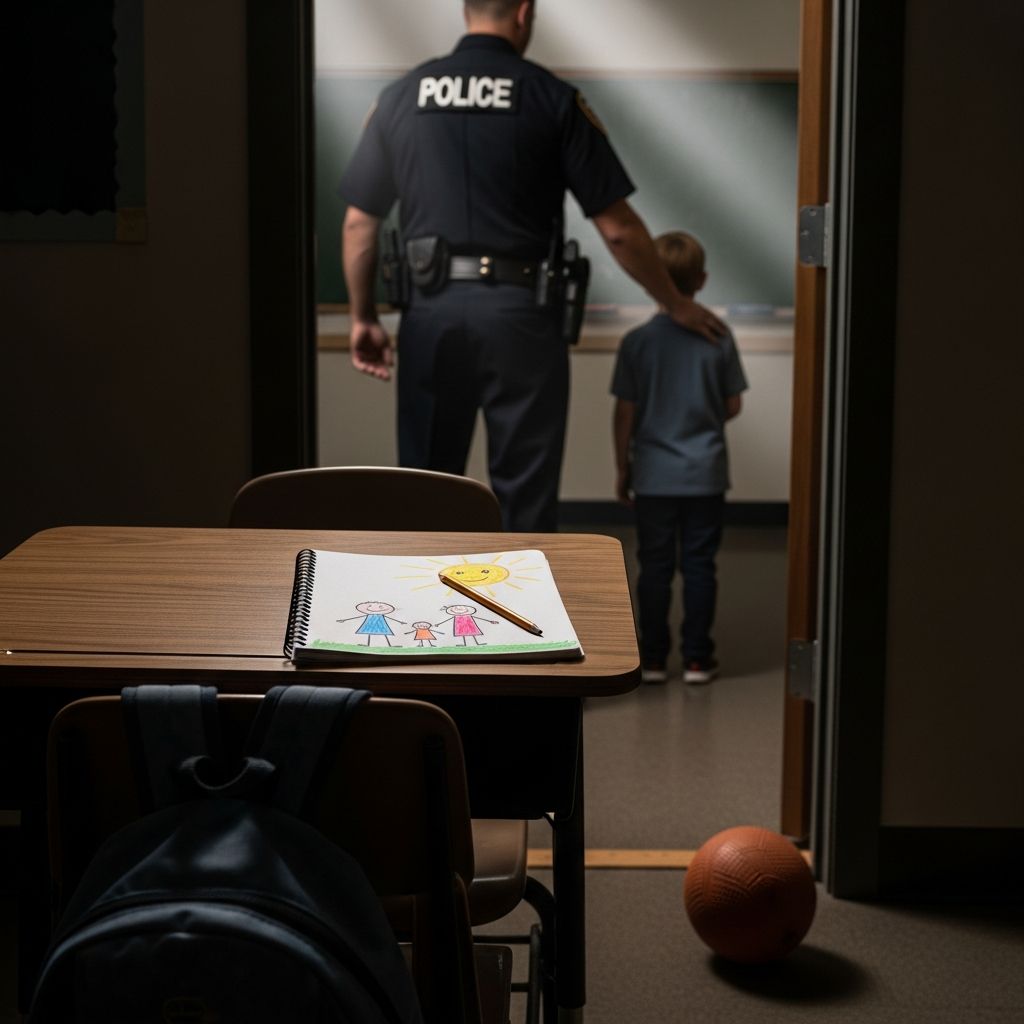
Young children in elementary schools can indeed face arrest for behaviors that disrupt the learning environment, often under vague state laws targeting school disturbances. These incidents raise serious questions about child rights, school safety, and the role of law enforcement in education settings.
The Growing Presence of Police in Schools
School resource officers (SROs), who are sworn police personnel, have become common in K-12 institutions across the United States. Their numbers surged by 38 percent from 1997 to 2007, according to U.S. Department of Justice data, leading to increased referrals of students to the justice system for minor infractions like disorderly conduct. This expansion coincides with declining school violence rates—the lowest since 1992 per National Center for Education Statistics reports—prompting debates on whether such policing is necessary.
In elementary settings, SROs respond to everyday childish behaviors, escalating them into criminal matters. A USA TODAY analysis revealed over 2,600 arrests of children aged 5 to 9 in schools between 2000 and 2019, illustrating how routine discipline issues morph into legal actions.
Common Triggers for Elementary School Arrests
Arrests often stem from “public order offenses” such as disrupting class, talking back, or minor physical altercations. In South Carolina, for instance, students have been handcuffed for refusing to surrender cellphones or protesting discipline, charged under “disrupting a school” statutes that criminalize actions not typically offenses off-campus.
- Disorderly conduct: Banging on lockers, yelling, or refusing commands.
- Assault or battery: Playful shoving, kicking, or accidental hits during recess.
- Defiance: Arguing with teachers or ignoring instructions.
- Property issues: Throwing objects or minor vandalism.
These low-level behaviors, when handled internally in past decades, now frequently involve police due to zero-tolerance policies and SRO presence.
State-Specific Legislation Enabling Arrests
Twenty-three states maintain “school disturbance laws” that explicitly penalize interruptions to school activities, often with broad language open to interpretation. Such statutes lower the threshold for arrests compared to adult contexts, allowing officers to charge young students for actions like protesting or minor disruptions.
For example, in states like South Carolina and Virginia, these laws target “disturbing the peace” or “disorderly conduct” uniquely within schools, contributing to disproportionate enforcement against minority students, as noted by civil rights advocates.
| State Example | Key Offense | Typical Age Affected | Reform Status |
|---|---|---|---|
| South Carolina | Disrupting school | Elementary (5-10) | Bills to narrow definitions |
| Virginia | Disturbing assembly | K-12 | Legislative review ongoing |
| Massachusetts | Disorderly conduct | 11+ | Prohibitions proposed |
This table summarizes select states’ approaches, highlighting how legislation facilitates arrests for non-violent acts.
Disproportionate Impact on Vulnerable Groups
Students of color and those with disabilities face arrests at higher rates for disruptive behavior rather than serious crimes. ACLU reports from Massachusetts indicate that a significant portion of school arrests involve “acting out” like banging lockers, with minorities overrepresented. Federal data from the Civil Rights Data Collection defines school-related arrests broadly, including any custody taken on school grounds or during school activities, amplifying these disparities.
Civil rights groups argue that subjective enforcement criminalizes routine student interactions, perpetuating the “school-to-prison pipeline.”
Case Studies of Elementary Arrests
Real incidents underscore the issue. In Florida, 6-year-old Kaia Rolle was arrested for aggravated battery after kicking and punching a teacher—a response to her autism-related outburst. Despite the teacher’s complaint, supervisors later halted a second similar arrest that day. The case prompted a confidential settlement and policy reviews on handcuffing young children.
In Denver, school board resolutions now limit handcuffs for elementary students, reflecting backlash against SRO overreach. These examples show how even kindergarteners encounter felony-level charges for age-inappropriate actions.
Legal Rights and Protections for Students
Despite arrests, children retain constitutional rights. Juveniles as young as 10 can be detained in many states, but they have due process claims, rights to silence, counsel, and parental notification. Schools cannot expel solely based on arrest without conviction, as arrests do not prove guilt; however, they may discipline for policy violations independently.
Before expulsion, districts must offer notice, hearings, and appeals. Off-campus crimes affecting school safety can trigger action, but evidence standards in school proceedings are lower than criminal courts.
Consequences Beyond the Classroom
An arrest disrupts education, leading to suspensions, expulsions, or juvenile records that hinder future prospects like college admission or jobs. Penalties may include probation, community service, counseling, or detention. Long-term, these mark students, exacerbating dropout risks and justice system involvement.
Reform Movements and Policy Shifts
Bipartisan efforts target these practices. In Virginia, conservative groups advocate examining juvenile justice causes, criticizing arrests for playground fights. Massachusetts pushes bills banning arrests for minor disruptions. Nationally, declining federal SRO funding and low violence stats fuel calls to reduce police in schools.
Alternatives include restorative justice, mental health support, and teacher training, aiming to handle discipline without criminalization.
Role of School Resource Officers
SROs blur lines between education and enforcement, often lacking child psychology training. Critics label them heavy-handed, providing teachers an easy out for discipline. While intended for serious threats, they handle trivial matters, alienating students from learning.
Parental and Legal Recourse
Parents should document incidents, request school policy reviews, and consult attorneys to challenge arrests or expulsions. Coordinating defenses across school and court protects rights and minimizes harm.
Frequently Asked Questions
Can elementary students be handcuffed during arrests?
Yes, though some districts like Denver restrict it for young children following high-profile cases.
Do schools need a conviction to discipline after an arrest?
No, schools operate separately with lower standards, but must provide due process.
Why are minority students arrested more often?
Subjective law interpretations and biases contribute to higher rates for disruptive behaviors.
Can off-campus behavior lead to school arrest?
If it impacts school safety, yes, per many district policies.
What reforms are proposed to stop school arrests?
Narrowing disturbance laws, reducing SROs, and promoting alternatives like counseling.
References
- Can My Child Be Expelled from School for an Arrest? — AER Law Group. 2023. https://www.aerlawgroup.com/blog/can-my-child-be-expelled-from-school-for-an-arrest/
- State Laws That Can Lead to School Arrests Targeted for Change — Education Week. 2016-01. https://www.edweek.org/leadership/state-laws-that-can-lead-to-school-arrests-targeted-for-change/2016/01
- Education Under Arrest: The Case Against Police in Schools — Office of Justice Programs (OJP). 2011. https://www.ojp.gov/ncjrs/virtual-library/abstracts/education-under-arrest-case-against-police-schools
- Why do kids as young as 5 or 6 still get arrested at schools? — Center for Public Integrity. 2023. https://publicintegrity.org/education/criminalizing-kids/young-kids-arrested-at-schools/
- Arrested Futures: The Criminalization of School Discipline — ACLU of Massachusetts. 2023. https://www.aclum.org/arrested-futures-criminalization-school-discipline/
- Referrals to Law Enforcement & School-Related Arrests (ARRS) Module — U.S. Department of Education. 2025-01. https://crdc.communities.ed.gov/sites/default/files/2025-01/Referrals%20to%20Law%20Enforcement%20and%20School-Related%20Arrests%20(ARRS)%20Module.pdf
Similar Articles








Read full bio of Sneha Tete


