
Encountering Armed Groups at Polls: Your Rights and Actions
Know your legal protections and immediate steps if armed individuals or militias appear at voting sites to ensure safe elections.
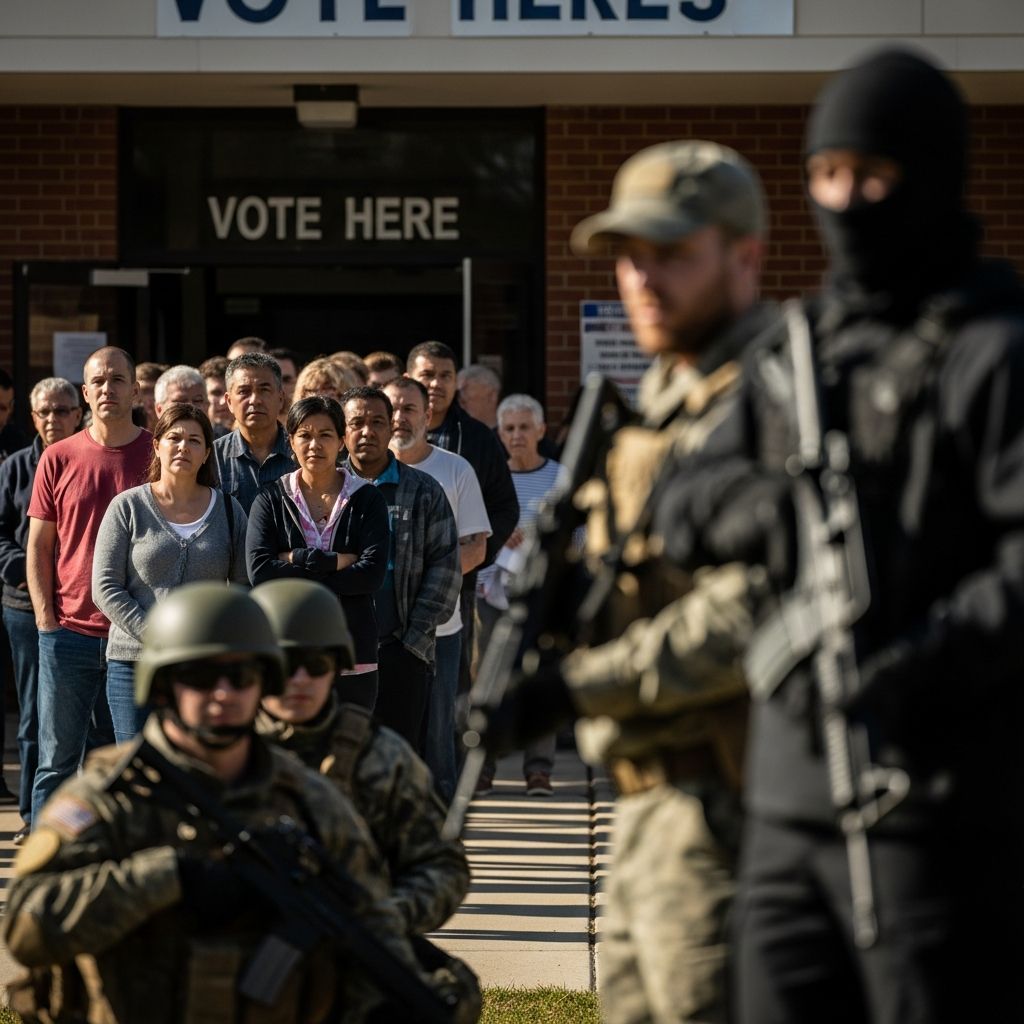
Armed individuals or groups near voting locations can create fear and disrupt the democratic process. Federal and state laws strictly prohibit actions that intimidate voters or interfere with elections, empowering citizens to act decisively.
Understanding Voter Intimidation Laws
Voter intimidation undermines the core of free elections. Under federal statutes like 18 U.S.C. § 594, it is illegal to intimidate, threaten, or coerce anyone to interfere with their right to vote in general elections. Similarly, 52 U.S.C. § 20511 criminalizes knowingly intimidating or threatening individuals for registering to vote or casting a ballot.
These laws cover a broad range of behaviors, including verbal threats, physical blockages, and displays of force. The Ku Klux Klan Act of 1871 (Section 2) further bans conspiracies by two or more persons using force or intimidation to prevent voting. States reinforce these protections; for instance, California deems carrying firearms near polling places, vote centers, or drop boxes a felony.
What Counts as Intimidation?
Not every presence of armed people violates the law, but specific actions cross the line. Common examples include:
- Brandishing firearms or openly displaying weapons in a menacing way near voters.
- Wearing military-style uniforms while confronting or questioning voters aggressively.
- Following voters to or from polling sites or noting license plate numbers intimidatingly.
- Spreading false claims about voting rules, fraud, or penalties to deter participation.
- Physically blocking access to entrances or creating delays through mass challenges without cause.
Courts have upheld that such conduct lacks First or Second Amendment protection when it aims to suppress votes. Groups acting like unauthorized militias face additional bans in all 50 states, prohibiting paramilitary activities that incite disorder.
Federal Restrictions on Military and Armed Forces
U.S. law tightly controls federal involvement at polls. 18 U.S.C. § 592 makes it a felony for military officers or personnel to bring troops or armed individuals to polling places unless repelling armed enemies. This stems from post-Civil War efforts to prevent federal overreach in civilian elections.
Federal agents cannot station themselves without authorization, echoing state rules like California’s ban on unapproved law enforcement or private guards near vote centers. Violations lead to fines, imprisonment up to five years, and disqualification from office.
State-Specific Safeguards
Laws vary by state but uniformly prioritize voter safety. In California, possessing guns within 100 feet of polling entrances or drop boxes is prohibited, as is hiring unauthorized security. Other states mirror this with disorderly conduct statutes or specific election codes banning interference during ballot counting.
| State Example | Key Prohibition | Penalty |
|---|---|---|
| California | Firearms at polls/drop boxes | Felony |
| Texas (ref.) | Mass groundless challenges | Criminal charges |
| Minnesota | Interfering with ballot counts | Disorderly conduct |
Election officials can halt excessive challenges if they foster intimidation, ensuring smooth voting.
Steps for Voters Facing Threats
If you spot armed groups, stay calm but document everything. Note descriptions, vehicle details, and behaviors without engaging. Report immediately to poll workers or election hotlines.
- Approach a poll worker or supervisor discreetly.
- Call local non-emergency police if safe, or 911 for imminent danger.
- Use state voter protection hotlines; many offer real-time support.
- Continue voting if possible—intimidators aim to deter you.
Do not argue or challenge them yourself; let authorities handle it to avoid escalation.
Guidance for Election Workers and Officials
Poll workers serve as the first line of defense. Train staff to recognize intimidation signs and respond protocol-driven. Key actions include:
- Document incidents with photos/videos if safe, noting times and witnesses.
- Contact senior elections officials for authorization on security needs.
- Issue public notices reminding groups of laws against armed presence.
- Coordinate with law enforcement pre-election via advisories like those from state attorneys general.
Proactive planning, such as Michigan’s AG memorandum, deters violations by clarifying enforcement.
Private Militias: Legal Status and Dangers
All states outlaw private militias performing law enforcement roles without sanction. Attire, formations, or commands mimicking official forces signal illegality. Historical cases, like the 1980s Republican Ballot Security Task Force, resulted in lawsuits for intimidating minority voters with armed patrols.
Multiple armed individuals amplify intimidation risks, triggering conspiracy charges under 18 U.S.C. § 241. Officials should probe for militia intent through statements or gear.
Civil Remedies and Enforcement
Beyond criminal penalties, civil suits under 42 U.S.C. § 1985(3) allow victims to sue conspirators for damages. Organizations like the ACLU provide know-your-rights resources, emphasizing no English test or citizenship quizzes at polls.
Enforcement has precedents: Texas courts convicted for improper voter challenges. Voters can file complaints with the DOJ’s Election Day Program.
Protecting Ballot Drop Boxes and Counting Centers
Intimidation extends to drop boxes and counting sites. Federal law covers these as extensions of voting rights. Loitering armed nearby violates intimidation statutes; states like California explicitly ban guns there.
Observers have rights but cannot interfere—Minnesota rules ensure public viewing doesn’t disrupt counts.
Frequently Asked Questions (FAQs)
Is open carry allowed at polling places?
No federal ban exists, but displaying guns intimidatingly violates intimidation laws. States often restrict firearms near polls.
Can I challenge voters’ eligibility?
Only authorized officials can; mass or baseless challenges are felonies.
What if groups claim Second Amendment rights?
The Second Amendment doesn’t protect voter intimidation; courts reject such defenses.
Who do I call for armed intimidation?
Poll worker first, then local police or state hotline. DOJ for federal issues.
Are uniforms or tactical gear illegal?
Not alone, but combined with threats or voter confrontation, yes—signals unlawful militia activity.
Empowering Safe Participation
Elections thrive when voters feel secure. Familiarity with laws and rapid reporting preserve integrity. Attorneys general advisories and hotlines enhance readiness. By acting informed, everyone upholds democracy.
References
- Protections Against Intimidation of Voters and Election Workers — Brennan Center for Justice. 2024. https://www.brennancenter.org/our-work/research-reports/california-protections-against-intimidation-voters-and-election-workers
- Fact Sheet: Protecting Against Voter Intimidation — Georgetown Law ICAP. 2024-08. https://www.law.georgetown.edu/icap/wp-content/uploads/sites/32/2024/08/Voter-Intimidation-Fact-Sheet.pdf
- 18 U.S. Code § 592 – Troops at polls — Cornell Law School LII. N/A. https://www.law.cornell.edu/uscode/text/18/592
- Election Protection: Preventing and Responding to Illegal Armed Intimidation — Everytown Law. 2024. https://everytownlaw.org/report/election-protection/
- Is Voter Intimidation Illegal? What Should I Do If I Experience It? — Campaign Legal Center. 2024. https://campaignlegal.org/update/voter-intimidation-illegal-what-should-i-do-if-i-experience-it
- Guide to Laws Against Intimidation of Voters and Election Workers — Brennan Center for Justice. 2024. https://www.brennancenter.org/our-work/research-reports/guide-laws-against-intimidation-voters-and-election-workers
Similar Articles








Read full bio of medha deb


