
Arkansas Service Dog and ESA Rights Guide
Comprehensive guide to Arkansas laws protecting service dogs and emotional support animals in public, housing, and workplaces.
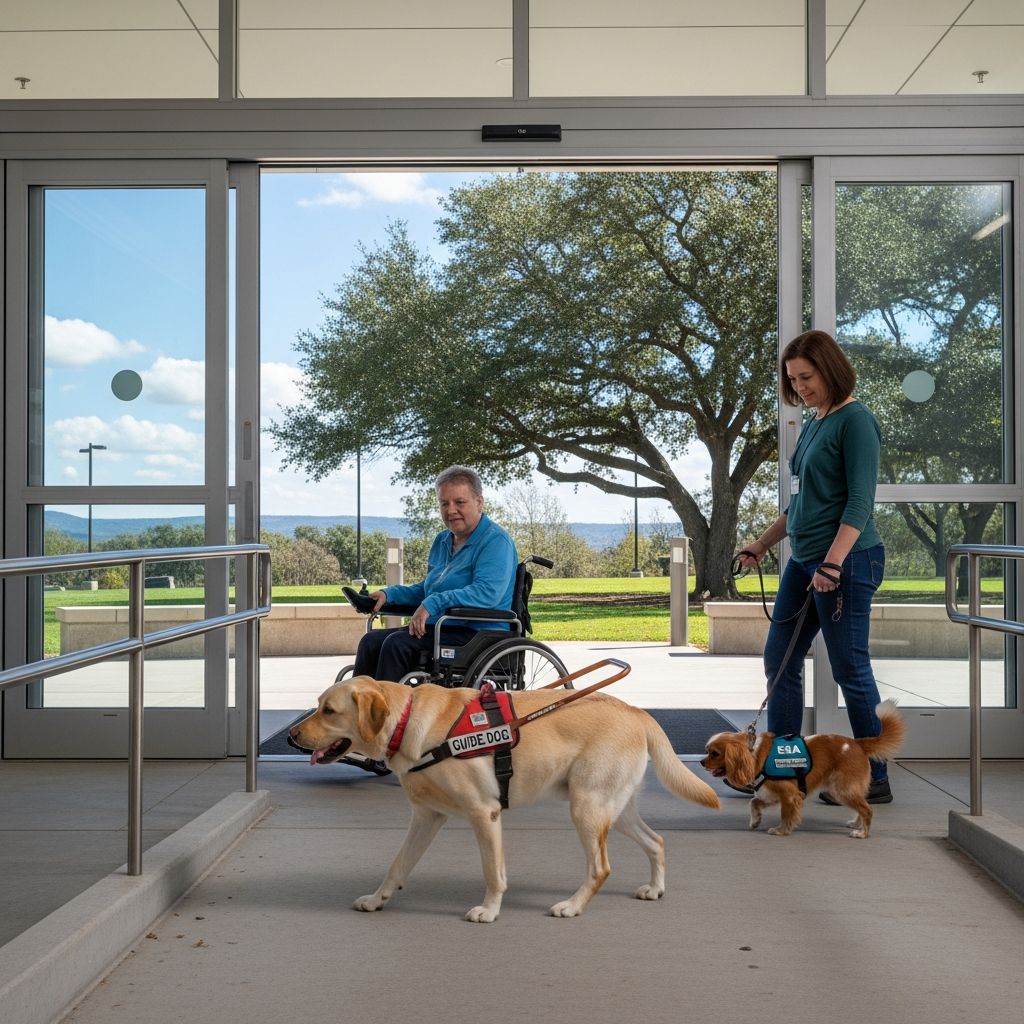
Individuals with disabilities in Arkansas benefit from robust protections for service animals under both state statutes and federal regulations like the Americans with Disabilities Act (ADA). These laws ensure equal access to public spaces, housing, and employment while distinguishing service dogs from emotional support animals (ESAs). This guide explores key provisions, handler responsibilities, business obligations, and penalties for violations.
Defining Service Animals Under Arkansas and Federal Law
Arkansas aligns closely with the ADA in recognizing service animals as dogs individually trained to perform specific tasks that mitigate a person’s disability. These tasks must directly relate to conditions such as visual, hearing, physical, psychiatric, or cognitive impairments. State law, particularly Arkansas Code § 20-14-304, grants physically disabled persons the right to be accompanied by service animals in public ways, places, and accommodations without extra charges.
- Dogs and Miniature Horses: The ADA permits both, but Arkansas primarily focuses on dogs, extending ADA protections to miniature horses where applicable.
- Training Requirements: Animals must be task-trained; mere presence or emotional comfort does not qualify.
- Service Dogs in Training: Arkansas grants these the same public access rights as fully trained dogs, provided they remain under control.
Psychiatric service dogs, which assist with mental health tasks like interrupting self-harm or retrieving medication, receive ADA coverage even if state law emphasizes physical disabilities.
Public Access Protections for Service Animals
Service animal handlers in Arkansas enjoy broad access to public facilities. Businesses and public entities must allow entry to places like restaurants, stores, hotels, theaters, medical offices, and government buildings.
| Public Venue Type | Access Granted | Key Restrictions |
|---|---|---|
| Restaurants & Retail | Full access where public allowed | None, unless out of control |
| Hospitals & Clinics | Allowed in patient areas | Exclusion if infection risk |
| Hotels & Lodging | No extra pet fees | Pay for damages only |
| Public Transportation | Taxis, buses, trains | Under handler control |
Staff may ask only two questions: (1) Is this a service animal required for a disability? (2) What task does it perform? No proof, certification, or demonstrations are required. Animals must be harnessed, leashed, or tethered unless it interferes with tasks; voice control suffices otherwise.
Housing Rights for Assistance Animals
The federal Fair Housing Act (FHA) and Arkansas law mandate reasonable accommodations for assistance animals, encompassing both service dogs and ESAs. Landlords cannot enforce no-pet policies, pet fees, or deposits against qualified individuals. Handlers need only provide reliable documentation, such as a letter from a healthcare provider confirming the need.
- ESA Qualification: Animals providing emotional support to alleviate disability symptoms, without task training.
- No Size/Breed Limits: Applies to any reasonable animal, though dogs predominate.
- Damage Liability: Tenants cover repairs caused by their animal.
Common housing includes apartments, condos, and single-family rentals. HOAs must comply similarly.
Workplace Accommodations for Service Animals
Under the ADA, employers with 15+ employees must reasonably accommodate service animals unless it causes undue hardship. Handlers bear full responsibility for supervision, feeding, grooming, and veterinary care. Misbehavior justifies exclusion, but the employee retains job access without the animal.
Arkansas extends training dogs similar rights, provided they do not disrupt operations. Local licensing applies universally, including to service animals in Conway.
Distinctions: Service Animals vs. Emotional Support Animals
Service animals receive public access rights; ESAs do not, except in housing and air travel (with DOT rules).
| Aspect | Service Animal | Emotional Support Animal (ESA) |
|---|---|---|
| Public Access | Yes, all ADA places | No |
| Housing | Yes | Yes, as assistance animal |
| Training Needed | Specific tasks | No, emotional support |
| Air Travel | Yes (cabin) | Limited post-2021 rules |
| Workplace | Reasonable accommodation | Generally no |
Handler Responsibilities and Control Standards
Owners must ensure animals are housebroken, non-aggressive, and under control at all times. Exclusion grounds include threats to health/safety, fundamental alteration of operations, or lack of control. Arkansas requires payment for damages caused.
- Vaccinations and licensing per local laws.
- No special fees for access.
- Trainers share rights during training.
Penalties for Harming Service Animals and Fraud
Purposely killing or injuring a service animal or search-and-rescue dog constitutes a Class D felony. Misrepresenting a pet as a service animal incurs civil penalties up to $250 per violation. Fraudulent sales of fake certifications also penalized.
Drivers must yield to pedestrians with guide dogs.
Special Protections for Vulnerable Populations
Homeless services may verify ESA needs annually via clinical evaluation. Search-and-rescue dogs receive identical protections.
Frequently Asked Questions
Can businesses charge extra for service animals?
No, but handlers pay for damages.
Do ESAs get public access like service dogs?
No, only housing and limited travel.
Is certification required in Arkansas?
No; only two inquiries allowed.
What if my service dog misbehaves?
Business can exclude it, but not you.
Do local dog laws apply to service animals?
Yes, licensing and vaccines required.
Are miniature horses allowed?
Under ADA yes; state focuses on dogs.
Recent Legislative Updates
Act 268 reinforces misrepresentation penalties and clarifies ESA fraud. Laws remain stable as of 2023, aligning with 2010 ADA revisions.
This framework empowers disabled Arkansans while protecting public safety. Consult legal experts for personalized advice.
References
- What Employers Should Know About Service Animals — Law Group NWA. 2023. https://lawgroupnwa.com/what-employers-should-know-about-service-animals/
- Arkansas Laws on Service Dogs and Emotional Support Animals — Nolo. 2024. https://www.nolo.com/legal-encyclopedia/arkansas-laws-on-service-dogs-and-emotional-support-animals.html
- Arkansas Service Dog Laws — USA Service Dog Registration. 2020. https://usaservicedogregistration.com/statelaws/arkansas-service-dog-laws/
- AR – Arkansas Assistance Animal/Guide Dog Laws — Animal Legal & Historical Center, Michigan State University College of Law. 2024. https://www.animallaw.info/statute/ar-assistance-animal-arkansas-assistance-animalguide-dog-laws
- Service Animal Information and Frequently Asked Questions — University of Central Arkansas. 2024. https://uca.edu/oars/faculty-resources/service-animals/
- ADA Requirements: Service Animals — U.S. Department of Justice. 2010-12-28. https://www.ada.gov/resources/service-animals-2010-requirements/
Similar Articles








Read full bio of medha deb


