
Arkansas Car Accident Laws: 2025 Essential Guide
Essential guide to Arkansas vehicle collision rules, insurance mandates, fault rules, and claim deadlines for drivers and victims.
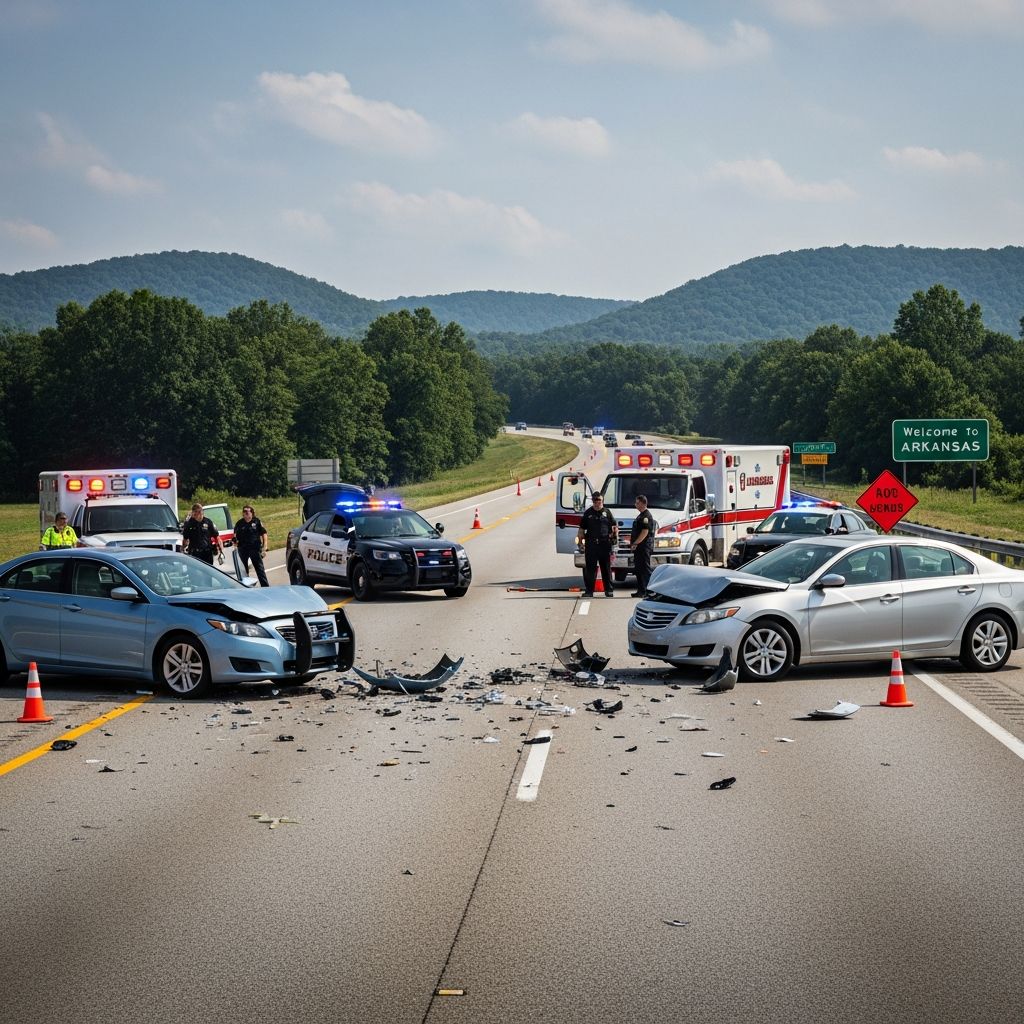
Vehicle collisions in Arkansas follow specific legal frameworks designed to ensure accountability, protect victims, and maintain road safety. Understanding these rules helps drivers respond appropriately after a crash and pursue rightful compensation when harmed.
Immediate Actions After a Collision
Following a car accident in Arkansas requires prompt and responsible steps to comply with state statutes and safeguard all parties involved. Drivers must first prioritize safety by checking for injuries and calling emergency services if needed.
- Stop the vehicle immediately at or near the scene without blocking traffic more than necessary.
- Exchange contact and insurance details with other drivers involved.
- Move the vehicle off the roadway unless it is disabled or someone is visibly injured.
- Document the scene with photos of damage, positions, and road conditions.
These actions prevent legal penalties and preserve evidence crucial for insurance claims or lawsuits.
Reporting Requirements for Crashes
Arkansas mandates official reporting for certain accidents to the Department of Finance and Administration. Submit a Safety Responsibility SR-1 form within 30 days if property damage exceeds $1,000 or injuries/fatalities occur.
Failure to report can lead to license suspension. For minor incidents with damage under $1,000 and no injuries, reporting is not required, but documenting privately remains advisable.
| Accident Type | Reporting Threshold | Deadline |
|---|---|---|
| Property Damage Only | Over $1,000 | 30 days |
| Injuries or Fatalities | Any amount | 30 days |
| Minor Damage, No Injuries | Under $1,000 | Not required |
Insurance Mandates for Arkansas Drivers
All motorists in Arkansas must carry minimum liability coverage to operate legally. The state sets these limits to cover bodily injuries and property damage caused to others.
- $25,000 bodily injury per person
- $50,000 bodily injury per accident
- $25,000 property damage liability
Additionally, policies often include uninsured/underinsured motorist (UIM) and personal injury protection (PIP) coverages, though not strictly mandatory. These provide safeguards against uninsured drivers or insufficient policies. Driving without required insurance invites fines, license revocation, or jail time.
Negligence: Foundation of Liability Claims
Most Arkansas car accident cases hinge on proving negligence, where one driver’s failure to exercise reasonable care causes harm. Plaintiffs must demonstrate four key elements: duty, breach, causation, and damages.
- Duty: All drivers owe a duty to operate safely, obeying traffic laws.
- Breach: Examples include speeding, distracted driving (texting banned statewide, handheld devices restricted for younger drivers), drowsy or impaired operation, or ignoring signals.
- Causation: Linking the breach directly to the crash, often requiring witness statements, police reports, or expert analysis.
- Damages: Quantifiable losses like medical bills, lost wages, vehicle repairs, and pain/suffering.
Strict liability applies rarely, such as for defective vehicle parts, bypassing negligence proof.
Modified Comparative Negligence Rule
Arkansas adheres to modified comparative fault under Ark. Code § 16-64-122, allowing recovery if the plaintiff is less than 50% at fault. Damages reduce proportionally to the plaintiff’s fault percentage; over 50% bars recovery entirely.
For instance, if damages total $100,000 and you are 40% at fault, compensation drops to $60,000. This system promotes fairness by apportioning responsibility accurately.
| Your Fault % | Recovery Allowed? | Example: $10K Damages |
|---|---|---|
| 0-49% | Yes, reduced | $6,000 (40% fault) |
| 50%+ | No | $0 |
Time Limits for Filing Claims
The statute of limitations provides three years from the accident date to file personal injury or property damage lawsuits (Ark. Code § 16-56-105). Missing this deadline typically results in case dismissal.
Exceptions may extend timelines for minors or undiscovered injuries, but prompt action is critical. Consult an attorney early to preserve rights.
Consequences of Hit-and-Run Incidents
Leaving the scene of an accident with property damage over $1,000 is a Class A misdemeanor; over $10,000 escalates to a Class D felony. Even minor damage constitutes a Class B misdemeanor.
Penalties underscore Arkansas’s emphasis on accountability, protecting victims’ ability to seek redress.
Special Rules: Distracted and Impaired Driving
Arkansas bans texting while driving for all, handheld phone use for drivers under 21, and cell phone use entirely for those under 18. Violations carry fines up to $500 and factor into fault assessments.
Dram shop laws hold alcohol vendors liable if they serve visibly intoxicated patrons who later cause crashes.
Compensation Available to Victims
Successful claims cover economic damages (medical costs, repairs, lost income) and non-economic (pain, emotional distress). In severe cases, punitive damages may punish egregious conduct.
Property damage claims proceed separately, often directly against the at-fault driver’s insurance, unaffected by no-fault rules since Arkansas is a tort state.
Frequently Asked Questions
What should I do right after an Arkansas car crash?
Ensure safety, call police if injuries or major damage exist, exchange info, and document everything. Move vehicle if safe.
Is Arkansas a no-fault insurance state?
No, it’s an at-fault tort state using modified comparative negligence.
How much insurance is required in Arkansas?
25/50/25 minimum: $25K per person injury, $50K per accident injury, $25K property.
What’s the deadline to sue after a crash?
Three years from the accident date.
Can I recover if partially at fault?
Yes, if under 50% fault; award reduced by your percentage.
Navigating Claims and Legal Support
Insurance companies often minimize payouts, making attorney involvement vital for complex cases involving disputed fault or severe injuries. Professionals handle negotiations, evidence gathering, and litigation if settlements fail.
Arkansas’s framework balances victim protection with driver responsibility, but success demands knowledge of these laws. Stay informed to protect your rights on the road.
References
- Arkansas Code § 27-53-102 (2024) – Accidents involving damage — Justia Law. 2024. https://law.justia.com/codes/arkansas/title-27/subtitle-4/chapter-53/subchapter-1/section-27-53-102/
- What Are Arkansas Car Accident Laws? — Oliver Law Firm. Accessed 2026. https://www.oliverlawfirm.com/blog/what-are-laws-for-car-accidents-in-arkansas/
- Is Arkansas a No-Fault State for Motor Vehicles? — Harris Law Firm. Accessed 2026. https://harrislawfirm.com/articles/is-arkansas-a-no-fault-state/
- Arkansas Car Accident Laws to Keep in Mind — Romc Law. Accessed 2026. https://romclaw.com/arkansas-car-accident-laws-to-keep-in-mind/
- Arkansas Car Accident Laws — Nolo. Accessed 2026. https://www.nolo.com/legal-encyclopedia/arkansas-car-accident-laws.html
- Safety Responsibility — Arkansas DFA. Accessed 2026. https://www.dfa.arkansas.gov/office/driver-services/safety-responsibility-2/
Similar Articles








Read full bio of Sneha Tete


