
Arizona Car Accident Laws: What Every Driver Needs To Know
Essential guide to Arizona's car accident rules, from fault determination to insurance requirements and timelines for claims.
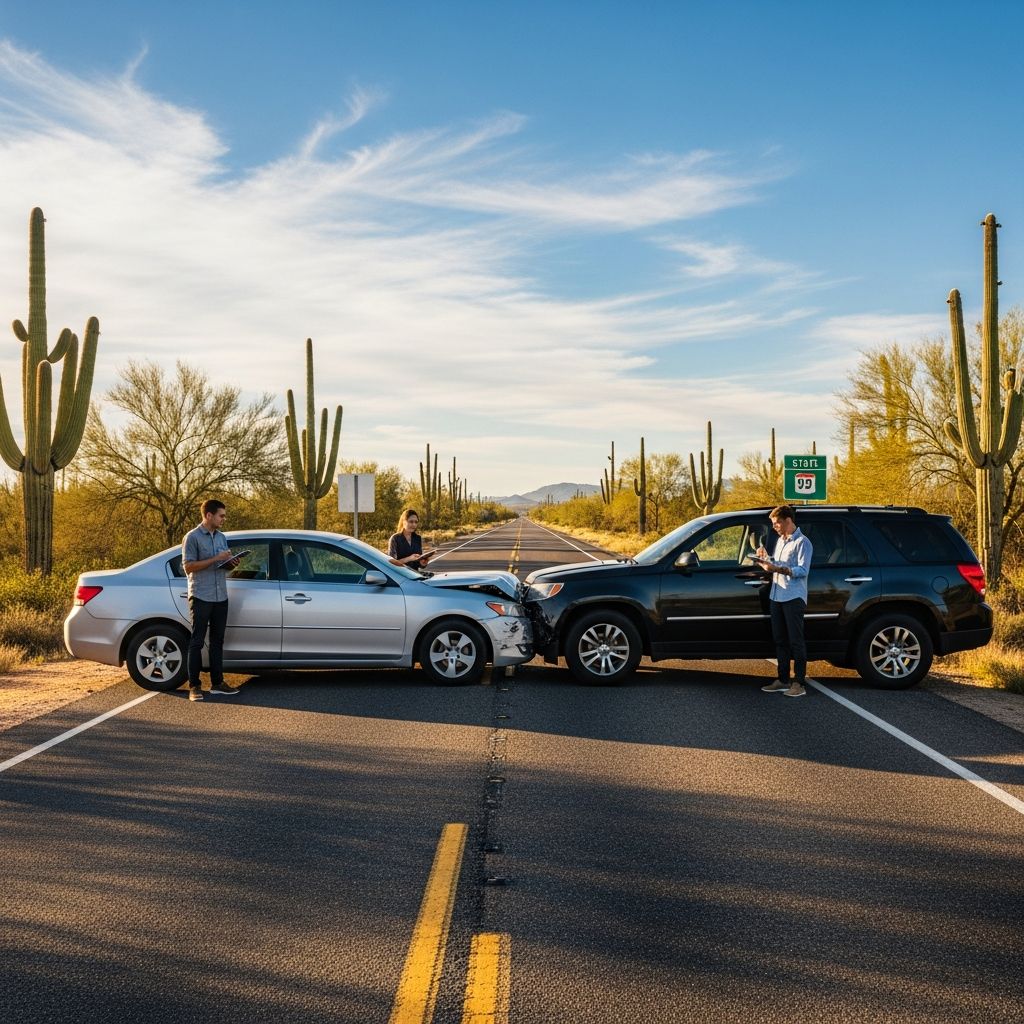
Arizona’s roadways see thousands of collisions annually, making it crucial for drivers to understand state-specific regulations governing these incidents. This guide breaks down key legal principles, from determining fault to pursuing compensation, empowering you to protect your rights after a crash.
Understanding Fault in Arizona Collisions
Arizona operates under a
pure comparative negligence
system, allowing injured parties to recover damages regardless of their fault percentage. Unlike modified systems that bar recovery above 50% fault, Arizona reduces awards proportionally. For instance, if damages total $100,000 and you’re deemed 70% responsible, you receive $30,000.This framework encourages thorough investigations into all contributing factors, such as speeding, distraction, or road conditions. Courts assign fault percentages based on evidence like police reports, witness statements, and expert reconstructions.
- Pure comparative negligence promotes fairness by not completely denying claims for minor errors.
- Insurance adjusters often contest fault to minimize payouts, underscoring the value of legal representation.
- Even high fault percentages (up to 99%) permit some recovery, benefiting partially responsible victims.
Time Limits for Filing Injury Claims
The
statute of limitations
for personal injury claims from car accidents is strictly two years from the incident date under ARS 12-542. Missing this deadline forfeits your right to sue, regardless of injury severity.Exceptions may apply for minors or discovery of latent injuries, but these are rare. Prompt action preserves evidence like vehicle data and witness memories, strengthening cases. Consult an attorney immediately to evaluate timelines and gather documentation.
| Claim Type | Deadline | Key Statute |
|---|---|---|
| Personal Injury | 2 years from accident | ARS 12-542 |
| Property Damage | 2 years from accident | ARS 12-542 |
| Wrongful Death | 2 years from death | ARS 12-551 |
Mandatory Insurance Coverage Requirements
All Arizona drivers must carry minimum liability insurance: $25,000 bodily injury per person, $50,000 per accident, and $15,000 property damage (25/50/15). These limits often prove inadequate for serious crashes, covering only basic costs.
Liability pays for others’ injuries and damage you cause; it excludes your own losses. Additional coverages like collision, comprehensive, and uninsured motorist protection are advisable. Driving without required insurance risks license suspension, fines, and vehicle impoundment.
- Bodily Injury: Covers medical bills, lost wages for others.
- Property Damage: Repairs to vehicles or structures.
- Many policies meet minimums only, leaving gaps for severe injuries.
Immediate Actions Required After a Crash
Arizona law mandates specific duties post-collision to avoid hit-and-run charges. Under ARS 28-661, drivers must immediately stop at or near the scene and return if needed.
For accidents with injury, death, or occupied vehicle damage:
- Provide name, address, vehicle registration, and driver’s license to involved parties.
- Render reasonable aid to injured persons, including calling 911.
- Notify police if injury or death occurs.
Property-only damage requires locating the owner and providing contact details if unoccupied. Failure to comply escalates to criminal penalties.
Consequences of Fleeing the Scene
Leaving without fulfilling duties constitutes a hit-and-run, ranging from misdemeanor to felony. Misdemeanors apply to property damage; felonies for injuries or fatalities.
Penalties include:
- Class 1 Misdemeanor (property damage): Up to 6 months jail, $2,500 fine.
- Class 5 Felony (injury): 0.5-2.5 years prison, license revocation up to 5 years.
- Class 3 Felony (death): 3.5-7 years prison, 10-year license revocation.
Civil liabilities compound criminal charges, with victims pursuing full damages.
When and How to Report Incidents
Drivers aren’t statutorily required to file reports, but police must for injuries, deaths, over $1,000-$2,000 property damage, or citations. Obtain the official report for insurance and claims; it’s available via the Arizona Department of Public Safety.
Report promptly to secure accident numbers and diagrams aiding fault determination.
Steps to Build a Strong Compensation Claim
After ensuring safety, document everything: photos of damage, injuries, skid marks, and license plates. Collect witness contacts and avoid admitting fault.
- Seek medical attention immediately, even for minor symptoms.
- Notify your insurer and the at-fault party’s if identified.
- Gather evidence and file police report if applicable.
- Contact a personal injury attorney to negotiate or litigate.
Claims cover medical expenses, lost income, pain, and property repair. Arizona’s fault system directs claims to the responsible party’s insurer.
No-Fault vs. Fault-Based Systems Explained
Arizona is
not a no-fault state
; it’s fault-based, meaning the at-fault driver’s insurance primarily responds. No-fault states require personal coverage first regardless of blame.This setup allows direct pursuit of full damages from culpable parties but demands proving fault, often through litigation.
Common Damages Recoverable in Claims
Victims seek economic and non-economic damages:
- Economic: Bills, wages, future care.
- Non-Economic: Pain, suffering, emotional distress.
- Punitive damages rare, only for egregious conduct.
Pure comparative rules adjust totals by fault share.
Role of Police and Official Reports
Police investigations produce critical reports detailing fault opinions, diagrams, and citations. Request copies early; they’re admissible in court and influence settlements.
Seeking Legal Help: When and Why
Insurance companies prioritize profits, often undervaluing claims. Attorneys level the field, handling investigations, negotiations, and trials on contingency—no upfront fees.
Engage counsel for disputed fault, severe injuries, or deadline pressures.
Frequently Asked Questions About Arizona Car Accidents
Can I recover if mostly at fault?
Yes, under pure comparative negligence, recovery reduces by your fault percentage, even over 50%.
What is the injury claim deadline?
Two years from the accident date per ARS 12-542.
Are minimum insurance limits sufficient?
Often not for major crashes; consider higher coverage or uninsured motorist protection.
What happens if I leave the scene?
Hit-and-run charges from misdemeanor to felony, plus license revocation.
Is Arizona no-fault?
No, it’s fault-based; at-fault insurance pays.
References
- Arizona Car Accident Guide: Laws, Deadlines, and Your Rights — Game Time Attorneys. 2026-01-05. https://www.gametimeattorneys.com/blog/arizona-car-accident-guide
- Arizona Car Accident Laws — Stone Rose Law. N/D. https://www.stoneroselaw.com/blog/blog/arizona-car-accident-laws/
- Arizona Car Accident Laws Explained — Esquire Law. N/D. https://esquirelaw.com/blog/what-are-the-arizona-car-accident-laws/
- Arizona Car Accident Laws — Sargon Law Group. N/D. https://www.sargonlawgroup.com/arizona-car-accident-laws
- Is Arizona a No-Fault State for Car Accidents? — Bleaman Law Firm. 2026. https://www.bleamanlawfirm.com/blog/is-arizona-a-no-fault-state-for-car-accidents/
- ARS 28-661: Accident and Hit-and-Run Duties — Arizona Legislature. N/D. https://www.azleg.gov/viewdocument/?docName=https%3A%2F%2Fwww.azleg.gov%2Fars%2F28%2F00661.htm
- Arizona Car Auto Accident Laws — Attorney at Law Magazine. 2026. https://attorneyatlawmagazine.com/public-articles/personal-injury/car-accidents/arizona-car-auto-accident-laws
Similar Articles








Read full bio of Sneha Tete


