
Arizona Burial and Cremation Regulations
Comprehensive guide to Arizona's rules on burial, cremation, ashes handling, and final disposition rights for families.
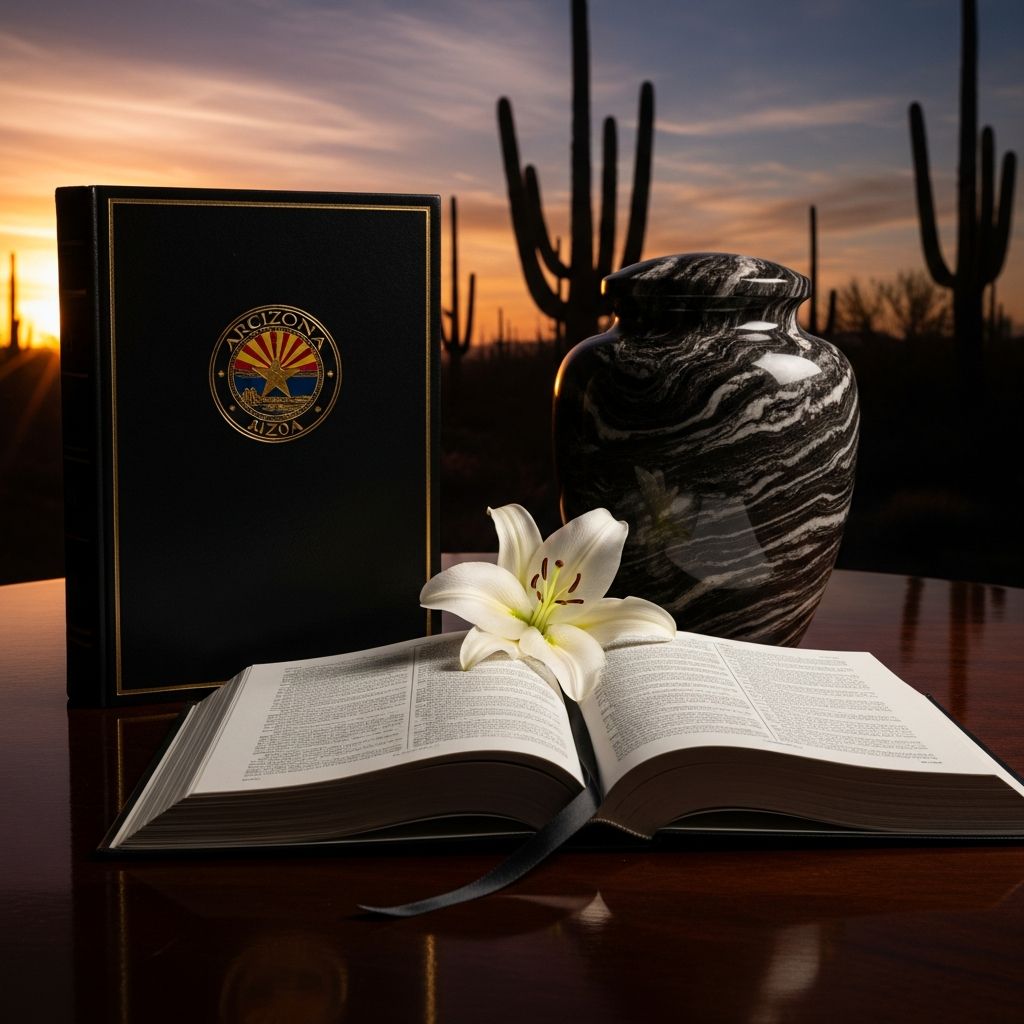
Arizona provides clear legal frameworks for handling human remains after death, balancing family rights, public health, and crematory operations. These rules ensure respectful and orderly final dispositions, whether through burial or cremation.
Legal Foundations for Final Disposition
Arizona statutes outline responsibilities for burying or cremating remains, prioritizing the deceased’s wishes followed by family members. Under A.R.S. § 36-831, the duty falls first to the person designated by the decedent in a legally valid document, then to close relatives in a specific order.
- Person named by the deceased in writing.
- Surviving spouse.
- Adult children.
- Parent.
- Adult sibling.
- Other specified kin or guardian.
If no one steps forward, the county where death occurred assumes responsibility, arranging burial or placement in a permanent crypt. This hierarchy prevents disputes, as seen in cases like Ghostley, where courts upheld cremation based on oral wishes despite family objections, absent overriding hardship.
Authorizing Cremation Processes
Cremation requires explicit approval before proceeding. A county medical examiner must issue approval, confirming no further investigation is needed. An authorizing agent—typically next-of-kin—signs a form, with providers documenting oral consents in writing, including agent details, relation, date, and recorder’s name.
The deceased can pre-authorize via a witnessed or notarized document under A.R.S. §§ 32-1365.01 and 32-1365.02. Agents must act within 15 days per state guidelines. Funeral homes verify identities and obtain government-issued cremation permits.
| Priority Order for Authorization | Description |
|---|---|
| 1. Designated Person | Named in decedent’s document |
| 2. Spouse | Surviving legal spouse |
| 3. Adult Children | Majority agreement if multiple |
| 4. Parent | Either surviving parent |
| 5. Adult Sibling | Adult brother or sister |
Embalming and Preparation Rules
Embalming is not mandatory unless burial or cremation is delayed beyond 24 hours without refrigeration. Bodies must be handled promptly to comply with health standards. Cremation providers use combustible containers, excluding metal or fume-emitting materials.
Funeral establishments designate a responsible cremationist for oversight. Body fluids are generally not cremated unless explicitly requested by the agent with crematory consent.
Crematory Operational Standards
Arizona regulates crematories strictly to ensure dignity and safety. Containers must bear identification: decedent’s name and address, agent’s details, service provider, permit, and a metal disk placed with remains.
Crematories process one set of remains at a time, avoiding commingling. Post-cremation, they remove residues, place cremains in temporary urns or containers with secure lids, filling extra space with non-mixing packing. Prosthetics or bridgework are disposed unless otherwise directed.
Employees follow universal precautions to prevent disease transmission. Viewing the cremation chamber is optional; facilities disclose policies upfront.
Handling and Disposition of Cremated Remains
Cremated remains (cremains) have flexible disposition options. No state laws restrict keeping or scattering ashes privately. For land scattering or burial, obtain landowner permission; public lands may need permits.
Urns are not required by law, though transport services may specify types. Crematories return excess cremains in separate containers or dispose with permission. If unclaimed after 30 days, agents receive notice; after 90 days, legal disposal follows.
Agents indemnify crematories for unclaimed remains disposition. Families direct final placement via pre-planning documents or post-death agreements.
Burial-Specific Guidelines
Traditional burials follow similar authorization hierarchies. Without timely embalming or refrigeration, delays beyond 24 hours violate health codes. Cemeteries enforce local rules on vaults, markers, and plots.
Counties handle indigent burials in permanent crypts if family cannot. Respecting decedent wishes remains paramount unless unreasonable hardship applies.
Family Rights and Dispute Resolution
The responsible party must honor known decedent preferences if feasible. Disputes, like burial vs. cremation, may require court intervention, prioritizing evidence of wishes over emotional objections.
Pre-planning via durable documents avoids conflicts, specifying burial, cremation, or donation. Legal adults can appoint agents for these decisions.
Practical Considerations for Families
Select licensed providers; Arizona requires funeral homes to detail services and costs upfront. Compare direct cremation options for affordability, ensuring compliance with identification and permit rules.
- Verify medical examiner approval.
- Secure written authorizations promptly.
- Discuss urn and transport needs.
- Plan scattering locations legally.
Costs vary; cremation often proves economical, with no casket mandates beyond combustibility.
Frequently Asked Questions
Who decides on burial or cremation in Arizona if no will exists?
The priority list starts with spouse, then adult children, parents, siblings. County intervenes if needed.
Is embalming required before cremation?
No, unless delayed over 24 hours without refrigeration.
Can I scatter ashes anywhere in Arizona?
No state restrictions, but private land needs owner permission; check local public land rules.
What if cremains are not picked up?
Notice after 30 days; disposal after 90 days.
Must crematories allow viewing the process?
Not required; they must disclose policies.
Can the deceased pre-authorize cremation?
Yes, via notarized or witnessed document.
References
- Legal Practices for Cremation Burials – Phoenix, AZ — Whitney Murphy Funeral Home. 2024. https://www.whitneymurphyfuneralhome.com/legal-practices-for-cremation-burials
- Arizona Cremation Laws and Regulations in 2023 — Smart Cremation. 2023. https://www.smartcremation.com/articles/arizona-cremation-laws/
- Burial and Cremation Laws in Arizona — Nolo. 2024. https://www.nolo.com/legal-encyclopedia/burial-cremation-laws-arizona.html
- Ariz. Admin. Code § R4-12-613 – Requirements for a Funeral Establishment That Provides for Cremation — Cornell Law School. 2024. https://www.law.cornell.edu/regulations/arizona/Ariz-Admin-Code-SS-R4-12-613
- Chapter 0138 – 511R – S Ver of HB2272 — Arizona Legislature. 2014. https://www.azleg.gov/legtext/51leg/1r/laws/0138.htm
- Arizona Duty and Power to Bury or Cremate — Berk Law Group. 2024. https://berklawgroup.com/our-services/estate-trust-litigation/duties-and-powers-to-bury-or-cremate/
- 32-1399 – Crematories; rules; standards of practice — Arizona Legislature. 2024. https://www.azleg.gov/ars/32/01399.htm
Similar Articles








Read full bio of medha deb


