
Arbitrary Detention: A Violation of Asylum Seekers’ Rights
Examining how arbitrary ICE detention violates asylum seekers' legal rights.
The Foundational Right to Seek Refuge
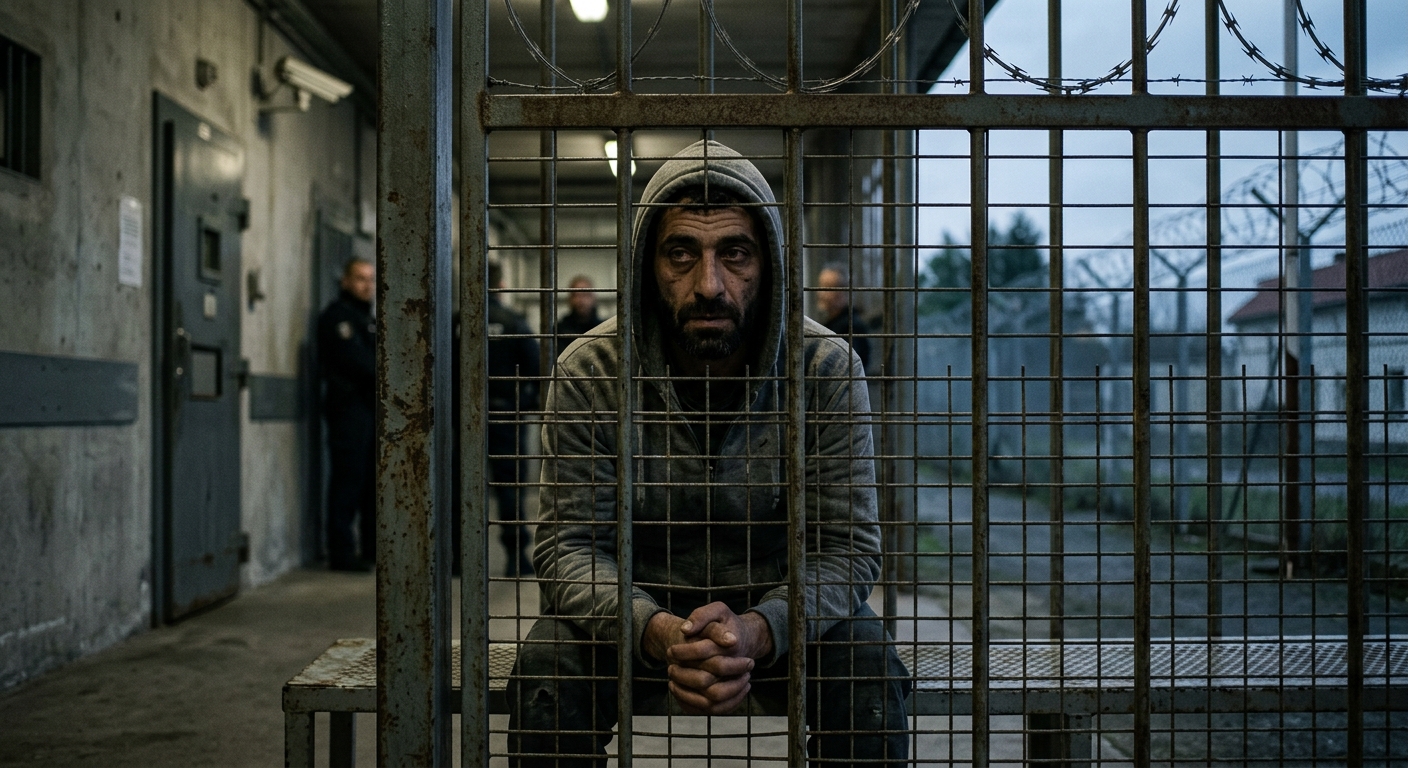
For decades, the United States has positioned itself as a global beacon of hope for individuals fleeing political violence, severe persecution, and systemic abuse. The right to seek asylum is firmly enshrined not only in domestic legislation but also in international human rights treaties. However, the reality for many vulnerable individuals seeking refuge at U.S. borders is starkly different from the nation’s historical ideals of liberty and justice. Upon presenting themselves at an official port of entry and following all necessary legal protocols, thousands of asylum seekers find themselves subjected to indefinite incarceration.
Despite passing rigorous initial screenings designed to identify legitimate claims, these individuals are frequently detained in maximum-security environments by U.S. Immigration and Customs Enforcement (ICE). This practice of arbitrarily imprisoning asylum seekers represents a profound deviation from established administrative directives and constitutional norms. Utilizing detention primarily as a deterrent, rather than a necessary administrative mechanism, has sparked intense legal battles. It raises critical questions regarding due process, human rights violations, and the ethical foundations of the modern U.S. immigration enforcement apparatus.
Navigating Expedited Removal: The Credible Fear Standard
The journey of an asylum seeker arriving at the U.S. border is governed by a complex and fast-paced administrative framework known as “expedited removal.” Under this procedure, border enforcement officers possess the authority to rapidly deport noncitizens who arrive without proper documentation. Nevertheless, a vital legal safeguard exists for those expressing a genuine fear of returning to their home countries: the credible fear interview.
Conducted by specially trained asylum officers from U.S. Citizenship and Immigration Services (USCIS), this interview serves as a critical initial screening mechanism. To pass this intense assessment, an individual must demonstrate a “significant possibility” that they could establish eligibility for asylum, withholding of removal, or protection under the Convention Against Torture. This is a rigorous evaluation that analyzes the individual’s credibility, the consistency of their trauma narrative, and the objective human rights conditions prevailing in their country of origin.
If an asylum officer determines that the applicant possesses a credible fear, the expedited removal process is immediately halted. The individual is subsequently placed into standard removal proceedings before an immigration judge, where they have the formal opportunity to apply for asylum and present comprehensive evidence. Passing the credible fear interview fundamentally alters the legal posture of the applicant—they are no longer subject to immediate deportation but are officially recognized as possessing a prima facie claim to protection. Despite achieving this crucial milestone, the next phase of their journey frequently plunges them into arbitrary and prolonged civil detention.
The 2009 ICE Parole Directive: A Blueprint for Due Process
Recognizing that the long-term detention of bona fide asylum seekers is generally neither necessary nor in the public interest, ICE issued a pivotal policy memorandum in December 2009. Formally known as Directive 11002.1, or the “Parole Directive,” this comprehensive framework was established to guide ICE field officers in exercising their discretion to release arriving individuals who have successfully passed their credible fear screenings.
The core philosophy anchoring the 2009 Directive is that civil immigration detention should never be utilized as a punitive measure. If an asylum seeker has successfully proven they have a legitimate, credible fear of persecution, ICE is instructed to grant “humanitarian parole.” This designation allows the individual to live freely in the community alongside their families or sponsors while their complex immigration case proceeds through the heavily backlogged court system.
To qualify for parole under this specific directive, an asylum seeker must thoroughly satisfy three primary criteria:
- Identity Verification: The individual must establish their identity to the complete satisfaction of immigration authorities. This is typically achieved by presenting valid passports, national identification cards, original birth certificates, or sworn affidavits from credible sources.
- Flight Risk Assessment: The applicant must demonstrate that they do not pose a flight risk and will reliably appear for all scheduled immigration court hearings. This requirement is frequently satisfied by showing strong community ties or securing a dedicated sponsor residing in the United States.
- Public Safety: The individual must definitively prove that they do not pose any danger to the community or to national security. A thorough background check is conducted to ensure compliance.
When these three conditions are met, the Directive dictates that parole should generally be granted. For years, this policy was celebrated as a victory for due process, closely aligning U.S. enforcement practices with international guidelines which emphasize that asylum seekers should only be detained as an exceptional, strictly necessary measure of last resort.
The Ideological Shift Toward Blanket Incarceration
Despite the clear, written mandates of the 2009 Parole Directive, the landscape of immigration enforcement experienced a drastic ideological shift in the late 2010s. Operating under the guise of heightened border security and aggressive deterrence, administrative enforcement practices morphed drastically, resulting in what became an effective de facto ban on humanitarian parole for arriving asylum seekers.
ICE field offices across the country began systematically ignoring the individualized, case-by-case assessment requirements explicitly mandated by the Directive. Instead of carefully weighing the specific circumstances of each applicant—such as their verified identity, robust sponsorship, and complete lack of criminal history—supervising officers started issuing blanket denials. Data collected by legal advocacy organizations revealed that parole grant rates plummeted drastically, falling from over 80% in the early 2010s to near absolute zero in several key geographic jurisdictions by 2018.
This unwritten policy shift exacted a devastating human toll. Asylum seekers—many of whom were survivors of severe torture, political persecution, or systemic domestic violence—found themselves locked behind bars for months or even years without justification. The physical conditions inside these civil detention facilities frequently mirrored those of maximum-security criminal prisons, complete with punitive solitary confinement, chronically inadequate medical care, and severe restrictions on outside communication.
The profound psychological impact of indefinite incarceration on highly traumatized populations cannot be overstated. Mental health professionals have extensively documented how prolonged, unpredictable detention exacerbates post-traumatic stress disorder (PTSD), severe anxiety, and clinical depression. Furthermore, holding asylum seekers in remote, rural detention centers creates practically insurmountable barriers to legal representation. Access to competent counsel is notoriously difficult in isolated facilities, severely hampering an individual’s ability to gather critical evidence, contact witnesses, and prepare the complex legal arguments required to successfully win an asylum case.
Fighting Back: Legal Challenges and Accountability
The government’s steadfast refusal to abide by its own established parole policies did not go unchallenged. Civil liberties organizations, legal aid clinics, and international human rights advocates launched aggressive, coordinated litigation to hold the government accountable and enforce fundamental constitutional protections.
The cornerstone of these formidable legal challenges rests upon the Fifth Amendment of the U.S. Constitution, which unambiguously guarantees that no person shall be deprived of life, liberty, or property without due process of law. The Supreme Court has consistently held that noncitizens physically present within the United States—even those who have just arrived at the border—are entitled to basic due process rights. Arbitrarily locking up individuals who pose no threat to society and have meticulously followed every legal procedure directly violates this vital constitutional safeguard.
One of the most consequential legal battles in this specific arena was the landmark class-action lawsuit filed in 2018, which challenged the blanket denial of parole across multiple ICE field offices. The plaintiffs in this litigation represented thousands of asylum seekers who had successfully passed their credible fear interviews but were categorically denied release. The lawsuit presented highly compelling statistical and anecdotal evidence demonstrating that the agency had entirely abandoned the individualized review process required by the 2009 Directive, opting instead for an unlawful blanket policy of detention designed expressly to deter future migration.
In a watershed ruling, a federal judge strongly agreed with the plaintiffs, granting an injunction that legally ordered immigration authorities to immediately resume individualized, case-by-case parole determinations. The court definitively affirmed that government agencies cannot arbitrarily discard their own regulations to pursue an overarching political agenda of deterrence. While the ruling represented a massive victory for civil rights, the struggle did not permanently end there. Ongoing judicial vigilance and subsequent compliance litigation have remained necessary to ensure that federal agencies actually adhere to court orders and process parole applications in genuine good faith.
The Systemic Consequences of Indefinite Confinement
Beyond the severe, unconstitutional violations of individual liberties, the arbitrary detention of asylum seekers carries massive systemic and economic consequences for the nation. The United States expends billions of taxpayer dollars annually to maintain a sprawling, highly controversial network of immigration detention facilities, a significant portion of which are operated by private, for-profit prison corporations seeking to maximize capacity.
Financial Costs vs. Alternatives
| Method of Enforcement | Estimated Daily Cost (Per Person) | Impact on Court Appearance Rates |
|---|---|---|
| Immigration Detention (Facility) | $130 – $350+ | N/A (Forced physical presence) |
| Alternatives to Detention (ATD) | $4 – $8 | Consistently exceeds 90% compliance |
As the data illustrates, the financial cost of physically detaining an individual is astronomically high. In stark contrast, Alternatives to Detention (ATDs)—such as community-based case management programs—cost only a minuscule fraction of facility incarceration. Extensive empirical data demonstrates that well-designed case management programs yield incredibly high appearance rates for immigration court hearings, often exceeding 90%. Thus, the continued reliance on mass incarceration is demonstrably not driven by administrative necessity, flight risk mitigation, or cost-effectiveness, but rather by a punitive approach to border management.
Furthermore, utilizing physical detention as a deterrent mechanism directly contradicts the core tenets of international refugee law. The 1951 Refugee Convention, which the United States actively helped draft and is legally bound by through its 1967 Protocol, explicitly prohibits signatory states from penalizing individuals for entering a country irregularly if they are actively seeking asylum. Subjecting vulnerable people to severe, prison-like conditions simply to “send a message” to other prospective migrants constitutes a clear, undeniable violation of this foundational international standard.
Frequently Asked Questions (FAQs)
Is seeking asylum in the United States considered a crime?
No. Seeking asylum is a legally protected right under both U.S. domestic law and international treaties. Regardless of exactly how or where an individual arrives at the border, they possess the fundamental right to request asylum if they genuinely fear persecution based on their race, religion, nationality, membership in a particular social group, or political opinion.
What happens if an asylum seeker is officially denied humanitarian parole?
If humanitarian parole is denied, the individual is legally required to remain confined in a civil immigration detention facility while their complex asylum case is slowly adjudicated by an immigration judge. Due to massive, historic backlogs in the immigration court system, this process frequently takes many months or even several years to conclude.
Can detained asylum seekers easily access legal representation?
Accessing competent legal counsel while held in custody is exceptionally difficult. Unlike the standard criminal justice system, immigrants facing deportation are not legally entitled to a government-appointed attorney. They must independently find and pay for their own legal representation, which is nearly impossible when locked in remote, heavily guarded facilities with highly restricted access to telephones, the internet, and legal documentation.
Are there effective alternatives to locking up asylum seekers?
Yes. Alternatives to Detention (ATDs), particularly comprehensive community-based case management models, have proven to be highly effective and deeply humane. These structured programs seamlessly connect asylum seekers with vital legal, medical, and social services, ensuring they fully understand their legal obligations while boasting court appearance rates that consistently exceed 90%.
Conclusion
The arbitrary imprisonment of asylum seekers remains a profoundly dark chapter in modern immigration enforcement. By actively weaponizing detention and deliberately ignoring established parole directives, enforcement authorities inflict unnecessary, long-lasting trauma on highly vulnerable populations and run afoul of the U.S. Constitution’s due process guarantees. The hard-fought legal victories mandating a return to individualized assessments highlight the enduring, critical power of judicial oversight, but the broader fight for humane treatment is far from over. A truly just immigration system must always prioritize constitutional due process, unwavering respect for international human rights standards, and the fundamental dignity of those seeking refuge from persecution.
References
- Parole of Arriving Aliens Found to Have a Credible Fear of Persecution or Torture — U.S. Immigration and Customs Enforcement. 2009-12-08. https://www.ice.gov/doclib/dro/pdf/11002.1-hd-parole_of_arriving_aliens_found_credible_fear.pdf
- Questions and Answers: Credible Fear Screening — U.S. Citizenship and Immigration Services. 2025-01-10. https://www.uscis.gov/humanitarian/refugees-and-asylum/asylum/questions-and-answers-credible-fear-screening
- Damus v. Nielsen, 313 F. Supp. 3d 317 (D.D.C. 2018) — United States District Court for the District of Columbia. 2018-07-02. https://casetext.com/case/damus-v-nielsen
- The Use of Parole Under Immigration Law — American Immigration Council. 2023-01-10. https://www.americanimmigrationcouncil.org/research/use-parole-under-immigration-law
Similar Articles








Read full bio of Sneha Tete




