
Guide to Appleton and Outagamie County Courthouses
Understand how Appleton and Outagamie County courts work, what each courthouse does, and how to prepare for your court visit.
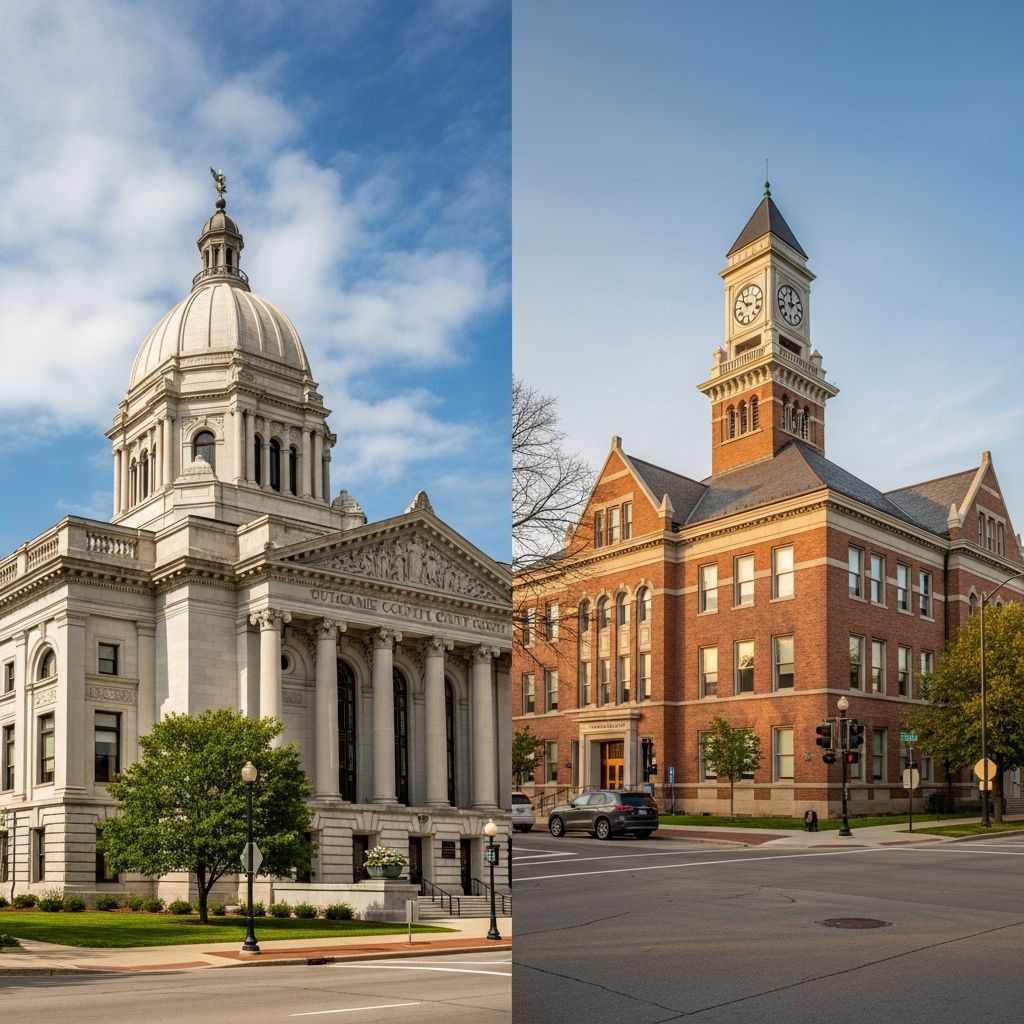
Appleton, Wisconsin is served by several different courts that handle everything from traffic tickets to serious criminal and civil cases. Understanding which courthouse you need, what happens there, and how these courts fit into the broader Wisconsin judicial system can make your court experience far less stressful.
This guide explains the roles of the main Appleton and Outagamie County courts, how they fit into Wisconsin’s statewide structure, and what you should know before your court date.
How Appleton Courts Fit into the Wisconsin Judicial Structure
Wisconsin has a unified court system with several levels of courts, each with a specific function. Appleton’s local courthouses operate within this statewide framework.
- Municipal courts handle local ordinance violations, many traffic matters, and some non-criminal cases.
- Circuit courts are Wisconsin’s general trial courts and hear most civil and criminal cases.
- Court of Appeals reviews decisions from circuit courts.
- Wisconsin Supreme Court is the court of last resort and has discretionary review of most cases.
Appleton residents typically interact first with either a municipal court (for ordinance and many traffic matters) or the Outagamie County Circuit Court (for criminal, family, larger civil, and probate cases). Appeals from circuit court decisions generally go to the Court of Appeals and, in limited situations, to the Wisconsin Supreme Court.
Main Types of Courts Serving Appleton
Although names and mailing addresses vary, most cases involving Appleton residents pass through three main court categories: municipal court, circuit court, and higher appellate courts.
1. Municipal Courts (Local Ordinances and Traffic)
Municipal courts are local courts created by Wisconsin cities, villages, or towns. They focus on violations of local ordinances rather than on state criminal law.
- Typical cases:
- City ordinance violations (noise, zoning, property maintenance)
- Many traffic citations, such as speeding or parking tickets
- Minor forfeiture offenses where penalties are fines rather than jail
- Penalties usually include fines, court costs, or non-criminal sanctions rather than jail time.
- Defendants do not gain a criminal record from most municipal court cases because they are civil forfeiture matters, not crimes.
Appleton residents receiving a traffic ticket or city citation will typically see information on the ticket indicating whether the case is in a municipal court or in the Outagamie County Circuit Court.
2. Outagamie County Circuit Court (General Trial Court)
The Outagamie County Circuit Court is the main trial court serving Appleton. Circuit courts in Wisconsin are courts of general jurisdiction, meaning they can hear almost any type of civil or criminal case.
- Civil cases (for money or other relief)
- Contract disputes, personal injury, and property damage claims
- Landlord–tenant disputes above small-claims limits
- Injunctions and restraining orders
- Family law and juvenile matters
- Divorce, legal separation, and annulment
- Child custody, placement, and support
- Children in need of protection or services (CHIPS) and juvenile delinquency cases
- Criminal cases
- Felonies (serious crimes punishable by more than one year of imprisonment)
- Misdemeanors (less serious crimes, up to one year in jail)
- Related pretrial motions, plea hearings, and trials
- Probate and guardianship
- Estate administration after a death
- Guardianships for adults with disabilities and for minors
- Conservatorships and certain trust matters
- Traffic and small claims
- Some traffic cases that rise above simple ordinance violations
- Small claims actions for lower-dollar disputes (often with simplified procedures)
Outagamie County is part of Wisconsin’s single-level circuit court system, with judges elected in nonpartisan elections to six-year terms. Each branch may handle a mix of criminal, civil, family, and other matters, though counties often assign judges to certain case types to improve efficiency.
3. Appellate Courts (Court of Appeals and Supreme Court)
If you believe the circuit court made a legal error in your case, you may have the right to appeal. In Wisconsin, appeals generally move through two higher levels of courts.
- Court of Appeals
- Intermediate appellate court with four geographic districts.
- Reviews decisions from circuit courts in its district for legal error.
- Most appeals from Outagamie County must first go here.
- Wisconsin Supreme Court
- Highest court in the state, with broad appellate jurisdiction.
- Chooses most of its cases, focusing on issues of statewide importance.
- Supervises the statewide court system and sets procedural rules.
Appeals generally do not re-try your case from scratch. Instead, appellate judges review the record from the circuit court and written legal arguments to determine whether the law was applied correctly.
Typical Courthouse Services and Offices
Regardless of the specific courthouse building, courts in and around Appleton share several key functions and offices that visitors will encounter.
| Office / Function | Primary Role | When You Might Use It |
|---|---|---|
| Clerk of Court | Maintains case files, schedules hearings, and receives many court filings. | To file documents, check hearing dates, or pay some fees and judgments. |
| Judge’s Branch / Courtroom | Conducts hearings, trials, and sentencing; rules on motions and evidence. | Whenever you have a scheduled court appearance or trial. |
| District Attorney | Prosecutes state criminal and certain traffic offenses in circuit court. | If you are charged with a crime or involved as a crime victim or witness. |
| Public Defender / Defense Counsel | Represents defendants who qualify for appointed counsel in criminal matters. | If you are accused of a crime and cannot afford your own lawyer. |
| Court Commissioner | Handles selected matters such as initial appearances, small claims, or some family hearings under authority of circuit judges. | For early stages of criminal cases, small claims, and some temporary family orders. |
Common Case Types Involving Appleton Residents
Residents of Appleton may find themselves in court for many different reasons. Below are some frequent case types and where they are usually heard.
Traffic and Ordinance Violations
- Minor traffic tickets and city code violations are often in municipal court, especially if they are non-criminal forfeiture actions.
- Serious traffic offenses, such as operating while intoxicated (OWI) with prior offenses or injury cases, are usually handled in circuit court because they are crimes under state law.
Criminal Cases
All state criminal prosecutions—both misdemeanors and felonies—are brought in the circuit courts.
- Misdemeanors
- Less serious crimes with maximum penalties of up to one year in jail.
- Examples include some thefts, lower-level battery, and disorderly conduct.
- Felonies
- More serious crimes, such as higher-level theft, burglary, serious assault, and many drug crimes.
- Carry possible prison sentences of more than one year.
The process typically includes an initial appearance, possible preliminary hearing (for felonies), arraignment, pretrial motions, and either a plea or trial, followed by sentencing if there is a conviction.
Civil Disputes and Small Claims
- Small claims are lower-value disputes with simplified procedures, often involving:
- Unpaid rent or security deposits
- Consumer debts and small contract disputes
- Minor property damage claims
- Large civil lawsuits involving higher amounts, complex contracts, major injury claims, or business disputes proceed on the regular civil docket of the circuit court.
Family, Juvenile, and Probate Matters
- Family law (divorce, custody, child support) is handled in circuit court, often in a family division or by judges assigned to family calendars.
- Juvenile cases address allegations of delinquency and children in need of protection or services. Proceedings are typically confidential or partially closed to protect minors.
- Probate concerns the distribution of a deceased person’s estate and related matters such as guardianships or conservatorships.
Preparing for a Visit to an Appleton Courthouse
Whether your case is in a municipal court or the Outagamie County Circuit Court, proper preparation reduces confusion and stress.
Before Your Court Date
- Read your paperwork carefully. The citation, summons, or notice should identify:
- The court name (municipal or circuit)
- The case number
- The date, time, and location of your hearing
- Whether your appearance is mandatory or optional
- Confirm details with the clerk. If anything is unclear, contact the appropriate clerk’s office. Staff cannot give legal advice but can explain schedules, filing procedures, and basic logistics.
- Consider legal representation. For criminal matters or complex civil disputes, consulting an attorney is strongly recommended. Defendants facing jail who cannot afford counsel may qualify for a public defender.
- Organize your documents. Bring copies of any evidence, correspondence, photographs, or records you wish the court to consider.
On the Day of Your Hearing
- Arrive at least 30–45 minutes early to find parking, clear security, and locate your courtroom.
- Dress neatly and avoid clothing with offensive images or text.
- Turn off or silence phones and electronic devices before entering the courtroom.
- Check in with the clerk or bailiff inside the courtroom so the court knows you are present.
- Address the judge as “Your Honor” and speak clearly, without interrupting others.
Rights and Responsibilities in Court
Wisconsin’s court system exists to protect the rights, liberties, and property of its residents while maintaining the rule of law. Even in local Appleton matters, participants are part of a broader constitutional framework.
Basic Participant Rights
- Right to notice of the claims or charges and the scheduled hearings.
- Right to be heard and present evidence, subject to the rules of procedure and evidence.
- Right to counsel in criminal cases that may result in incarceration, including appointed counsel if you qualify financially.
- Right to appeal many final decisions to a higher court within established time limits.
Key Responsibilities
- Appear on time at all required hearings.
- Follow court orders, including payment of fines, completion of conditions, or adherence to parenting plans.
- Notify the court of any change in contact information if required by local rule.
- Show respect to court personnel and other parties.
Frequently Asked Questions (FAQs)
Q: How do I know whether my Appleton case is in municipal court or circuit court?
A: Check the top portion of your ticket, summons, or complaint. It will list the court name. Municipal courts generally handle city ordinance and many traffic matters, while Outagamie County Circuit Court handles state criminal, family, probate, large civil, and some traffic cases.
Q: Can I appeal a decision from an Appleton municipal or circuit court?
A: Many decisions can be appealed. Municipal court judgments may be reviewed by the circuit court according to state law. Circuit court final judgments can normally be appealed to the Wisconsin Court of Appeals, and in limited cases, further review may be sought from the Wisconsin Supreme Court.
Q: Do I need a lawyer for my court appearance?
A: You are generally not required to have a lawyer in civil or municipal matters, but legal counsel can be very helpful, especially in cases involving significant money, rights, or potential jail. In criminal cases where incarceration is possible and you are financially eligible, you may qualify for a public defender.
Q: Where can I get official information about Wisconsin courts?
A: The Wisconsin Court System’s official website provides statewide court overviews, rules, and many self-help resources, including forms and procedural guides. Local clerk of court and municipal court offices can also answer procedural questions (but not give legal advice).
Q: What happens if I miss my court date?
A: Missing a required appearance can have serious consequences. In criminal or some traffic matters, the court may issue a warrant. In civil cases, the court may enter a default judgment against you. If you discover you have missed a date, contact the appropriate clerk’s office immediately to learn your options.
References
- Court system overview — Wisconsin Court System. 2023-01-01. https://www.wicourts.gov/courts/overview/overview.htm
- Wisconsin circuit courts — Wisconsin Court System / Wisconsin Constitution (summarized via Wikipedia). 2022-06-01. https://en.wikipedia.org/wiki/Wisconsin_circuit_courts
- Wisconsin Judicial System Overview — Wisconsin Court System. 2020-01-01. https://www.wicourts.gov/courts/resources/docs/wsc_judicial-system-overview.pdf
- The Wisconsin Court System: Demystifying the Judicial Branch — Wisconsin Legislative Reference Bureau. 2005-01-01. https://docs.legis.wisconsin.gov/misc/lrb/blue_book/2005_2006/300_feature.pdf
- Judicial – Guide to Law Online: U.S. Wisconsin — Law Library of Congress. 2021-05-01. https://guides.loc.gov/law-us-wisconsin/judicial
- Court system overview (main site) — Wisconsin Court System. 2023-01-01. https://www.wicourts.gov
- Wisconsin Court System Overview — Wisconsin Bankers Association Newsroom. 2020-08-01. https://www.wbanewsroom.org/wisconsin-court-system-overview/
Similar Articles








Read full bio of Sneha Tete


