
Analyzing Executive Order 14019 and Voting Access
Exploring the whole-of-government approach to voter registration and its impact.
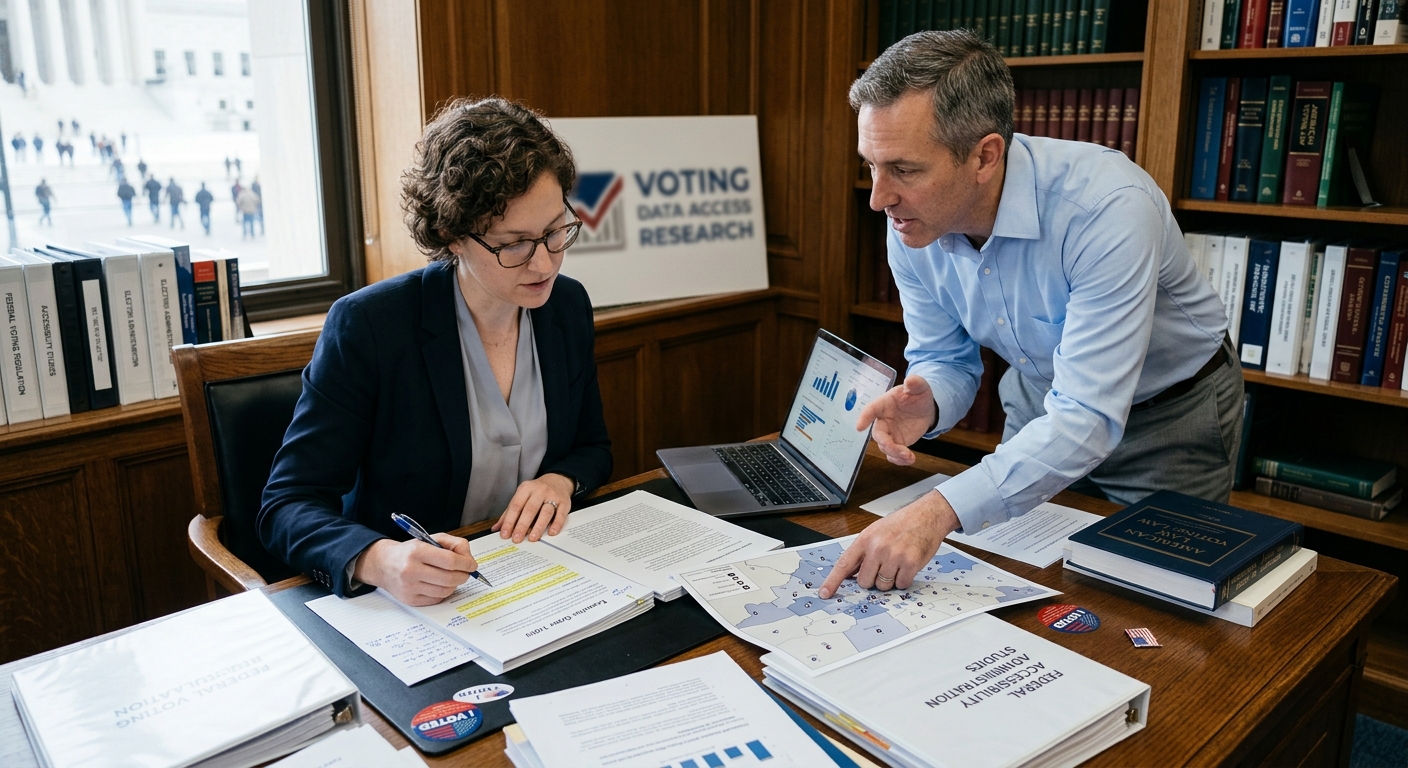
The Foundational Mandate for Democratic Participation
The right to cast a ballot is widely regarded as the cornerstone of American democracy, the mechanism through which citizens express their political will and hold their leaders accountable. Yet, the history of voting in the United States is deeply complex, characterized by alternating periods of expansion and restriction. Recognizing persistent disparities in voter registration and turnout, the executive branch initiated a sweeping policy directive in early 2021 designed to utilize the vast infrastructure of the federal government to close these gaps. Issued on the anniversary of the 1965 civil rights march in Selma, Alabama, Executive Order 14019 represented a significant paradigm shift in how the federal government viewed its role in election administration.
Rather than leaving the mechanics of voter registration entirely to the discretion of individual states, this directive established a whole-of-government approach. It mandated that federal agencies actively participate in the civic engagement process by integrating voter registration opportunities into their routine interactions with the public. The underlying philosophy was straightforward: if a citizen is interacting with a federal agency to access benefits, apply for a service, or update their personal information, that interaction should simultaneously serve as a frictionless opportunity to register to vote or update existing electoral information.
The Mechanics of a Whole-of-Government Strategy
Historically, federal intervention in voting rights primarily occurred through the enforcement of civil rights legislation by the Department of Justice, which intervened when states enacted discriminatory voting laws. The new strategy, however, sought to proactively build infrastructure rather than merely penalize bad actors. To accomplish this, the administration leaned heavily on the framework established by the National Voter Registration Act (NVRA) of 1993, commonly known as the Motor Voter Act.
While the NVRA is most famous for requiring states to offer voter registration at Department of Motor Vehicles (DMV) offices, Section 7 of the law also requires states to offer registration at public assistance agencies and allows them to designate other state and federal offices as voter registration agencies. Executive Order 14019 seized upon this underutilized provision, directing federal agencies to evaluate their programs and negotiate with state officials to become designated voter registration sites. This meant that entities ranging from the Department of Veterans Affairs to the Indian Health Service were tasked with fundamentally expanding their operational mandates to include civic empowerment.
The logistical undertaking was immense. Agencies were required to submit strategic plans outlining how they would distribute voter registration forms, assist applicants in completing these forms, and establish secure channels to transmit the completed paperwork to local election officials. The directive also explicitly prohibited any partisan bias, requiring agencies to administer these services uniformly, regardless of the applicant’s political affiliation or demographic background.
Targeting Historical Inequities: Focus on Marginalized Demographics
A central pillar of the federal directive was its explicit focus on communities that have historically faced systemic, geographic, and institutional barriers to the ballot box. The strategic plans required by the order were not generic; they demanded tailored solutions for specific populations.
Native American Communities
Voters residing on tribal lands frequently encounter unique geographical and infrastructural hurdles. Many reservations lack traditional residential mailing addresses, complicating the voter registration process and the receipt of mail-in ballots. Furthermore, polling locations on tribal lands are often scarce, requiring residents to travel extensive distances across challenging terrain. To address this, the executive order established an Interagency Steering Group on Native American Voting Rights. This group engaged in extensive consultations with tribal leaders to identify specific pinch points in the voting process. Their subsequent recommendations emphasized the need for federal agencies operating on tribal lands, such as the Bureau of Indian Affairs, to aggressively facilitate registration and provide reliable, translated election information to mitigate these persistent logistical disadvantages.
Voters with Disabilities
Despite the protections outlined in the Americans with Disabilities Act, individuals with physical and cognitive disabilities continue to face severe accessibility issues during elections. These issues range from physically inaccessible polling locations to electronic voting machines that fail to accommodate visual or motor impairments. Under the mandate, the National Institute of Standards and Technology (NIST) was tasked with conducting a comprehensive evaluation of the barriers preventing private and independent voting. The goal was to establish rigorous new guidelines for voting technology and to ensure that the federal government’s own digital properties, such as online voter registration portals, were strictly compliant with modern accessibility standards.
Justice-Impacted Individuals
The disenfranchisement of incarcerated and formerly incarcerated individuals creates a labyrinthine legal environment, as voting rights for justice-impacted citizens vary drastically from state to state. The federal initiative required the Bureau of Prisons to take a proactive role in civic education. This involved providing comprehensive materials to individuals in federal custody—many of whom maintain their voting rights if they are held pre-trial or serving sentences for misdemeanors—and establishing programs to help returning citizens understand how to restore their voting rights upon their reintegration into society.
Modernizing Digital Infrastructure: The Overhaul of Vote.gov
In an era where digital interactions define the citizen-state relationship, the modernization of online civic resources was deemed a critical priority. The General Services Administration (GSA) was given specific instructions to overhaul Vote.gov, the federal government’s primary portal for election information. The objective was to transform the website from a static directory of state election offices into a dynamic, user-centric platform that could seamlessly guide users through the registration process.
Crucially, the modernization effort mandated strict adherence to language accessibility requirements. The GSA was tasked with translating the portal into multiple languages, mirroring the language minority protections found in Section 203 of the Voting Rights Act. By ensuring that non-English speakers could independently navigate registration deadlines, absentee ballot requests, and identification requirements, the federal government aimed to remove the linguistic friction that often deters naturalized citizens from participating in federal elections.
| Federal Entity | Designated Responsibility | Primary Target Audience |
|---|---|---|
| General Services Administration (GSA) | Modernizing Vote.gov, translating resources, and improving UX/UI design. | General Public, Language Minorities |
| National Institute of Standards and Technology (NIST) | Evaluating and publishing standards for accessible voting technologies. | Voters with Disabilities |
| Department of Veterans Affairs (VA) | Integrating registration assistance at medical centers and benefit offices. | Military Veterans and their Families |
| Department of Defense (DoD) | Streamlining the Federal Post Card Application (FPCA) process. | Overseas Citizens and Active Duty Military |
| Bureau of Prisons (BOP) | Providing civic education and rights restoration guidance. | Justice-Impacted Individuals |
Evaluating Implementation: Successes and Shortfalls
Policy directives, regardless of their ambition, are ultimately judged by their execution. Two years after the issuance of Executive Order 14019, a coalition of prominent civil rights organizations—including the ACLU, Demos, and the Leadership Conference on Civil and Human Rights—published a comprehensive progress report titled “Strengthening Democracy.” The report provided a sobering analysis of the federal government’s follow-through, offering praise for the vision but significant criticism of the bureaucratic implementation.
According to the coalition’s analysis, if the federal agencies had fully maximized the potential of the executive order, the integrated systems could have generated an estimated 3.5 million additional voter registrations annually. However, the report found that agency compliance was highly uneven. While some departments, such as the Department of the Treasury and the Department of the Interior, made commendable strides in incorporating civic engagement into their public-facing portals, many other large agencies dragged their feet.
The delays were attributed to a variety of factors. Some agency leaders expressed apprehension about diverting operational resources away from their primary statutory missions. Others struggled with the complex legal negotiations required to become designated voter registration agencies under state laws, facing resistance from state-level election administrators who were wary of federal encroachment. The civil rights coalition ultimately urged the executive branch to exert stronger oversight and compel hesitant agencies to finalize and execute their strategic plans without further delay.
Political Pushback and Institutional Resistance
The directive did not exist in a political vacuum. Almost immediately upon its issuance, it became a flashpoint in the broader partisan debate over election administration and federalism. Critics, predominantly conservative lawmakers and state attorneys general, argued that the executive order represented an unconstitutional overreach by the executive branch. They contended that the Constitution vests the authority to administer elections squarely with state legislatures, and that using federal funds and federal agency personnel to facilitate voter registration violated the Antideficiency Act—a law prohibiting federal employees from spending funds not explicitly appropriated by Congress for a specific purpose.
Opponents characterized the initiative as a taxpayer-funded voter mobilization drive engineered to benefit specific political constituencies, arguing that the targeted demographics implicitly favored the incumbent administration. Several states launched litigation attempting to block the federal government from implementing the order within their jurisdictions, citing concerns about election integrity and the potential for bureaucratic duplication.
This political friction ultimately culminated in the revocation of the mandate following a transition in presidential administrations. In early 2025, Executive Order 14148 was issued, explicitly rescinding the whole-of-government voter registration effort and ordering all federal agencies to cease actions related to the prior directive. This reversal highlighted the inherent vulnerability of relying on executive action to establish long-term election policy; what one administration implements by the pen, the next can swiftly erase. The ideological whiplash demonstrated the deep, unresolved national divide over whether the federal government should act as a proactive facilitator of the franchise or whether it should strictly defer to state autonomy.
The Enduring Legacy of the Federal Civic Engagement Blueprint
Despite its eventual rescission, the strategic framework pioneered by the whole-of-government approach left a lasting intellectual legacy in the field of election administration. It provided a detailed blueprint of how vast administrative states can be leveraged to reduce the friction of civic participation. The extensive research produced during its implementation—such as NIST’s comprehensive guidelines for disabled access and the Interagency Steering Group’s documentation of tribal voting barriers—remains highly valuable to policymakers, civil rights litigators, and voting advocates.
The debate surrounding the initiative fundamentally shifted the conversation about the government’s affirmative duty to its citizens. It raised enduring questions about the nature of bureaucracy: should a government agency merely process claims and distribute benefits, or should it actively ensure that the citizens it serves are equipped to participate in the democratic process that funds it? As the United States continues to grapple with shifting demographics, evolving technologies, and polarized political environments, the architectural concepts of federalized voter access will undoubtedly resurface in future legislative and policy debates.
Frequently Asked Questions (FAQ)
- What was the primary goal of the whole-of-government voter access strategy?
The primary goal was to leverage the existing interactions between federal agencies and the public to provide seamless, nonpartisan opportunities for eligible citizens to register to vote, update their information, and access accurate election resources. - How did this mandate attempt to assist voters with disabilities?
It directed technical agencies like NIST to extensively study barriers to independent voting, resulting in recommendations for accessible voting technologies, better polling place designs, and stricter compliance standards for digital platforms like online voter registration websites. - Did the federal government take over the administration of local elections?
No. The administration of elections, including the processing of voter registration applications and the counting of ballots, remained entirely under the jurisdiction of state and local officials. The federal initiative merely sought to expand the distribution and collection of registration materials. - Why was the initiative eventually revoked?
The initiative faced intense political opposition from critics who argued it bypassed congressional authorization, improperly used federal funds, and infringed upon states’ constitutional authority to manage elections. It was formally rescinded via a new executive order in 2025 following a change in presidential administrations.
References
- Promoting Access to Voting (Executive Order 14019) — Executive Office of the President. 2021-03-10. https://www.federalregister.gov/documents/2021/03/10/2021-05087/promoting-access-to-voting
- Report of the Interagency Steering Group on Native American Voting Rights — The White House. 2022-03. https://www.whitehouse.gov/wp-content/uploads/2022/03/Native-American-Voting-Rights-Report.pdf
- Request for Information on Promoting Access to Voting — National Institute of Standards and Technology. 2021-06-16. https://www.federalregister.gov/documents/2021/06/16/2021-12619/promoting-access-to-voting
- Strengthening Democracy: A Progress Report on Federal Agency Action to Promote Access to Voting — Leadership Conference on Civil and Human Rights. 2023-03-03. https://civilrights.org/resource/strengthening-democracy-a-progress-report-on-federal-agency-action-to-promote-access-to-voting/
- Preserving and Protecting the Integrity of American Elections (Executive Order 14148) — Executive Office of the President. 2025-01-24. https://www.federalregister.gov/documents/2025/01/24/2025-01646/preserving-and-protecting-the-integrity-of-american-elections
Similar Articles








Read full bio of medha deb


