
Obtaining Alcohol Service Permits: A Complete Guide
Navigate licensing requirements and legal pathways to lawfully operate alcohol sales.
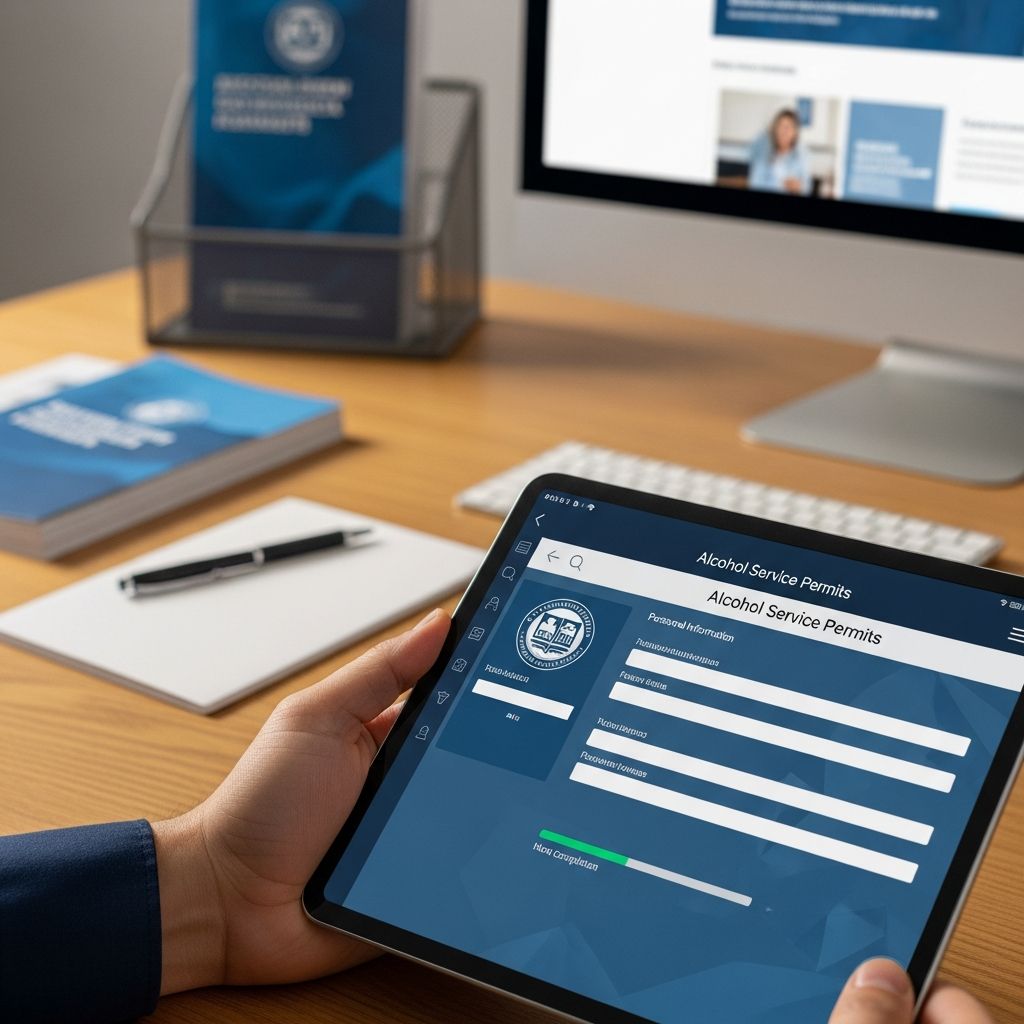
Understanding Alcohol Service Licensing Fundamentals
Operating a business that serves or sells alcoholic beverages requires proper authorization from government regulatory agencies. The licensing process ensures that establishments maintain health and safety standards, follow local zoning regulations, and operate within legal boundaries. Unlike general business licenses, alcohol permits involve more rigorous scrutiny and longer approval timelines due to public health and safety considerations. Understanding the foundational requirements before beginning your application can save considerable time and prevent costly mistakes.
The regulatory framework governing alcohol sales varies by jurisdiction, but most states employ a dedicated department or agency to oversee licensing. These agencies review applications thoroughly, conduct background investigations on business owners, and verify that locations meet zoning requirements. The complexity of this process means entrepreneurs should allocate several months for the complete licensing journey, including preparation, application submission, and final approval.
Identifying Your Specific License Category
The first critical decision involves determining which license type matches your business model. Different establishments require different permits because their operational patterns and risks differ significantly. A restaurant that serves wine with meals requires different oversight than a dedicated liquor store, which differs from a brewery or winery.
License categories typically include:
- On-premises licenses for bars, restaurants, and nightclubs where beverages are consumed at the location
- Off-premises licenses for liquor stores, grocery stores, and gas stations selling packaged beverages for consumption elsewhere
- Manufacturing licenses for breweries, distilleries, and wineries producing beverages
- Wholesale permits for distributors and suppliers
- Special event permits for temporary service at festivals or gatherings
Each category carries different restrictions regarding hours of operation, types of beverages allowed, and allowable locations. Some jurisdictions further subdivide these categories by alcohol content or beverage type. Consulting with your local regulatory agency about your specific business model ensures you pursue the correct license classification from the start.
Essential Documentation and Preliminary Requirements
Successfully navigating the licensing process requires gathering comprehensive documentation before submitting your application. Missing or incomplete paperwork frequently delays approvals and may result in application rejection. Building a complete file demonstrates professionalism and commitment to regulatory compliance.
Core documentation includes:
- Proof of business registration and federal Employer Identification Number (EIN)
- Evidence of location control through lease agreement or property ownership deed
- Background check authorization and personal financial statements from all owners and operators
- Zoning verification confirming that alcohol sales are permitted at your proposed location
- Health and safety permits demonstrating facility compliance with sanitation standards
- Sales tax permit authorization from the state revenue department
- Insurance documentation proving adequate liability coverage for alcohol service operations
Additionally, some jurisdictions require notarization of specific documents when applicants cannot appear in person. Federal requirements may also apply depending on your business structure, necessitating Federal Occupational Tax Stamps or basic permits from the Alcohol and Tobacco Tax and Trade Bureau.
Location Evaluation and Zoning Compliance
Real estate considerations profoundly impact licensing success. Regulatory agencies scrutinize proposed locations to ensure they align with community interests and local land use policies. Many jurisdictions restrict alcohol sales near schools, parks, or residential areas, or limit the number of establishments in specific zones.
Before committing to a lease, verify with county planning departments that your intended location permits alcohol sales. Some areas require Conditional Use Permits—special approvals allowing uses not typically permitted in designated zones. This preliminary investigation prevents investing time and money in a location that will never receive licensing approval. Contact local officials early to understand any special restrictions or requirements specific to your area.
If purchasing an existing business with a current license, transferring that license involves different requirements than obtaining a new one. Transfer applicants must establish escrow accounts and follow specific procedures to ensure smooth ownership transitions while maintaining regulatory oversight.
The Application and Notification Process
The formal application process unfolds in sequential stages designed to provide transparency and allow community input. Understanding each stage helps applicants navigate requirements systematically and anticipate timelines.
Stage One: Initial Filing begins when you submit completed application forms to your local regulatory agency office. These forms request detailed information about business structure, ownership, financial capacity, and operational plans. Incomplete submissions are typically returned for correction, delaying processing.
Stage Two: Public Notification requires posting official notices at your business location for a specified period—typically 30 days. This notification period allows nearby residents and competing businesses to raise objections. Some jurisdictions additionally require newspaper publication or direct mail notification to residents within a 500-foot radius. These requirements ensure community awareness and provide opposition pathways before regulatory approval.
Stage Three: Investigation involves regulatory agency verification of all information provided. Investigators confirm ownership and management credentials, verify zoning compliance through independent county contacts, assess financial stability, and evaluate potential community impacts. Background checks examine personal and business histories for red flags indicating fitness to operate alcohol establishments.
Stage Four: Final Review evaluates whether all requirements have been satisfied and no disqualifying factors exist. Regulatory agencies may request additional documentation or clarification during this phase. Missing information or inaccurate details frequently trigger delays.
Stage Five: License Issuance follows approval and fee payment. Approved applicants receive formal licenses authorizing legal alcohol sales operations.
Financial Considerations and Fee Structures
Licensing costs vary substantially based on license type, business size, and location. Applicants should budget for multiple financial obligations beyond the license fee itself. Costs may include application fees, investigation charges, background check expenses, notarization services, and the license fee itself. Some jurisdictions charge different rates for new applications versus license transfers. Off-premises licenses typically cost less than on-premises permits due to lower regulatory oversight requirements for consumption locations.
For businesses purchasing existing operations with current licenses, escrow agreements are mandatory. These accounts hold the full purchase price until regulatory approval confirms license transfer. This mechanism protects buyers and ensures transactions only complete if licensing transfers successfully. Understanding these financial requirements prevents budget surprises during the application process.
Processing Timelines and Approval Outcomes
Application processing duration depends on whether opposition emerges during the public notification period. Non-contested applications typically progress from filing to issuance within 55 to 65 days. However, if residents or other businesses object during the notification period, contested applications extend to 175 days or longer as regulatory agencies conduct additional investigation and sometimes hold hearings to resolve disputes.
Approval is never guaranteed. Regulatory agencies deny applications for various reasons including incomplete documentation, inaccurate information, community opposition, zoning violations, insufficient financial resources, or applicant background concerns. Applicants should view the process as competitive rather than automatic, particularly in densely populated areas where beverage service licenses face high demand and limited availability.
Regulatory Oversight and Operational Compliance
Obtaining a license represents a beginning rather than a conclusion. Regulatory agencies maintain ongoing authority to monitor operations, investigate complaints, conduct unannounced inspections, and enforce compliance with extensive regulations governing hours of operation, types of beverages sold, customer conduct, and record-keeping requirements. Violations may result in warnings, fines, license suspension, or permanent revocation.
Successful licensees maintain detailed knowledge of regulations governing their specific license type, respond promptly to regulatory inquiries, address customer complaints professionally, and implement robust compliance systems. Some jurisdictions require annual license renewal with updated documentation and fees. Treating regulatory compliance as an ongoing business function rather than a one-time obligation is essential for long-term operational success.
Special Considerations for Federal Requirements
Depending on business structure and beverage types, federal permits may be necessary in addition to state and local licenses. The Alcohol and Tobacco Tax and Trade Bureau issues Federal Basic Permits to entities manufacturing or importing alcoholic beverages. Special Occupational Tax Stamps authorize specific activities like wholesale distribution. Online application systems streamline federal permitting, typically requiring just minutes of applicant time once proper permit type is identified.
Federal permits and state licenses operate independently but must both be obtained for full legal authorization. Federal approval does not guarantee state licensing, and state approval does not waive federal requirements. Understanding which federal permits apply to your specific business model prevents operational delays after receiving state approval.
Frequently Asked Questions
Q: What is the minimum age to hold an alcohol license?
A: Applicants must be at least 21 years old. All owners, managers, and individuals with financial interest in alcohol businesses must meet this age requirement and pass background investigations.
Q: Can I operate an alcohol business from a home location?
A: Residential locations are generally prohibited for alcohol service establishments due to zoning restrictions and public safety concerns. Commercial properties in appropriately zoned areas are required for legal operations.
Q: What happens if my application is denied?
A: Denied applicants receive written explanations of deficiencies. Many jurisdictions allow reapplication after addressing identified issues, though timelines and requirements for reapplication vary by location.
Q: Are there restrictions on how many licenses can operate in an area?
A: Many jurisdictions implement quota systems limiting the number of alcohol licenses in specific zones. Available licenses are often allocated by lottery or based on community need criteria.
Q: How long does a license remain valid?
A: License validity periods typically range from one to three years depending on jurisdiction and license type. Annual renewal with updated documentation and fees is commonly required.
Q: Can I transfer my license to a new location?
A: Some jurisdictions allow location transfers while others require new applications. Transfer procedures and requirements differ significantly from new licenses and should be verified with your regulatory agency.
Q: What records must I maintain as a licensee?
A: Licensees must typically maintain detailed purchase and inventory records, document customer identification checks, track hours of operation, and retain records of any incidents or complaints for regulatory review.
References
- How to Apply for a Liquor License in California — Restolabs. 2024. https://www.restolabs.com/blog/how-to-get-a-liquor-license-in-california
- How to Get a California Liquor License: Types & Cost in 2025 — Korona POS. 2025. https://koronapos.com/blog/california-liqour-license/
- How to Get a Liquor License in the State of California — Square. 2024. https://squareup.com/us/en/the-bottom-line/starting-your-business/california-liquor-license
- What You Need To Get a Liquor License In California — NotaryLive. 2022-12-16. https://notarylive.com/blog/what-you-need-to-get-a-liquor-license-in-california
- How to Apply for a Liquor License in California — License Locators. 2024. https://licenselocators.com/how-to-apply-for-a-liquor-license/
- License Application Requirements — California Department of Alcoholic Beverage Control. 2025. https://www.abc.ca.gov/licensing/apply-for-a-new-license/license-application-requirements/
- How to Get a Liquor License in California — Huckleberry Insurance. 2024. https://huckleberry.com/blog/liquor-license-california/
Similar Articles








Read full bio of Sneha Tete


