
Alaska Burial And Cremation Regulations: Practical Guide
Comprehensive guide to Alaska's rules on death disposition, from permits to ash scattering and private burials.
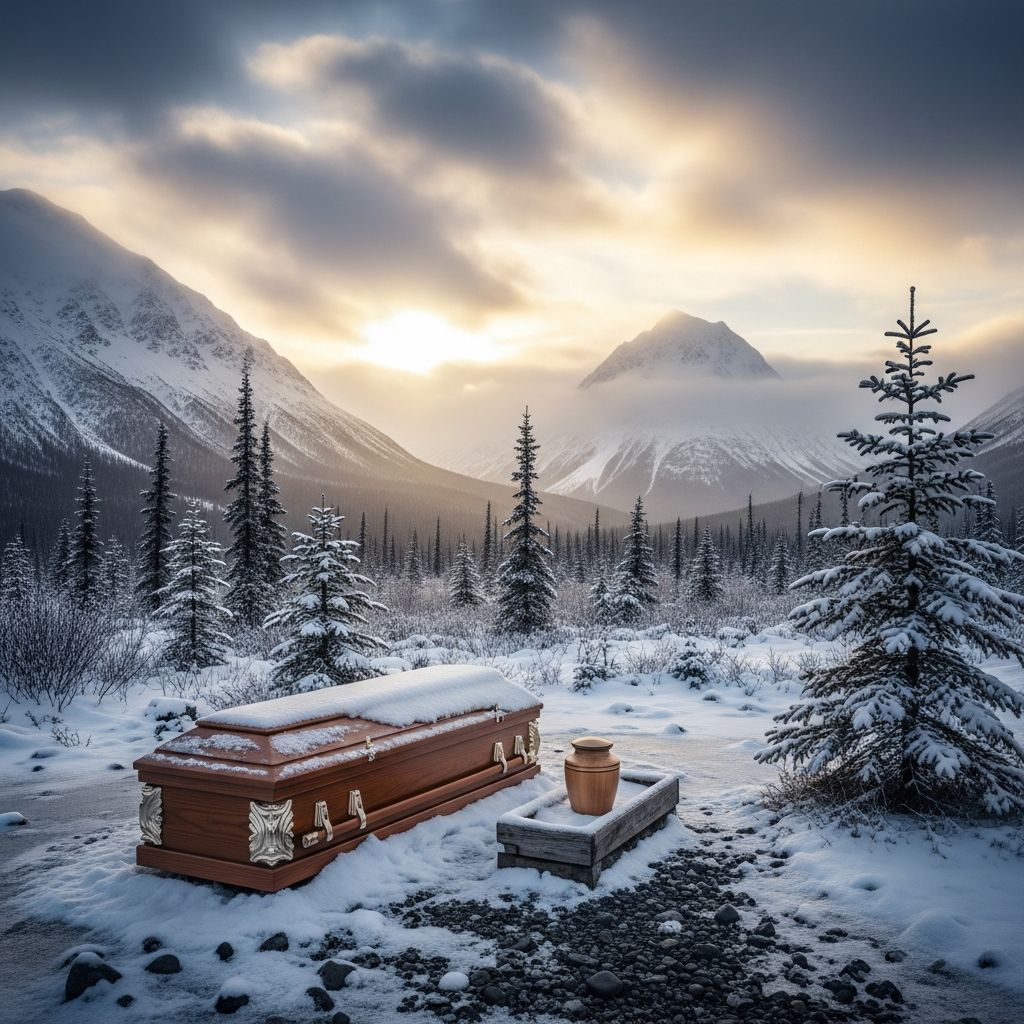
Alaska’s remote landscapes and independent spirit extend to its approach to final dispositions, offering families flexibility in burial and cremation choices while upholding essential public health safeguards. This guide details state statutes, local variations, and practical steps for honoring loved ones.
Initial Steps After Death: Registration and Permits
Upon a person’s passing in Alaska, prompt administrative actions are crucial. Deaths must be reported to the local registrar within three days. No burial, cremation, or other disposition can proceed without a filed death certificate, typically handled by funeral providers or those managing remains.
A burial-transit permit is mandatory before final disposition, ensuring compliance with health codes. This document verifies the death certificate and authorizes transport or processing of remains.
- Report death immediately to avoid delays.
- Funeral homes often file paperwork, but families directing arrangements must coordinate directly.
- Permits are issued by local registrars or health departments.
Body Preparation Requirements
Alaska law imposes minimal mandates on body preparation, prioritizing family preferences over rigid protocols.
Embalming Policies
Embalming is not required for burial or cremation statewide. Exceptions apply only if remains won’t reach their destination within 24 hours, requiring family consent for health department embalming.
This flexibility supports green funerals and home vigils, aligning with Alaska’s vast geography where transport times vary.
Casket and Container Guidelines
No state law demands caskets for ground burial, though cemeteries may specify outer burial containers for grave integrity. Federal rules ensure providers disclose alternative container options like cardboard or fiberboard for cremations, with no casket required—just a combustible alternative.
| Disposition Type | Container Rules | Notes |
|---|---|---|
| Burial | Not required by state | Cemetery-specific; vaults often needed |
| Cremation | Alternative container allowed | Must be rigid, combustible; provider must offer |
Burial Locations and Permissions
Families in Alaska enjoy broad options for burial sites beyond commercial cemeteries.
Private Property Burials
State law permits burials on private land, reflecting Alaska’s frontier ethos. However, local boroughs and municipalities enforce zoning ordinances. For instance, Anchorage restricts burials to designated cemeteries.
- Verify zoning with local planning offices.
- Secure a burial-transit permit.
- Maintain minimum distances from water sources per health codes.
Cemetery Operations and Rules
Established cemeteries follow specific protocols. Many require vaults for caskets and urn vaults for cremains. Memorial markers must use approved materials like granite or bronze, installed within one year.
Interments are limited per space: one casket or two urns maximum. Endowment care funds support perpetual maintenance.
Cremation Procedures and Rights
Cremation is popular in Alaska due to its simplicity and lower costs. Key protections prevent unauthorized cremation.
Pre-Cremation Directives
If a deceased adult provides written instructions against cremation in a disposition document, no one—including next-of-kin—can override it. Forms allow specifying irrevocable no-cremation wishes or limited survivor override options.
This upholds personal autonomy, with sample language for advance planning: designating no cancellation or naming specific individuals for decisions.
Process and Costs
Providers must issue a burial-transit permit before cremation. Simple containers suffice, enabling affordable direct cremations without services.
Handling Cremated Remains
Alaska offers expansive freedoms for cremains disposition.
Scattering on Private Land
Scatter ashes freely on owned property. For others’ land, obtain landowner permission to avoid disputes.
Public and Government Lands
Local public areas like parks require checking municipal rules, though discreet ceremonies often proceed unhindered. Federal lands, including national parks, recommend avoiding developed areas, trails, and waterways—request permission formally but low-profile events are common.
Ash Scattering at Sea or Inland Waters
Federal Clean Water Act governs marine scattering: at least three nautical miles offshore, using biodegradable containers or disposing separately. Notify EPA within 30 days; no beach or wading pool scattering.
Inland waters follow similar rules; permits may be needed from state waterway managers. Contact Alaska EPA for specifics.
| Location Type | Requirements | Authority |
|---|---|---|
| Private Property | Owner permission if not yours | State/local zoning |
| Public Parks | Check local regs; discreet ok | Municipal/borough |
| Federal Lands | Permission advised; avoid facilities | NPS/USFS |
| At Sea | 3+ nautical miles; EPA notify | Clean Water Act/EPA |
| Inland Waters | Permit possible; biodegradable | State agencies/EPA |
Planning Ahead: Documents and Family Guidance
Proactive planning eases burdens. Alaska recognizes disposition documents where individuals outline preferences for burial, cremation, or scattering, binding survivors.
- Include specifics on no-cremation clauses.
- Name agents for decisions if priorities conflict.
- Combine with wills or health directives.
Discuss wishes openly; pre-pay services if desired, but avoid locking families into outdated plans.
Local Variations and Practical Tips
While state laws provide a baseline, boroughs like Mat-Su or Fairbanks may add layers. Always consult:
- Local health departments for permits.
- Borough planning for private burials.
- Cemeteries for interment specs.
Costs vary: direct cremations start low, burials higher with vaults. Home funerals are viable with permits.
Frequently Asked Questions
Is embalming mandatory in Alaska?
No, except potentially for delayed transport with consent.
Can I bury someone on my rural property?
Yes, subject to local zoning and permits.
What container is needed for cremation?
A simple alternative like cardboard; no casket.
Where can I scatter ashes legally?
Private land freely; public/federal with care; sea 3 miles out.
Can written wishes block cremation?
Yes, explicit no-cremation directives are binding.
Are vaults required in cemeteries?
Often by cemetery policy, not state law.
This framework empowers informed choices amid Alaska’s unique regulations. Verify updates with officials, as laws evolve.
References
- Burial and Cremation Laws in Alaska — Nolo. 2024. https://www.nolo.com/legal-encyclopedia/burial-cremation-laws-alaska.html
- SENATE BILL NO. 288 — Alaska State Legislature. 2026. https://www.akleg.gov/basis/Bill/Text/26?Hsid=SB0288A
- Cemetery Rules and Regulations — Alaskan Memorial Mortuary. 2018-11-01. https://www.legacyalaska.com/Content/Media/WitzlebenLegacyFuneralHome/Cemetery%20Rules%20and%20Regulations%20-%20Alaskan%20Memorial%20Mortuary.pdf
- Alaska Laws & Regulations — Alaska End of Life Alliance. 2026. https://alaskaendoflifealliance.org/laws-&-regulations
- Alaska Cremation Guide: Costs, Laws & Options (2026) — Funeral.com. 2026. https://funeral.com/blogs/the-journal/alaska-cremation-guide-costs-laws-options
- 7 AAC 47.130 – Funeral and burial expenses — Cornell Law School (Alaska Admin Code). 2026. https://www.law.cornell.edu/regulations/alaska/7-AAC-47.130
Similar Articles








Read full bio of medha deb


