Alabama maintains specific regulations that protect individuals with disabilities who rely on service dogs for daily tasks, while distinguishing these animals from emotional support animals (ESAs). These rules align with federal standards like the Americans with Disabilities Act (ADA) but include state-specific provisions on access, training, and enforcement.
Defining Service Animals Under Alabama Regulations
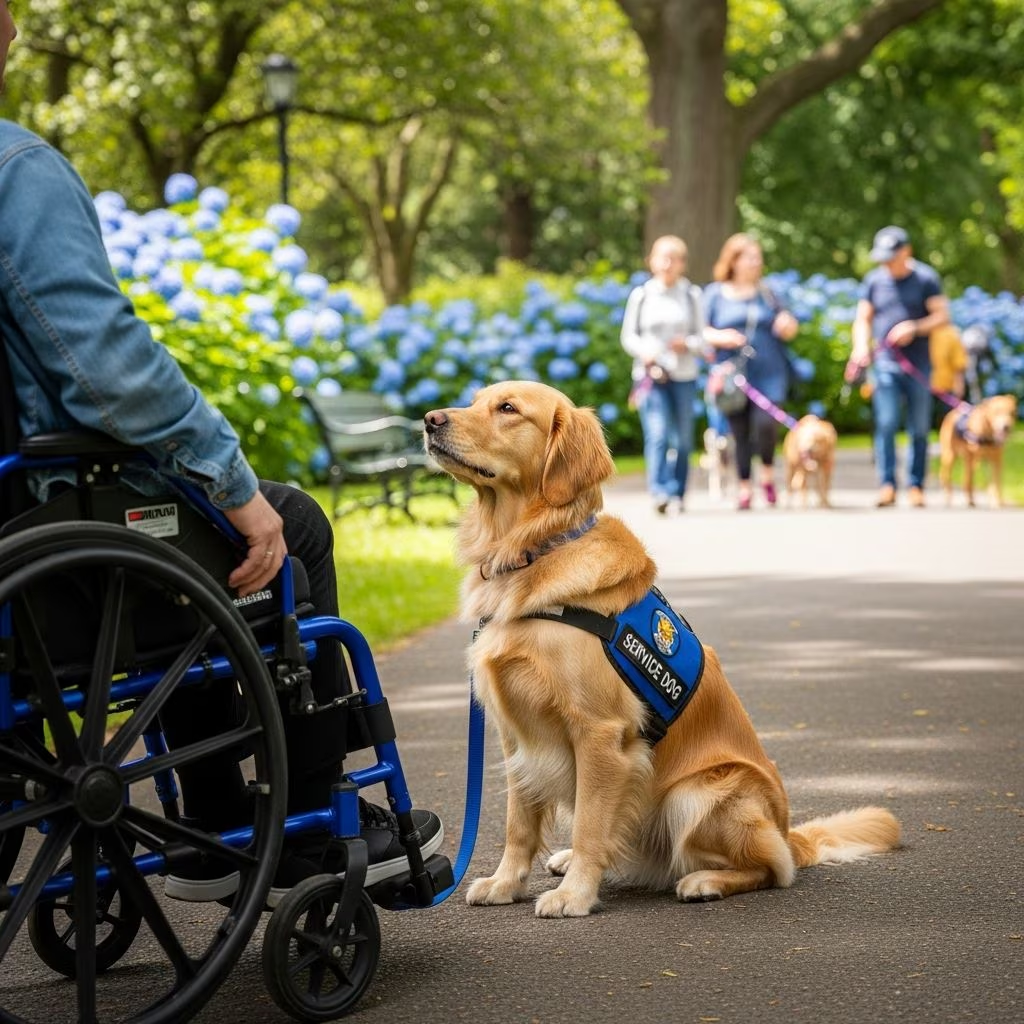
Service animals in Alabama are primarily dogs—or in some cases miniature horses—that undergo individual training to execute tasks directly linked to a person’s disability. These tasks might involve guiding visually impaired individuals, alerting those with hearing loss, aiding mobility by pulling wheelchairs, or providing psychiatric support such as interrupting self-harm behaviors or retrieving medication.
The definition explicitly excludes animals that merely offer comfort, emotional support, or companionship. Crime-deterrent effects or general presence do not qualify as tasks. This narrow scope ensures only legitimately trained animals receive legal protections, preventing pets from being misrepresented.
- Key Tasks Examples: Alerting to seizures, providing balance support, tracking wandering individuals with autism, or detecting allergens.
- Inclusions: Dogs used by law enforcement, fire departments, or search-and-rescue for detecting substances or locating people.
- Exclusions: Untrained pets, miniature horses beyond ADA scope in state law, or animals solely for emotional comfort.
Public Access Rights for Handlers
Individuals with disabilities in Alabama enjoy broad access rights, allowing their service dogs into all public accommodations where the general public is permitted. This encompasses restaurants, stores, hotels, theaters, medical facilities, public transportation, schools, and government buildings.
Under both ADA and Alabama Code Section 21-7, handlers must maintain control via harness, leash, or tether—unless it interferes with the animal’s work, in which case voice commands or signals suffice. Businesses cannot demand proof of training, special documentation, or fees for the animal’s presence.
| Public Venue Type | ADA Coverage | Alabama State Law Coverage |
|---|---|---|
| Retail Stores & Restaurants | Yes | Yes |
| Hospitals & Doctor Offices | Yes | Yes |
| Public Schools | Yes | Yes |
| Buses & Ferries | Yes | Yes |
| Private Hotels | Yes | General Public Areas |
Liability for damages rests with the handler, mirroring policies for non-disabled patrons’ pets. Businesses bear no obligation to provide food, care, or cleanup assistance. Exclusion is permitted only if the animal is uncontrollably disruptive, not housebroken, or poses a direct safety threat, provided the handler fails to correct the behavior.
Rights and Rules for Service Dogs in Training
Alabama law grants trainers the same public access privileges as fully trained handlers. Service dogs in training (limited to dogs) must wear identifiable harnesses or leashes, but fully trained active service dogs do not require such markings to avoid ADA violations.
Trainers can be questioned only about the specific task being taught and confirmation of active training. This provision supports organizations developing service animals without access barriers.
Housing Protections: Service Dogs and Assistance Animals
State law primarily safeguards guide dogs for blind or visually impaired individuals in leased or purchased housing, prohibiting extra fees or ‘no pets’ enforcement against them. Damages remain the owner’s responsibility.
Federal Fair Housing Act (FHA) extends broader protections statewide, covering service dogs for any disability and ESAs. Landlords must accommodate these ‘assistance animals’ if a disability-related need is demonstrated, without pet deposits, rent hikes, or breed restrictions.
- ESA Qualifications: Letter from a licensed healthcare provider verifying disability and therapeutic need; no task-training required.
- Handler Responsibilities: Ensure animal is housebroken and well-behaved; cover damages.
- Landlord Limits: Can deny if animal poses direct threat or causes undue burden, but not based on unsubstantiated fears.
ESAs do not qualify for public access rights under ADA or state law, confined to housing and air travel contexts.
Combating Fraud: Penalties for Misrepresentation
Alabama addresses the proliferation of fake service animals through Act 2019-478 (Senate Bill 10), criminalizing knowing misrepresentation. First offenses constitute a Class C misdemeanor, mandating 100 hours of community service for disability-serving organizations within six months.
Repeat violations escalate to Class B misdemeanors with $100 fines. Unregulated vests and IDs available online exacerbate the issue, undermining trust in legitimate teams. Alabama joins states enforcing such ‘service animal interference’ measures.
Practical Responsibilities for Handlers and Businesses
Handlers ensure their animals remain under control, housebroken, and vaccinated. Businesses train staff on two permissible inquiries: (1) Is this a service animal for a disability? (2) What tasks does it perform? No certification or demos required.
For psychiatric service dogs, tasks must be disability-specific, distinguishing them from ESAs. In federal buildings, similar leash/harness rules apply unless task-interfering.
Frequently Asked Questions
Can my emotional support cat live in an Alabama apartment?
Yes, under FHA if a healthcare provider verifies your disability-related need, but no public access rights apply.
Do service dogs need vests or certifications in Alabama?
No, fully trained dogs do not; only those in training require visible ID. No formal certification exists under ADA.
What if my service dog damages property in a store?
You are liable, as with any patron’s pet damage policy.
Can a business charge me extra for my service dog?
No, neither ADA nor state law permits pet fees for legitimate service animals.
Are miniature horses allowed as service animals in Alabama public places?
ADA allows them federally if trained, but state law limits to dogs; rely on ADA for broadest protection.
State and Federal Law Overlaps
Alabama’s framework supplements ADA, with handlers invoking the more protective rule. Recent updates emphasize enforcement against fraud while expanding trainer access. For air travel, DOT rules apply separately.
Consult Alabama Code Title 13A Chapter 11 Article 10A for criminal provisions and Title 21 Chapter 7 for civil rights. Disability rights groups like Service Dogs Alabama offer further guidance.
References
- Understanding Alabama’s service dog laws — The Cullman Tribune. 2019-08-27. https://www.cullmantribune.com/2019/08/27/understanding-alabamas-service-dog-laws/
- Service Dog and Emotional Support Animal Laws in Alabama — Nolo. Accessed 2026. https://www.nolo.com/legal-encyclopedia/alabama-laws-on-service-dogs-and-emotional-support-animals.html
- ADA Service Dog Laws 2026: Rules, Access & Proof — Pettable. 2026. https://pettable.com/blog/ada-service-animal
- Service Dogs in Training — American Disability Rights Inc. Accessed 2026. https://americandisabilityrights.org/adr/service-dogs/service-dogs-in-training
- Service Animal Laws by State 2026 — World Population Review. 2026. https://worldpopulationreview.com/state-rankings/service-animal-laws-by-state
- Alabama Code Title 13A, Chapter 11, Article 10A — Justia. 2024. https://law.justia.com/codes/alabama/title-13a/chapter-11/article-10a/