
Alabama Seller Disclosures: Legal Duties Explained
Navigate Alabama's caveat emptor rules and mandatory disclosures for safe, lawsuit-free home sales.
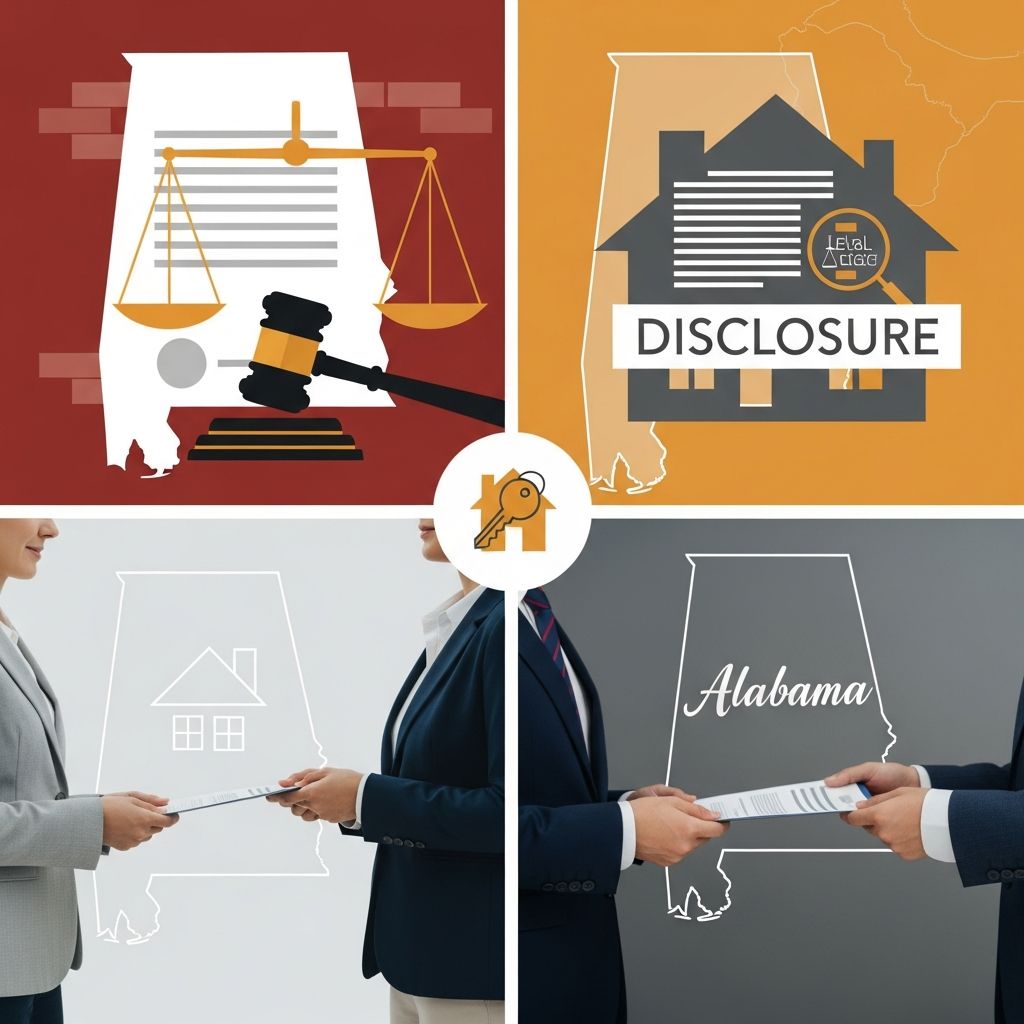
Alabama’s real estate market follows a ‘buyer beware’ philosophy, placing primary responsibility on purchasers to uncover property issues. However, sellers face specific legal mandates to reveal certain problems, preventing fraud claims and promoting transparent transactions. This guide details when and what to disclose, drawing from state statutes and court precedents to equip sellers for compliance.
Understanding Caveat Emptor in Alabama Real Estate
The principle of caveat emptor, or ‘let the buyer beware,’ governs used residential property sales in Alabama. Unlike disclosure-heavy states, sellers lack a general duty to proactively list every flaw. Buyers must inspect and investigate independently.
This approach stems from Alabama Code § 6-5-102, emphasizing fraud prevention over exhaustive revelations. Sellers benefit from reduced paperwork but risk liability if they conceal facts fitting legal exceptions. Courts prioritize buyer diligence, yet hold sellers accountable for deliberate omissions.
- Buyer Responsibilities: Conduct thorough inspections, including structural, environmental, and mechanical reviews.
- Seller Advantages: No mandatory statewide disclosure form simplifies FSBO sales.
- Risk Balance: Transparency builds buyer trust, speeding sales and minimizing disputes.
Despite these rules, over 77% of real estate lawsuits nationwide tie to disclosure failures, underscoring the value of voluntary honesty.
Key Exceptions Requiring Seller Disclosure
Alabama courts recognize three critical exceptions to caveat emptor, mandating disclosure of known defects. Failure invites lawsuits for misrepresentation, negligence, or fraud.
Fiduciary Relationships Trigger Full candor
If a seller acts as a fiduciary—owing a duty to prioritize the buyer’s interests—full disclosure of known issues is required. This arises in agency relationships or trusted advisor roles, as in Cato v. Lowder Realty Co. (630 So. 2d 378, Ala. 1993).
Fiduciaries must reveal material facts impacting value or use, regardless of observability. Breaches lead to damages, emphasizing professional oversight in transactions.
Health and Safety Defects Demand Revelation
Sellers must disclose known material defects posing health or safety risks, unknown or unobservable to buyers. This exception applies post-inspection if issues evade detection.
| Criteria for Disclosure | Examples | Legal Consequence of Non-Disclosure |
|---|---|---|
| Seller’s actual knowledge | Mold infestation, faulty wiring | Fraud liability under Ala. Code § 6-5-102 |
| Health/safety impact | Structural instability, toxic contamination | Damages for suppression of facts |
| Not readily observable | Hidden foundation cracks, plumbing leaks | Negligence claims |
Courts demand proof of direct threats, protecting sellers from minor cosmetic claims.
Direct Inquiries Require Honest Responses
Buyers asking specific questions about property conditions compel truthful answers and known defect disclosures. In Moore v. Prudential Residential Services (849 So. 2d 914, Ala. 2002), denying water damage led to liability upon discovery of rot.
Sellers should document responses to avoid ‘he said, she said’ disputes. Verbal assurances bind as firmly as written ones under fraud statutes.
Federal Lead-Based Paint Disclosure Mandate
All U.S. sellers of pre-1978 homes must comply with federal rules, overriding state caveat emptor. Requirements include:
- Providing the EPA’s Protect Your Family From Lead in Your Home pamphlet.
- Disclosing known lead-based paint or hazards.
- Sharing records or reports of lead presence.
- Including a Lead Warning Statement in contracts.
Buyers get 10 days for inspections, negotiable by agreement. Non-compliance risks contract rescission and penalties. Alabama agents routinely handle this via standard forms.
Voluntary Property Disclosure Statements
Though not required, the Alabama Association of Realtors’ Property Disclosure Statement is standard. Agents attach it to listing agreements, covering:
- Roof condition and age.
- Plumbing, electrical, HVAC functionality.
- Boundary disputes or encroachments.
- Environmental hazards like flooding or pests.
- Structural integrity and past repairs.
FSBO sellers can access similar forms online or via legal resources. Obtain buyer acknowledgment via signature, email, or letter to prove delivery.
Best Practices for Compliant Home Sales
Proactive steps mitigate risks in Alabama’s buyer-beware environment:
- Document Maintenance: Retain repair receipts, inspection reports, and renovation records as evidence of diligence.
- Engage Professionals: Real estate attorneys or agents interpret nuances, especially for FSBO.
- Disclose Proactively: Share even minor issues to foster trust and justify higher offers.
- Encourage Inspections: Recommend third-party reviews, disclaiming your representations.
- Use Written Forms: Standardize communications to create a paper trail.
These habits reduce lawsuit exposure, with transparency often accelerating closings.
Legal Risks and Remedies for Non-Compliance
Buyers discovering undisclosed defects can pursue:
- Fraud: Intentional concealment for damages or rescission.
- Misrepresentation: False statements about conditions.
- Negligent Suppression: Failing to reveal known issues.
Proving seller knowledge is challenging but pivotal. Sellers defend via buyer inspection waivers or observable defects. Statute of limitations applies, typically two years for fraud.
Insurance like owner policies may cover claims, but exclusions for intentional acts persist. Consult carriers early.
For Sale By Owner: Navigating Disclosures Solo
FSBO sellers shoulder full responsibility without agent buffers. Key tips:
- Download RECAD forms from Alabama Realtors for brokerage disclosures.
- Include lead disclosures verbatim per federal rules.
- Respond to inquiries in writing, copying buyers.
- Attach voluntary statements to offers.
Agents streamline this; FSBO demands legal review to avoid pitfalls.
Common Disclosure Pitfalls to Avoid
| Pitfall | Why It Hurts | Solution |
|---|---|---|
| Assuming ‘as-is’ waives duties | Fraud exceptions persist | Explicitly list known issues |
| Ignoring hidden defects | Liability if health/safety related | Professional pre-sale inspection |
| Verbal-only responses | No proof in disputes | Document everything | Skipping lead pamphlet | Federal penalties | Provide EPA materials upfront |
Frequently Asked Questions
Does Alabama require a mandatory seller disclosure form?
No, but voluntary forms like the Alabama Realtors’ statement are common, and exceptions mandate specific revelations.
What if a buyer doesn’t inspect the property?
Caveat emptor still applies, but sellers must disclose under the three exceptions if applicable.
Are emotional disclosures needed, like deaths on property?
No state requirement for stigmatizing events; focus on physical defects.
How soon must lead disclosures be given?
Before contract acceptance, with 10-day inspection right.
Can sellers be sued years after closing?
Yes, within fraud statute limits; document to defend.
References
- Disclosure Requirements for Selling Alabama Real Estate — ListWithClever. 2024. https://listwithclever.com/real-estate-blog/disclosure-requirements-for-selling-alabama-real-estate/
- Selling an Alabama Home: What Are My Disclosure Obligations? — Nolo. 2024. https://www.nolo.com/legal-encyclopedia/alabama-home-sellers-your-disclosure-obligations.html
- Seller’s Disclosure in Alabama: Here’s What You Must Disclose — Houzeo. 2024. https://www.houzeo.com/blog/seller-disclosure-in-alabama/
- To Disclose or Not to Disclose: Caveat Emptor in Alabama — GK Middleton Law. 2024. https://www.gkmiddletonlaw.com/blogs/to-disclose-or-not-to-disclose-caveat-emptor-in-alabama
- Code of Alabama § 6-5-102 (Fraud Statute) — Alabama Legislature. Accessed 2026. https://www.alison.legislature.state.al.us/code-of-alabama?section=6-5-102
Similar Articles








Read full bio of Sneha Tete


