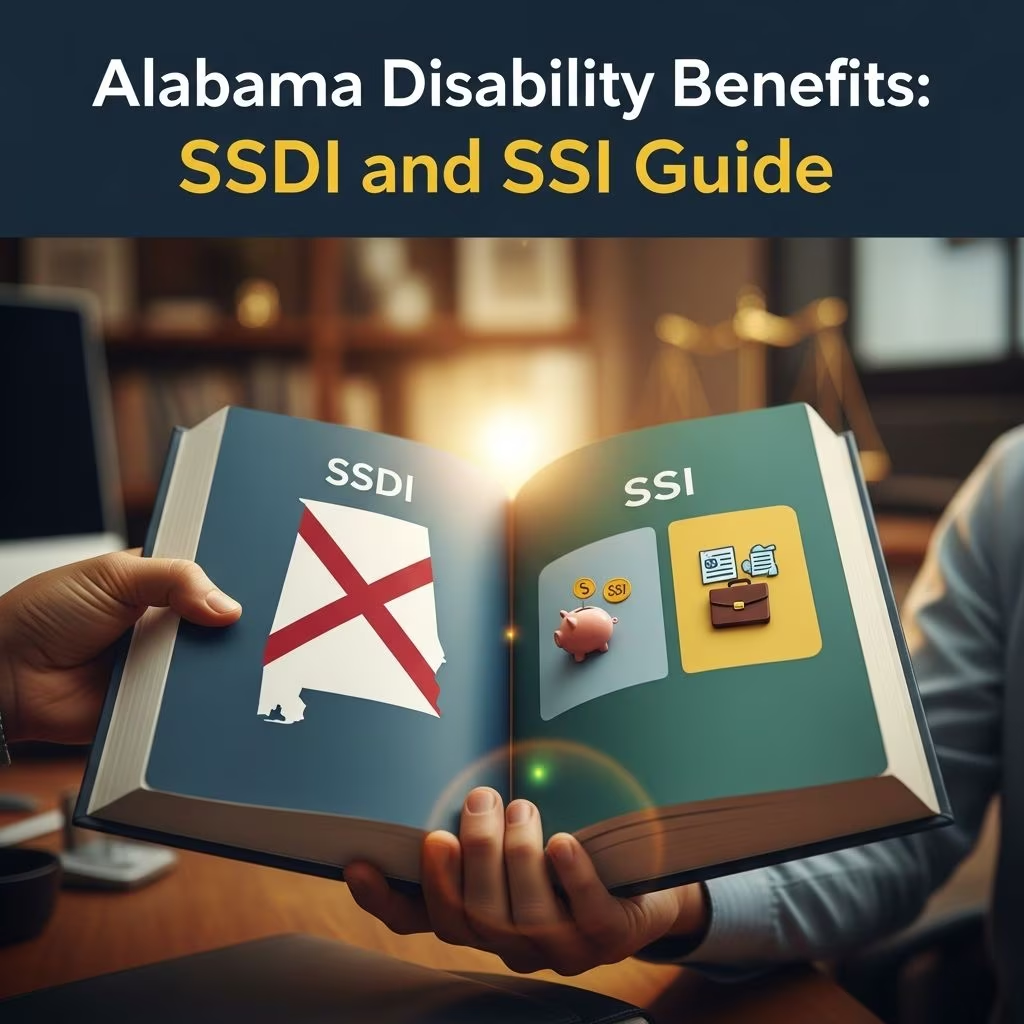
Individuals in Alabama facing severe medical conditions that prevent substantial work may qualify for federal disability programs administered by the Social Security Administration (SSA). These include Social Security Disability Insurance (SSDI) for those with sufficient work history and Supplemental Security Income (SSI) for low-income applicants. This guide details eligibility criteria, application procedures, benefit calculations, and Alabama-specific support systems.
Understanding Federal Disability Programs in Alabama
Social Security disability benefits provide essential financial aid to people whose health impairments stop them from earning a living. SSDI relies on prior contributions via payroll taxes, while SSI targets financial hardship alongside disability. Both programs demand proof of a condition lasting at least 12 months or expected to cause death, ruling out substantial gainful activity (SGA)—earning over $1,550 monthly for non-blind individuals in 2025.
In Alabama, the Disability Determination Services (DDS) evaluates medical claims, approving roughly 36% of initial applications in recent fiscal years, slightly under the national average. This underscores the need for thorough documentation and persistence through potential denials.
Qualifying Criteria for SSDI Benefits
To access SSDI, applicants must demonstrate insured status through work credits. Typically, 40 credits are required, with 20 acquired in the decade before disability onset. Younger workers face reduced thresholds: under 24 years old, just 6 credits suffice.
- Medical proof: Condition must match SSA’s Listing of Impairments (Blue Book) or limit residual functional capacity for past or any viable jobs.
- Work history: Earnings up to 4 credits yearly; credits hinge on income levels set annually by SSA.
- Duration: Impairment ongoing or projected for 12+ months.
Common qualifying issues span musculoskeletal issues like chronic back pain, cardiovascular diseases, neurological conditions such as epilepsy, mental health disorders including severe anxiety, respiratory ailments like COPD, various cancers, and immune deficiencies.
SSI Program: Needs-Based Support
SSI offers aid irrespective of employment past, focusing on limited resources and income. Resource caps stand at $2,000 for singles and $3,000 for couples, exempting primary residence and one car. Maximum federal payments reach $943 monthly for individuals and $1,415 for couples in 2025, adjustable for other income.
Alabama enhances SSI with state supplements of $56 to $120 monthly for recipients using home health services, providing modest extra relief.
| Aspect | SSDI | SSI |
|---|---|---|
| Basis | Work credits | Financial need |
| Payment Source | Earnings record | Federal minimum |
| Avg. Monthly (2024) | $1,537 (up to $3,822) | $943 individual |
| Waiting Period | 5 months | None |
| Health Coverage | Medicare after 24 mos. | Medicaid immediate |
This table highlights key distinctions, aiding applicants in selecting or pursuing both programs if eligible.
Step-by-Step Application Process
Submitting a claim starts with gathering evidence: medical histories, physician statements, treatment logs, employment records over 15 years, and financial details. Applications occur online at SSA.gov, via 800-772-1213, or at local offices.
- Initial Filing: SSA checks financial/insurance eligibility; viable claims go to Alabama DDS for medical review.
- DDS Evaluation: Assesses against Blue Book listings or work capacity; may schedule exams.
- Decision Timeline: 3-5 months typical; approvals trigger benefits post-waiting period.
- Back Payments: SSDI includes 5-month delay plus retroactive up to 12 months; SSI starts sooner.
Precision in applications averts common pitfalls like incomplete records, boosting approval odds.
Benefit Amounts and Financial Planning
SSDI sums derive from Average Indexed Monthly Earnings (AIME), reflecting career-long Social Security-covered income. High earners approach $3,822 maximum (2024), though averages hover at $1,537. SSI remains fixed, reduced by countable earnings or assets.
Post-approval, SSDI recipients gain Medicare after 24 months from onset (29 months from entitlement typically), while SSI qualifies for immediate Medicaid. Alabama’s DDS facilitates these transitions.
- Plan for waiting periods: SSDI’s 5 months from onset; first check arrives sixth month.
- Track onset date: SSA assigns it, impacting back pay and Medicare start.
- Explore state aids: Alabama supplements and programs like ADMH’s Work Incentives Planning.
Handling Denials and Appeals
With Alabama’s 36% initial approval rate, appeals prove vital. Denied claimants have 60 days for reconsideration by DDS. Further steps include hearings before administrative law judges, where representation often sways outcomes favorably.
Success rises at hearings: prepare fresh evidence, consider legal aid. Alabama’s Protection and Advocacy system, rooted in 1975 reforms, offers free support for disability rights issues.
Alabama-Specific Resources and Support
Beyond federal aid, Alabama provides targeted assistance. The Department of Mental Health’s Work Incentives Planning and Assistance Program delivers free counseling for SSDI/SSI recipients eyeing employment without benefit loss.
Local SSA offices in Birmingham, Mobile, and elsewhere handle in-person aid. For mental health-related claims, state resources integrate with federal processes.
Frequently Asked Questions
What conditions qualify for disability in Alabama?
Severe impairments like heart disease, MS, depression, cancer, or arthritis that bar SGA for 12+ months, per SSA Blue Book.
How long until I get benefits after applying?
3-5 months for decisions; SSDI waits 5 months post-onset, SSI quicker.
Can I get both SSDI and SSI?
Yes, if eligible—SSI supplements SSDI if income falls short.
Does working affect my benefits?
Under SGA limit ($1,550/mo 2025) possible; trial works test benefits via programs like Alabama’s WIPA.
When does Medicare start with SSDI?
24 months after established onset date, often 29 months from entitlement.
Maintaining Benefits and Returning to Work
Once approved, periodic reviews ensure ongoing disability. SSA offers work incentives: Ticket to Work, extended eligibility. Alabama’s counseling helps balance employment trials with benefit security.
Report changes in health, income, or living promptly to avoid overpayments. Resources abound for sustained support.
References
- Qualifying for Social Security Disability Benefit in Alabama — Thiry & Associates. 2025. https://www.thiryandassociates.com/social-security-disability-alabama/
- FAQs about Social Security Disability Benefits in Alabama — Powell and Denny. 2025. https://www.powellanddenny.com/frequently-asked-questions/social-security-disability-faq/
- Alabama Social Security Disability and SSI Benefits — Nolo. 2024. https://www.nolo.com/legal-encyclopedia/alabama-disability-benefits-social-security-disability-insurance-ssi.html
- How Do I Determine How Much Social Security Disability I Will Get? — Dansby Law. 2025. https://dansbylaw.com/how-do-i-determine-how-much-social-security-disability-i-will-get/
- Disability Benefits — Social Security Administration. 2025. https://www.ssa.gov/pubs/EN-05-10029.pdf
- Disability | SSA — Social Security Administration. 2025. https://www.ssa.gov/disability
- Guide To Alabama Disability Benefits — Benefits.com. 2025. https://benefits.com/social-security-disability/states/alabama/