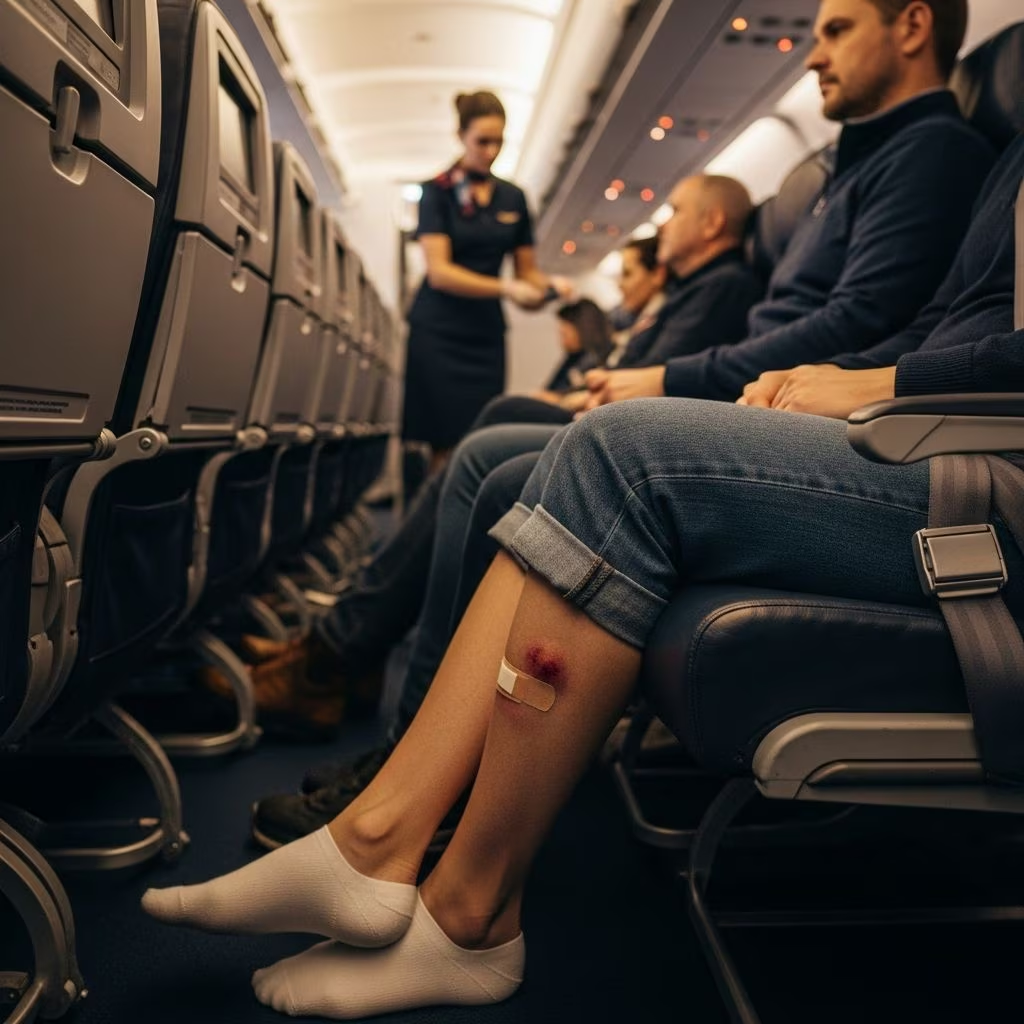
Air travel offers convenience but carries risks of injury from turbulence, faulty equipment, or operational errors. Injured passengers can seek compensation through structured legal avenues that hold airlines accountable for negligence or strict liability standards. This guide outlines the process, governing laws, and strategies to maximize recovery.
Common Scenarios Leading to Passenger Injuries
Injuries during flights often stem from preventable issues. Turbulence remains a primary cause, where unsecured passengers suffer falls, fractures, or head trauma despite crew announcements. Slip-and-fall incidents occur in aisles due to spills, uneven flooring, or poor lighting, especially during meal services or deplaning.
Overhead bin mishaps injure passengers when heavy luggage falls during takeoff, landing, or turbulence. Faulty seats, such as broken armrests or non-reclining mechanisms, lead to strains or immobility-related harm. Boarding and deboarding expose individuals to jet bridge defects, aggressive baggage handling, or crowd surges.
- Turbulence-related falls: Sudden drops cause concussions and spinal injuries.
- Luggage accidents: Improperly stowed items dislodge mid-flight.
- Equipment failures: Malfunctioning lavatories or seats exacerbate harm.
- Ground operations: Slippery tarmacs or faulty stairs during embarkation.
These events highlight airlines’ duty to maintain safe conditions, from crew training to equipment checks.
Establishing Airline Responsibility
To succeed in a claim, passengers must prove four core elements of negligence. First, airlines owe a **duty of care** to protect passengers throughout the journey, including safe aircraft maintenance and clear safety instructions. A **breach** happens when staff ignore protocols, like failing to warn about turbulence or allowing overloaded bins.
**Causation** links the breach directly to the injury—for instance, uncollected spills causing slips. Finally, **damages** encompass tangible losses like bills and intangible suffering. Courts scrutinize whether airline actions fell below reasonable standards set by regulators.
| Element | Description | Example |
|---|---|---|
| Duty of Care | Obligation for safety | Proper seatbelt enforcement |
| Breach | Failure to act reasonably | Ignoring turbulence forecasts |
| Causation | Direct injury link | Unsecured cart causes laceration |
| Damages | Quantifiable harm | Medical costs and lost wages |
Key Legal Frameworks for Recovery
Domestic Flight Protections
U.S. domestic flights fall under state personal injury laws and Federal Aviation Regulations (FARs). Airlines must adhere to FAA standards on maintenance, crew training, and emergency protocols. Violations, like inadequate pilot briefings, bolster claims. State statutes often impose one-year filing deadlines from injury date, varying by jurisdiction.
International Travel Rules: Montreal Convention
The Montreal Convention (1999) governs international flights, imposing strict liability up to 113,100 Special Drawing Rights (roughly $155,000 USD) without proving fault. Beyond this, airlines escape liability only by showing no negligence or third-party fault. Claims must file within two years, with advance payments required within 15 days for severe cases.
This treaty simplifies recovery, ensuring insurance coverage and allowing suits from passengers’ home countries. It covers bodily injury from embarkation to disembarkation.
Warsaw Convention Legacy
Though largely superseded, the Warsaw Convention applies in limited scenarios, capping liability unless negligence is proven. Its influence persists in understanding evolving passenger protections.
Types of Compensation Available
Successful claims yield economic and non-economic damages. Economic cover verifiable costs: hospital visits, surgeries, therapy, medications, and adaptive equipment. Lost wages compensate missed work, including future earning potential for disabilities.
Non-economic damages address **pain and suffering**, emotional trauma, and reduced life quality. Permanent impairments or disfigurement warrant additional awards. Wrongful death suits for families include funeral costs, loss of companionship, and beneficiaries’ financial support.
- Medical bills: All treatment-related expenses.
- Lost income: Past and projected earnings.
- Pain/suffering: Daily discomfort and mental anguish.
- Wrongful death: Family economic and emotional losses.
Navigating Time Limits and Procedures
Timeliness is critical. Domestic claims typically have one-year statutes of limitations, while Montreal Convention mandates two years from arrival or scheduled arrival. Delays risk claim denial, so document immediately: photos, witness contacts, medical reports.
Report injuries to crew before deplaning for official logs. Seek prompt care to link symptoms to the incident. Airlines may offer quick settlements, but review with counsel to avoid undervaluation.
Steps to Build a Strong Claim
- Document everything: Photographs of injuries, scene, and hazards; collect crew statements.
- Get medical attention: Even minor issues may worsen; records prove causation.
- Notify the airline: File written incident report promptly.
- Gather evidence: Flight manifests, maintenance logs via discovery.
- Consult an attorney: Specialists handle investigations, NTSB coordination if applicable.
Attorneys preserve evidence, negotiate settlements, and litigate if needed, often on contingency.
Potential Challenges and Defenses
Airlines argue passenger fault, like ignoring seatbelt signs or misuse of equipment. They invoke liability caps or claim ‘act of God’ for weather. Third-party liability, such as air traffic control errors, shifts claims to the FAA under Federal Tort Claims Act, requiring negligence proof against government agents.
Product defects in seats or bins prompt manufacturer suits. Overcome hurdles with expert testimony on standards and accident reconstruction.
When to Pursue Legal Action
Not every bump warrants a suit; minor issues resolve via airline customer service. Serious injuries—fractures, surgeries, ongoing pain—demand formal claims. Evaluate via free consultations: viability hinges on evidence strength and jurisdiction.
Frequently Asked Questions
Can I sue for turbulence injuries?
Yes, if crew failed to warn or secure the cabin adequately, proving negligence.
What is the compensation limit under Montreal Convention?
Strict liability up to 113,100 SDRs (~$155,700); higher with fault proof.
How long do I have to file a claim?
One year for domestic (state-dependent); two years for international.
Do airlines have insurance for injuries?
Montreal Convention mandates sufficient coverage for claims.
Can I claim for emotional distress alone?
Typically requires physical injury linkage, but severe cases qualify.
Protecting Your Rights Post-Injury
Prompt action preserves options. Airlines prioritize profits, downplaying incidents. Equipped with knowledge of laws like FARs and Montreal Convention, passengers reclaim control. Professional guidance ensures full, fair recovery, deterring future lapses.
Air travel safety improves with accountability; your claim contributes to industry standards.
References
- Airline Liability for Personal Injury: Understanding Passenger Rights — Ramos Law. 2023. https://www.ramoslaw.com/airline-liability-for-personal-injury-understanding-passenger-rights/
- Can I File A Lawsuit If I’m Involved In An Airplane Accident Or Injured — CZ Law. 2023-07. https://www.cz.law/blog/2023/july/can-i-file-a-lawsuit-if-i-m-involved-in-an-airpl/
- Legal Options After an Aviation Accident: What Families Should Know — Podhurst Orseck. N/A. https://www.podhurst.com/news/legal-options-after-an-aviation-accident-what-families-should-know/
- When are Airlines Liable for Passenger Injuries? — Egenberg Law. 2024-07-09. https://egenberg.com/2024/07/09/when-are-airlines-liable-for-passenger-injuries/
- Understanding the Statute of Limitations in Aviation Injury Claims — Harger Aviation Law. N/A. https://hargeraviationlaw.com/blog/understanding-the-statute-of-limitations-in-aviation-injury-claims/
- When Airlines Fail: Understanding Your Rights as an Injured Passenger — Brandon J. Broderick. N/A. https://www.brandonjbroderick.com/when-airlines-fail-understanding-your-rights-injured-passenger
- Injured In An Airplane? What Can You Do? — Gallagher & Kennedy. N/A. https://www.gallagherkennedyinjury.com/injured-in-an-airplane-what-can-you-do/