
AED Mandates: 9 Steps For Small Business Compliance
Navigate federal and state AED regulations to protect your employees and comply with workplace safety laws.
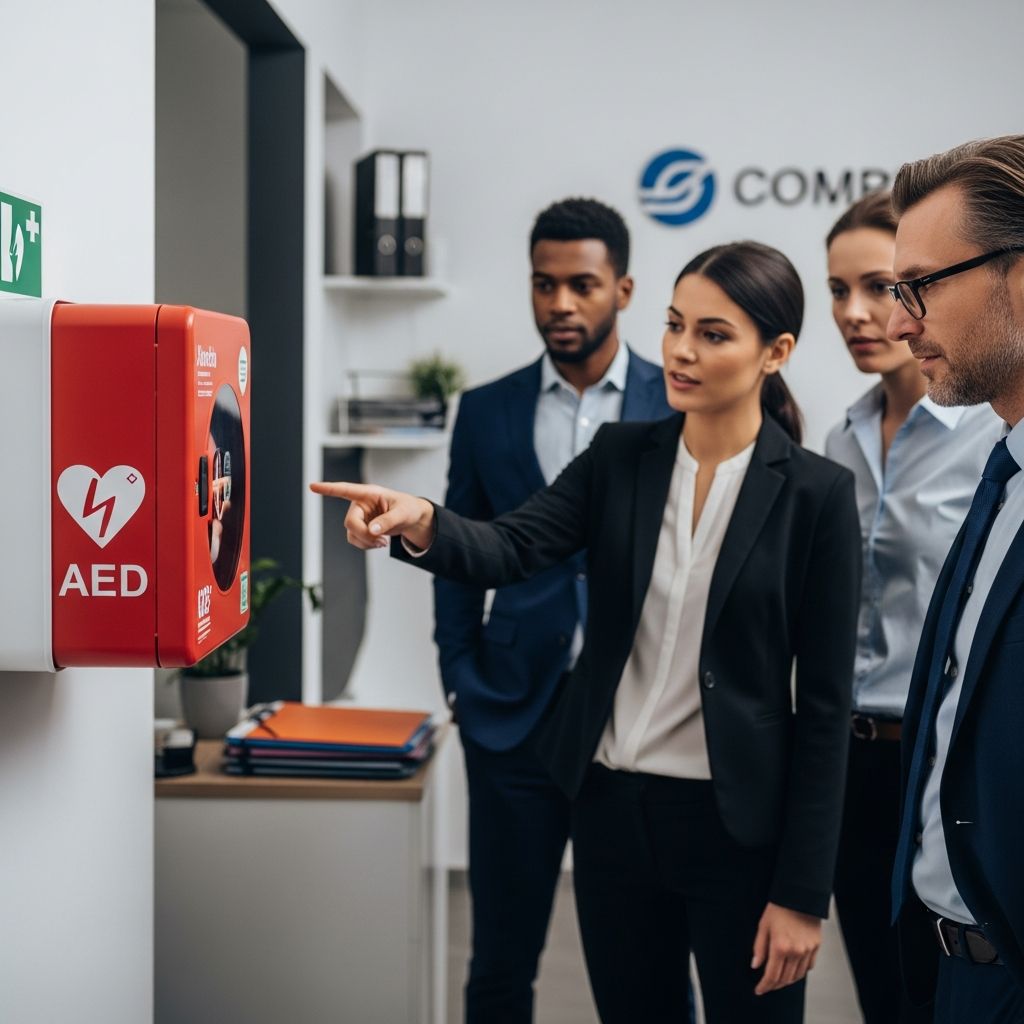
Understanding Automated External Defibrillator Mandates for Small Business Operators
Sudden cardiac arrest represents one of the most life-threatening medical emergencies that can occur in a workplace setting. When an individual experiences cardiac arrest, survival rates decline significantly with each passing minute—approximately 10% reduction in survival chances occurs for every minute that defibrillation is delayed. Automated External Defibrillators (AEDs) have emerged as critical lifesaving devices that can dramatically improve outcomes during these emergencies. However, small business owners frequently face confusion regarding whether they are legally obligated to install and maintain these devices. Understanding the landscape of AED regulations involves navigating both federal guidelines and the varying requirements established by individual states.
The Federal Regulatory Framework for Workplace AEDs
At the federal level, the regulatory situation presents a nuanced picture. The Occupational Safety and Health Administration (OSHA) does not have specific mandatory standards that require all employers to install AEDs in their workplaces. This absence of a blanket federal requirement often leads business owners to assume that AEDs are entirely optional. However, this interpretation would be incomplete. OSHA standards do require that employers make medical services and first aid “readily available” to employees when occupational hazards exist and when there is no nearby clinic or hospital. This broader requirement, while not explicitly naming AEDs, has significant implications for workplace safety planning.
The relevant OSHA regulations that address first aid and medical services include 29 CFR 1910.151 for general industry employers and 29 CFR 1926.50 for construction companies. Although these standards do not mandate AEDs specifically, OSHA strongly encourages their presence in industries where sudden cardiac arrest risk is elevated. These high-risk sectors include construction sites, manufacturing facilities, healthcare settings, health clubs, and dental offices. For small business owners operating in these industries, proactive implementation of AED programs demonstrates a commitment to exceeding baseline compliance requirements and protecting employee welfare.
State-Level Legislation and the Variability Across Jurisdictions
While federal requirements remain general, the regulatory environment at the state level presents a more complex picture. All 50 states have enacted laws or regulations concerning AEDs, though these laws vary considerably in their scope and requirements. This patchwork of state legislation means that small business owners must investigate the specific requirements applicable in their jurisdiction rather than relying on a uniform national standard.
State AED laws typically address several key dimensions:
- Establishing legislative intent that AEDs may be used by any person to save the life of someone experiencing cardiac arrest
- Mandating or encouraging training requirements for AED users
- Requiring AED maintenance and testing according to manufacturer specifications
- Creating registries or notification systems for local emergency medical services
- Providing “Good Samaritan” liability protections for individuals and organizations using AEDs in good faith
Many states have specifically targeted certain facilities for AED requirements. These commonly include schools, athletic facilities, gymnasiums, health clubs, public assembly buildings with significant occupancy thresholds, and dental offices. For example, state laws frequently require that schools with athletic programs maintain AEDs on campus, and buildings with assembly occupancy of 300 or more must provide access to AEDs. Additionally, some states mandate that state parks and other public facilities ensure employees receive appropriate AED training.
Developing Comprehensive AED Programs for Workplace Safety
Whether AED installation is legally mandated or voluntarily adopted, implementing a robust AED program requires careful attention to multiple components. OSHA guidance emphasizes that a written AED program should address several essential elements to ensure effectiveness and compliance.
The foundational elements of a comprehensive AED program include:
- Establishment of a Cardiac Emergency Response Team — Designate and train personnel responsible for responding to cardiac emergencies
- Emergency Response Protocols — Document procedures for activating the response team and immediately notifying local Emergency Medical Services
- Strategic Placement — Determine optimal AED locations that ensure accessibility within the workplace, particularly in high-traffic or high-risk areas
- Maintenance Schedules — Establish regular inspection and maintenance protocols to ensure devices remain functional
- Emergency Response Drills — Conduct periodic training exercises to ensure personnel can respond effectively to cardiac emergencies
- Medical Oversight — Identify a qualified medical professional to supervise the program, review incidents, and provide medical guidance
Critical Components of AED Compliance and Implementation
Merely acquiring an AED and placing it somewhere in the workplace does not constitute adequate compliance. A non-functional or inaccessible AED provides no protection and may create false confidence in the organization’s emergency preparedness. Effective compliance requires attention to several operational dimensions.
Accessibility and Strategic Placement
AEDs must be positioned in locations where they can be retrieved and deployed within critical timeframes. Devices should be clearly marked and visible, positioned near high-risk areas, and stored in climate-controlled environments when possible. Organizations should consider the layout of their facilities and identify locations that balance accessibility with protection from environmental hazards.
Equipment Maintenance and Testing
AED batteries and electrode pads have expiration dates, and equipment performance degrades over time without proper maintenance. Regular testing schedules should be implemented, with many industry standards recommending checks at least once every 30 days if the device has not been used. Documentation of all maintenance activities becomes essential, particularly if an AED is ever deployed in an actual emergency, as these records may be reviewed by medical authorities or during incident investigations.
Personnel Training and Readiness
Employee training represents a cornerstone of AED program effectiveness. Workers should receive instruction in CPR and AED use as part of their broader first aid training, and these skills should be refreshed regularly through continuing education courses. Some states have made AED training a condition for gaining civil immunity protection, meaning that organizations operating in those jurisdictions must ensure their personnel maintain current certifications.
Reporting and Documentation Requirements
Multiple states require that any actual clinical use of an AED be reported to Emergency Medical Services, a licensed health care provider, or other medical authorities. Some states establish specific timeframes for these reports—for instance, Arizona requires written reports to be submitted within five working days of AED use. Maintaining accurate records of all training sessions, maintenance checks, and actual emergency deployments demonstrates organizational diligence and can be critical in legal proceedings.
Understanding Liability Protection and Good Samaritan Laws
A significant concern for business owners contemplating AED installation involves potential liability exposure. Fortunately, nearly all states have enacted Good Samaritan protections that shield both trained and untrained individuals who use AEDs in good faith emergency situations from civil liability. These protections typically extend to various categories of users and facility owners, creating a legal framework that encourages AED deployment without fear of frivolous lawsuits.
However, liability protection typically applies only when AEDs are used in good faith during genuine emergencies and when the device was maintained according to manufacturer standards. This underscores the importance of proper maintenance and documentation—an organization cannot claim liability protection if it is shown to have negligently maintained equipment or failed to train personnel adequately.
The Business Case for Proactive AED Implementation
Beyond legal compliance considerations, small business owners should recognize the substantial business and ethical case for implementing AED programs. When sudden cardiac arrest occurs, the immediate availability of defibrillation can mean the difference between life and death. Employees and customers have a reasonable expectation that their employer takes their safety seriously. Organizations with robust AED programs demonstrate this commitment, which can enhance employee morale, improve company reputation, and potentially reduce insurance premiums.
Additionally, the cost of AED acquisition and maintenance has become increasingly modest relative to the potential consequences of not having devices available. A single saved life through timely defibrillation represents an outcome that transcends financial considerations but should factor into organizational decision-making.
Navigating State-Specific Regulations and Local Requirements
Because AED regulations vary significantly by state, small business owners must undertake research into their specific jurisdictional requirements. This investigation should address whether the state law mandates AEDs for the particular type of business operation, what training requirements exist, what maintenance standards apply, and what reporting obligations arise from AED deployment.
Many states have created comprehensive resources documenting their AED legislation, and state health departments or emergency management agencies can provide guidance. Additionally, organizations such as the American Heart Association offer resources on best practices for AED implementation that often exceed minimum legal requirements but position organizations as leaders in workplace safety.
Practical Steps for Small Business Implementation
Small business owners considering AED implementation should follow a structured approach:
- Research state and local AED requirements applicable to the specific business and industry
- Consult with legal counsel familiar with occupational safety to clarify compliance obligations
- Identify the number and optimal placement of AEDs based on facility layout and occupancy patterns
- Purchase AEDs that meet regulatory standards and manufacturer specifications
- Establish a maintenance schedule and designate personnel responsible for equipment oversight
- Implement comprehensive training for employees in CPR and AED use
- Create written protocols for cardiac emergency response
- Maintain detailed records of all training, maintenance, and deployments
- Review the program annually and adjust as necessary based on regulatory changes or organizational modifications
Frequently Asked Questions About Business AED Requirements
Q: Are AEDs required by federal law in all workplaces?
A: No. OSHA does not have a federal standard requiring all employers to install AEDs. However, OSHA does require that medical services and first aid be “readily available,” and the agency strongly encourages AED deployment in high-risk industries such as construction, manufacturing, healthcare, and fitness facilities.
Q: How do I determine if my small business must have an AED?
A: Your legal obligation depends primarily on your state and industry. You should consult your state’s AED legislation or contact your state health department to identify specific requirements. If your business is in a facility with 300+ occupancy or operates as a school, athletic facility, or health club, check your state’s rules carefully as these sectors frequently have AED mandates.
Q: What should a written AED program include?
A: A comprehensive program should address the formation of a cardiac emergency response team, emergency notification procedures, AED placement locations, maintenance schedules, employee training requirements, medical oversight arrangements, and protocols for cardiac emergency response drills.
Q: How often must AEDs be maintained and tested?
A: Industry standards typically recommend testing at least once every 30 days if the device has not been used, though manufacturer guidelines should always be consulted as these may vary by device model. Batteries and electrode pads must be checked for expiration dates and replaced when necessary.
Q: Do I face liability if I install an AED and someone is injured during its use?
A: All 50 states have enacted Good Samaritan protections that provide liability immunity for individuals and organizations that use AEDs in good faith during cardiac emergencies, provided the devices are properly maintained and users have received appropriate training. However, liability protection may not extend if negligence in maintenance or training can be demonstrated.
Q: What training must employees receive for AED use?
A: Employees should receive instruction in CPR and AED use through courses meeting nationally recognized standards. Some states require ongoing training as a condition of maintaining liability protections. Training should be conducted by qualified instructors and refreshed regularly.
Q: Must I report if an AED is actually used in my workplace?
A: Many states require that any clinical use of an AED be reported to Emergency Medical Services or a licensed healthcare provider, typically within specific timeframes established by state law. For example, some states require reports within five working days. Your state regulations should be reviewed to confirm applicable reporting obligations.
References
- Everything You Need to Know About AEDs in the Workplace — Defibtech. 2024. https://www.defibtech.com/news/latest/everything-you-need-to-know-about-aeds-in-the-workplace/
- AED Requirements by State | AED State Laws Guide — AED Brands. 2024. https://www.aedbrands.com/resources-type/state-aed-laws/
- OSHA AED Laws and Requirements — Occupational Safety and Health Administration (OSHA). 2025. https://www.aed.com/osha-aed-laws-and-requirements
- Your Workplace AED Program: Is It Compliant or Just There? — Thompson Safety. 2023. https://thompson-safety.com/articles/aed-workplace-requirements
- Public Access Defibrillation (PAD) State Law Fact Sheet — Centers for Disease Control and Prevention (CDC). 2024. https://www.cdc.gov/cardiovascular-resources/php/pad-slfs/index.html
- Automated External Defibrillators (AEDs) – Overview — Occupational Safety and Health Administration (OSHA). 2025. https://www.osha.gov/aed
- AED State Laws: California — Avive Solutions. 2024. https://www.avive.life/aed-laws/california
- Are Businesses Legally Required to Have AEDs? — GBW Legal. 2022. https://www.gbw.law/blog/2022/may/are-businesses-legally-required-to-have-aeds/
Similar Articles








Read full bio of medha deb


