
Adverse Possession Claims in North Carolina
Unlocking land ownership through adverse possession: Requirements, timelines, and eligibility rules in North Carolina explained.
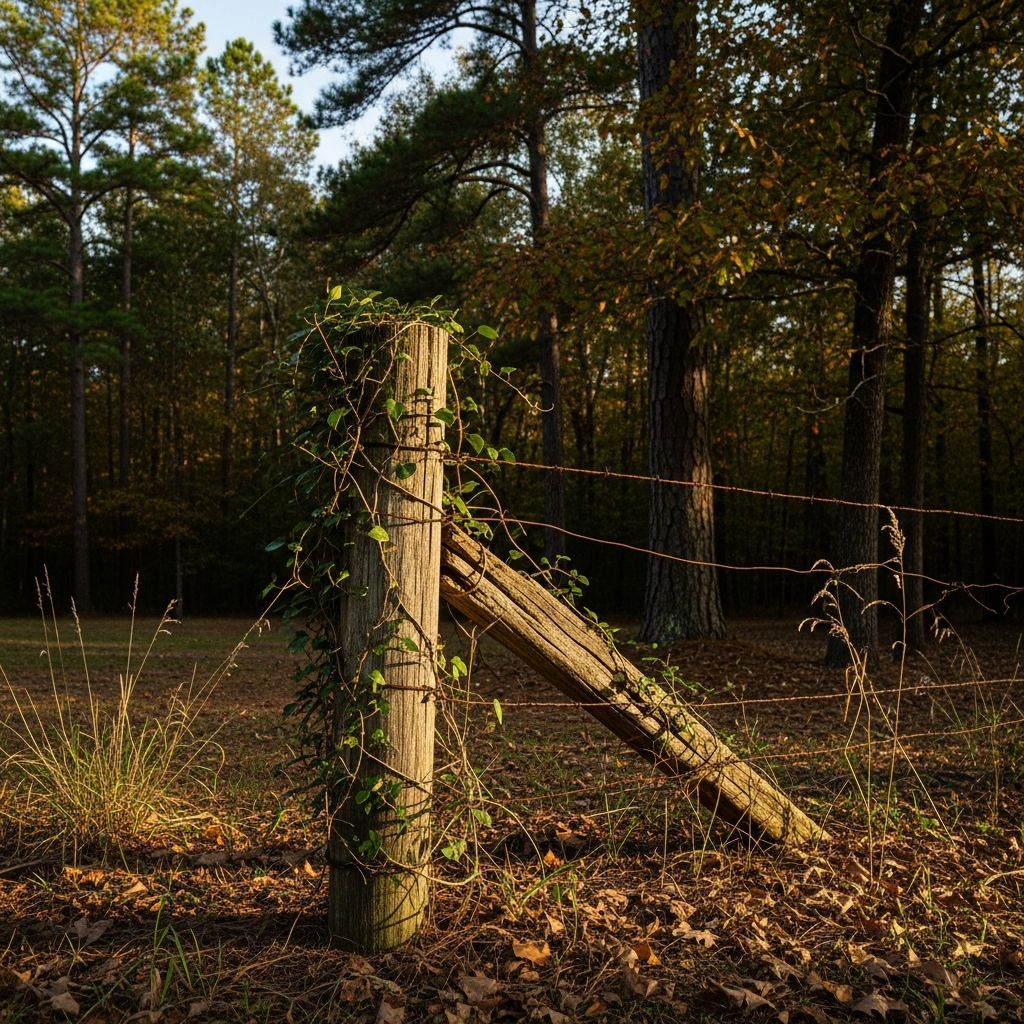
Adverse possession enables a person to gain legal title to land by occupying it without permission under specific conditions defined by North Carolina statutes. This doctrine balances property rights with long-term use, requiring proof of actual, open, exclusive, hostile, and continuous possession typically for 20 years.
Core Principles of Property Acquisition by Occupation
The foundation of adverse possession lies in transforming unauthorized use into rightful ownership after a statutory period. In North Carolina, N.C. Gen. Stat. § 1-40 establishes that possession under known and visible lines and boundaries for 20 years bars recovery actions by the true owner, granting fee simple title to the possessor. This applies against private individuals not under legal disability.
Claimants bear the burden of proof, presenting compelling evidence to overcome the legal title holder’s presumption of ownership. Courts scrutinize whether occupation manifests owner-like behavior, providing notice to the record owner.
Essential Elements Every Claimant Must Prove
To succeed, possessors must demonstrate five interconnected requirements, each rigorously interpreted by North Carolina courts.
- Actual Possession: Physical occupancy and use consistent with the property’s nature, such as farming, building structures, or maintaining improvements. Mere intent without action fails.
- Open and Notorious: Use visible to anyone, including the owner, putting the world on notice. Hidden or secretive activities do not qualify.
- Exclusive: Control without sharing possession with the owner or public, treating the land as one’s own.
- Hostile: Occupation without permission, under a claim of right. North Carolina presumes permissive use, especially among relatives or tenants, requiring claimants to rebut this. Hostility begins post-lease for tenants.
- Continuous and Uninterrupted: Ongoing use for the full period without significant breaks, under fixed boundaries.
These elements must align under “known and visible lines and boundaries,” limiting claims to defined areas, not vague encroachments.
Statutory Time Periods: Standard vs. Accelerated Paths
| Type of Claim | Duration | Statute | Key Condition |
|---|---|---|---|
| Without Color of Title | 20 years | N.C. Gen. Stat. § 1-40 | Adverse under visible boundaries |
| With Color of Title | 7 years | N.C. Gen. Stat. § 1-38 | Written instrument suggesting ownership |
| Against the State (No Color) | 30 years | N.C. Gen. Stat. § 1-35 | Strict immunity otherwise |
| Against the State (With Color) | 21 years | N.C. Gen. Stat. § 1-35 | Rarely applicable |
The standard 20-year period applies to bare possession claims. “Color of title” shortens this to 7 years if backed by a defective deed, will, or similar document reasonably believed to convey title, even if flawed.
Understanding Color of Title and Its Advantages
Color of title refers to a written instrument purporting ownership, providing a good-faith basis for possession. It accelerates the period because it evidences intent and defines boundaries more clearly. For example, a buyer under an invalid deed who improves the land for 7 years may claim title.
Courts require the instrument to cover the claimed area, distinguishing partial from full claims. Without it, claimants default to the longer timeline.
Who Cannot Pursue Adverse Possession Claims
Not all properties or persons qualify. Government-owned land is largely immune.
- State and Local Government: N.C. Gen. Stat. § 1-45 exempts public entities, protecting parks, roads, and buildings from claims.
- Federal Land: Similarly shielded under federal law, though not detailed in state statutes.
- Minors or Disabled Owners: Tolling provisions may extend periods for those under disability.
- Permissive Users: Tenants, licensees, or family members using with consent cannot claim until permission ends and hostility begins.
Adverse possession targets negligent private owners, not public resources or consensual arrangements.
Real-World Applications and Common Disputes
Claims often arise from boundary ambiguities, abandoned lots, or inherited misconceptions. Neighbors fencing erroneous lines or families maintaining adjacent parcels for generations exemplify scenarios.
In boundary disputes, courts award only actively used portions, not entire titles. Long-term gardeners or shed-builders may gain strips, not whole yards.
Steps to Formally Secure Title After Qualification
- Gather Evidence: Photos, receipts, witness affidavits documenting use over time.
- File Quiet Title Action: Sue in superior court to adjudicate ownership.
- Prove Elements: Present case meeting statutory tests.
- Obtain Judgment: Court decree registers new title.
Success quiets title, marketable against challenges.
Defending Against Baseless Claims
Property owners can counter by:
- Granting explicit permission in writing.
- Ejecting occupants promptly via eviction or trespass suits.
- Monitoring boundaries with surveys.
- Challenging proof gaps, like interruptions or non-exclusivity.
Frequently Asked Questions
Can relatives claim adverse possession against family land?
Difficult due to permissive use presumption; requires clear hostility evidence post-permission.
Does occasional maintenance count as continuous possession?
No, requires owner-like, uninterrupted control.
Can squatters on foreclosed homes succeed?
Possible if abandoned and requirements met for 20 years, but lenders actively prevent.
Is adverse possession possible on apartment common areas?
Rarely, as exclusive possession is hard against co-owners.
What if the owner pays taxes during possession?
Doesn’t stop claim; taxes don’t negate adverse elements.
Historical Context and Policy Rationale
Rooted in English common law, adverse possession encourages land productivity and resolves stale claims. In North Carolina, statutes refine this, promoting certainty while safeguarding owners vigilant within 20 years.
Judicial patterns favor strong evidence, rejecting speculative claims. Jury instructions emphasize all elements.
Recent Developments and Practical Advice
As of 2025, no major statutory changes; courts uphold traditional tests. Property owners should survey regularly; potential claimants document meticulously.
Consult attorneys early—success hinges on precise proof.
References
- How Adverse Possession Works in North Carolina — Anderson Legal. 2023. https://www.andersonlegalnc.com/how-adverse-possession-works-in-north-carolina/
- Who Can Claim Property Based on Adverse Possession in North Carolina — Nolo. 2023. https://www.nolo.com/legal-encyclopedia/who-can-claim-property-based-adverse-possession-north-carolina.html
- Adverse Possession of Real Property — King Law Offices. 2024. https://kinglawoffices.com/blog/civil-litigation/real-property-disputes/adverse-possession-of-real-property/
- Adverse Possession—Holding for Statutory Period — UNC School of Government. 2019-04. https://www.sog.unc.edu/sites/default/files/pji-master/c/c820.00%20Adverse%20Possession%E2%80%94Holding%20for%20Statutory%20Period.%20%5B4-2019%5D.pdf
- North Carolina Squatters’ Rights & Adverse Possession Laws – 2025 — Hemlane. 2025. https://www.hemlane.com/resources/north-carolina-squatters-rights/
- N.C. Gen. Stat. § 1-40 — North Carolina General Assembly. Accessed 2026. https://www.ncleg.gov/EnactedLegislation/Statutes/PDF/BySection/Chapter_1/GS_1-40.pdf
- NC General Statutes – Chapter 1 Article 4 — North Carolina General Assembly. Accessed 2026. https://www.ncleg.net/EnactedLegislation/Statutes/PDF/ByArticle/Chapter_1/Article_4.pdf
Similar Articles








Read full bio of Sneha Tete


