
Activists vs. Politicians on National Security
Exploring the clash between civil liberty advocates and career politicians.
Introduction: The Inherent Tension in Democratic Governance
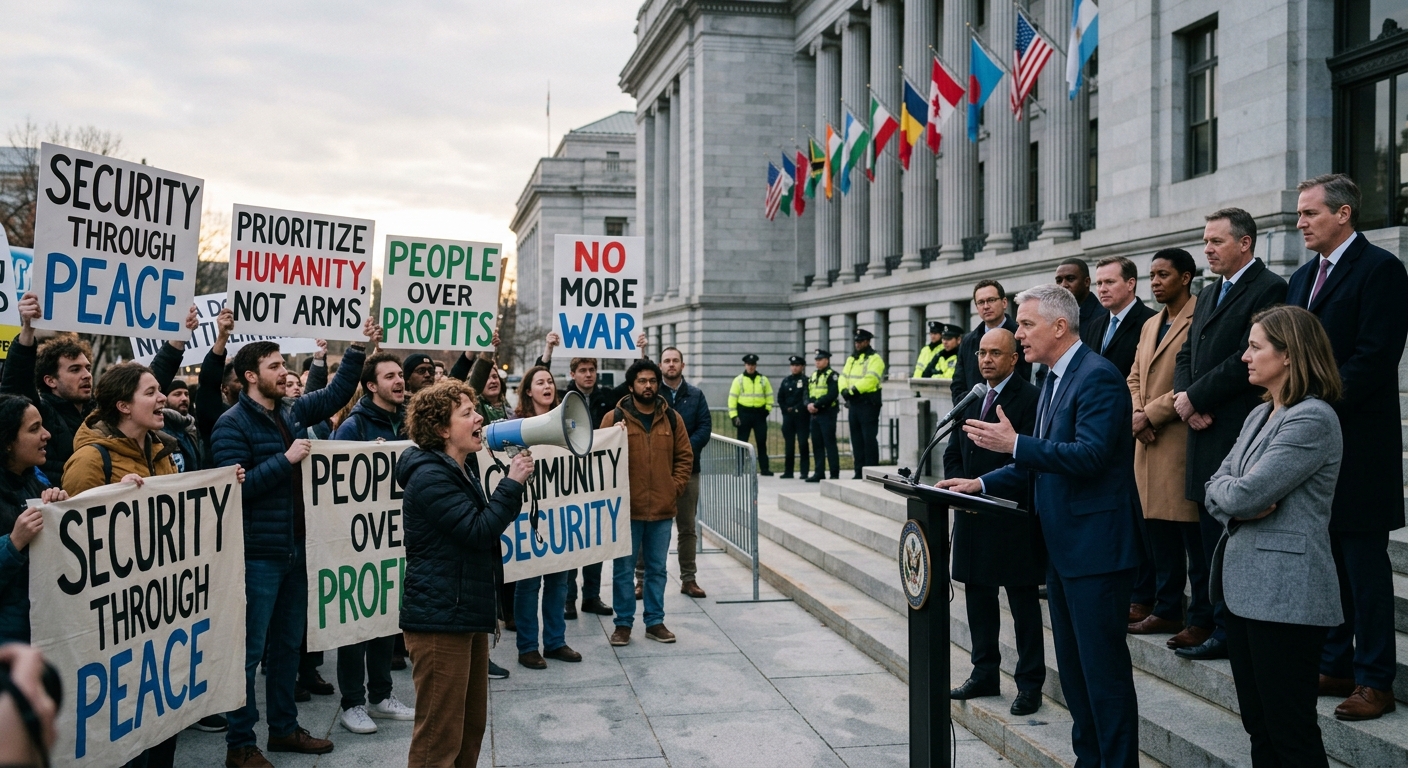
In the intricate architecture of modern democratic governance, few debates are as enduring or as intensely fought as the balance between national security and civil liberties. At the core of this perpetual struggle exist two primary actors whose differing philosophies shape the laws of the land: grassroots civil liberties activists and career politicians. While both factions claim to act in the best interests of the public, their approaches, underlying principles, and ultimate goals frequently place them in direct opposition. This dynamic is not indicative of a broken system; rather, it represents the vital, albeit chaotic, friction required to navigate the perilous waters of state power and individual freedom. As nations face evolving threats in the digital age, understanding the tug-of-war between uncompromising advocates and pragmatic lawmakers is crucial for grasping how surveillance policies are born, reformed, and occasionally dismantled.
The tension between these two forces is magnified during times of national crisis or rapid technological advancement. In the aftermath of monumental security failures, the pendulum of government power historically swings toward heightened surveillance and expanded executive authority. It is during these critical junctures that the differing methodologies of the activist and the politician become most pronounced. The politician, burdened by the immediate responsibility of protecting the populace and wary of the electoral consequences of another attack, often defaults to expanding state capabilities. Conversely, the activist views these moments of crisis as the most dangerous threats to constitutional integrity, recognizing that powers granted to the government in panic are rarely relinquished in peace.
The Ideological Divide: Absolutism versus Pragmatism
To fully comprehend this conflict, one must dissect the contrasting ideological frameworks that drive each group. For the civil liberties activist, moral clarity and constitutional absolutism are paramount. Organizations and advocates dedicated to privacy view foundational legal texts—such as the Fourth Amendment of the United States Constitution—not as malleable guidelines subject to situational interpretation, but as rigid barriers against state overreach. Activists operate under the belief that the erosion of individual rights, even when framed as necessary for national defense, initiates a dangerous descent into authoritarianism. They prioritize absolute transparency, demanding that the mechanisms of state surveillance be exposed to public scrutiny and subjected to rigorous, uncompromising judicial oversight.
In stark contrast, the career politician is heavily influenced by the immediate demands of governance, institutional pressures, and the undeniable reality of electoral survival. Lawmakers are frequently granted access to highly classified intelligence briefings that detail imminent threats to national security—information that the public and civil advocates rarely see. This asymmetric access to threat data inevitably fosters a “security-first” mindset. For the politician, the abstract purity of civil liberties often collides with the pragmatic necessity of preventing physical or cyber catastrophes. They are forced to operate in a landscape of difficult trade-offs, where the perfect is frequently the enemy of the good. Consequently, their legislative outputs are typically characterized by incremental reforms, cautious compromises, and sunset clauses rather than the sweeping, systemic overhauls demanded by purist advocates.
The Ultimate Battleground: Surveillance and FISA
Nowhere is the friction between activists and career politicians more visible than in the ongoing debates surrounding government surveillance programs, particularly the Foreign Intelligence Surveillance Act (FISA). Originally established in 1978 to curb the abuses exposed by the Church Committee, FISA was intended to provide judicial oversight for domestic intelligence gathering. However, post-9/11 amendments, most notably Section 702, dramatically expanded the state’s ability to intercept communications. Section 702 allows intelligence agencies to collect the communications of non-citizens located abroad without individualized warrants. The controversy arises from the incidental collection of millions of communications belonging to citizens who interact with these foreign targets.
For civil liberties activists, Section 702 represents a catastrophic loophole that effectively bypasses constitutional warrant requirements. They argue that the government utilizes this “incidental” data to conduct backdoor searches on ordinary citizens, turning a foreign intelligence tool into a domestic law enforcement dragnet. Activist coalitions mobilize public outrage, launch extensive awareness campaigns, and file strategic lawsuits to force judicial review of these practices. Their message is clear and uncompromising: mass surveillance is inherently incompatible with a free society, and programs that operate outside of strict individualized suspicion must be allowed to expire or be completely dismantled entirely.
Career politicians, however, approach FISA reauthorization through a lens of risk management and state continuity. Intelligence community leaders routinely testify before congressional committees, asserting that tools like Section 702 are indispensable for disrupting terror plots, countering espionage, and thwarting cyberattacks from adversarial nations. Faced with these dire warnings, the average career politician is deeply hesitant to pull the plug on such programs. Instead of abolition, they seek legislative middle grounds. These compromises often manifest as proposed procedural safeguards, such as requiring independent experts to participate in the secretive Foreign Intelligence Surveillance Court (FISC). To the politician, this is responsible governance; to the activist, it is a capitulation that merely sanitizes a flawed system.
The Role of Public Outrage and Media Mobilization
The dynamic between these two factions is significantly influenced by public opinion, which serves as the primary currency for both movements. Activists rely on mass mobilization and public outrage to force suppressed issues onto the mainstream legislative agenda. They heavily leverage whistleblower leaks, investigative journalism, and independent academic research to expose the hidden realities of government surveillance programs. When explosive revelations occur—such as unauthorized bulk metadata collection or the improper tracking of political dissidents—activists capitalize on the ensuing public shock to demand immediate accountability and structural reform. By framing complex technological and legal issues in terms of fundamental human rights, they successfully shift the Overton window, forcing politicians to address topics they would rather leave in the classified shadows.
Politicians must continuously gauge and respond to these sudden shifts in public sentiment while simultaneously managing the pressures of the national security apparatus. When public outrage reaches a boiling point, lawmakers are forced to pivot, often scrambling to introduce reform bills that demonstrate their commitment to civil liberties. However, the political memory is famously short. As the immediate shock of a surveillance scandal fades and new, frightening geopolitical threats emerge, the political appetite for severe intelligence restrictions often diminishes. Astute career politicians understand this cyclical nature of public attention and frequently utilize legislative tactics like short-term extensions or convoluted review committees to weather the storm of activist anger until the political climate stabilizes and business can resume.
Compromise Versus Capitulation: Analyzing Legislative Outcomes
The interplay between uncompromising advocacy and political pragmatism directly shapes the actual text of national security legislation. A prime example of this phenomenon is the legislative journey of bills attempting to reform domestic data collection. When widespread public outcry demands the end of a specific surveillance practice, activists will draft and support “clean” bills that explicitly prohibit the behavior without any exceptions. However, as these bills move through the labyrinthine congressional committee processes, they are inevitably subjected to intense lobbying from executive branch officials, intelligence directors, and national security hawks.
The resulting legislation is almost always a hybrid document that leaves neither side entirely satisfied. For instance, a reform bill might end the direct bulk collection of telecommunications metadata by the government, but simultaneously mandate that private telecommunications companies retain that same data for a specified period, accessible by intelligence agencies via targeted legal requests. Politicians will publicly laud such a bill as a historic triumph for privacy and a successful bipartisan compromise that protects the homeland. Activists, conversely, will relentlessly dissect the bill’s loopholes, arguing that it merely privatizes the surveillance apparatus and fails to address the root constitutional violations. This continuous cycle of demand, compromise, and subsequent dissatisfaction is the engine that drives incremental legal evolution in democratic societies.
Approaches to National Security and Privacy
| Dimension | Grassroots Activists | Career Politicians |
|---|---|---|
| Core Priority | Preservation of constitutional rights and absolute privacy. | Balancing national security threats with public opinion. |
| View on Warrants | Non-negotiable; requires individualized suspicion and probable cause. | Flexible in matters of foreign intelligence or imminent terror threats. |
| Legislative Strategy | Demand sweeping repeals, zero-tolerance for surveillance loopholes. | Favor incremental reform, sunset clauses, and oversight committees. |
| Reaction to Leaks | Leverage for public mobilization and demand for immediate accountability. | Condemn the security breach while cautiously addressing the revealed content. |
The Role of Technology in the Modern Debate
As we advance further into the twenty-first century, the rapid evolution of technology has profoundly complicated the traditional debate between civil liberties advocates and legislative policymakers. The proliferation of end-to-end encryption, artificial intelligence, and advanced biometric tracking has created unprecedented challenges for intelligence agencies attempting to monitor transnational threats. For the career politician, these technological leaps are often viewed as “going dark” moments—instances where the state’s inability to access private communications poses an unacceptable risk to homeland security. Consequently, lawmakers frequently introduce legislation aimed at mandating backdoor access to encrypted platforms or expanding the allowable scope of digital data harvesting.
Activists view these technological developments entirely differently. To the civil liberties advocate, encryption and digital anonymity are not tools for subversion, but the last remaining digital shields protecting the individual from an increasingly omniscient state apparatus. They argue that creating legal backdoors for law enforcement inevitably creates vulnerabilities that can be exploited by malicious hackers and hostile foreign entities. This technological proxy war has shifted the battleground from traditional wiretaps to complex algorithms and data brokerage. Activists now employ software engineers and cryptographers as front-line defenders, demonstrating that the fight for privacy is no longer confined to the courtroom or the halls of Congress, but is deeply embedded in the very code that powers our digital lives.
The Symbiotic Necessity in a Democratic System
While the public rhetoric between civil liberties advocates and government officials is frequently antagonistic and bitterly fought, their respective roles are ultimately symbiotic and fundamentally necessary for the health of a democratic republic. Without the relentless pressure applied by activists, the national security state would inevitably expand its reach unchecked. Bureaucracies inherently seek to maximize their operational capabilities, and in the highly secretive realm of intelligence gathering, there are very few natural barriers to overreach. Activists serve as the essential counterweight, constantly ringing the alarm bells, funding complex legal challenges, and ensuring that civil liberties are not quietly sacrificed on the altar of temporary security.
Conversely, without the pragmatic filtering provided by career politicians, the state might find itself entirely paralyzed, unable to effectively counter legitimate, highly sophisticated threats from hostile foreign actors and transnational networks. The politician’s essential role is to digest the absolutist demands of the activist and synthesize them into actionable, legally sound policies that can survive the complex realities of global geopolitics. They are the shock absorbers of democracy, translating the raw, unyielding energy of public movements into the structured, functional text of statutory law.
Ultimately, the goal is not for one side to achieve a total, permanent victory over the other. A society entirely dominated by the security-first mindset of unchecked politicians risks descending into an authoritarian surveillance state where legal dissent is monitored and chilled. On the other hand, a system that completely dismantles its intelligence capabilities in the pursuit of absolute privacy risks catastrophic vulnerabilities. The enduring struggle between the activist and the politician ensures that state power is constantly contested, justified, and carefully recalibrated for the modern age.
Frequently Asked Questions (FAQs)
What is the primary difference between a civil liberties activist and a career politician regarding national security?
Civil liberties activists typically advocate for absolute adherence to constitutional rights, prioritizing individual privacy over state surveillance capabilities. They demand strict judicial oversight and warrants for any data collection. In contrast, career politicians often prioritize national security and preventing threats, frequently compromising on absolute privacy to ensure intelligence agencies have the tools they claim are necessary to protect the country.
Why is FISA Section 702 considered highly controversial?
FISA Section 702 allows U.S. intelligence agencies to collect communications from non-citizens located abroad without a specific warrant. It is controversial because this surveillance frequently sweeps up the private communications of American citizens incidentally. Activists argue that the government uses this data to conduct warrantless “backdoor searches” on Americans, circumventing Fourth Amendment protections.
How do activists influence the legislative process?
Activists influence the legislative process by mobilizing public opinion, leveraging media coverage of government overreach or data leaks, and initiating strategic litigation. By raising public awareness and generating outrage over privacy violations, they shift the political landscape, forcing career politicians to address civil liberties concerns and introduce reform legislation.
Can a balance truly be achieved between security and privacy?
Achieving a perfect balance is an ongoing, dynamic process rather than a final destination. Democratic systems rely on the constant push-and-pull between advocates demanding absolute privacy and politicians attempting to mitigate security risks. This continuous friction ensures that surveillance powers are regularly scrutinized, debated, and legally recalibrated to fit the evolving technological and geopolitical landscape.
References
- “Surveillance as Suppression”: Safeguarding Civil Liberties in the Post-9/11 Era — University of Pennsylvania. 2025-12-12. https://www.law.upenn.edu/
- Durbin Calls For Reforms To FISA Section 702 — U.S. Senator Dick Durbin of Illinois. 2026-04-20. https://www.durbin.senate.gov/newsroom/press-releases/durbin-calls-for-reforms-to-fisa-section-702
- Liberty and Security in a Changing World — Obama White House Archives. 2013-12-12. https://obamawhitehouse.archives.gov/blog/2013/12/18/liberty-and-security-changing-world
- National Security. Civil Liberties. Can We Have Both? — Judicature. 2021-03-01. https://judicature.duke.edu/articles/national-security-civil-liberties-can-we-have-both/
- About the Foreign Intelligence Surveillance Court — United States Foreign Intelligence Surveillance Court. 2026-04-20. https://www.fisc.uscourts.gov/about-foreign-intelligence-surveillance-court
Similar Articles








Read full bio of medha deb


