
Accountability and Post-911 Interrogation Legacy
Examining the legal imperative for justice after post-9/11 interrogations.
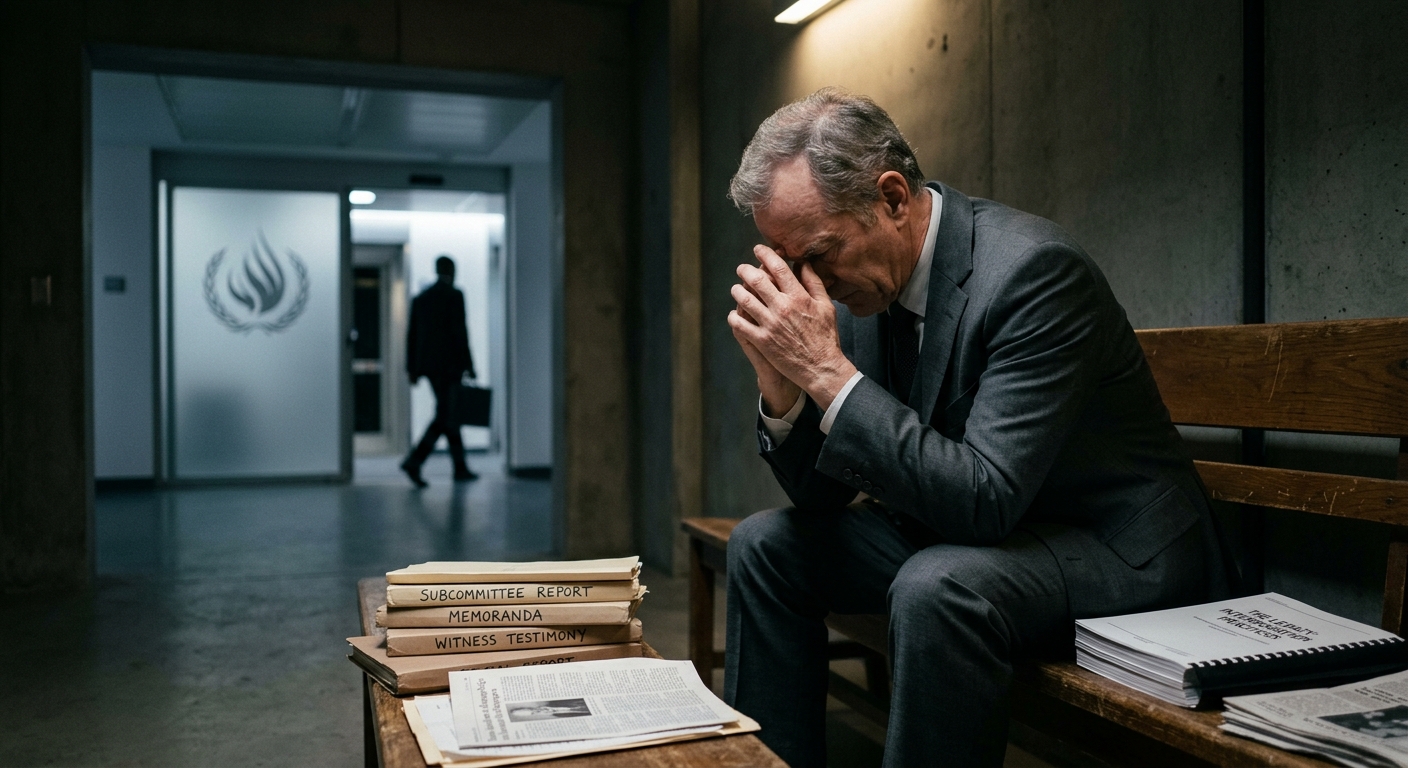
The aftermath of the September 11 attacks triggered an unprecedented paradigm shift in American intelligence, military operations, and national security doctrine. In the immediate wake of the tragedy, the United States government embarked on a “Global War on Terror,” rapidly prioritizing the acquisition of actionable intelligence over established legal boundaries. This era birthed an expansive, covert infrastructure dedicated to the capture, detention, and aggressive interrogation of suspected terrorists.
The resulting “enhanced interrogation” initiatives created a profound tension between the urgent desire to protect the homeland and the vital necessity of upholding foundational human rights. Decades later, the legacy of these covert operations continues to cast a long shadow over the United States’ democratic institutions and its moral standing on the global stage. The concept of a historical reckoning is not merely an academic exercise; it is a critical necessity to address the enduring damage to the justice system when state-sponsored abuse goes unaddressed.
The Architecture of Covert Operations and the Global Network of Black Sites
To execute its newly minted intelligence objectives, the government facilitated the creation of a clandestine global infrastructure. Intelligence agencies were granted extraordinary authority to detain and interrogate individuals far outside the traditional jurisdictional boundaries of the United States justice system. This resulted in the establishment of secret detention facilities, colloquially known as “black sites,” strategically positioned in allied nations across Europe, Asia, and the Middle East.
The geographic displacement of these sites was a calculated legal maneuver. By placing these facilities outside of sovereign U.S. territory, the executive branch sought to bypass the constitutional protections, due process requirements, and habeas corpus rights afforded to individuals on American soil. The detention camp at Guantanamo Bay, Cuba, became the most visible and enduring symbol of this extralegal strategy—a facility where individuals were subjected to indefinite detention without charge or trial.
A cornerstone of this system was the practice of “extraordinary rendition.” Suspects were routinely apprehended and transported across international borders without formal extradition procedures. They were delivered either to CIA-operated black sites or to third-party countries with documented histories of employing coercive interrogation methods. This systemic circumvention of legal oversight fundamentally altered the international perception of the United States as a steadfast champion of human rights and the rule of law.
The Pseudo-Legal Framework of ‘Enhanced Interrogation’
The implementation of such extreme measures required a veneer of legal justification to shield operatives and policymakers from domestic and international prosecution. The Department of Justice’s Office of Legal Counsel was tasked with drafting a series of highly controversial legal opinions, now widely known as the “Torture Memos.” These documents engaged in profound linguistic gymnastics, artificially narrowing the legal definition of torture. They argued that severe physical and psychological pain did not meet the statutory threshold of torture unless it was equivalent in intensity to the pain accompanying serious physical injury, such as organ failure, impairment of bodily function, or death.
With this pseudo-legal framework in place, the intelligence community outsourced the design of its interrogation methods. The CIA relied heavily on external contractors, most notably two psychologists, James Mitchell and Bruce Jessen. These individuals were instrumental in reverse-engineering military survival training (specifically the Survival, Evasion, Resistance, and Escape or SERE program) to create an offensive interrogation protocol. Detainees were subsequently subjected to brutal techniques, including waterboarding, prolonged sleep deprivation, excruciating stress positions, physical strikes, and confinement in coffin-like boxes. These methods were purposefully designed to break the human psyche and induce a state of “learned helplessness.”
While criminal prosecutions for the architects of the program have remained elusive, civil litigation has occasionally pierced the veil of impunity. In a landmark victory for accountability, the American Civil Liberties Union (ACLU) brought a civil lawsuit, Salim v. Mitchell, on behalf of three torture survivors directly against the psychologists who designed the program. The historic 2017 settlement of this case marked a rare and vital moment of accountability, demonstrating that civil courts can serve as an avenue for redress when criminal avenues are blocked.
A Direct Collision with International Human Rights Law
Following the atrocities of the Second World War, the international community painstakingly constructed a robust legal framework intended to prevent the recurrence of state-sponsored brutality. The cornerstone of this framework is the absolute and non-derogable prohibition of torture under both customary international law and specific, binding treaties.
The most critical of these is the United Nations Convention Against Torture and Other Cruel, Inhuman or Degrading Treatment or Punishment (CAT), which the United States ratified in 1994. The Convention unequivocally dictates that no exceptional circumstances whatsoever—whether a state of war, a threat of war, internal political instability, or any other public emergency—may be invoked as a justification for torture. The post-9/11 interrogation program represented a blatant, systemic breach of the United States’ obligations under CAT and the Geneva Conventions.
The international community, alongside global human rights organizations, fiercely condemned these violations. The fallout was severe, highlighting the dissonance of a nation that publicly championed liberty while secretly authorizing the systematic abuse of detainees. Furthermore, this abdication of human rights commitments provided dangerous political cover for authoritarian regimes worldwide, which quickly leveraged the U.S. precedent to justify their own repressive crackdowns under the guise of counter-terrorism.
The Judiciary and the Shield of the State Secrets Privilege
In a healthy constitutional republic, the judicial branch serves as a vital check on executive overreach. However, in the context of post-9/11 national security litigation, U.S. courts have repeatedly deferred to the executive branch, often prioritizing government secrecy claims over the rights of victims desperately seeking legal redress.
This deference is most visibly manifested through the weaponization of the “state secrets privilege.” This evidentiary rule allows the federal government to withhold information in legal proceedings—and often to seek the outright dismissal of lawsuits—if it claims that disclosure would harm national security. While initially intended for rare and highly specific military secrets, the privilege has been expansively invoked by multiple administrations to summarily terminate lawsuits brought by survivors of extraordinary rendition and torture.
A prominent illustration of this judicial deference occurred in the 2022 Supreme Court decision United States v. Zubaydah. Abu Zubaydah, a detainee held at Guantanamo Bay who survived some of the most extreme torture in the CIA program, sought information regarding the location of a black site in Poland to support foreign criminal investigations. Despite the fact that the existence of the Polish site was already widely documented by international bodies and public reporting, the Supreme Court ruled in favor of the government, permitting the state secrets privilege to block the discovery of the evidence.
By allowing the executive branch to utilize the state secrets privilege as an impenetrable shield, the judiciary has effectively closed the courthouse doors to those seeking accountability. This lack of judicial scrutiny denies individual justice and prevents the American public from fully understanding the scope of the government’s extrajudicial actions.
The Imperative of Transparency and the Senate Intelligence Report
Accountability is impossible without radical transparency. The most significant institutional effort to bring the covert detention and interrogation program into the light was undertaken by the Senate Select Committee on Intelligence (SSCI).
After years of exhaustive investigation and intense bureaucratic conflict with the intelligence community, the Committee released a declassified, 500-page executive summary of its comprehensive report in December 2014. The findings were devastating. The report officially concluded that the “enhanced interrogation techniques” were not only brutally cruel but fundamentally ineffective at acquiring actionable intelligence or preventing imminent terrorist attacks. It also detailed how the agency misled Congress, the White House, and the public regarding the severity and effectiveness of the program.
However, the full, 6,700-page report remains heavily classified and hidden from public view. Transparency organizations and human rights advocates continue to demand the release of the complete document. They argue that a true historical reckoning requires an unvarnished account of the operational details, internal communications, and systemic institutional failures that allowed the abuses to operate unchecked for years. The ongoing classification of the full record serves primarily to protect the architects of the program from historical and legal scrutiny, risking a dangerous historical amnesia.
The Ripple Effects on the Military Commissions
The legacy of these interrogations continues to actively subvert the United States military justice system, most notably within the military commissions established at Guantanamo Bay to try suspected terrorists.
A bedrock principle of both domestic and international law is that evidence extracted through torture is inherently unreliable and legally inadmissible. The systemic use of coercive techniques has irreparably tainted the evidentiary record for many high-value detainees. Consequently, the legal proceedings at Guantanamo have devolved into a perpetual quagmire of pre-trial litigation.
Defense attorneys are locked in endless battles with government prosecutors over the admissibility of statements made by defendants who were subjected to brutal, prolonged torture. Because of these legal complexities, decades after the 9/11 attacks, the victims’ families remain without closure, and the defendants remain in an unresolved legal limbo. This dynamic vividly demonstrates that state-sponsored torture ultimately undermines the very justice it claims to seek.
Restorative Justice and Institutional Reform: The Path Forward
Democratic resilience requires the courage to confront the darkest chapters of a nation’s history. A comprehensive reckoning must begin with official acknowledgment and formal apologies to those who were wrongfully detained, rendered, and abused under the guise of national security.
While executive orders have technically ended the CIA’s enhanced interrogation program, such executive actions are fragile and can be overturned by future administrations. To guarantee non-repetition, the legislative branch must enact ironclad laws that unequivocally criminalize all forms of torture without exception, close existing legal loopholes, and establish robust, independent oversight mechanisms with the teeth to hold intelligence agencies accountable.
The fight for transparency is not just a legal battle; it is a profound moral imperative. Reclaiming the moral high ground demands more than merely halting abuse—it requires a proactive, enduring commitment to restorative justice and the uncompromising defense of human dignity, even in the face of national fear. Only through an honest accounting of its past can the United States truly heal the institutional wounds inflicted during the post-9/11 era.
Frequently Asked Questions (FAQs)
- What is the UN Convention Against Torture (CAT)?
The United Nations Convention Against Torture is a core international human rights treaty aimed at preventing torture and other cruel, inhuman, or degrading treatment worldwide. It establishes an absolute, non-derogable prohibition on torture, meaning that no emergency, state of war, or national security threat can ever legally justify its use. The United States ratified this vital treaty in 1994.
- Who designed the post-9/11 “enhanced interrogation” program?
The program’s aggressive methods were heavily developed by James Mitchell and Bruce Jessen, two contracted psychologists who reverse-engineered military survival training to create coercive interrogation techniques, including waterboarding and sleep deprivation. They were subsequently sued by the ACLU in the landmark civil case Salim v. Mitchell.
- What is the “state secrets privilege”?
The state secrets privilege is a common-law evidentiary rule allowing the U.S. government to block the release of information in civil litigation if it claims the disclosure would harm national security. Legal experts and advocates argue it has been aggressively overused to dismiss legitimate lawsuits brought by victims of torture and rendition.
- Why is the Senate Intelligence Committee Report on Torture so important?
The 2014 declassified executive summary of the SSCI report provided official, government-backed confirmation of the extreme brutality and systemic ineffectiveness of the CIA’s post-9/11 interrogation program. It remains one of the most critical foundational documents for demanding transparency and historical accountability regarding the abuses of this era.
References
- Convention against Torture and Other Cruel, Inhuman or Degrading Treatment or Punishment — United Nations. 1984-12-10. https://treaties.un.org/pages/ViewDetails.aspx?src=IND&mtdsg_no=IV-9&chapter=4&clang=_en
- United States v. Zubaydah, 595 U.S. 195 (2022) — Supreme Court of the United States. 2022-03-03. https://www.supremecourt.gov/opinions/21pdf/20-827_i426.pdf
- Salim v. Mitchell – Lawsuit Against Psychologists Behind CIA Torture Program — American Civil Liberties Union (ACLU). 2017-08-17. https://www.aclu.org/cases/salim-v-mitchell-lawsuit-against-psychologists-behind-cia-torture-program
- Report of the Senate Select Committee on Intelligence Committee Study of the Central Intelligence Agency’s Detention and Interrogation Program — U.S. Senate Select Committee on Intelligence. 2014-12-09. https://www.intelligence.senate.gov/sites/default/files/publications/CRPT-113srpt288.pdf
Similar Articles








Read full bio of Sneha Tete


