
Civil Rights in 2026: The Supreme Court and Executive Power
Navigating the shifting landscape of American civil liberties in 2026.
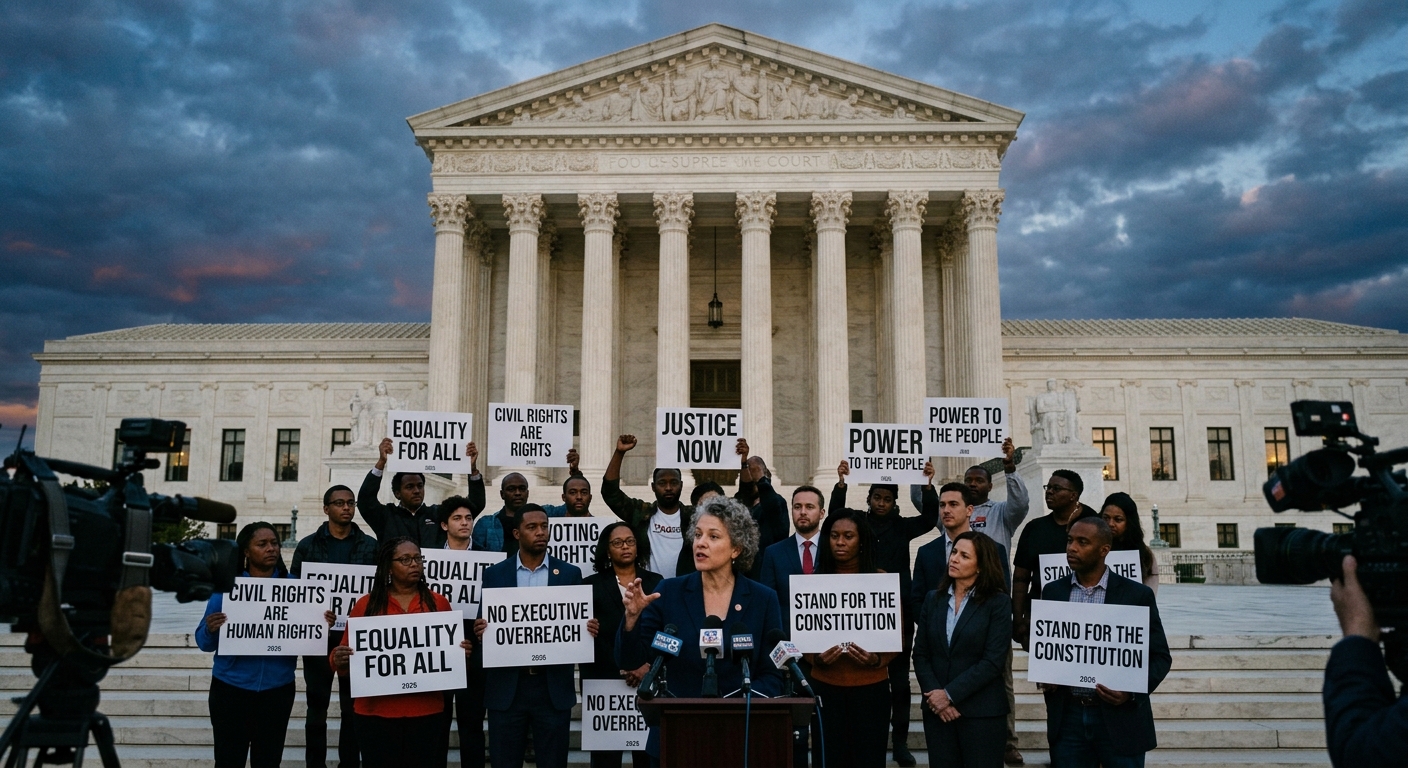
The Shifting Federal Landscape
The intersection of a shifting federal administration and a highly influential Supreme Court has ushered in a defining era for civil rights and civil liberties in the United States. As of 2026, the nation faces a profoundly transformed legal landscape. Following an election cycle marked by deep political polarization, the executive branch has wasted no time asserting broad authority through rapid executive orders, while the Supreme Court continues to aggressively shape the boundaries of constitutional law. This dynamic creates both unprecedented challenges and new battlegrounds for advocates of equality, free speech, and due process.
From the rolling back of historical anti-discrimination frameworks to heightened friction over immigration policies and birthright citizenship, the legal terrain is shifting at breakneck speed. Understanding the trajectory of these changes is essential for grasping the current state of American democracy. This article explores how the confluence of executive action and judicial interpretation is fundamentally redefining the rights of individuals, the strategic maneuvers shaping these outcomes, and what the future holds for civil liberties in the United States.
The Expanding Reach of Executive Power
Every new presidential administration brings a unique ideological approach to governance. However, the volume and pace of recent federal executive actions represent a historic structural shift in how civil rights policies are formulated and enforced. The current administration has heavily utilized executive orders to circumvent legislative stalemates, implementing directives that target a broad spectrum of civil liberties. These actions range from reshaping federal contracting guidelines regarding workplace diversity to redefining international asylum protocols.
A central pillar of this strategy is the rapid consolidation of authority within federal regulatory agencies. By directing departments to discard longstanding interpretations of foundational civil rights statutes, the executive branch is effectively rewriting federal compliance standards. Consequently, programs focused on environmental justice and systemic equity have been swiftly restricted or entirely defunded. This relentless momentum forces civil rights advocacy groups into a perpetually reactive state, constantly filing emergency lawsuits in federal district courts to halt immediate harms.
Furthermore, this aggressive regulatory posture has been emboldened by recent judicial precedents concerning executive privilege. A major Supreme Court ruling in 2024 affirmed expansive immunity for presidential actions, signaling to the executive branch that bold, unilateral policy shifts are less likely to face fatal legal repercussions at the highest levels. As federal agencies deprioritize the investigation of systemic discrimination, the immense burden of defending vulnerable communities has increasingly fallen upon grassroots organizers and proactive state-level officials.
The Supreme Court’s Shadow Docket: Speed vs. Transparency
Historically, the Supreme Court has resolved the nation’s most consequential civil rights disputes through its traditional merits docket—a rigorous process involving months of public briefing, extensive oral arguments, and deeply detailed, signed opinions. Today, an alarming number of fundamental civil liberties battles are being decided via the Court’s emergency mechanism, commonly known as the “shadow docket.” Originally designed to handle mundane procedural questions or genuine, time-sensitive emergencies, this expedited process has morphed into a primary vehicle for the federal government to bypass lower court injunctions.
The lack of transparency inherent in the shadow docket deeply concerns legal scholars and transparency advocates. Rulings are frequently published late at night, often consist of merely a few sentences, and routinely fail to disclose which justices voted for or against the measure. This deliberate opacity deprives the public, lower appellate courts, and lawmakers of the detailed legal reasoning required to understand evolving constitutional precedents.
For civil rights advocates, the implications are disastrous. When a district court blocks an executive order that severely restricts voting access or dismantles protections for marginalized groups, an immediate appeal to the shadow docket can reinstate the policy before a thorough constitutional analysis occurs. This trend allows monumental shifts in American civil rights law to take effect behind closed doors, undermining the legitimacy of the judicial review process and intimidating lower courts from issuing necessary injunctions against unconstitutional policies.
Key Areas of Civil Liberties Under Review
| Issue Area | Federal Policy Stance | Judicial Status | Civil Rights Impact |
|---|---|---|---|
| Birthright Citizenship | Executive orders restricting 14th Amendment interpretations. | Facing injunctions; appealed to the Supreme Court. | Potential creation of a disenfranchised subclass of American-born individuals. |
| Disparate Impact | Directives aimed at eliminating the standard in federal enforcement. | Lower courts divided; awaiting high court review. | Harder to prove systemic discrimination in housing and employment. |
| Emergency Action | Invocation of Alien Enemies Act for rapid removals. | Temporarily blocked, pending full constitutional review. | Severe threats to due process and immigration hearing rights. |
Immigration, Due Process, and Birthright Citizenship
Immigration policy remains one of the most fiercely contested arenas in the ongoing struggle for civil liberties. Recent legal maneuvers have drastically impacted the fundamental rights of noncitizens and naturalized Americans alike. A primary example is the executive branch’s highly controversial invocation of the Alien Enemies Act. Historically reserved for formally declared international wars, this centuries-old statute is now being weaponized to justify sweeping domestic removals. By bypassing traditional immigration courts, this tactic strips individuals of their right to a fair hearing, posing a severe threat to basic due process.
Concurrently, a direct, high-stakes battle is waging over the 14th Amendment’s Citizenship Clause. Through targeted executive orders, the federal government is actively attempting to deny birthright citizenship to children born on United States soil to parents lacking permanent legal status. This aggressive policy contradicts over a century of established Supreme Court precedent, which has long recognized that anyone born within U.S. jurisdiction is inherently an American citizen.
This proposed redefinition of citizenship has ignited a massive wave of litigation. Civil rights organizations warn that eliminating birthright citizenship would create a permanent, marginalized underclass of American-born residents, completely disenfranchised and devoid of constitutional protections. Although lower federal courts have temporarily blocked these orders, the administration’s persistent appeals guarantee that this profound constitutional crisis will soon reach the Supreme Court.
Dismantling the Disparate Impact Standard
While immigration battles dominate the headlines, a quieter but equally catastrophic threat to equality is unfolding regarding the “disparate impact” standard. Enshrined in Title VI and Title VII of the Civil Rights Act of 1964, disparate impact is a critical legal doctrine holding that policies can be deemed discriminatory if they disproportionately harm a protected demographic class—regardless of whether there was explicit intent to discriminate. This framework has been the cornerstone of efforts to eradicate systemic racism in housing, employment, banking, and public education.
A wave of executive directives and conservative legal challenges is now actively seeking to eliminate this vital standard. Opponents argue that holding institutions accountable for disparate outcomes constitutes an unfair burden and amounts to reverse discrimination. If the Supreme Court ultimately agrees to strike down or severely limit disparate impact liability, plaintiffs will face the near-impossible hurdle of proving explicit, intentional malice to win civil rights lawsuits.
The ripple effects of such a ruling would be felt across the economy. Discriminatory algorithms used in hiring processes would become virtually untouchable. Housing advocates would lose their most potent legal tool against predatory lending and exclusionary local zoning laws. Stripping away disparate impact would severely cripple the federal government’s enforcement mechanisms, effectively rolling back half a century of hard-won progress and shielding systemic inequality behind a veneer of legally permissible neutrality.
State Courts: The New Vanguard of Constitutional Rights
As the federal judiciary becomes increasingly resistant to expansive civil rights interpretations, advocates are strategically shifting their focus to state supreme courts. The United States Constitution is designed to establish a “floor” for fundamental rights, but state constitutions are legally permitted to provide a much higher “ceiling” of civil liberties. This concept, known as independent state grounds, has rapidly become an essential lifeline for rights organizations.
State judicial systems are now issuing landmark rulings that sharply diverge from restrictive federal trends. In response to federal rollbacks, state supreme courts are robustly applying their own constitutional provisions to defend the right to privacy, equal protection, and fair search and seizure. For instance, following the federal dismantling of reproductive rights, several state courts have explicitly recognized an independent right to bodily autonomy within their state charters, ensuring access to healthcare for millions.
Additionally, state courts are actively challenging the conscription of local law enforcement for federal immigration sweeps, relying on strict interpretations of the separation of powers. While this decentralized approach successfully preserves liberties in certain regions, it inherently breeds extreme geographic inequality. Consequently, an individual’s access to fundamental human rights is increasingly dictated by their zip code, forcing local advocacy chapters to bear the enormous cost of defending American liberty state by state.
Strategies for the Future: Advocacy and Public Action
Protecting constitutional freedoms against coordinated assaults from both the executive branch and a conservative federal judiciary necessitates a comprehensive, multifaceted strategy. Civil rights organizations recognize that they can no longer rely entirely on defensive litigation within the federal court system. Instead, the focus has shifted toward proactive campaigns that synchronize strategic legal challenges with massive public mobilization.
First, a heavy emphasis is being placed on civic education. Advocates are working tirelessly to demystify complex judicial processes—such as the shadow docket—for everyday citizens. Fostering a highly informed electorate is absolutely critical for generating the political pressure required to codify vulnerable rights into permanent law. Second, there is a strategic pivot toward aggressive legislative advocacy at the municipal and state levels. By enacting robust local non-discrimination laws and community defense policies, local governments can construct vital legal firewalls against federal overreach.
Ultimately, the survival of American civil liberties depends on the public’s unwavering refusal to normalize the gradual erosion of democratic norms. These ongoing legal battles transcend abstract judicial theory; they are fundamental struggles over the nation’s core identity. Active engagement, sustained support for grassroots legal defense funds, and demanding absolute accountability from elected representatives remain the most powerful tools for ensuring that justice prevails.
Frequently Asked Questions (FAQs)
What is the Supreme Court’s “shadow docket”?
The shadow docket refers to emergency orders and summary decisions issued by the Supreme Court outside of its regular, formal merits docket. These rulings are typically fast-tracked, lack full public briefing or oral arguments, and often do not include detailed written opinions explaining the Court’s legal reasoning.
Why is the disparate impact standard so important?
Disparate impact is a foundational legal doctrine used in civil rights law. It prohibits policies or institutional practices that have a disproportionately adverse effect on a protected class (such as race, religion, or gender), even if there was no explicit or proven intention to discriminate.
How are state courts protecting civil liberties today?
State constitutions frequently offer broader legal protections than the federal Constitution. In response to federal rollbacks, civil rights advocates are increasingly filing lawsuits in state courts. They rely on “independent state grounds” to successfully secure rights related to privacy, free speech, and reproductive freedom.
What is the legal debate surrounding birthright citizenship?
The 14th Amendment’s Citizenship Clause has long been interpreted by courts to grant automatic citizenship to anyone born on U.S. soil. Recent executive actions have attempted to bypass this interpretation to deny citizenship to children of undocumented immigrants, sparking massive constitutional challenges that are currently progressing toward the Supreme Court.
References
- 23-939 Trump v. United States (07/01/2024) — Supreme Court of the United States. 2024-07-01. https://www.supremecourt.gov/opinions/23pdf/23-939_e2pg.pdf
- Restoring Equality of Opportunity and Meritocracy — The White House. 2025-04-23. https://www.whitehouse.gov/presidential-actions/
- The People’s Guide to the U.S. Supreme Court: 2025-2026 — Democracy Forward. 2026-01-20. https://democracyforward.org/work/the-peoples-guide-to-the-u-s-supreme-court-2025-2026/
- United States: Freedom in the World 2025 Country Report — Freedom House. 2025. https://freedomhouse.org/country/united-states/freedom-world/2025
Similar Articles








Read full bio of medha deb


