
Tiny Tech: Uses of the World’s Smallest Computer
Discover innovative applications of the 0.3mm Michigan microdevice revolutionizing medicine, energy, and surveillance.
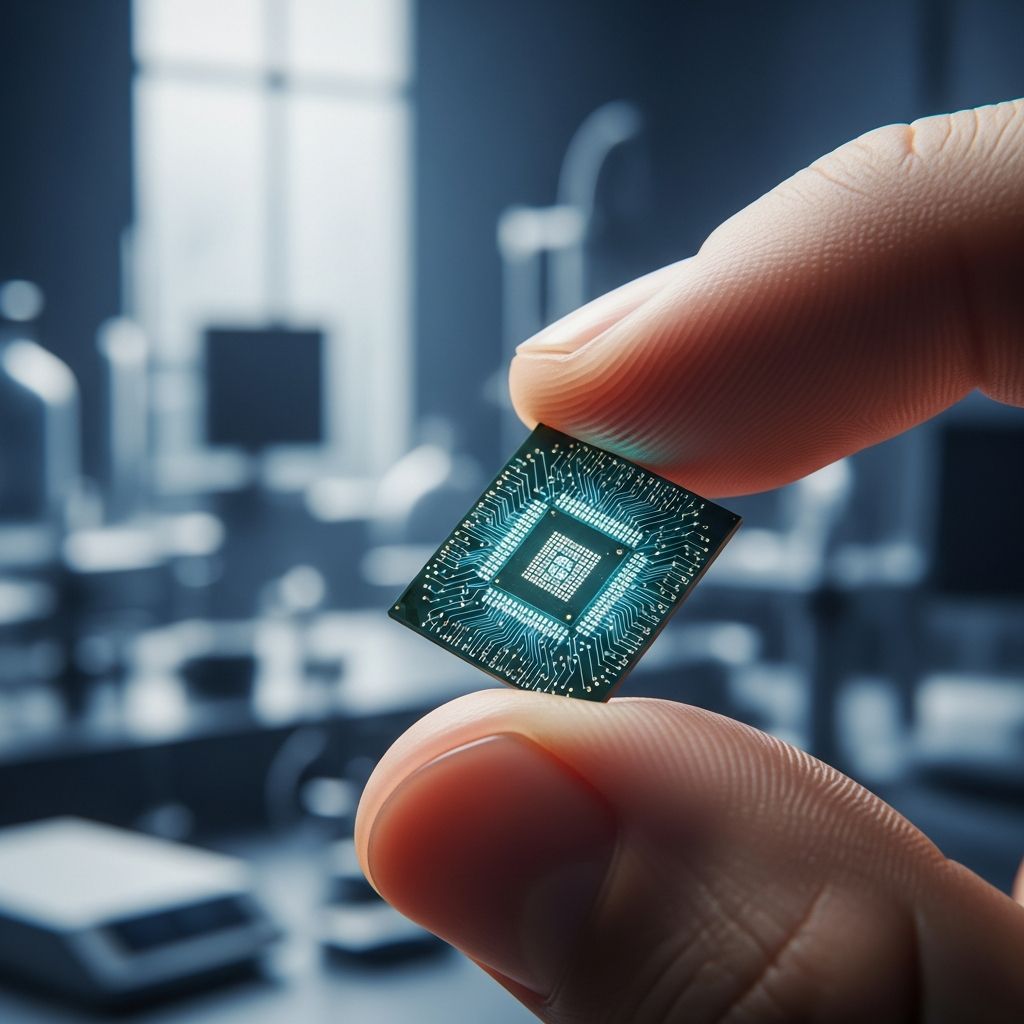
The quest for miniaturization in computing has reached extraordinary levels with the development of devices measuring just 0.3 millimeters on each side—smaller than a grain of rice. Engineers at the University of Michigan have pioneered this breakthrough, creating a fully functional computer system that challenges traditional notions of what constitutes a ‘computer.’ This microdevice integrates processing, memory, sensors, and communication capabilities into a cube so tiny it could fit millions into a thimble. Unlike larger systems, it operates on mere nanowatts of power harvested from ambient light, enabling perpetual functionality without batteries.
Engineering a Marvel at Millimeter Scale
At the heart of this innovation is the Michigan Micro Mote (M3), recognized by the Computer History Museum as a historic milestone in computing. Measuring 0.3mm x 0.3mm x 0.3mm, it surpasses previous records, including earlier 2mm versions and competitors like IBM’s efforts. The device features a processor, RAM, photovoltaic cells for energy harvesting, and optical communication via visible light instead of radio waves—necessary due to its minuscule size precluding traditional antennas.
Power efficiency defines its design: a 1mm² solar cell generates 20nW under indoor lighting, with standby consumption at just 2nA—a million times less than a smartphone. This energy neutrality allows continuous operation in low-light environments, a first for wireless systems of this scale. Data processing occurs in bursts: sensors detect changes in temperature, pressure, or motion, log them, and transmit via LED pulses to a base station up to 2 meters away.
Revolutionizing Healthcare Monitoring
One of the most transformative applications lies in medicine, where size constraints have long limited internal diagnostics. This microcomputer enables in vivo sensing, such as pressure monitoring inside the eye for glaucoma detection. Implanted devices could wirelessly relay real-time intraocular pressure data, alerting physicians to spikes that risk vision loss—potentially preventing blindness through early intervention.
Cancer research benefits immensely too. These motes could be injected into tumors to track growth, metabolic changes, or treatment responses at the cellular level. Unlike static imaging, they provide continuous, localized data, aiding personalized therapies. Researchers envision swarms of thousands monitoring biochemical processes, offering insights into tumor microenvironments previously inaccessible.
- Glaucoma Detection: Measures eye pressure continuously without invasive surgery.
- Tumor Tracking: Monitors cancer cell activity in real-time.
- Drug Delivery Feedback: Senses local responses to chemotherapy.
Environmental and Industrial Sensing
Beyond biology, these devices excel in harsh environments. In oil reservoirs, they could be dispersed to monitor pressure, temperature, and fluid composition deep underground. Traditional sensors are bulky and wired; motes offer wireless, distributed networks, optimizing extraction and predicting failures to enhance safety and yield.
Biochemical monitoring extends to labs and ecosystems. Placed in reactors, they track pH, toxins, or reactions with precision. In environmental science, they enable studies of micro-organisms, like tracking snail behaviors or aquatic pollutants at scales invisible to larger tools.
| Application | Key Metrics Monitored | Advantages Over Traditional Sensors |
|---|---|---|
| Oil Reservoirs | Pressure, Temperature, Flow | Wireless, Deployable in Thousands, Low-Power |
| Biochemical Processes | pH, Toxins, Reactions | Micro-Scale Resolution, Perpetual Operation |
| Environmental Studies | Motion, Chemicals | Non-Invasive, Long-Term Deployment |
Surveillance and Security Innovations
In security, the M3’s stealth makes it ideal for discreet monitoring. Deployed in rooms, it detects motion, temperature anomalies, or even audio/visual cues within a 2-meter range. Swarms could form ad-hoc networks for comprehensive coverage, transmitting alerts via light to base stations. This low-profile approach suits high-security areas where visible cameras fail.
Future iterations aim for sub-millimeter scales, potentially entering cells for intracellular surveillance—revolutionizing biosecurity against pathogens or enabling forensic analysis at molecular levels.
Technical Challenges and Breakthroughs
Building such a device demanded innovations in fabrication. Multi-layered integrated circuits stack solar cells, processors, and memory vertically, interconnected with microscopic vias. Transparent packaging allows light penetration for power and communication, but induces parasitic currents—solved via specialized circuit designs.
Communication via visible light (backscatter modulation) achieves data rates sufficient for sensor bursts. Programming occurs optically too: the base station flashes instructions, which the mote stores transiently in RAM. Upon power loss, data and code vanish, distinguishing it from persistent-memory systems—a debate on its ‘computer’ status.
Future Horizons: Cellular and Beyond
Looking ahead, scaling to 0.1mm could enable cellular implantation, broadcasting activity for disease modeling or gene therapy monitoring. Combined with AI-driven base stations, swarms could self-organize, forming intelligent sensor clouds for smart cities, agriculture, or disaster response.
Energy harvesting evolves too: integrating vibration or thermal sources for diverse environments. Standardization efforts may yield commercial motes, integrating with IoT ecosystems for ubiquitous sensing.
Frequently Asked Questions (FAQs)
What powers the world’s smallest computer?
It uses tiny solar cells harvesting ambient light, producing 20nW indoors for perpetual operation without batteries.
How small is the Michigan Micro Mote exactly?
0.3mm per side, about 1/10th the size of a grain of rice, with earlier versions at 2mm.
Can it store data permanently?
No, it uses volatile RAM; data and programs reset without power, prioritizing low-power operation.
What are its communication limits?
Up to 2 meters via visible light to a base station, suitable for room-scale deployments.
Is it recognized as the smallest computer?
Yes, inducted into the Computer History Museum; it meets criteria for input, processing, and output.
Ethical and Regulatory Considerations
With great power comes scrutiny. Privacy concerns arise in surveillance uses—optical comms mitigate interception but raise deployment ethics. Medical implants demand biocompatibility testing; FDA pathways for such novel devices are uncharted. Intellectual property from University of Michigan spurs startups, but scaling manufacturing poses yield challenges.
Broader implications include democratizing sensing: low-cost swarms could empower developing regions for health and agriculture monitoring, bridging digital divides.
References
- Michigan Micro Mote (M3) makes history as the world’s smallest computer — University of Michigan Engineering. 2023-06-15. https://ece.engin.umich.edu/stories/michigan-micro-mote-m3-makes-history-as-the-worlds-smallest-computer
- Researchers develop the world’s smallest computer, smaller than a grain of rice — Hindustan Times Tech. 2023-05-10. https://tech.hindustantimes.com/tech/news/researchers-develop-the-world-s-smallest-computer-smaller-than-a-grain-of-rice-story-s8uFRlwqcxsmz68Vw2mZCN.html
- World’s Smallest ‘Computer’ Runs off 16nW — EE Power. 2023-07-20. https://eepower.com/news/worlds-smallest-computer-runs-of-16nw/
- The World’s Smallest Computer — Computer History Museum. 2015-03-26. https://computerhistory.org/blog/the-worlds-smallest-computer/
- World’s Smallest Computer — YouTube (University of Michigan). 2023-04-12. https://www.youtube.com/watch?v=VjLRNkNgJGU
Similar Articles








Read full bio of Sneha Tete




