
Winter Multi-Vehicle Crashes: Key Legal Insights
Navigating liability, fault determination, and compensation strategies in hazardous winter chain-reaction accidents.
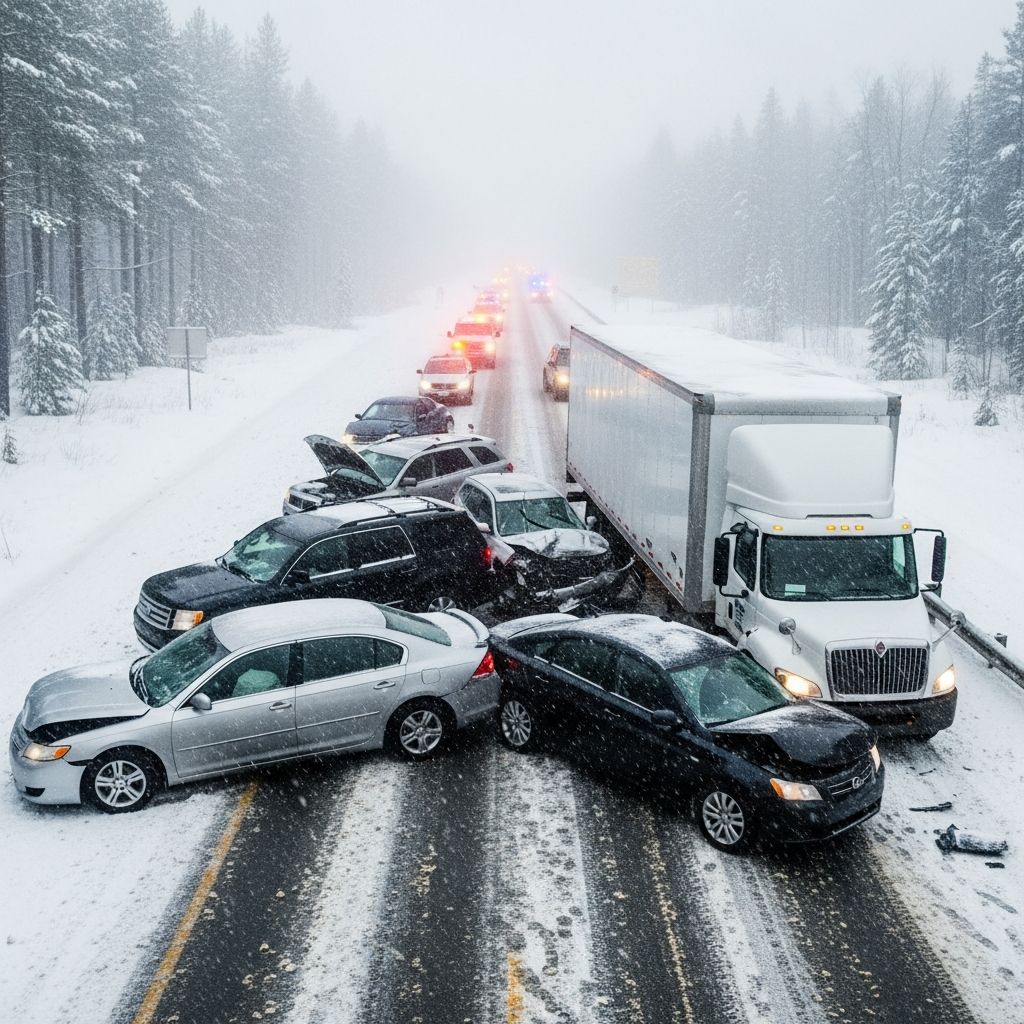
Hazardous winter conditions like snow, ice, and poor visibility frequently trigger multi-vehicle collisions known as chain-reaction crashes. These incidents involve sequential impacts among several cars, complicating fault assignment and compensation claims. Drivers must adapt to road dangers, and failure to do so can lead to legal accountability despite the weather.
The Nature and Dangers of Chain-Reaction Incidents in Winter
Chain-reaction crashes occur when one vehicle’s sudden maneuver—such as braking abruptly—prompts a domino effect of rear-end collisions. In winter, factors like black ice, slush-covered roads, and whiteout conditions amplify risks, turning highways into high-danger zones. According to the National Highway Traffic Safety Administration, adverse weather contributes to over 900,000 crashes annually in the U.S., with multi-vehicle pileups often resulting in severe injuries due to repeated impacts from various directions.
These accidents differ from single-pair collisions because damage patterns and witness accounts become fragmented. A vehicle might sustain initial front-end damage followed by side or rear hits, making injury causation harder to trace. Victims often face whiplash, fractures, traumatic brain injuries, and long-term trauma, underscoring the need for immediate medical attention and legal strategy.
Establishing Negligence in Icy Road Collisions
Negligence forms the backbone of most personal injury claims in winter crashes. To succeed, plaintiffs must prove four elements: duty of care, breach of that duty, causation, and resulting damages. Every driver owes others a duty to operate safely under prevailing conditions, meaning speed limits are maximums, not mandates, in storms.
Courts evaluate if drivers adjusted behaviors—like increasing following distances to four seconds or more, using headlights, or activating hazard lights. Breaches occur when motorists speed for conditions, tailgate, or drive distracted. For instance, following too closely on icy roads prevents timely stops, initiating chains.
- Duty: Operate vehicle prudently given weather.
- Breach: Speeding, improper tires, or inattention.
- Causation: Breach directly led to the pileup sequence.
- Damages: Medical costs, lost income, pain.
Weather serves as context, not a blanket defense. In snow-prone areas, storms are foreseeable, so ‘sudden emergency’ claims rarely succeed unless truly unforeseeable, like a fallen tree.
Apportioning Fault Among Multiple Parties
Multi-vehicle crashes often involve shared liability under comparative negligence rules, adopted by most states. Fault percentages reduce recoveries proportionally. Pure comparative systems allow claims regardless of plaintiff fault; modified versions bar recovery if over 50-51% at fault.
| State Example | Rule Type | Impact on Recovery |
|---|---|---|
| Rhode Island | Pure Comparative | Recover even if 99% at fault (reduced amount) |
| Illinois | Modified (51% bar) | No recovery if 51%+ at fault |
| California | Pure Comparative | Full damages minus fault share |
In chain reactions, investigators pinpoint the ‘trigger’ driver—perhaps one who stopped without cause or hydroplaned due to bald tires. Subsequent drivers may share blame for not maintaining safe distances. Commercial trucks add vicarious liability for employers under respondeat superior.
Gathering Critical Evidence Post-Crash
Preserving proof is vital amid chaos. Police reports document scene layouts, weather, and statements. Dashcams capture sequences, while traffic cams provide overhead views. Vehicle black boxes reveal speeds and braking.
Witness contacts, photos of skid marks, and damage alignments aid reconstruction experts in modeling crash dynamics. Weather logs from NOAA confirm conditions, countering ‘act of God’ defenses. Medical records link injuries to impacts, essential for causation.
- Call 911 and stay safe.
- Document everything: positions, weather, lights.
- Exchange info; note commercial vehicles.
- Seek medical care promptly.
- Contact attorney before insurers.
Insurance Hurdles in Winter Pileups
Multiple policies complicate claims. Each driver’s liability coverage responds first, but limits may exhaust quickly. Uninsured/underinsured motorist (UM/UIM) stacks for gaps. Insurers deploy adjusters to minimize payouts, blaming weather or mutual fault.
Commercial crashes tap deeper pockets via cargo and employer policies. Subrogation battles arise as companies seek reimbursement. Policyholders should avoid recorded statements without counsel, as admissions can undermine claims.
Potential Third-Party Liabilities
Beyond drivers, others may bear responsibility. Municipalities face suits for negligent plowing or untreated roads, but immunities apply—notice within 60-180 days required. Construction zones with poor signage heighten risks.
Vehicle owners neglecting maintenance (e.g., uncleared snow launching as missiles) invite liability. Employers for at-fault drivers on duty are vicariously liable. Product makers of defective tires or brakes could face strict liability.
Navigating Claims and Litigation Timelines
Statutes of limitations vary: 1-3 years for personal injury. Winter victims must act swiftly for preservation orders on footage. Settlements favor strong evidence; trials use experts for animations.
Compensation covers economic (bills, wages) and non-economic (pain) damages, plus punitive if reckless. Lawyers negotiate multiples of specials in solid cases.
Preventive Measures to Avoid Winter Chains
Proactive steps reduce risks: Install snow tires, clear all glass/roofs, pack kits. Drive defensively—slow, distant, alert. Apps like Waze warn of hazards.
Frequently Asked Questions (FAQs)
Can bad weather completely excuse a driver in a chain crash?
No, courts require reasonable adaptation to conditions; negligence persists if avoidable.
Who pays if multiple at-fault drivers in a pileup?
Insurance apportions by fault percentage under comparative rules.
Should I talk to insurance right after?
Consult a lawyer first to protect your claim.
Are government roads always safe in snow?
No, but sovereign immunity limits suits; check state notice rules.
How much are settlements for winter multi-car injuries?
Varies widely; $50K-$500K+ based on damages and liability clarity.
References
- Winter Driving Accidents: Legal Steps to Protect Your Rights — DM Law USA. 2025. https://www.dmlawusa.com/blog/winter-driving-accidents-protect-your-rights/
- Multi-Car Pileups During Snowstorms – Who Is Liable In A Chain-Reaction Crash? — GS Injury Firm. 2024-12-15. https://gsinjuryfirm.com/blog/multi-car-pileups-during-snowstorms-who-is-liable-in-a-chain-reaction-crash/
- Car Accidents in Snowy Conditions: Legal Liability, Negligence, and States of Emergency — Morris James LLP. 2026-01-24. https://www.morrisjames.com/p/102me22/car-accidents-in-snowy-conditions-legal-liability-negligence-and-states-of-eme/
- Who Is Liable in Winter Chain-Reaction Crashes? — Adler & Sons, Ltd. 2025. https://www.adlerltd.com/chicago-injury-lawyer/who-is-liable-in-winter-chain-reaction-crashes
- Chain Reaction Car Accidents & Determining Legal Fault — Justia. 2024. https://car-accidents.justia.com/types-of-car-accidents/chain-reaction-accidents/
- Car Accidents in Snow or on Black Ice: Who Is At Fault? — M-N-Law. 2025. https://www.m-n-law.com/blog/who-is-at-fault-snow-black-ice-accident/
- The Truth About Winter and Snow Multi-Vehicle Pileups — Malm Legal. 2025. https://www.malmlegal.com/blog/winter-snow-multi-vehicle-pileups/
Similar Articles








Read full bio of Sneha Tete




