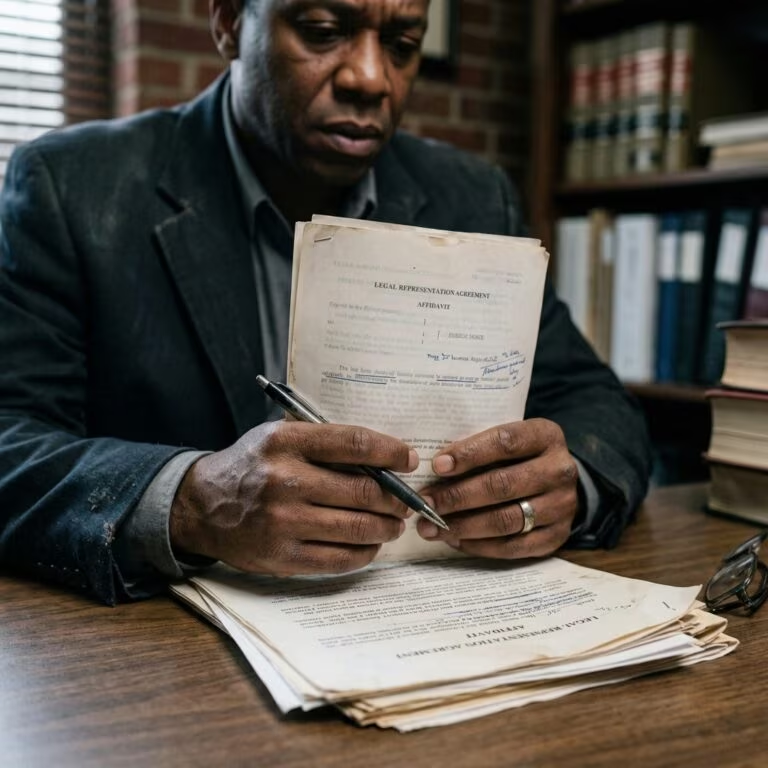
The relationship between a criminal defendant and their lawyer forms the bedrock of the U.S. justice system. Central to this bond is attorney-client privilege, a legal shield that encourages open communication without fear of betrayal. But does this protection hold under all circumstances? This article delves into the nuances of confidentiality, exceptions that compel disclosure, and strategic considerations for those navigating warrants or ongoing cases.
Foundations of Attorney-Client Confidentiality
Attorney-client privilege traces its roots to English common law and has been enshrined in American jurisprudence for centuries. It ensures that individuals can seek legal advice freely, knowing their disclosures remain protected. Without this safeguard, clients might withhold critical details, undermining effective defense strategies.
Under the American Bar Association’s (ABA) Model Rule 1.6, lawyers must maintain confidentiality for all information related to representation unless specific exceptions apply. This rule, adopted or adapted by nearly every state, prohibits attorneys from revealing client secrets—even if doing so would exonerate the lawyer in unrelated matters.
Privilege applies broadly: from initial consultations to trial preparations. Even prospective clients enjoy this protection if seeking legal services. Communications must be confidential—meaning private discussions, emails, or notes not shared with third parties qualify.
- Verbal discussions in private settings.
- Written correspondence, including emails and letters.
- Documents shared solely for legal advice.
However, privilege does not cover communications in the presence of outsiders or those intended for public dissemination. State variations exist; for instance, some jurisdictions impose stricter duties on future crimes.
When Privilege Holds Firm: Everyday Scenarios
In routine criminal matters, lawyers cannot disclose client information. Suppose you confess a past crime during consultation—your attorney cannot report it. This holds even for active warrants. Lawyers routinely advise clients with outstanding arrest warrants without alerting authorities.
Attorneys often recommend self-surrender with representation, negotiating bond arrangements beforehand to minimize jail time. This cooperation demonstrates responsibility to courts, potentially influencing outcomes positively.
| Scenario | Can Lawyer Disclose? | Reason |
|---|---|---|
| Past crime confession | No | Privilege covers historical facts |
| Active warrant discussion | No | Confidential consultation |
| Strategy planning | No | Essential to representation |
| General legal inquiry | No | Prospective client protection |
These protections empower full candor, allowing lawyers to craft robust defenses based on complete facts.
Critical Exceptions: When Disclosure Becomes Mandatory
Absolute confidentiality does not exist. Model Rule 1.6(b) outlines permissive disclosures, with some states mandating them. Key exceptions prioritize public safety over privilege.
- Preventing Death or Substantial Bodily Harm: If a client reveals plans for imminent violence, lawyers may warn victims or authorities. This mirrors the Tarasoff duty-to-warn principle extended to attorneys.
- Future Crimes or Fraud: Disclosure permitted to avert financial harm where the lawyer’s services facilitate the act.
- Rectifying Past Fraud: Lawyers can report if client used their services in ongoing deception causing substantial injury.
- Court Orders or Legal Compliance: Subpoenas override privilege in limited cases.
- Self-Defense: Attorneys may reveal info to defend against client lawsuits or criminal accusations.
State laws diverge. California Rule of Professional Conduct 1.16 allows withdrawal if representation aids crime, while Florida emphasizes silence rights during surrender. Always verify jurisdiction-specific rules.
Navigating Warrants: Lawyer’s Role in Safe Surrender
Discovering a warrant triggers urgency. Contacting a lawyer first preserves rights. They can verify warrant details, assess charges under statutes like Florida’s § 901.15 (probable cause arrests), and coordinate voluntary surrender.
Benefits include:
- Pre-arranged bond to avoid overnight detention.
- Protection from impromptu questioning.
- Strategic timing to minimize flight risk perceptions.
Avoid police contact without counsel—statements during booking can incriminate. Lawyers guide on invoking Fifth Amendment rights immediately.
Ethical Boundaries: Can Lawyers Refuse or Withdraw?
Private attorneys select cases per ethical rules, rejecting conflicts or overwhelming workloads. Once accepted, withdrawal requires court approval under rules like California’s 1.16, triggered by non-payment, non-cooperation, or ethical violations.
Clients must assist actively; persistent obstruction justifies exit. This upholds representation quality.
Practical Steps for Defendants
To maximize protections:
- Seek counsel promptly for consultations.
- Maintain privacy in all communications.
- Follow advice on surrender or pleas.
- Understand limits—discuss exceptions upfront.
- Document interactions for fee disputes.
For interstate issues, federal matters, or complexities, specialist consultation proves invaluable.
Frequently Asked Questions (FAQs)
Can a lawyer report me for a past crime I confessed?
No, attorney-client privilege protects historical disclosures unless they involve ongoing harm or exceptions apply.
What if I have a warrant and consult a lawyer?
Lawyers cannot turn you in; they often facilitate safe surrender with bond pre-negotiated.
Does privilege apply to initial phone calls?
Yes, prospective clients enjoy confidentiality when seeking advice.
Can my lawyer withdraw mid-case?
Yes, for reasons like non-payment or ethical conflicts, with court permission.
Are there state differences in disclosure rules?
Yes, some mandate reporting future crimes; check local bar rules.
Should I turn myself in without a lawyer?
No—consult first to protect rights and strategize.
What items to bring when surrendering?
ID, attorney contacts, essentials only—lawyer advises specifics.
Does self-surrender guarantee leniency?
It shows cooperation but outcomes vary by case factors.
References
- Will A Lawyer Turn You In? — Barkemeyer Law Firm. 2023. https://attorneycarl.com/will-a-lawyer-turn-you-in/
- Can a lawyer turn u in if you call for case advise — Avvo Legal Answers. 2013-01-15. https://www.avvo.com/legal-answers/can-a-lawyer-turn-u-in-if-you-call-for-case-advise-1183222.html
- Should I Call a Lawyer Before Turning Myself In? — Musca Law. 2024. https://www.muscalaw.com/blog/should-i-call-lawyer-turning-myself
- If There Is a Warrant Out, Can an Attorney Help Me Turn Myself In? — Crawford & Boyle. 2019-01. https://www.crawfordboyle.com/blog/2019/january/if-there-is-a-warrant-out-can-an-attorney-help-m/
- Can a Defense Attorney Turn Down a Case? — Blair Defense. 2025-11-12. https://blairdefense.com/blog/can-a-defense-attorney-turn-down-a-case/