
Why Shooting Drones is a Dangerous Mistake
Discover the severe legal, safety, and practical risks of attempting to shoot down drones over your property.
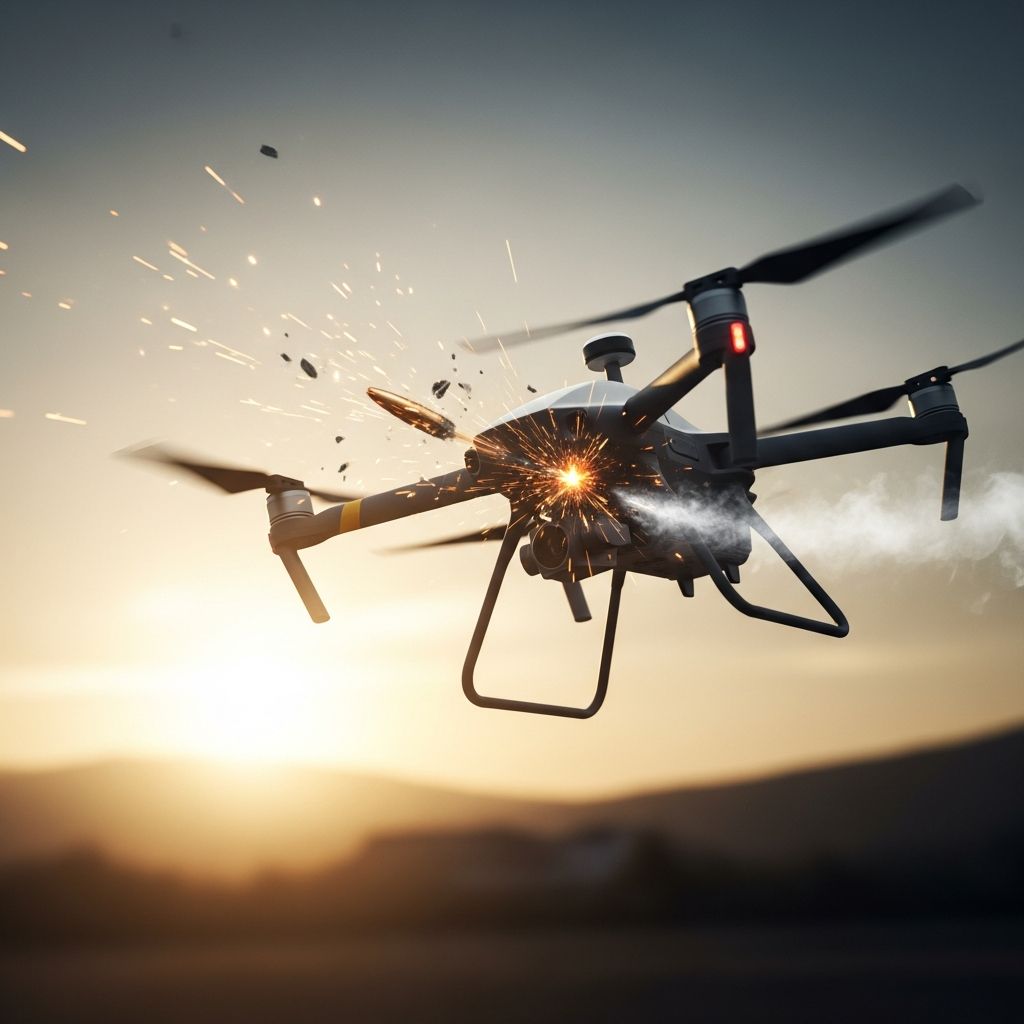
Drones have become ubiquitous in modern skies, used for everything from recreation to professional inspections. However, when individuals perceive these devices as threats to privacy or property, the impulse to grab a firearm can arise. This reaction, while understandable, carries profound risks that far outweigh any perceived benefits. Federal authorities, legal experts, and safety professionals unanimously advise against it, citing immediate dangers to public safety, severe legal repercussions, and escalation of minor issues into major crises.
The Inherent Dangers of Drone Shoot-Downs
Attempting to fire at a drone transforms a small, airborne object into a potential projectile hazard. When struck by bullets, drones do not simply vanish; they plummet unpredictably, often at high speeds, endangering anyone or anything below. Experts like Rick Smith, CEO of Axon, a leader in anti-drone technology, warn that a downed drone can act like a “missile,” causing severe property damage or injuries upon impact.
Consider the physics: many consumer drones weigh several pounds and carry batteries, propellers, and cameras. A crash in a residential area could shatter windows, damage vehicles, or strike pedestrians. In rural settings, a falling drone might ignite dry vegetation, sparking wildfires—a scenario highlighted by Vijay Kumar, dean of engineering at the University of Pennsylvania. Nighttime sightings amplify these risks, as distinguishing a drone from birds, planes, or stars becomes nearly impossible, leading to stray bullets that travel miles.
- Unpredictable trajectories: Bullets fired upward follow parabolic paths, potentially landing far from the shooter.
- Fragmentation risks: Exploding batteries or propellers create shrapnel hazards.
- Chain reactions: A crash could damage power lines or vehicles, causing secondary accidents.
Homeland Security Secretary Alejandro Mayorkas has publicly stated that such actions “in and of itself would be dangerous,” emphasizing the potential for collisions with other aerial objects.
Federal and State Laws Prohibiting Drone Interference
Drones are classified as aircraft under U.S. federal law, placing them under the strict oversight of the Federal Aviation Administration (FAA). The key statute, 18 U.S.C. § 32, criminalizes any willful act to “damage, destroy, disable, or wreck any aircraft” in U.S. airspace. Violations can lead to fines or up to 20 years in prison.
This law applies universally, regardless of whether the drone hovers over private property. The FAA has explicitly warned that shooting at unmanned aircraft invites civil penalties and criminal charges from federal, state, or local authorities. State laws compound these penalties; for instance, New York’s Penal Law 265.35 bans discharging firearms at aircraft, with up to 7 years imprisonment if lives are endangered.
| Violation Type | Federal Penalty | Possible State Add-Ons |
|---|---|---|
| Aircraft Sabotage (18 U.S.C. § 32) | Fines + up to 20 years prison | Reckless endangerment (misdemeanor/felony) |
| Discharging Firearm at Aircraft | Civil fines from FAA | Criminal mischief, up to 7 years (e.g., NY) |
| Reckless Endangerment | N/A | Misdemeanor or felony charges |
Attorneys like Andrew Stengel, a former New York City prosecutor, note additional charges such as reckless endangerment or criminal mischief if the drone is damaged or causes injury. Even non-lethal interference, like lasers or jammers, is prohibited—lasers can blind pilots, and jammers face severe federal penalties.
Real-World Cases and Escalating Consequences
Incidents of drone shoot-downs have led to swift arrests and lawsuits. In one Pennsylvania case, a man fired at a neighbor’s drone, facing federal aircraft sabotage charges alongside state weapons violations. Courts ruled the drone’s property status irrelevant, as airspace rights supersede ground ownership. Another incident involved a Texas resident who downed a drone, only to learn it belonged to a real estate surveyor; he faced not just FAA fines but also civil suits for property destruction.
Former FBI drone experts describe shooting as a “really bad idea,” citing cases where falling debris injured bystanders or pets. As drone usage surges—with over 1 million registered in the U.S.—such confrontations are rising, normalizing risky behavior that spirals out of control.
Privacy Concerns vs. Legal Realities
Drones raise valid privacy worries, capable of capturing high-resolution footage from afar. Surveys show widespread public unease about drones over private spaces, even when operated by authorities. However, self-help vigilantism like shooting undermines legal recourse. Property owners retain rights against intrusive surveillance, but remedies lie in reporting to authorities, not destruction.
The Texas Privacy Act, for example, restricts drone flights over private property without consent, offering civil claims for violations. Federally, unauthorized filming may violate voyeurism laws, but shooting escalates the issue into a felony.
Safe and Legal Alternatives for Drone Encounters
Instead of firearms, individuals have effective, lawful options:
- Report to FAA: Use the FAA’s hotline or app to log sightings, including time, location, and photos.
- Contact local law enforcement: Provide evidence of harassment or illegal operation.
- Privacy shields: Install anti-drone netting, IR blockers, or motion-activated lights.
- Civil lawsuits: Sue for trespass or nuisance if drones repeatedly invade space.
- Trackers and apps: Tools like DroneWatcher identify operators via radio signals.
These methods preserve safety while upholding the law, avoiding the pitfalls of escalation.
Broader Implications for Airspace Safety
Proliferating shoot-down attempts threaten the growing drone ecosystem, vital for agriculture, delivery, and emergency response. Firefighters, search-and-rescue, and police rely on drones for life-saving operations; damaging them endangers missions. Mid-air collisions with manned aircraft, though rare, are documented near-misses, underscoring the need for regulated skies.
As drone traffic increases, normalizing gunfire risks a “wild west” airspace, with experts predicting more accidents and legal battles.
Frequently Asked Questions (FAQs)
Is it ever legal to shoot a drone on my property?
No. Drones are aircraft under federal law (18 U.S.C. § 32), and shooting them is a crime punishable by fines and up to 20 years in prison, regardless of location.
What if the drone is spying on me?
Report it to the FAA and police with evidence. You may pursue civil action for privacy invasion, but destruction is illegal.
Can a downed drone start a fire?
Yes, lithium batteries can ignite on impact, especially in dry areas, as noted by engineering experts.
What are the penalties for using a laser on a drone?
Federal law prohibits lasing aircraft, with penalties including fines and jail time for endangering pilots.
How do I safely deter drones without breaking the law?
Use reporting apps, physical barriers, or consult authorities. Jammers are illegal.
The Future of Drone Regulations
With drone numbers exploding, lawmakers are crafting targeted rules. Pending bills aim to clarify low-altitude privacy rights and enhance tracking. Until then, restraint protects everyone. Shooting drones isn’t defense—it’s a gateway to disaster.
References
- Residents want to shoot down reported drones. Here’s why it would create more problems — ABC7 Chicago / CNN. 2024-12-15. https://abc7chicago.com/post/residents-want-shoot-down-reported-drones-heres-would-create-more-problems/15663437/
- ‘Really bad idea’: Fmr. FBI drone expert on why shooting mystery drones can be extremely dangerous — MSNBC / YouTube. 2024-12-16. https://www.youtube.com/watch?v=h8JxG1ToJRA
- The Pros and Cons of Drone Technology — Pilot Institute. 2024-11-01. https://pilotinstitute.com/drone-pros-and-cons/
- What REALLY Happens if You Shoot a Drone — YouTube / Midwest Safety. 2024-12-10. https://www.youtube.com/watch?v=oKoDkHUAZWo
- Why Can’t I Shoot Down a Drone? Legal Consequences and Alternatives — Blizzard Law Firm. 2024-12-01. https://blizzardlawfirm.com/2024/12/why-i-cannot-shoot-down-a-drone/
Similar Articles








Read full bio of Sneha Tete




