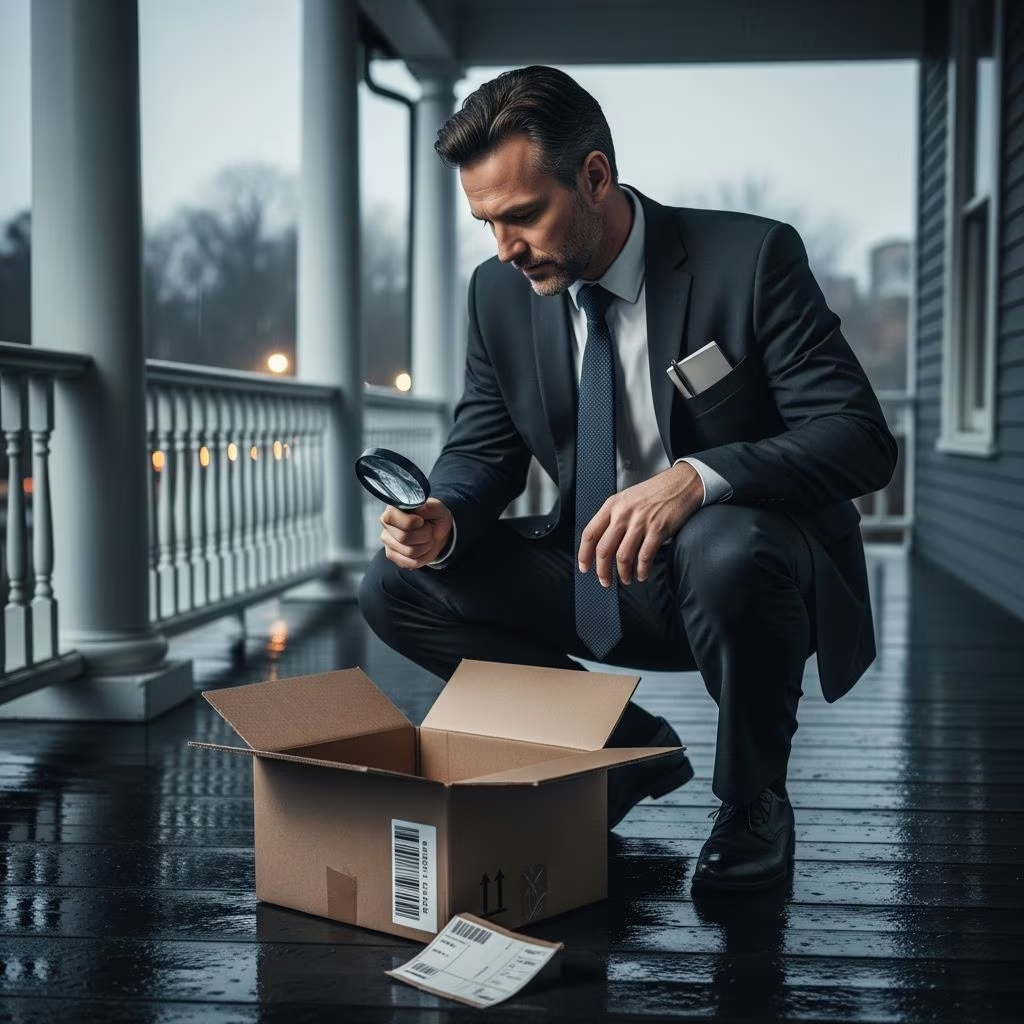
Package theft, commonly known as porch piracy, has exploded alongside online shopping, with millions of incidents annually leading to substantial financial losses for consumers. Determining liability hinges on delivery terms, carrier policies, and retailer guarantees, often placing the burden on buyers post-delivery. This comprehensive guide explores responsibilities, actionable recovery steps, preventive measures, insurance safeguards, legal frameworks, and future trends to empower you against thieves.
Understanding Liability in Package Deliveries
Liability for stolen packages typically transfers based on shipping agreements and carrier protocols. Once a carrier marks a package as delivered—often via GPS or photo proof—the risk shifts from the sender to the recipient in most cases. Sellers handle risk during transit under certain contracts, but post-delivery theft falls outside their scope unless specified otherwise.
Key factors influencing responsibility include:
- Shipping contract terms: Determine when title and risk pass to the buyer.
- Proof of delivery: Signatures, photos, or GPS data mark the handover point.
- Retailer policies: Vary widely, with some offering generous protections.
- Insurance add-ons: Optional coverage can bridge gaps in standard liability.
Seller Responsibilities: From Order to Doorstep
Sellers bear primary responsibility until delivery confirmation. Under Freight on Board (FOB) Destination terms, they cover losses in transit, including theft before arrival, obligating replacement or refund via their carrier claims process. FOB Origin shifts risk to buyers immediately upon shipping, common in direct-to-consumer models.
Many e-commerce platforms enforce seller accountability through buyer protection programs. For instance, major marketplaces reimburse via guarantees if sellers fail to resolve issues promptly. Contacting the seller first yields results in most cases, as they prioritize customer retention and may expedite replacements to avoid disputes.
Carrier Policies: Where the Buck Stops
Major carriers like UPS, USPS, and FedEx explicitly disclaim liability after marking packages delivered. UPS advises filing police reports and approaching sellers for reimbursement, confirming no financial responsibility post-delivery. USPS echoes this, denying indemnity for post-delivery losses even on insured mail.
Despite this, carriers facilitate claims for undelivered items:
| Carrier | Post-Delivery Policy | Claims Process |
|---|---|---|
| UPS | Not liable; contact seller | Online trace via sender |
| USPS | No indemnity after delivery | Report via USPS.com |
| FedEx | Shifts to recipient | Delivery Manager for redirects |
Buyers must provide tracking details and proof of non-receipt to initiate traces, though success rates drop sharply post-delivery scan.
Your Role as the Buyer: Steps to Recovery
Buyers assume risk upon delivery confirmation, necessitating proactive measures. Follow this sequence:
- Verify delivery: Check tracking, porches, neighbors, and alternate locations.
- Contact seller immediately: Provide order number, tracking, and photos of empty porch.
- File police report: Essential for claims; document theft officially.
- Submit carrier claim: If seller unresponsive, use online portals with evidence.
- Leverage payment protections: Credit cards often reimburse purchases; dispute charges within windows.
Success hinges on documentation—screenshots, timestamps, and communications strengthen cases. Retailers like Amazon streamline via A-to-z Guarantee, covering most thefts regardless of fulfillment source.
Insurance and Financial Backstops
Homeowners and renters insurance frequently covers porch theft as personal property loss, with policies reimbursing demonstrably stolen items post-delivery. Credit card purchase protections extend to theft, provided notification timelines are met—many reimburse up to $500 per incident.
Sellers may offer shipping insurance; verify at purchase. Third-party services provide add-on coverage for high-value items, shifting risk from buyers.
Prevention Strategies: Stop Thieves Before They Strike
Proactive tactics reduce vulnerability:
- Smart doorbells/cameras: Deter thieves and provide evidence (e.g., Ring, Nest).
- Delivery redirects: Use carrier apps for hold-at-location or locker pickup.
- Amazon Hub/FedEx Lockers: Secure, 24/7 access points.
- Package holds: Pause deliveries during absences.
- Discreet placement: Instruct hidden drops or neighbor handoff.
Timing orders for daytime arrival when home minimizes exposure. Community watch programs and neighborhood apps alert on suspicious activity.
Evolving Legal Landscape Against Porch Pirates
Legislatures respond to rising thefts with stiffer penalties. Texas escalated sentences to 10 years imprisonment and fines up to $10,000 for convictions. Michigan’s tiered law treats repeats as felonies with five-year terms, especially fraud-intent mail theft.
Federal efforts target mail theft via USPS enhancements and proposed nationwide penalties. States increasingly classify package theft as felonies above value thresholds, aiding prosecutions with video evidence.
High-Value Items: Special Considerations
Electronics, jewelry, and luxury goods demand extra caution. Require signatures, insure separately, and use tracked overnight services. For items over $500, combine multiple protections—seller guarantee, carrier insurance, and personal policy—to ensure full recovery.
Future of Secure Deliveries
Technological innovations promise transformation: drone deliveries to locked compartments, AI-monitored drops, and blockchain-tracked handoffs. Carriers invest in locker networks, while retailers pilot in-home robots. Regulatory pushes for uniform liability standards could standardize protections, reducing buyer burdens.
Consumers benefit from empowered choices—opt for protected shipping, informed by policy reviews. As e-commerce grows, balancing convenience and security remains paramount.
Frequently Asked Questions
Is the seller responsible for stolen packages?
Typically until marked delivered; after, responsibility shifts to buyer unless seller policy states otherwise.
What if UPS says it’s delivered but it’s gone?
File police report, contact seller for refund/replacement; UPS won’t reimburse post-delivery.
Does homeowners insurance cover porch theft?
Yes, as personal property if proven stolen after delivery; report to police first.
Can I get a refund via credit card?
Often yes, for purchases made with the card; dispute within 60-120 days with proof.
How do I prevent package theft?
Use lockers, cameras, redirects, and discreet instructions; time deliveries wisely.
References
- Who is Responsible for Package Theft and What is Being Done about It? — Adoorn. 2023. https://www.adoorn.com/blogs/news/who-is-responsible-for-package-theft-and-what-is-being-done-about-it
- Are Companies Responsible for Stolen Packages? Understanding Liability in E-Commerce Deliveries — ShipAid. 2024. https://www.shipaid.com/blogs/news/are-companies-responsible-for-stolen-packages-understanding-liability-in-e-commerce-deliveries
- How To Deal With Stolen Mail Packages — Super Lawyers. 2023-10-01. https://www.superlawyers.com/resources/consumer-law/how-to-deal-with-stolen-mail-packages/
- Online orders: who is responsible when you don’t get your package? — Consumer Protection BC (Government of British Columbia). 2025-10-01. https://www.consumerprotectionbc.ca/2025/10/online-orders-who-is-responsible-when-you-dont-get-your-package/
- Porch Pirates: 6 Steps to Take if Your Package Gets Stolen — ValuePenguin. 2024. https://www.valuepenguin.com/home-insurance/6-steps-take-if-your-package-gets-stolen-your-door
- Package theft: be careful in the Christmas period — AXA (Swiss Insurance Authority). 2023. https://www.axa.ch/en/privatkunden/blog/at-home/house-and-home/package-theft.html