
Who Is Barred From Buying A Gun? Federal Eligibility Guide 2026
A practical guide to federal firearm disqualifications, background checks, and lawful exceptions.
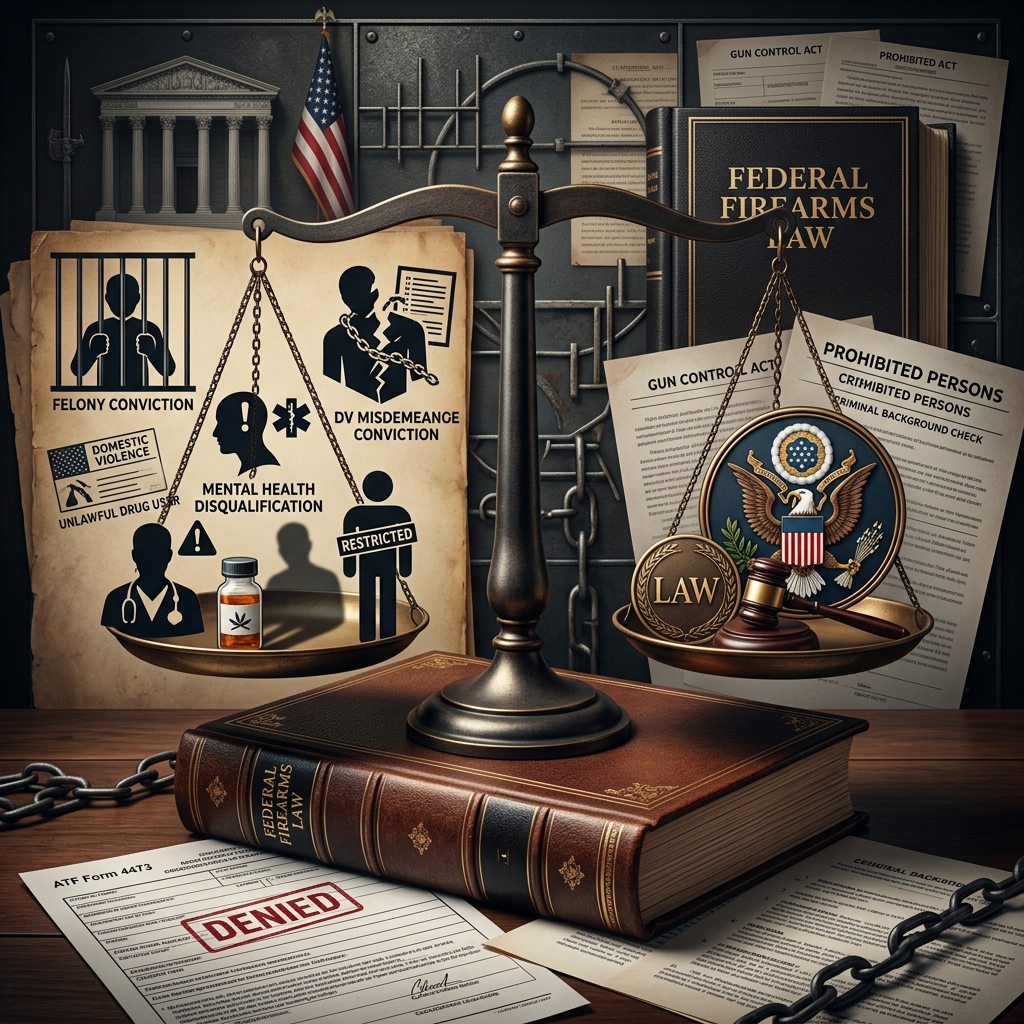
Federal gun law does not treat firearm purchase as a universal right for every adult. Instead, it sets out specific categories of people who are barred from buying or possessing guns, and those rules are enforced through background checks and other eligibility standards. Understanding these restrictions matters because a disqualifying event can prevent a lawful purchase even when a person lives in a state with relatively broad gun access.
The basic rule is simple: if a person falls into a prohibited category, a gun seller who follows federal law may not complete the sale. In practice, that means the buyer’s record, court orders, immigration status, or mental health history may all affect whether the transaction can legally proceed.
What federal law is trying to prevent
Federal firearm restrictions are designed to keep guns away from people who have been found, by law or by formal process, to present a heightened risk. The focus is not only on criminal convictions. It also includes certain restraining orders, mental health findings, unlawful drug use, and other categories Congress has identified as too risky for lawful gun possession.
These rules appear in the federal firearms statutes and are implemented through the background-check system used by licensed dealers. The result is a national baseline: states may add their own restrictions, but they generally cannot loosen the federal floor.
Common categories of people who are barred from buying firearms
The most familiar prohibition applies to people convicted of qualifying felonies. Federal law generally bars anyone convicted of a crime punishable by more than one year in prison from receiving or possessing a firearm. Certain state misdemeanors and business-regulation offenses are excluded from that definition, so the label of the offense is not always the deciding factor; the legal classification and possible punishment matter as well.
Other common disqualifications include:
- People who are fugitives from justice.
- People who are unlawful users of, or addicted to, controlled substances.
- People who have been adjudicated as mentally defective or committed to a mental institution.
- People subject to qualifying domestic-violence restraining orders.
- People convicted of certain misdemeanor domestic violence offenses.
- People dishonorably discharged from the armed forces.
- People who have renounced U.S. citizenship.
- Certain noncitizens, including some people unlawfully present in the United States and some nonimmigrant visa holders.
- People under indictment for a qualifying offense.
These categories reflect a policy choice to block access before a sale is completed, rather than waiting until after a violent or unlawful act occurs.
Felonies are the most common disqualifier, but not every conviction works the same way
A felony conviction often creates the clearest barrier to gun ownership, but federal law uses a technical definition. The question is not simply whether a state calls the offense a felony. Instead, the issue is whether the offense was punishable by more than one year in prison and whether any statutory exception applies.
That means two people with similar records can face different outcomes. One conviction may trigger the federal ban, while another offense with a different classification or sentence structure may not. For that reason, people with older or unusual convictions often need a record review before assuming they are barred or eligible.
Domestic violence rules are broader than many people realize
Domestic-violence restrictions are especially important because they can apply even when the underlying case was not labeled a felony. A qualifying misdemeanor domestic violence conviction can prohibit firearm possession under federal law. In addition, certain domestic-violence restraining orders can also trigger a ban if the order meets federal requirements, such as giving the restrained person notice and a chance to participate in the hearing.
This means a person may be disqualified even without a prison sentence. The legal trigger is often the nature of the offense or order, not the severity of the punishment.
Mental health findings can matter, but only certain legal events count
Not every mental health diagnosis creates a firearm prohibition. Federal law focuses on formal legal findings, such as being adjudicated mentally defective or being committed to a mental institution. Those terms have specific legal meanings and are not the same as receiving outpatient therapy, taking medication, or having a private diagnosis.
In general, the law is concerned with proceedings that show a person was formally found to lack the capacity to manage their affairs or was committed under applicable legal standards. Because these records may be sealed, incomplete, or entered under different terminology in different systems, mental health disqualifications can be difficult to identify without careful review.
Drug use and other status-based bans
Federal law also bars firearm access for unlawful users of or addicts to controlled substances. This category can apply even without a drug conviction. The government may rely on evidence showing regular unlawful use or dependency that makes the person fall within the prohibited class.
Other status-based restrictions are less common but still important. For example, some people who are not citizens may be prohibited from receiving firearms depending on their immigration status. Likewise, people under indictment for a qualifying offense are barred before conviction, which shows that federal law does not always wait for a final judgment before restricting access.
How the background-check system enforces the ban
When a person buys a firearm from a licensed dealer, the dealer must run the transaction through the federal background-check system. The search compares identifying information against databases containing criminal, mental health, and other disqualifying records. If the system identifies a match, the sale can be denied or delayed.
That process is important because it turns legal disqualifications into an enforceable screening system. Without it, many prohibited transactions would be much harder to catch in real time. Licensed dealers are therefore a key part of the federal enforcement structure.
| Disqualifying category | What it usually means | Typical effect on purchase |
|---|---|---|
| Felony conviction | Crime punishable by more than one year in prison | Sale denied |
| Domestic violence misdemeanor | Qualifying misdemeanor involving domestic violence | Sale denied |
| Restraining order | Qualifying court order after notice and hearing | Sale denied |
| Mental health commitment | Formal adjudication or involuntary commitment | Sale denied |
| Unlawful drug use | Current unlawful use or addiction | Sale denied |
Private sales are not a legal loophole
People sometimes assume that a prohibited buyer can avoid the law by purchasing from a private seller instead of a licensed dealer. That assumption is dangerous. Federal law still bars a prohibited person from receiving or possessing a firearm, and a seller who knowingly transfers a gun to a prohibited buyer can face serious legal consequences.
In other words, the federal prohibition follows the person, not just the point of sale. Even when a transaction does not involve a licensed dealer, the buyer’s legal status still matters.
Age rules are separate from disqualification rules
Age restrictions are not the same thing as prohibited-person rules, but they often arise in the same discussion. Federal law generally sets minimum ages for certain firearm purchases, and states can impose stricter limits. A person may be old enough to buy one type of firearm but still disqualified because of a conviction, restraining order, or other federal bar.
So age eligibility does not guarantee purchase eligibility. Both sets of rules must be satisfied.
What happens if someone is wrongly denied
A denial does not always mean the person is permanently prohibited. Sometimes the background-check system returns a false match, incomplete record, or outdated entry. In other cases, the person may have a record that appears disqualifying on first review but does not actually meet the federal definition.
When that happens, the person may be able to challenge the denial by correcting the record or showing that the disqualifying event does not apply. The exact process depends on the type of record involved and the agency handling the dispute.
What happens if a prohibited person tries to buy anyway
Trying to buy a gun while prohibited is a serious matter. The buyer may face denial at the point of sale, and in some circumstances investigators may view the attempt itself as evidence of unlawful conduct. If the purchase is completed through false statements, additional crimes may apply because federal firearm forms and background-check procedures depend on truthful answers.
That is why the safest approach is to determine eligibility before attempting a purchase. If there is any chance of a disqualifying record, the issue should be resolved first rather than tested at the counter.
How to think about eligibility before shopping for a firearm
Anyone who is unsure about firearm eligibility should start by reviewing the categories that federal law treats as disqualifying. A quick self-check can often identify the obvious problems, but records are not always straightforward. Expunged charges, old convictions, out-of-state orders, military findings, and immigration classifications can all create confusion.
- Review criminal convictions, including misdemeanors involving domestic violence.
- Check whether any restraining or protective orders are currently active.
- Confirm whether any mental health commitment or adjudication applies.
- Assess whether drug use, immigration status, or military discharge creates a ban.
- When in doubt, consult a qualified lawyer before attempting a purchase.
Frequently asked questions
Can a person with a felony ever own a gun again?
Sometimes, but not automatically. Relief may depend on expungement, restoration of civil rights, pardon, or another legal remedy recognized under applicable law. The answer varies by jurisdiction and by the nature of the conviction.
Does every domestic violence charge block a gun purchase?
No. The federal ban generally applies after a qualifying conviction or qualifying restraining order. An arrest or accusation alone is not the same as a disqualifying event.
Does mental health treatment automatically prevent gun ownership?
No. Federal law focuses on formal legal adjudications or commitments, not ordinary treatment or counseling.
Can a background check miss a disqualifying record?
Yes, in some cases. Records can be incomplete or outdated, which is why a denial may require follow-up and record correction.
Is a private sale safer for a prohibited buyer?
No. The federal prohibition still applies, and both the buyer and seller can face legal problems if the transfer violates the law.
Why these rules matter
Firearm eligibility rules are not just technical paperwork. They are the main legal barrier separating lawful ownership from unlawful possession at the federal level. For that reason, a person’s criminal history, court orders, mental health adjudications, and other legal statuses can be just as important as age or residence when determining whether a gun purchase is lawful.
Anyone with a potentially disqualifying record should treat the issue carefully and avoid assumptions based on what friends, sellers, or internet sources say. The federal system is specific, and the consequences for getting it wrong can be significant.
References
- Firearms — Bureau of Alcohol, Tobacco, Firearms and Explosives. 2026-07-10. https://www.atf.gov/firearms
- Firearm Prohibitions — Giffords Law Center to Prevent Gun Violence. 2026-07-10. https://giffords.org/lawcenter/gun-laws/policy-areas/who-can-have-a-gun/firearm-prohibitions/
- 8 facts about gun control in the US — Deutsche Welle. 2017-09-07. https://www.dw.com/en/8-facts-about-gun-control-in-the-us/a-40816418
- Overview of Key California Firearms Laws — California Attorney General. 2026-07-10. https://oag.ca.gov/ogvp/overview-firearm-law
- Key facts about Americans and guns — Pew Research Center. 2024-07-24. https://www.pewresearch.org/short-reads/2024/07/24/key-facts-about-americans-and-guns/
Similar Articles








Read full bio of Sneha Tete




