
Who Can Open Probate In Arizona: 6 Steps To Start Probate Now
Learn who may open an Arizona probate case, what the court looks for, and how the process moves forward.
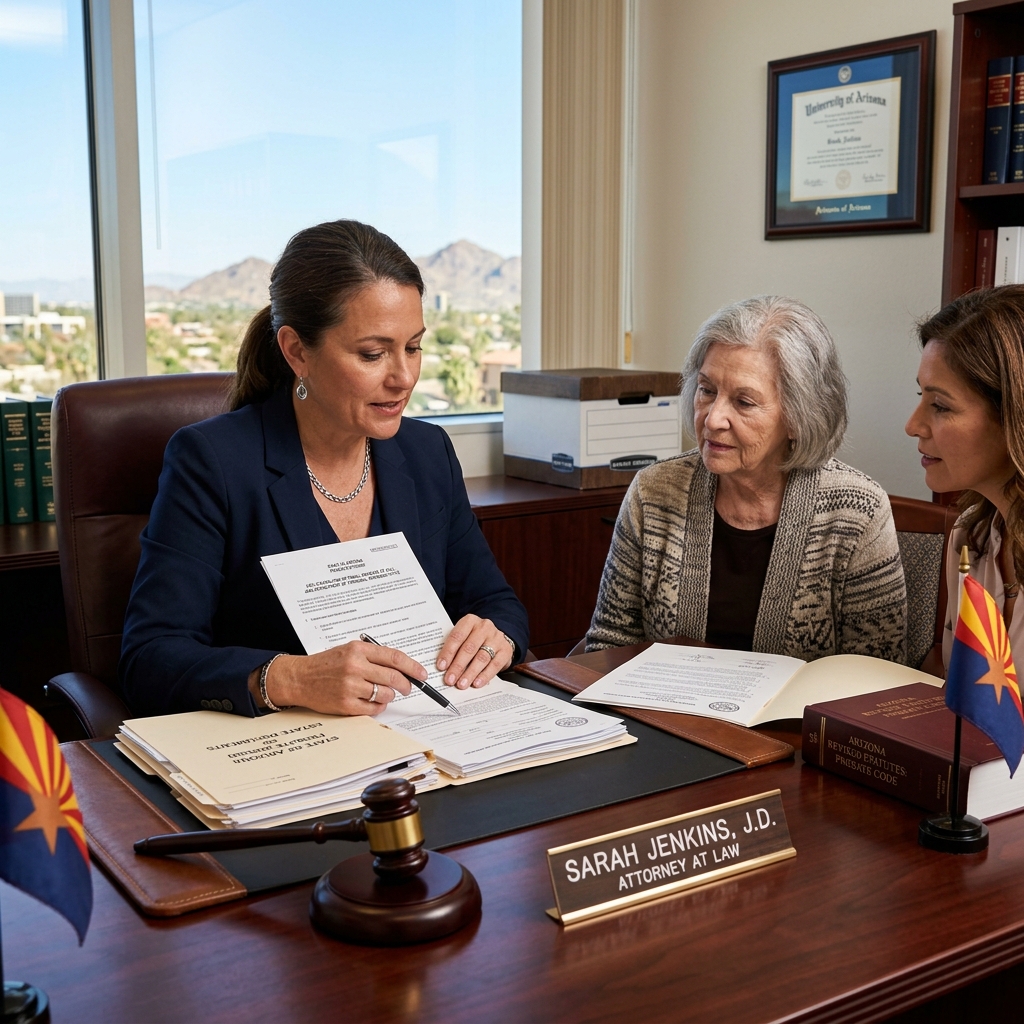
Who Can Open Probate in Arizona?
In Arizona, probate usually begins when someone asks the court to appoint a person to manage a deceased person’s estate. That person is often called the personal representative, and in many wills the role is described as executor. The right to start the case is not limited to one narrow group, but the court still follows a clear order when deciding who may serve and who has the strongest claim to begin the process.
The practical answer is that a named personal representative, a surviving spouse, an adult child, another heir, or another interested person may be able to file the initial paperwork, depending on the facts of the estate. Whether the court accepts the request depends on the existence of a valid will, the type of probate needed, and whether the proposed representative is legally suitable to act.
The First Step: Filing the Probate Case
Probate starts with a petition or application filed in the proper Arizona court, usually in the county where the decedent lived. The filing asks the court to open the estate, confirm the will if there is one, and appoint a personal representative to handle the estate’s affairs.
If the person who died left a will, the individual named in that document is normally the first person the court considers for appointment. If there is no will, the court looks to Arizona’s priority rules to determine who may act. The court’s main concern is not simply who wants the job, but who has the legal authority and ability to carry it out responsibly.
Who Usually Has the Strongest Claim to Serve?
Arizona law gives priority to certain people when no valid executor choice controls the case. The surviving spouse is typically near the top of the list, followed by other heirs and individuals with a close legal relationship to the decedent. The court may also consider whether a person is already nominated in a will or whether another qualified applicant has a stronger statutory claim.
The court does not appoint someone just because that person asks first. It looks at priority, suitability, and whether there is any reason to reject the request. For example, a conflict of interest, serious family dispute, or inability to perform fiduciary duties may make another applicant a better choice.
| Possible applicant | Why the person may qualify | Common court concern |
|---|---|---|
| Named personal representative | Selected in the will by the decedent | Whether the person is willing and able to serve |
| Surviving spouse | Often given high priority when there is no controlling nomination | Whether another person has a stronger legal claim |
| Adult child or other heir | May qualify under intestate succession priorities | Whether family disagreement creates a problem |
| Other interested person | May petition if they have a legitimate stake in the estate | Whether the person is too remote or conflicted |
Can a Person Other Than the Named Executor File First?
Yes. A person named in the will is often the strongest candidate, but a different interested person may still be able to begin the case if the named individual does not act, cannot act, or is unsuitable. For example, if the named personal representative refuses the role, cannot be located, or is disqualified, another qualified person can ask the court to step in.
This is important because an estate may need prompt attention even when the preferred representative is unavailable. Bills may need to be managed, property may need protection, and creditors or beneficiaries may need notice. Probate exists in part to give the estate a lawful manager, so the process can continue even when the first choice is not an option.
What If There Is No Will?
When someone dies without a will, the estate is handled under intestate succession rules. In that situation, no executor is named in advance, so the court uses state law to decide who should have priority to be appointed as personal representative. Close family members usually receive the first opportunity, with the surviving spouse commonly having the strongest position.
Even without a will, the court still needs a responsible person to open the estate, gather assets, notify interested parties, and handle debts. The person who initiates the probate case is therefore not necessarily the person who ultimately benefits most from the estate; instead, the applicant is the one asking the court to begin administration and place someone in charge.
Who May Be Disqualified?
Not everyone who has an interest in an estate is a good candidate to act as personal representative. Courts may refuse appointment when a person lacks legal capacity, has serious conflicts, has been removed in another fiduciary role, or otherwise appears unable to carry out the duties honestly and competently.
- A person under a legal disability may not be able to serve.
- A person with a major conflict of interest may be challenged.
- A person with a history of misconduct may face objections.
- A person who cannot be found or who declines the role may not be appointed.
The court may also consider practical concerns. A personal representative must keep records, give notices, manage funds, and eventually distribute property. Someone who is unwilling or unable to perform those tasks can delay administration and create avoidable disputes.
Can Creditors or Other Outsiders Start Probate?
In some cases, yes. If an estate has unpaid obligations and no one steps forward, a creditor may have a reason to ask the court to open probate so the debt can be addressed through the estate process. This does not mean a creditor controls the estate, but it can mean the creditor has enough interest to seek court involvement.
Other outsiders may also petition if they can show a real legal interest in the estate. The key question is whether the person has a legitimate reason to ask the court to begin administration. The court generally does not allow a completely unrelated stranger to initiate probate without a meaningful connection to the decedent or the estate.
Why the Court Needs a Personal Representative
Probate is more than paperwork. The court appointment creates a legal authority to collect assets, pay valid debts, protect property, and distribute what remains. Without a personal representative, banks, title companies, creditors, and beneficiaries may be unable to move the estate forward in an orderly way.
The representative also serves as a central point of contact. That person receives notices, responds to claims, and keeps the estate administration on track. In a contested or complex estate, the representative’s role is even more important because the estate may involve multiple heirs, disputed assets, or questions about the validity of a will.
How the Probate Process Typically Unfolds
Although every estate is different, Arizona probate generally moves through a series of familiar stages. The exact form of the proceeding may vary depending on whether the case is informal, formal, or supervised, but the core tasks are similar.
- The interested person files the case with the probate court.
- The court reviews the will, if there is one, and decides whether to appoint the requested representative.
- The representative gives notice to heirs, beneficiaries, and creditors.
- The representative identifies, inventories, and protects estate assets.
- The representative pays valid debts, taxes, and administration expenses.
- The remaining property is distributed to the proper recipients.
This structure explains why the person who starts the case matters. The opening filing is the gateway to authority, and without it the estate may remain stalled.
Informal, Formal, and More Supervised Court Paths
Arizona allows more than one route through probate. Some estates are simple enough for an informal process, while others require greater court involvement because of disputes, unclear documents, or other complications. A formal proceeding is more likely when the will is challenged, heirs disagree, or the court needs to resolve a legal issue before moving ahead.
Supervised administration is less common but can be useful when the court wants closer oversight. The type of probate does not usually change who may initiate the case in principle, but it can affect how much proof, notice, and court review is required before the representative can act.
What Happens After the Case Is Opened?
Once the court appoints a personal representative, the estate administration becomes more structured. The representative must identify heirs and beneficiaries, gather assets, and keep the estate’s property safe. Notices are also important, because interested parties have a right to learn that the estate has entered probate.
The representative may need to publish notice to unknown creditors and send notice directly to known creditors. Claims are then evaluated, and only valid obligations are paid. After that, the representative can move toward distribution and closing the estate. The goal is to settle the decedent’s affairs in an orderly and lawful way.
Common Questions About Starting Probate in Arizona
Can only the person named in the will file probate?
No. A named personal representative often has priority, but if that person does not serve, another qualified person may ask the court to open the estate.
Does the surviving spouse always control the estate?
No. The surviving spouse often has priority when there is no controlling nomination, but the court still checks the facts and may consider other legal priorities.
Can probate begin without a will?
Yes. The court can open probate for an intestate estate and appoint a representative under Arizona’s priority rules.
Can a creditor force the estate into probate?
In some situations, a creditor may seek court involvement if probate is needed to address unpaid obligations, though the creditor does not become the estate manager by filing.
Does the first person to file always get appointed?
No. The court looks at legal priority, suitability, and any objections before making an appointment.
Why Early Action Matters
Delays can create problems for an estate. Property may lose value, bills may go unpaid, and family members may disagree about who should take charge. Filing promptly can preserve assets and reduce confusion about authority. It can also prevent banks, insurers, and title holders from freezing matters longer than necessary.
For families, the question of who can initiate probate is often the first legal issue they face after a death. The answer depends on the will, family relationships, the size and type of the estate, and whether the proposed representative is fit to serve. Understanding those rules helps the right person move forward with less delay and fewer surprises.
References
- What Is Probate and How Does It Work in Arizona? — Udall Shumway. 2026-?-. https://www.udallshumway.com/blog/what-is-probate-and-how-does-it-work-in-arizona/
- Arizona Probate: An Overview — Nolo. 2025-?-. https://www.nolo.com/legal-encyclopedia/arizona-probate-an-overview.html
- Probate for Decedent’s Estate Resource Guide — Maricopa County Superior Court. 2026-?-. https://superiorcourt.maricopa.gov/ll/probate/
- Understanding the Probate Process in Arizona — Duffield Law. 2026-?-. https://www.duffieldlaw.com/probate
- Arizona Probate Process: Requirements & Avoidance — Rilus Law. 2026-?-. https://www.riluslaw.com/blog/arizona-probate-an-overview
Similar Articles








Read full bio of medha deb


