
Officer Firearm Removal: 5 Triggers, Laws, And Safe Returns.
Exploring legal standards, departmental policies, and due process for revoking law enforcement firearms access.
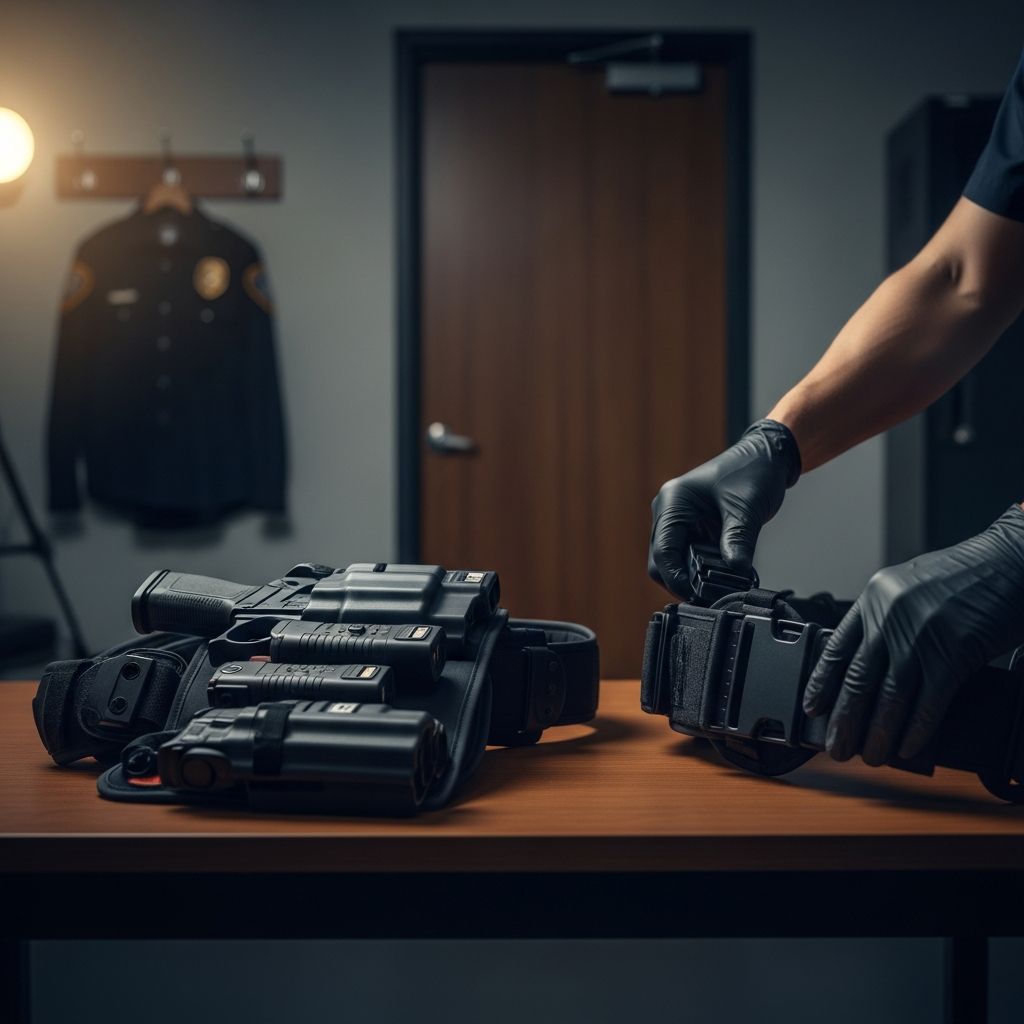
Law enforcement officers carry firearms as essential tools for public protection, but circumstances can arise where those weapons pose risks. Departments and courts employ structured processes to evaluate and, if necessary, revoke an officer’s authority to carry a gun. These measures prioritize community safety while respecting constitutional protections.
Legal Foundations for Firearm Removal from Officers
Firearm revocation for police typically stems from statutes governing officer certification, mental health, and criminal conduct. Unlike civilians, officers face heightened scrutiny due to their positions of trust. State laws often mandate psychological evaluations during hiring and periodically thereafter, with failure triggering disarmament protocols.
Officers deemed a danger may have weapons seized without immediate warrant under certain state provisions, followed by judicial review.
For instance, in jurisdictions with extreme risk protection orders, superiors or courts can initiate removal if an officer exhibits behaviors indicating imminent threat. This mirrors broader “red flag” frameworks but applies uniquely to armed professionals.
Triggers Prompting Internal Firearms Review
Several factors commonly lead to an officer’s gun being taken:
- Mental Health Crises: Documented incidents of suicidal ideation, severe depression, or erratic behavior prompt mandatory stand-downs and evaluations by licensed psychologists.
- Domestic Disputes: Reports of violence or threats against family members activate rapid response teams to secure weapons.
- Substance Abuse: Positive drug tests or alcohol dependency violations result in immediate suspension of duty weapons.
- Criminal Investigations: Arrests for felonies or serious misdemeanors lead to automatic confiscation pending resolution.
- Excessive Force Complaints: Sustained findings from internal affairs can limit armament during probes.
Departments maintain armory logs tracking issuance and return, ensuring compliance during these periods.
Departmental Protocols and Due Process
Most agencies follow multi-step procedures:
- Initial Assessment: Supervisors observe and document concerning conduct, often consulting behavioral threat units.
- Weapon Surrender: Officers receive written orders to relinquish sidearms, rifles, and ammunition to secure storage.
- Fitness-for-Duty Exam: Independent clinicians determine readiness, with appeals available.
- Administrative Hearing: Panels review evidence, potentially leading to decertification.
- Reinstatement Path: Successful rehabilitation allows gradual return, starting with simulations.
| Stage | Timeline | Key Action |
|---|---|---|
| Immediate Removal | Within hours | Secure weapons in evidence locker |
| Medical Evaluation | 1-7 days | Psych eval by certified expert |
| Hearing | 14-30 days | Present evidence to review board |
| Appeal/Resolution | 30-90 days | Final decision on certification |
This timeline ensures swift action while providing safeguards against arbitrary decisions.
State Variations in Officer Disarmament Laws
Laws differ significantly across the U.S. In Indiana, officers can seize arms from those believed dangerous without a warrant, filing affidavits within 48 hours for judicial retention hearings held within 14 days. Proof by clear and convincing evidence leads to declarations of dangerousness, firearm retention, and carry license suspension.
Florida’s risk protection orders, enacted post-2018 Parkland, have resulted in over 2,654 orders, potentially seizing thousands of firearms stored in vaults until hearings or transfers. Judges require clear evidence of risk to self or others.
California mandates decertification for specific offenses, automatically disqualifying officers from possessing duty weapons. Federal guidelines via POST commissions enforce national standards on psychological fitness.
Case Studies: Real-World Applications
Consider a Florida officer involved in a heated domestic altercation; family petitions led to a risk order, with 57 firearms surrendered temporarily. After evaluation, most were returned following counseling.
In another instance, an Indiana patrolman showed signs of instability; warrantless seizure preceded a hearing where evidence upheld retention, leading to retirement.
These examples highlight how laws balance urgency with rights, preventing tragedies while allowing recovery paths.
Psychological Screening and Ongoing Monitoring
Proactive measures include annual psych evals for veteran officers, critical incident debriefs post-shootings, and peer support programs. Tools like the MMPI-2 assess stability, with thresholds for disarmament.
Technology aids monitoring: body cams review conduct, and AI analytics flag stress patterns in reports. Failure to disclose therapy or medication changes can itself trigger reviews.
Legal Challenges and Officer Rights
Officers enjoy Second Amendment protections, but courts uphold restrictions for those in prohibitor categories (e.g., felons, involuntarily committed). Unions often provide legal aid during suspensions.
Key Supreme Court precedents like District of Columbia v. Heller affirm individual rights but permit regulations for safety. Challenges to red flag laws continue, questioning ex parte orders.
Restoration Processes After Disarmament
Regaining firearms requires:
- Clean criminal record
- Successful re-evaluation
- Probationary armed duty
- Retraining certification
Success rates vary; many officers transition to civilian roles if issues persist.
Frequently Asked Questions
Can an officer refuse to surrender their gun?
No, refusal constitutes insubordination, potentially leading to termination and criminal charges.
How long can weapons be held without a hearing?
Typically 48 hours to 14 days, depending on state law, before judicial oversight kicks in.
Do red flag laws apply to active police?
Yes, though departments often preempt with internal processes; Florida has applied them extensively.
What if an officer has personal firearms at home?
Orders can extend to all possessions, requiring surrender or transfer to licensed dealers.
Can decertified officers ever carry again?
Rarely; appeals succeed only with compelling rehabilitation evidence.
Public Safety Implications
These protocols mitigate risks from the 700,000+ U.S. officers, preventing incidents like off-duty shootings. Data shows most removals are temporary, with low recidivism post-intervention.
Training emphasizes de-escalation, reducing need for disarmament. Community oversight boards enhance transparency.
References
- State Gun Laws: How are firearms removed from a dangerous individual — WomensLaw.org. Accessed 2026. https://www.womenslaw.org/laws/in/state-gun-laws/firearms-seizure-and-retention-law/how-are-firearms-removed-dangerous
- Florida Police Have Confiscated Thousands of Guns — Moses & Rooth Attorneys at Law. Accessed 2026. https://www.mosesandrooth.com/florida-police-have-confiscated-thousands-of-guns/
- Top 5 Ways Cops SEIZE Your GUN in REAL Life! — YouTube (Attorney video). Accessed 2026. https://www.youtube.com/watch?v=DDNUXIRErLc
- Model Policy on the Use of Force — International Association of Chiefs of Police. 2020-09-15. https://www.theiacp.org/sites/default/files/2020-09/UseofForce.pdf
- Officer-Involved Domestic Violence — National Center for Women and Policing. 2005 (seminal reference). https://www.ncjrs.gov/pdffiles1/nij/grants/199718.pdf
Similar Articles








Read full bio of medha deb




