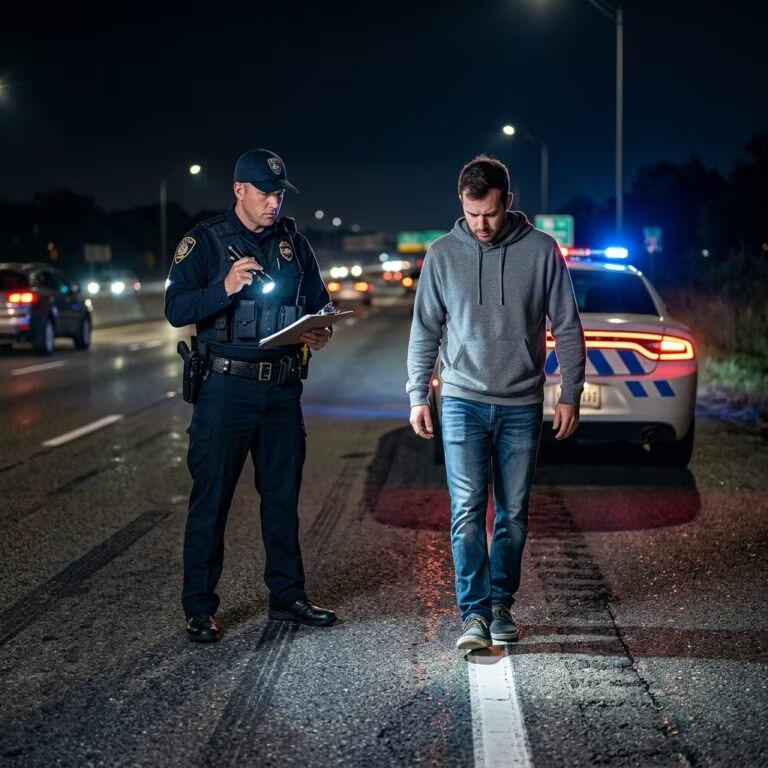
Being confronted by law enforcement is stressful, and one of the first questions many people have is simple: do police have to tell you what criminal charges you face, and when? The answer depends on where you are in the criminal process — initial stop, arrest, interrogation, booking, or first court appearance — and on constitutional rules that protect your rights. Understanding these stages helps you exercise your rights and avoid unintentionally harming your own case.
Key Principles: Arrest, Charges, and Your Right to Know
In most situations, officers must tell you that you are under arrest and allow you to know the basis for that arrest, but they are not required to give you a full, lawyer-style breakdown of every legal count at the roadside. The detailed list of charges is generally formalized and communicated a bit later in the process, typically during booking or at your first court hearing.
Several legal principles shape how and when you are told about your charges:
- Probable cause — Police must have objective reasons to believe you committed a crime before arresting you.
- Due process — The Constitution requires that you be adequately informed of accusations so you can defend yourself.
- Miranda rights — Before custodial interrogation, you must be advised of certain rights; in some jurisdictions, courts have held you must also be informed of the specific offense so you can make an informed decision about talking to police.
- Criminal procedure rules — State statutes and rules of court govern how charging documents are filed and served.
From Street Encounter to Arrest: What Must Police Say?
During a Stop or Brief Detention
When police briefly stop you — for example, during a traffic stop or a “stop and frisk” — you are usually not yet charged with a crime. Officers may explain why they stopped you (such as a traffic violation or suspicious behavior), but they do not have to specify future criminal charges that might be filed.
Your typical rights in this phase include:
- Right to remain silent about most questions; you generally do not have to answer beyond basic identifying information in states with so‑called “stop and identify” laws.
- Right to be free from unreasonable searches and seizures under the Fourth Amendment.
- Right to record the encounter in many jurisdictions, as long as you do not interfere with police activity.
At the Moment of Arrest
Once you are taken into custody, officers should make it clear that you are under arrest and provide at least a general description of the suspected crime (for example, “you’re under arrest for burglary” or “for assault”). Courts and police policies typically recognize that you need to know the nature of the alleged offense, but this does not necessarily mean a full recitation of every statutory subsection or potential enhancement.
Key points about information at arrest:
- Officers must have probable cause that you committed a crime.
- The formal list of charges may not yet exist; prosecutors may refine or add charges later.
- You do not have to answer questions about the allegations, and you may clearly state that you wish to remain silent and speak with a lawyer.
Miranda Rights and Knowing Your Charges
Miranda rights are warning statements police must provide before interrogating a suspect who is in custody. The standard warning includes your right to remain silent, your right to an attorney, and notice that anything you say can be used against you. Some courts have gone further, requiring that defendants be told the specific charge they face before they can validly waive these rights.
Miranda is triggered when two conditions are met:
- You are in custody (not free to leave).
- You are subject to interrogation (questioning likely to elicit incriminating responses).
Why this matters for being informed of charges:
- Some appellate decisions have held that a defendant must know the precise offense they are suspected of to make an informed decision about waiving the right against self‑incrimination.
- If police fail to properly inform the suspect and then obtain a statement, that statement may later be suppressed (excluded) from evidence.
- These rulings can vary by state, so how strictly this rule is applied depends on local case law and statutes.
Booking, Bail, and First Appearance: When Charges Become Official
The clearest information about your charges usually arrives at or shortly after booking, and again at your first court appearance. At these stages, the criminal justice system is required to give you formal notice of the allegations.
Booking at the Jail or Police Station
After arrest, you are typically transported to a jail or police facility for booking. This process often includes confirming your identity, taking fingerprints and photographs, and recording basic information about the arrest. In many jurisdictions, law enforcement must inform you of the charges within a reasonable time, frequently at booking or soon after.
During booking, you may:
- Be told the arresting charges (for example, “possession of a controlled substance” or “second‑degree assault”).
- Receive information about bail or pretrial release, depending on local rules.
- Be given access to phone calls to contact family or an attorney; some jurisdictions guarantee a minimum number of calls within a set timeframe.
Charging Documents and First Court Appearance
Your most detailed notice of charges comes in the form of formal charging documents, such as an indictment, information, or complaint. These documents list the offenses, statutory references, and often a brief description of the alleged conduct. They are served or presented to you at or before your first appearance in court.
| Stage | Type of Information | Level of Detail |
|---|---|---|
| Initial stop | Reason for stop (e.g., traffic violation) | Minimal; no formal charges yet |
| Arrest | General crime (e.g., theft, assault) | Basic description of suspected offense |
| Booking | Arresting charges recorded by police | Moderate; may list specific statutes |
| First court appearance | Formal charging document provided | High; detailed counts and legal references |
Limits on What Police Must Disclose
While you have a right to know the accusations against you, police and prosecutors are not required to share every piece of information they possess, especially during an ongoing investigation. Many jurisdictions have laws that make certain investigative records confidential when disclosure could interfere with law enforcement proceedings, reveal confidential sources, or prejudice a fair trial.
Common confidentiality limits include:
- Information that would interfere with ongoing investigations or future prosecutions.
- Details that could prejudice a jury or generate unfair publicity against an accused person.
- Protected details relating to confidential informants, investigative techniques, or internal strategies.
These rules mean that even after you are told your official charges, you might not immediately receive the full evidence file. Instead, discovery laws and court orders govern when and how your lawyer obtains documents, witness statements, and other materials.
Future Prosecution: Do Police Have to Warn You?
One point that often surprises people is that police generally do not have to tell you if you might be prosecuted in the future after being released from custody. Officers may release you pending further investigation without specifying whether charges will later be filed, and prosecutors can still choose to bring a case within applicable statutes of limitations.
Important takeaways:
- You may be released while the case is still under review by prosecutors.
- Police are not required to forecast or guarantee that you will not be charged later.
- Formal notice of charges generally comes from the court or prosecutor’s office, not from the officer on the street.
Your Responsibilities and Best Practices When Dealing with Police
Knowing when police must tell you your charges is only part of the picture. Your own conduct during encounters can strongly affect both your safety and your legal position. Law enforcement agencies and civil rights organizations emphasize a few practical guidelines.
- Do not lie or provide false information; giving false identifying details or making fraudulent statements can itself be a crime in many states.
- Comply with lawful orders, such as instructions to step out of a vehicle or move to a safe distance, while asserting your rights calmly.
- Reserve arguments for court; disputing the legality of a charge on the roadside is unlikely to help and may escalate the situation.
- Ask if you are free to go when unsure whether you are being detained, and politely state that you do not wish to answer questions if you prefer to remain silent.
- Document and report misconduct through formal complaint channels if you believe your rights were violated.
Frequently Asked Questions (FAQs)
1. Do police have to tell me exactly what statute I violated at the time of arrest?
Typically, officers must inform you that you are under arrest and provide the nature of the alleged crime, but they are not always required to cite the specific statute number on the spot. The detailed legal description appears later in the formal charging documents.
2. When will I receive a full list of my charges?
You usually receive a complete list of charges at or shortly after booking, and again at your first court appearance in the form of a complaint, information, or indictment. These documents outline each count and the corresponding legal provisions.
3. Can police question me about the crime before telling me the specific charge?
In some jurisdictions, courts have ruled that suspects must be told the precise charge they face before they can validly waive Miranda rights and be interrogated. In others, the requirement may be less strict. Regardless, you always have the right to decline questioning and request an attorney.
4. Are police required to tell me if they plan to charge me later after releasing me?
No. When you are released, officers are not generally obligated to inform you whether you will face future prosecution or which specific charges might later be filed. Prosecutors can bring charges later as long as they comply with statutes of limitations.
5. What if I believe the officer did not properly inform me of my charges?
If you think your rights were violated, you should discuss the incident with a criminal defense lawyer as soon as possible. Inappropriate or incomplete advisements may support motions to suppress statements or, in some cases, challenges to the lawfulness of the arrest. You may also be able to file a misconduct complaint with the relevant oversight body.
6. Do I have to answer questions about where I’m going or what I’m doing?
During most encounters, you are not required to answer detailed questions about your activities, and you may politely decline. In some states, you must provide identifying information under certain circumstances, but even there you retain the right to remain silent about other matters.
7. Can I get records showing why I was stopped or arrested?
In many cities, you can request stop reports, body‑worn camera footage, and other records through public records procedures or designated request portals. Some information may be withheld if releasing it would interfere with investigations or reveal confidential sources, but you generally have avenues to obtain key documents relevant to your case.
References
- Know Your Rights — Chicago Police Department. 2023-05-01. https://www.chicagopolice.org/know-your-rights/
- Do Police Have to Tell You What Crime You’re Being Charged With? — Attorneys Hartman, Chartered. 2018-06-21. https://www.attorneyshartman.com/blog/police-must-tell-you-what-crime-you-are-being-charged-with/
- Police Law in a Nutshell: Guidelines for Release of Information — Dirigo Safety, LLC (summarizing 16 M.R.S. § 804). 2022-03-10. https://dirigosafety.com/police-law-in-a-nutshell-guidelines-for-release-of-information/
- Interacting with Law Enforcement — Town of Carrboro, North Carolina. 2021-09-15. https://www.townofcarrboro.org/1017/Interacting-with-Law-Enforcement
- Know Your Rights — NYPD Federal Monitor. 2020-11-30. https://www.nypdmonitor.org/know-your-rights/
- Do Officers Need to Inform You of Charges? Legal Q&A Guide — JustAnswer (Criminal Law). 2019-08-07. https://www.justanswer.com/criminal-law/sj473-officer-obligation-inform-charges-jail.html
- When Do the Police Have to Tell You Your Charges or Possible Charges? — Avvo Legal Answers. 2017-03-12. https://www.avvo.com/legal-answers/when-do-the-police-have-to-tell-you-your-charges-o-6283035.html