
When Can Police Lawfully Shoot or Kill Dogs?
Understanding when officers may use deadly force against dogs, and what constitutional limits protect pet owners and communities.
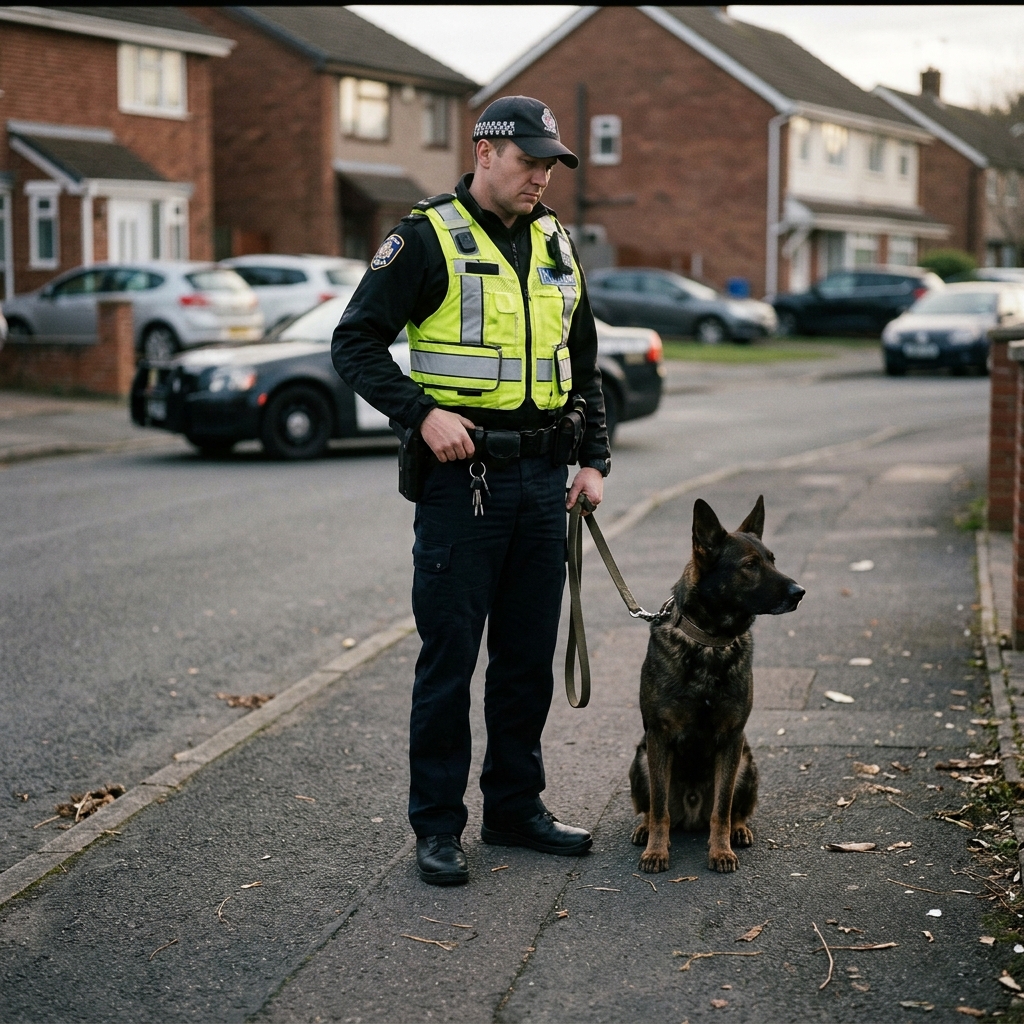
Incidents involving police officers shooting or killing dogs are emotionally charged and legally complex. Many people consider their dogs to be family members, yet in the eyes of the law these animals are generally treated as personal property. At the same time, officers may confront situations where a dog appears dangerous, and must decide quickly whether to use force. Understanding the legal rules that control those decisions is essential for both law enforcement agencies and pet owners.
This article explains when police may lawfully use deadly force against dogs, how constitutional rules on use of force apply, and what remedies may be available when officers act improperly. It draws on established Fourth Amendment law governing force against people and adapts those principles to encounters with animals.[10]
Dogs, Property, and Constitutional Protection
As a starting point, U.S. law generally classifies dogs as personal property. That classification matters because the Fourth Amendment protects people against unreasonable searches and seizures of their persons, houses, and effects—which includes property such as pets.
Court decisions on police use of dogs as force against people emphasize that deploying a dog is itself a seizure and must be objectively reasonable under the circumstances. By analogy, when police shoot or otherwise kill a companion dog, they are seizing and destroying property. That seizure can violate the Fourth Amendment if it is not justified by a reasonable governmental interest.
As a result, the legality of police killing a dog usually turns on a familiar constitutional balancing test:
- the seriousness of the intrusion (destroying a pet), weighed against
- the government’s need, such as stopping an immediate threat to officer or public safety.
In practical terms, courts look closely at what the dog was doing, what the officer observed, and whether less drastic options were available.
The “Objective Reasonableness” Standard
The Supreme Court has held that all police uses of force are judged under an objective reasonableness standard based on the facts and circumstances confronting the officer, not on their subjective intentions.[10] This standard comes from cases involving force against people, but it guides analysis when officers use deadly force against animals as well.
To decide if force is reasonable, courts examine the totality of the circumstances. Important factors include:
- Severity of the suspected offense leading to the encounter.
- Immediate threat posed to officers or others.
- Whether the person involved was resisting or trying to flee.
- The time the officer had to deliberate before acting.
- Whether any warnings were feasible and given.
Applied to dogs, this standard generally allows deadly force only when the animal presents an imminent risk of serious physical harm and no safer alternative is available. Shooting a dog merely because it is barking, off-leash, or annoying is unlikely to meet constitutional requirements.
When Police May Use Deadly Force Against Dogs
There is no single nationwide statute specifically controlling the shooting of dogs by police. Instead, decisions are shaped by constitutional law, general criminal statutes, and departmental policies. Nevertheless, some broad patterns have emerged from case law on use of force and police canines.
Situations Where Force Is More Likely to Be Justified
Deadly force against a dog is more likely to be legally justified when all of the following are present:
- The dog is actively attacking or attempting to bite an officer or another person.
- The attack could reasonably cause serious injury, for example with a large dog lunging repeatedly and closing distance.
- The officer has no practical alternative, such as retreating, closing a door, or using less-lethal tools.
- The officer must make a decision within seconds, leaving little time to assess other options.
In these circumstances, courts often view the shooting as a reasonable attempt to prevent serious harm. The key is whether an objectively reasonable officer would see the dog as an immediate threat, not whether the owner believes the dog is friendly.
Situations Where Shooting a Dog Is Unlikely to Be Reasonable
By contrast, the use of deadly force is generally harder to justify when:
- The dog is merely barking or displaying mild aggression from a distance.
- The dog is restrained, such as being on a leash, behind a fence, or under owner control.
- The officer has time and space to use de-escalation tactics, close a gate, or call animal control.
- The encounter occurs during a routine call or minor offense that does not involve immediate danger.
In these scenarios, courts may treat the shooting as an unreasonable seizure of property, potentially making the officer and agency liable for damages.
Training, Policy, and Proportionality
Modern use-of-force guidelines urge departments to craft clear policies for handling encounters with animals and for using police canines as a form of force. These policies typically incorporate the idea of proportionality: the level of force should match the level of threat.
| Principle | Application to Dogs |
|---|---|
| Proportionality | Deadly force only when the dog poses a serious, imminent threat and lesser force would be ineffective or unsafe. |
| Necessity | Shooting is a last resort after considering retreat, barriers, verbal commands, and less-lethal options. |
| Accountability | Handlers and officers are responsible for documenting every use or threatened use of force involving dogs. |
| Planning | Officers are encouraged to anticipate animals during searches and bring appropriate tools or support. |
Guidance from research and professional organizations emphasizes that officers should be trained both in animal behavior and in humane alternatives, such as using barriers, noise, or non-lethal devices rather than immediately resorting to firearms.
Police Dogs vs. Civilian Pets: Different Legal Questions
Legal rules distinguish between two very different situations:
- Police using canine force against people.
- Police using force against civilian dogs.
When officers deploy police dogs to apprehend suspects, courts treat the dog as a tool of force comparable to a baton or taser. The deployment must satisfy the Fourth Amendment, and policies often restrict use of canines to serious crimes or situations involving violent resistance.
Policies frequently specify that canines should not be used:
- solely to intimidate or control crowds,
- against handcuffed or fully compliant individuals,
- during routine calls or petty offenses.
By comparison, when officers encounter civilian dogs during searches, traffic stops, or neighborhood calls, the legal focus shifts to whether the officer reasonably believed the animal threatened human safety. The law does not treat harming a police dog as equivalent to harming a human officer, and likewise does not automatically justify deadly force against a civilian dog merely because it interferes with an investigation.
Rights and Remedies for Pet Owners
Owners whose dogs are shot or killed by police may have several potential legal claims, depending on the facts and local law:
- Fourth Amendment claim arguing that the killing was an unreasonable seizure of property.
- Due process claim if the property destruction occurred without adequate justification or procedure.
- State tort claims such as negligence or intentional destruction of property.
Success in these claims usually hinges on the same reasonableness analysis discussed above. If officers had time, alternatives, and no clear evidence of immediate danger, courts are more likely to find a constitutional violation.
From a practical standpoint, owners can strengthen potential claims by documenting the scene immediately afterward, preserving veterinary records, obtaining witness statements, and, where appropriate, consulting counsel familiar with civil rights and animal law. Law firms handling police canine cases stress the importance of thorough factual investigation including photographs, audio or video recordings, and officer reports.
Practical Steps to Reduce Risk During Police Encounters
Although the burden of lawful conduct ultimately lies with police departments and officers, pet owners can take practical steps to reduce the risk of tragic outcomes.
- Secure dogs quickly when you see officers approaching, particularly during searches or arrests.
- Communicate clearly with officers about the dog’s location, temperament, and how to control it (e.g., commands it responds to).
- Use physical barriers like crates, rooms, or fenced areas to separate dogs from officers whenever feasible.
- Maintain control tools such as leashes and harnesses near entry points so you can restrain animals rapidly.
- Know your local laws on leash requirements and dangerous dog definitions, which can influence officers’ expectations.
These steps do not eliminate all risk, particularly in fast-moving situations, but they may give officers more time and options, making deadly force less likely.
Policy Reform and Community Safety
Recent scholarship encourages a broader rethinking of how police and communities manage canine encounters. A public health–oriented framework known as One Health highlights the interconnected well-being of people, animals, and the environment, and has been proposed as a guide for police canine programs.
Under a One Health approach, agencies would:
- Integrate veterinary expertise into canine training and deployment standards.
- Track and publicly share data on canine uses of force, including incidents involving pet shootings.
- Emphasize non-lethal responses to animal behavior whenever possible.
- Engage communities in discussion about expectations and fears relating to dogs and policing.
Professional bodies have already recommended that canine deployments be limited to specific serious offenses and tightly controlled conditions, and that officers receive explicit training on de-escalation around animals. Expanding these reforms and ensuring robust oversight may reduce both human injuries and harm to pets.
Frequently Asked Questions
Can police legally shoot my dog in my fenced yard?
If officers enter a yard and confront a dog, the legality of shooting depends on whether the animal poses an immediate threat of serious harm and whether other options were available. A fenced yard does not automatically prevent a shooting, but it may affect whether a court views the officer’s actions as reasonable.
Does the law treat my dog like a person or property?
In most jurisdictions, dogs are treated legally as property. The Fourth Amendment can still protect them as property, but damages are usually measured differently than for injuries to people.
What if my dog just barked and did not attack?
Barking alone typically does not justify deadly force. Courts and policies focus on whether the dog is lunging, biting, or otherwise threatening serious injury, and whether the officer can safely choose a less severe response.
Are officers trained specifically to deal with dogs?
Many departments now include canine-specific training and policies, emphasizing proportionality, alternatives, and documentation. Guidance from police organizations urges agencies to define when officers may use force against dogs and how to avoid unnecessary harm.
Can I sue if police kill my dog without good reason?
Owners may be able to bring federal civil rights claims and state law actions, depending on the facts. Success depends heavily on proving the killing was not objectively reasonable in light of the dog’s behavior and the options available to officers.
References
- Police Brutality Involving Police Dogs — Piccuta Law Group. 2023-05-01. https://www.piccutalaw.com/practice-areas/civil-rights-violations-workplace-lawsuits/police-brutality-excessive-force/police-brutality-involving-police-dogs/
- Canines – Model Use of Force Policy — Stanford Law School. 2021-09-15. https://use-of-force.law.stanford.edu/modules/canines
- Guidance on Policies and Practices for Patrol Canines — Police Executive Research Forum. 2020-01-01. https://www.policeforum.org/assets/Canines.pdf
- K-9 Catch-22: The Impossible Dilemma of Using Police Dogs on Apprehension — University of Pittsburgh Law Review. 2015-06-01. https://lawreview.law.pitt.edu/ojs/lawreview/article/download/630/423/1343
- A One Health Approach to Public Safety: A Review of Police Canine Use by Municipal Law Enforcement in the United States — Journal of Veterinary Medical Science (PMC). 2024-04-15. https://pmc.ncbi.nlm.nih.gov/articles/PMC11432170/
- Case Law :: Patrol :: United States Police Canine Association — Chicago Police Department. 2018-03-01. http://directives.chicagopolice.org/forms/USPCA.pdf
Similar Articles








Read full bio of medha deb




