
Why Movie Murder Defenses Fail in Real Courtrooms
From “the devil made me do it” to mistaken identity, explore why dramatic movie murder defenses almost never survive the harsh rules of real criminal law.
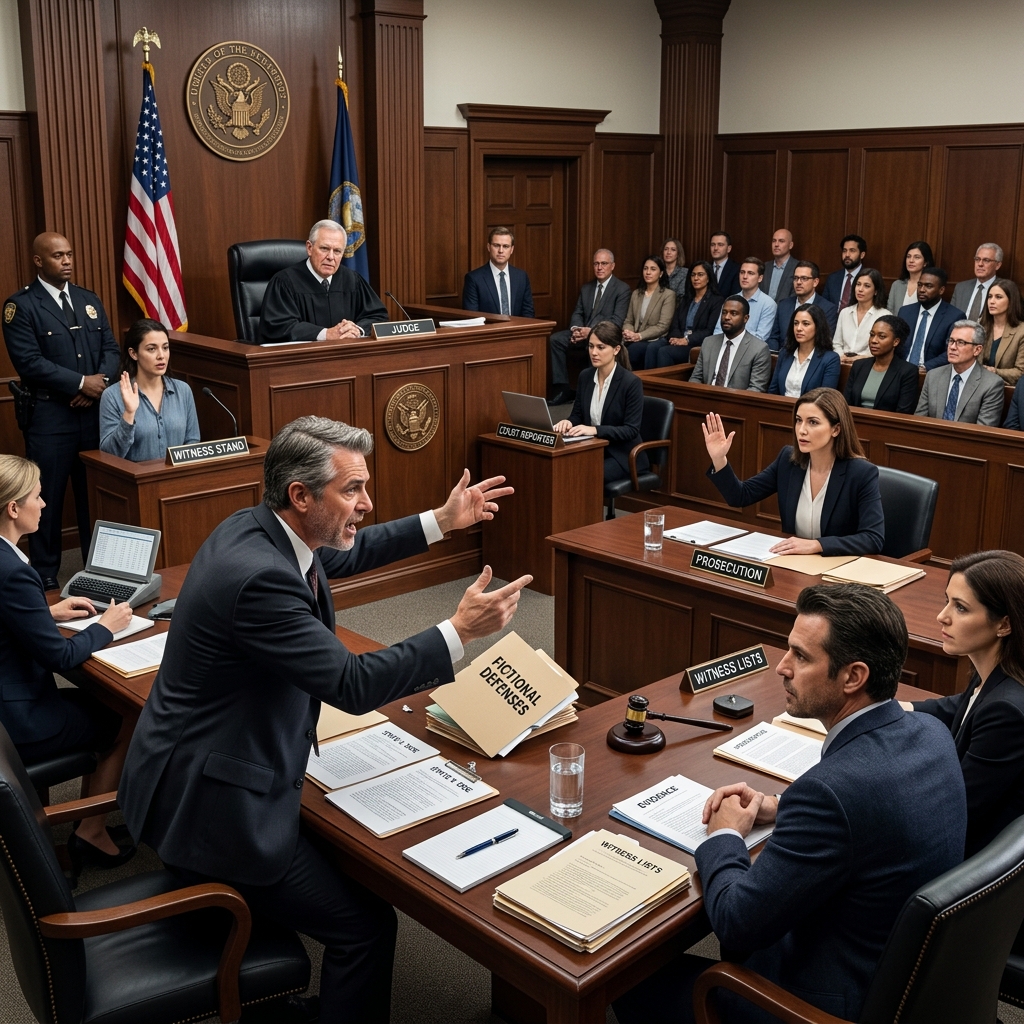
Crime films and courtroom dramas often hinge on spectacular murder defenses: shadowy conspiracies, mystical forces, sudden psychiatric revelations, or last‑minute confessions that magically clear the accused. These tropes make for compelling entertainment, but they rarely resemble how criminal defenses work in real courts.
This article uses the kind of defenses you frequently see in movies as a springboard to explore how homicide is actually litigated. By looking at why these cinematic strategies almost never succeed in practice, we can better understand what does matter: evidence, legal standards, and burdens of proof.
How Real Murder Cases Are Decided
Before examining individual movie-style defenses, it helps to understand the basic framework of a homicide prosecution. In most jurisdictions, prosecutors must prove several core elements beyond a reasonable doubt, such as:
- That a person is dead (the victim).
- That the defendant caused that death (causation).
- That the killing was unlawful (not justified or excused).
- That the defendant possessed the required mental state (for example, intent or extreme recklessness).
Many common defenses in films try to attack one of these elements—but often in ways that would be impossible or extremely rare given modern evidence, forensic techniques, and established legal rules.
Evidence vs. Drama: Why Standards Are So Demanding
Most movie murder defenses underestimate how much evidence prosecutors usually have: physical evidence, forensic science, digital records, and witness testimony. Contemporary criminal courts rely heavily on standardized rules for admitting and evaluating such evidence. In contrast, movies can simply minimize or ignore inconvenient facts to keep a twist alive until the final act.
| Aspect | Real Courtroom | Typical Movie Depiction |
|---|---|---|
| Evidence Rules | Strict admissibility rules; expert testimony controlled by judges. | Almost any dramatic statement or clue can be used instantly. |
| Burden of Proof | Prosecution must prove guilt beyond reasonable doubt. | Often feels like accused must “prove” innocence through theatrics. |
| Procedure | Structured questioning, objections, and limited surprises. | Frequent last‑minute revelations and surprise witnesses. |
Defense 1: “The Devil Made Me Do It” and Supernatural Explanations
One of the most attention‑grabbing tropes in horror and thriller movies is the claim that a defendant was compelled by demonic possession, curses, or other supernatural forces. The character insists, “It wasn’t really me,” and the film invites the audience to wonder whether something otherworldly is at work.
Why Supernatural Defenses Cannot Succeed
Modern criminal law assumes a natural, not supernatural, universe. Courts may respect religious freedom, but they still base decisions on evidence and rational inference. Claims like demonic possession or cursed objects fail for several reasons:
- No legally acceptable proof: Courts require evidence that can be examined, tested, and challenged. Supernatural claims are not verifiable in the way forensic or eyewitness evidence is.
- Causation remains with the defendant: Even if a person sincerely believes they were under an evil influence, the law generally sees the human actor as responsible for physical actions unless the person meets medical criteria for a recognized mental disease or defect.
- Separation of law and theology: Criminal courts avoid adjudicating religious doctrines. They focus on concrete conduct—who did what, and with what mental state.
When a movie character argues that a demon forced them to kill, a real lawyer would likely reframe the issue in terms of mental health: Did the person suffer from psychosis or a severe mental disorder that impaired understanding of reality?
Supernatural Arguments vs. Insanity Law
Most jurisdictions have an insanity defense that can, in rare cases, excuse criminal responsibility. But the legal test is grounded in psychiatry, not spirituality. For example, under the traditional M’Naghten rule, a defendant may be found insane if, due to a mental disease, they did not understand the nature or wrongfulness of their act.
In other words, the law asks whether the defendant’s mind was so impaired that they could not appreciate what they were doing—not whether a demon was involved. That distinction is why sensational movie claims about possession usually have no direct legal relevance.
Defense 2: The Overused “Insanity Plea”
Another reliable cinematic device is the last‑minute insanity plea. A character who seemed calculating throughout the film is suddenly portrayed as mentally unstable, just in time for trial. The implication: claiming insanity is an easy way to avoid prison.
Reality Check: Insanity Is Rare and Hard to Prove
In real life, insanity defenses are uncommon and rarely succeed. Research indicates that they are raised in only about 1% of U.S. felony cases and succeed in a fraction of those. Courts take this defense seriously and require substantial medical evidence and expert testimony.
- Strict legal tests: The definition of legal insanity is narrow. Simply having a mental illness or personality disorder is not enough.
- Extensive medical records: Successful insanity defenses usually involve long histories of documented psychiatric treatment and expert evaluations.
- Risk of confinement: Defendants found not guilty by reason of insanity are typically committed to secure psychiatric facilities, often for long periods.
Because of these requirements, the casual, last‑minute insanity claim popular in films would almost certainly fail in an actual trial.
How Insanity Differs from Diminished Capacity
Movies often blur the line between full legal insanity and partial mental impairment. In reality, some jurisdictions recognize concepts like diminished capacity, where mental illness affects the defendant’s ability to form specific intent but does not entirely excuse the crime. This can reduce charges (for example, from murder to manslaughter) but rarely results in complete acquittal.
Defense 3: Self‑Defense Stretched Beyond Recognition
Self‑defense is one of the most grounded and important real‑world defenses to homicide. Films, however, often portray self‑defense as a broad justification for nearly any violent reaction to danger. Characters might use lethal force in response to minor threats and then claim self‑defense, expecting instant exoneration.
Legal Requirements for Legitimate Self‑Defense
Actual self‑defense law is more demanding. While specifics vary by jurisdiction, most systems require that:
- The threat was imminent: The defendant reasonably believed they faced immediate unlawful force.
- Force was proportional: The level of force used was reasonable in relation to the perceived threat.
- The defendant was not the initial aggressor: Initiating the conflict can undermine a self‑defense claim.
- Retreat rules may apply: In some jurisdictions, a person must retreat if safely possible before using deadly force, unless a “stand your ground” law applies.
Movie scenarios often fail one or more of these requirements. For instance, a character may pursue a fleeing attacker and kill them long after the immediate danger has passed. In court, continuing to use deadly force when the threat is no longer imminent can transform self‑defense into unlawful homicide.
Stand Your Ground and Castle Doctrine: Misunderstood on Screen
Films sometimes reference “stand your ground” or the idea that a person can do anything to defend their home. In reality, self‑defense statutes are carefully defined. For example, many U.S. jurisdictions recognize a version of the castle doctrine, allowing people to defend themselves in their homes without a duty to retreat. But even then, the use of force must still be reasonable under the circumstances.
Simplifying these doctrines into a blanket license to shoot on sight may work as a plot device, but it misrepresents the measured, context‑specific analysis courts employ.
Defense 4: “It Was Just an Accident”
Some movie characters insist that a fatal injury was purely accidental. They claim they slipped, tripped, or barely nudged the victim, and the death was an unforeseeable tragedy. The script may expect jurors to sympathize and overlook suspicious context.
Intent vs. Recklessness vs. Pure Accident
Criminal law distinguishes between intentional killing, reckless killing, and no‑fault accidents. These categories often correspond to different charges—such as murder, manslaughter, or no criminal liability.
- Intentional: Directly aiming to kill or cause serious harm.
- Reckless: Consciously disregarding a substantial and unjustifiable risk of death.
- Negligent or accidental: Failing to perceive a risk, or unforeseeable harm with reasonable care.
Movie defenses often call something an “accident” even when the facts show intentional or reckless conduct, such as pointing a loaded gun at someone during an argument. In real courts, the surrounding behavior, prior threats, and physical evidence can reveal the true mental state, making a blanket accident claim implausible.
Why “Accident” Alone Is Not a Defense
Courts do not accept “it was an accident” as a standalone magic phrase. To avoid liability, the defendant must show that the harm occurred without criminal negligence, recklessness, or intent, and that their conduct met a reasonable standard of care. The law examines specific actions, not just verbal characterizations.
Defense 5: Mistaken Identity and Implausible Alibis
Mystery films thrive on mistaken identity, where the wrong person is accused. Sometimes movies feature defendants who offer flimsy alibis, only to be dramatically saved when a late‑arriving witness proves their whereabouts. In the real world, mistaken identity cases do occur, but they are not resolved through theatrical surprises.
The Limits of “Someone Else Did It”
Claiming that another person committed the crime is not itself a complete defense. To raise reasonable doubt, the defense must challenge the prosecution’s evidence linking the defendant to the act:
- Questioning eyewitness reliability: Research has shown that human memory can be fallible, especially under stress.
- Attacking forensic weaknesses: Challenging the quality and interpretation of DNA, fingerprints, or digital evidence.
- Presenting a credible alibi: Demonstrating that the defendant was somewhere else, often through multiple independent witnesses or records.
Unlike in films, courts rarely accept vague claims like “I saw someone who looked just like me” without corroborating proof.
Modern Forensics Reduce Some Mistaken Identity Risks
Over the last few decades, advancements in forensic science—such as DNA analysis—have both exposed wrongful convictions and strengthened accurate identifications. This has altered the landscape: while mistaken identity is still possible, it is far harder to argue when strong biological or digital evidence points to the defendant.
Defense 6: Conspiracy Theories and Shadowy Cover‑Ups
Another popular movie trope is blaming vast conspiracies: corrupt officials, large corporations, or secret organizations that allegedly frame the protagonist. Although real corruption and misconduct exist, blanket conspiracy claims without specific, testable evidence are unlikely to help a defendant in court.
Judicial Skepticism Toward Broad Allegations
Courts evaluate claims of misconduct, such as tampered evidence or perjury, through focused motions and hearings. Defendants can challenge specific pieces of evidence or seek remedies when constitutional rights are violated. But to be persuasive, they must:
- Identify concrete acts, such as fabrication of evidence or destruction of records.
- Provide supporting proof, not just speculation.
- Connect alleged misconduct directly to their case and the evidence against them.
Broad, unsubstantiated claims that “everyone is against me” might serve dramatic tension, but they rarely survive the disciplined scrutiny of actual judicial review.
What Real Defenses Focus On
Having seen why many movie murder defenses struggle in reality, it is useful to highlight what effective criminal defense typically emphasizes.
- Evidence quality: Challenging improper police procedures, unreliable witnesses, or flawed forensic methods.
- Legal elements: Arguing that the prosecution has not proven required elements like intent, causation, or unlawfulness.
- Procedural rights: Enforcing rights to counsel, fair trial, and protection against unlawful searches and coerced statements.
- Context: Presenting mitigating circumstances, such as provocation or mental impairment, to reduce the severity of charges or sentence.
The best defenses are less about dramatic speeches and more about systematic analysis of every piece of evidence and every applicable legal rule.
Frequently Asked Questions
1. Is the insanity defense really a “loophole” criminals use to escape punishment?
No. The insanity defense is rarely used and even more rarely successful. Defendants who are found not guilty by reason of insanity are typically committed to secure psychiatric institutions and may remain there as long as they meet criteria for commitment.
2. Can genuine self‑defense still lead to criminal charges?
Yes. Prosecutors may file charges if they believe the force used exceeded what was reasonably necessary or if they dispute the defendant’s account of the incident. Whether the defendant is ultimately acquitted will depend on how the facts match the jurisdiction’s self‑defense laws.
3. Do courts ever consider supernatural explanations like demonic possession?
Courts focus on medical and psychological evidence, not religious or supernatural claims. A person who attributes their behavior to possession might be evaluated for mental illness, but the legal question remains whether they met the jurisdiction’s definition of insanity or diminished capacity.
4. How often do mistaken identity defenses succeed?
Mistaken identity claims can succeed, especially when based largely on eyewitness testimony, which is sometimes unreliable. However, the presence of strong forensic or digital evidence makes success less likely. Each case turns on its specific proof.
5. Are movie portrayals of murder trials ever accurate?
Some films consult legal experts and depict procedures reasonably well, but even the most realistic courtroom dramas compress time, simplify evidence disputes, and emphasize emotional confrontations to keep audiences engaged. Real trials are typically more methodical and less theatrical.
References
- Mental Illness, the Insanity Defense, and Criminal Responsibility — U.S. National Library of Medicine / National Center for Biotechnology Information. 2013-04-01. https://pubmed.ncbi.nlm.nih.gov/23591758/
- Insanity Defense — Legal Information Institute, Cornell Law School. 2022-01-01. https://www.law.cornell.edu/wex/insanity_defense
- Self-Defense and Defense of Others — Legal Information Institute, Cornell Law School. 2021-06-01. https://www.law.cornell.edu/wex/self_defense
- Homicide — Legal Information Institute, Cornell Law School. 2020-10-01. https://www.law.cornell.edu/wex/homicide
- Identifying the Culprit: Assessing Eyewitness Identification — National Research Council (U.S.), National Academies Press. 2014-10-15. https://nap.nationalacademies.org/catalog/18891/identifying-the-culprit-assessing-eyewitness-identification
Similar Articles








Read full bio of medha deb




