
Crime Victim Abroad: Essential Steps and Legal Guidance
Practical legal, safety, and emotional support steps to take immediately if you suffer a crime while traveling or living abroad.
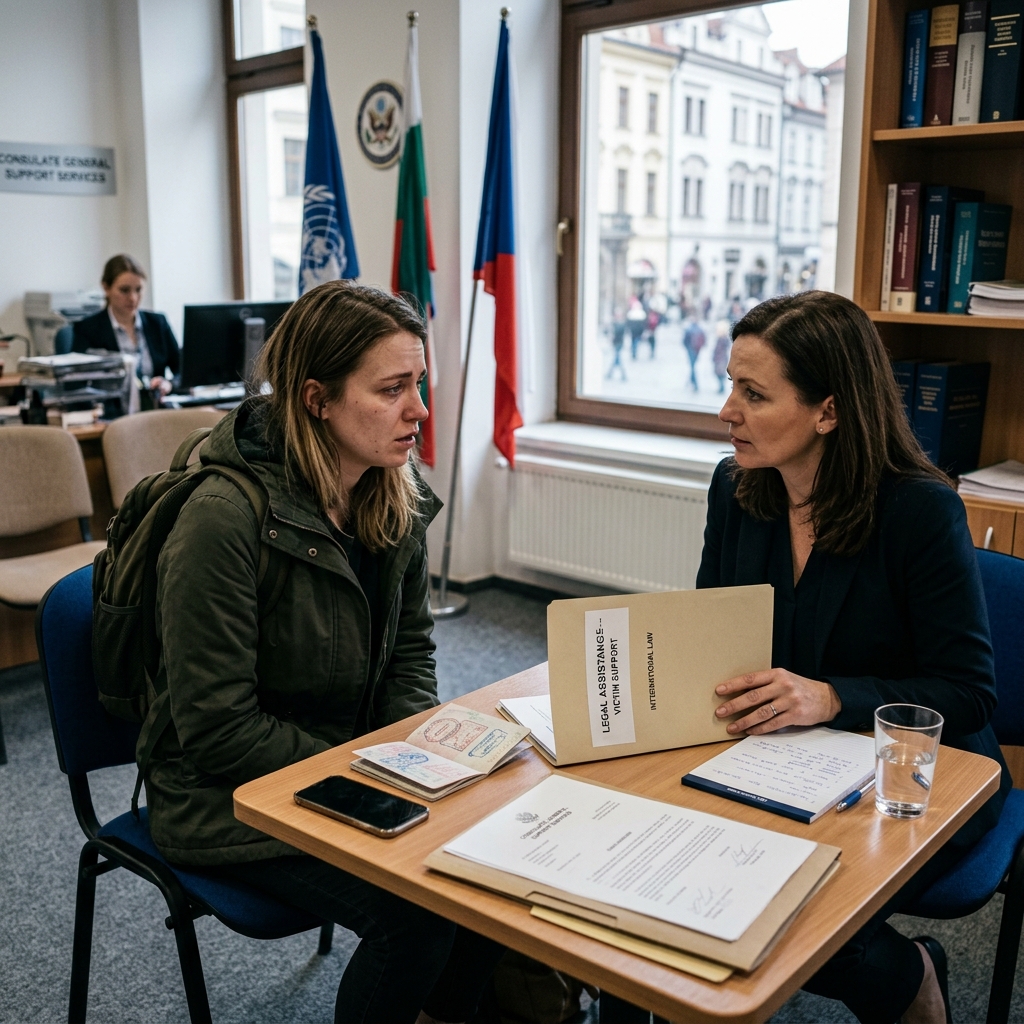
Experiencing a crime in another country can be shocking, confusing, and overwhelming. Different laws, unfamiliar procedures, and language barriers can make it hard to know what to do next. This guide explains clear, practical steps to take if you become a victim of crime abroad, from immediate safety and medical care to reporting the incident, working with your embassy, and getting long-term support.
Although specific procedures vary by country, many core principles are similar worldwide: prioritize safety, seek medical attention when needed, report the crime to local authorities, and contact your embassy or consulate for assistance. Using these steps, you can better protect your health, rights, and future legal options.
1. First Moments After the Crime: Safety and Stabilization
Your first priority after any crime is to protect your immediate safety and health. This applies to all types of crimes, including theft, assault, sexual violence, and scams.
1.1 Move to a Safe Location
If you are in danger or feel unsafe, leave the area as quickly and calmly as possible. Go somewhere public and well-lit, such as a hotel lobby, café, police station, or busy street. In many countries, you can dial the national emergency number (for example, 112 in much of Europe) to request urgent police or medical assistance.
- Seek help from nearby people, security staff, or hotel personnel.
- Avoid confronting the offender or returning to the scene alone.
- If you cannot move safely, call the local emergency number and describe your location as clearly as possible.
1.2 Get Medical Care Promptly
Even if injuries appear minor, consider seeing a doctor or going to a hospital. Medical professionals can treat injuries, provide documentation that may later support your case, and discuss preventive measures such as post-exposure prophylaxis after certain assaults.
In cases of sexual assault or severe violence:
- Seek medical attention immediately to document injuries and collect forensic evidence.
- Try not to wash, change clothes, or dispose of items that may be evidence until advised by medical staff or police.
- Ask the medical provider how to obtain copies of medical reports for legal and insurance purposes.
2. Reporting the Crime to Local Authorities
In most situations, crimes that occur abroad must be reported to the local police where the incident happened. This is often essential for investigations, court proceedings, and insurance claims.
2.1 Why Reporting Matters
- Official record: A police report creates a formal record of what occurred and when.
- Investigation and prosecution: Local authorities generally cannot act without a complaint or report.
- Insurance and compensation: Many insurers and compensation schemes require documentation from the police.
- Future legal options: Reporting may be necessary to seek criminal injuries compensation or to pursue civil claims later.
2.2 How to File a Police Report Abroad
Procedures differ by country, but some practical steps are widely recommended:
- Go to the nearest police station or call the emergency number if you need urgent assistance.
- Provide a clear, factual description of what happened, including time, place, and the people involved.
- Request a copy of the police report or a written record of your complaint for your own files.
- Ask for the names and contact details of officers who take your report to assist with follow-up communications.
If you face language barriers, ask whether an interpreter is available or contact your embassy, which may help you locate translation services or legal assistance.
2.3 Special Considerations for Legal Risks
Legal systems and cultural norms vary. In some countries, certain behaviors viewed as crimes in one jurisdiction may be treated differently in another, and victims may fear being blamed or accused themselves. Before reporting sensitive offences such as sexual assault or crimes involving interpersonal relationships, consider:
- Contacting your embassy or consulate to understand local legal implications.
- Consulting a local lawyer or legal aid service about potential risks or protections.
- Seeking confidential advice from victim support organizations that understand the local context.
3. Working with Your Embassy or Consulate
Your country’s diplomatic missions can be a critical source of assistance when you are a victim of crime abroad. While they usually cannot investigate crimes or act as your legal representative in court, they can provide guidance, support, and practical help.
3.1 What Consular Officials Can Do
| Type of Assistance | Typical Consular Role |
|---|---|
| Emergency support | Help you contact family, advise on immediate steps, and provide information about local services. |
| Lost or stolen passport | Issue emergency travel documents or replacement passports once required documentation is provided. |
| Legal and medical information | Offer lists of local lawyers and medical facilities; explain the basics of the local justice system. |
| Communication with authorities | In some cases, monitor your case, help clarify processes, and ensure you are treated in accordance with local law. |
| Victim support referrals | Refer you to victim assistance organizations or crisis counselling services. |
3.2 What Consular Officials Typically Cannot Do
It is equally important to understand the limits of consular assistance. In most countries, embassies and consulates:
- Cannot act as your attorney or pay your legal fees.
- Cannot order local authorities to release suspects or change legal decisions.
- Cannot provide direct financial compensation for losses caused by crime.
Nonetheless, they remain valuable allies to help you navigate unfamiliar systems and ensure you are aware of your rights and options.
4. Protecting Your Money, Identity, and Travel Documents
Crimes abroad frequently involve stolen wallets, phones, or passports. Quick action can prevent additional financial loss and identity theft.
4.1 Securing Your Finances
- Contact your bank or card provider immediately to freeze or cancel cards that may be compromised.
- Monitor online banking and card statements for unauthorized transactions and report them promptly.
- Ask your bank about emergency cash transfer options or temporary cards if needed.
4.2 Managing Lost or Stolen Passports
If your passport is lost or stolen:
- Report the loss to the local police and obtain a record of the report.
- Visit your embassy or consulate in person to apply for an emergency or replacement passport, typically with passport photos and a completed application form.
- Keep copies of your new passport and any related documentation in a secure place.
5. Understanding Your Rights and Legal Options
Victims of crime often have rights in both the country where the crime occurred and, in some circumstances, their home country. These may include the right to information, participation in proceedings, translation services, and access to support organizations.
5.1 Reporting from Home After Returning
In some legal systems, victims may be able to report certain serious crimes to authorities in their home country if they could not do so while abroad, particularly for offences within regional frameworks such as the European Union. However, the general rule remains that crimes are investigated in the country where they occurred.
5.2 Compensation and Insurance Claims
Depending on the country and circumstances, you may be eligible for:
- Travel insurance claims for stolen property, medical expenses, or trip interruption, generally requiring a police report and supporting evidence.
- State-funded victim compensation schemes in some jurisdictions, particularly for violent crimes.
- Civil claims against offenders or other liable parties, often with legal advice from a local attorney.
Consider consulting a lawyer or victim support organization familiar with cross-border cases to understand your specific options.
6. Emotional and Psychological Support
The impact of crime is not only physical or financial; it can also cause intense emotional and psychological distress. Many victims experience anxiety, sleep problems, fear of travel, or difficulty concentrating. Support is available both abroad and after you return home.
6.1 Accessing Support Services Abroad
Resources may include:
- Local crisis centres and hotlines for victims of violence or sexual assault.
- International victim support numbers, such as the pan-European victim support telephone number 116 006, which connects callers to local services in many countries.
- Non-profit organizations and counseling services referenced by embassies and consulates.
6.2 Continuing Care After Returning Home
When you return home, you may still need emotional support or practical advice. National victim support organizations, hotlines, and mental health professionals can help you process the experience and manage its impact.
Common forms of support include:
- One-on-one counseling or therapy.
- Support groups for victims of similar crimes.
- Online resources and self-help materials.
7. Practical Documentation Tips
Accurate and organized information will make it easier to deal with police, consulates, insurers, and courts.
7.1 What to Record
As soon as you feel able, write down or securely store:
- A detailed description of the incident, including date, time, location, and sequence of events.
- Names and contact details of police officers, medical staff, consular officials, and witnesses.
- Reference numbers for police reports, medical files, and insurance claims.
- Receipts for expenses related to the crime (medical bills, emergency travel, phone calls, etc.).
7.2 Safe Storage of Information
- Keep both digital and paper copies of key documents when possible.
- Use secure cloud storage to access documents if your devices are lost or stolen.
- Share copies with a trusted person at home who can assist in case of emergency.
8. Prevention and Risk Reduction for Future Travel
No measures can completely eliminate risk, but simple precautions can reduce the chance of becoming a victim of crime while abroad.
- Carry only essential items when out; leave valuables in a hotel safe where appropriate.
- Keep one payment card separate from others so you have a backup if your wallet is stolen.
- Avoid isolated or poorly lit areas, especially at night.
- Stay away from large demonstrations or crowds that could become unstable.
- Review official travel advisories and local crime information from your government before departure.
9. Frequently Asked Questions (FAQ)
9.1 Do I always have to report the crime in the country where it happened?
In general, yes. The standard practice is to report the crime to the police in the country where it occurred, because that is where investigators and courts have jurisdiction. In certain regions and for specific serious offences, you may later be able to report to your home authorities if you could not report abroad, but this is an exception and depends on national and regional law.
9.2 Can my embassy investigate the crime or represent me in court?
Embassies and consulates cannot act as investigative bodies or legal representatives. Their role is to assist with information, practical support, and referrals to local professionals. They may help you understand procedures, find a lawyer, and communicate for clarification, but they do not replace local authorities or courts.
9.3 What if I am afraid to report a sexual assault because of local laws?
If you fear that reporting may expose you to legal risk due to local laws or customs, contact your embassy or a trusted legal adviser before making a formal complaint. They can help you understand potential consequences and options, including confidential medical care and support services.
9.4 Will I be able to get compensation for my losses?
Compensation depends on several factors: your travel insurance policy, any state-funded victim compensation schemes, and whether the offender can be held liable. You usually need documentation such as police and medical reports. Consult your insurer and a legal professional to explore possible claims.
9.5 Where can I find emotional support after I return home?
National victim support organizations, crisis hotlines, and mental health services provide counselling and practical guidance for crime victims. Your local doctor can often refer you to a psychologist, and many countries have helplines dedicated to victim support or trauma care.
References
- Victims of Crime — U.S. Department of State, Bureau of Consular Affairs. 2023-05-01. https://travel.state.gov/en/international-travel/help-abroad/victims-crime.html
- Victims of Crime — U.S. Embassy & Consulate in Portugal. 2022-04-15. https://pt.usembassy.gov/victims-of-crime/
- Are you a victim of crime abroad? — Danish Prosecution Service (Anklagemyndigheden). 2021-11-10. https://anklagemyndigheden.dk/en/are-you-a-victim-of-crime-abroad
- If you become a victim of crime abroad — Ministry for Foreign Affairs of Finland (Finland Abroad). 2023-02-20. https://finlandabroad.fi/web/sau/victim-of-a-crime
- Crime abroad — Victim Support (England & Wales). 2022-08-30. https://www.victimsupport.org.uk/crime-info/types-crime/crime-abroad/
- What to do, if the crime was committed abroad? — Victim Support Finland (RIKU). 2021-09-01. https://www.riku.fi/en/various-crimes/frequently-asked-questions/what-to-do-if-the-crime-was-committed-abroad/
- Victim of Crime Abroad: Global Safety and Security — Northwestern University. 2020-03-10. https://www.northwestern.edu/global-safety-security/emergencies-abroad/victim-of-crime-abroad.html
Similar Articles








Read full bio of medha deb




