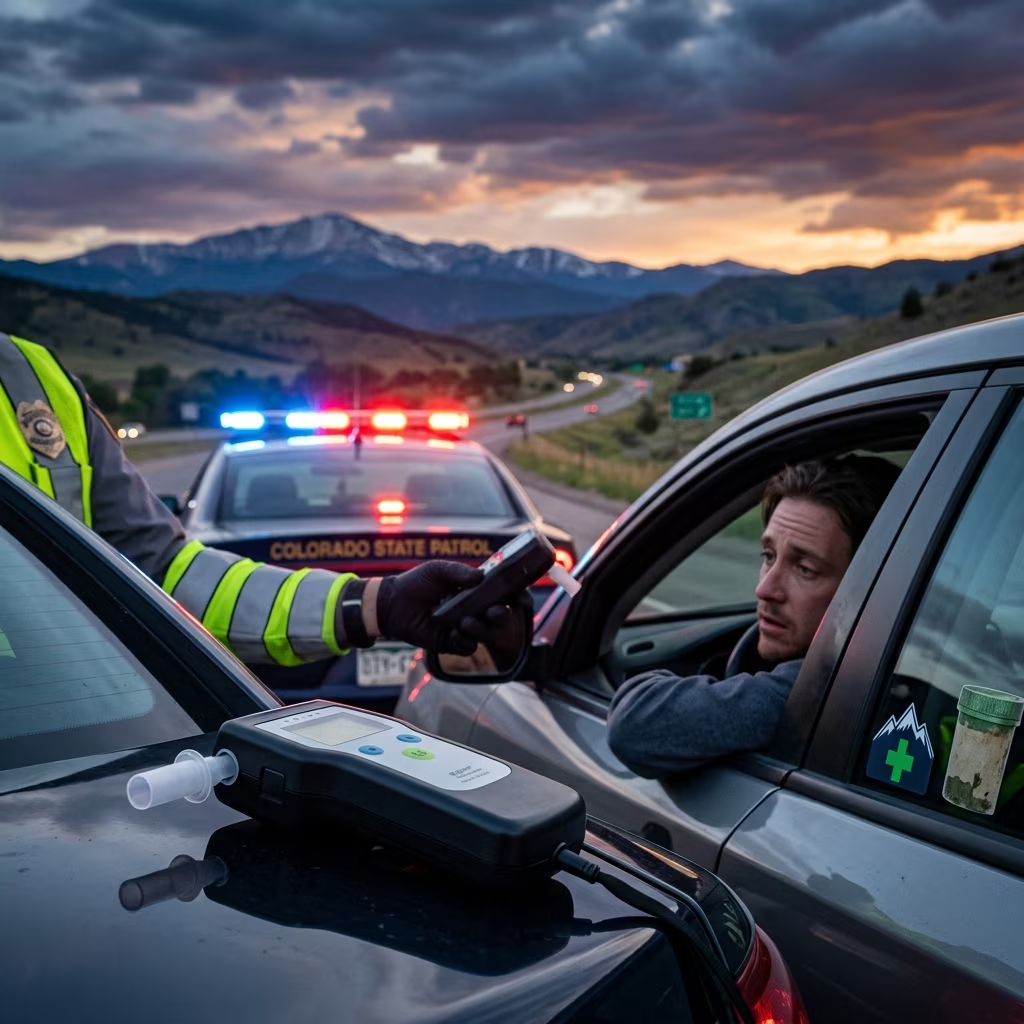
Colorado was one of the first states to legalize recreational marijuana, but legalization never removed the ban on impaired driving. Marijuana may be legal to possess and use in limited amounts, yet driving while affected by THC can still lead to DUI or DWAI charges, harsh penalties, and long-term consequences for your record and driver’s license.
This article explains how Colorado’s marijuana DUI laws work, how the 5 nanograms THC threshold is used in court, what penalties you could face, and how defense attorneys challenge these cases. It is an educational overview, not legal advice; anyone charged should consult a qualified Colorado DUI lawyer.
Marijuana Is Legal, Impaired Driving Is Not
Under Colorado law, adults may legally possess and use marijuana within strict limits, but the state clearly separates lawful use from unlawful driving. You can enjoy cannabis at home or in private spaces, yet once you get behind the wheel, the question becomes whether marijuana has impaired your ability to drive safely.
- Legal cannabis use: Adults 21+ can possess small amounts of marijuana and purchase it from licensed retailers.
- Impaired driving remains a crime: Operating a vehicle while affected by any drug, including marijuana, is illegal if it compromises safe driving.
- Medical marijuana cardholders are held to the same impaired driving rules as recreational users.
Colorado’s impaired driving statutes apply equally to alcohol and drugs. The core standard is whether the driver was capable of operating a vehicle safely, not whether the substance was legal to possess.
DUI vs. DWAI: How Colorado Classifies Marijuana Impairment
Colorado uses two main categories for marijuana-related impaired driving: DUI (Driving Under the Influence) and DWAI (Driving While Ability Impaired).
| Charge | Legal Standard | Impairment Level | Typical Consequences |
|---|---|---|---|
| DUI of marijuana | Substantially incapable of safely operating a vehicle due to marijuana. | More serious impairment; often supported by strong evidence of unsafe driving. | Misdemeanor or, for repeat offenses, possible felony; jail, fines, license impact. |
| DWAI by marijuana | Ability to drive is impaired to the slightest degree by marijuana. | Lesser level of impairment; still below safe driving standards. | Typically misdemeanor; penalties somewhat lower but still significant. |
Both charges can arise from the same underlying conduct, depending on how the prosecution views the evidence. DWAI reflects partial impairment, while DUI requires proof that the driver was substantially unable to operate the vehicle safely.
The 5 Nanogram THC Threshold: A Rebuttable Inference
One of the most debated features of Colorado’s marijuana DUI law is the 5 ng/mL THC level in whole blood. If a blood test shows delta-9 THC at or above five nanograms per milliliter, the court may draw a “permissible inference” that you were under the influence of marijuana.
- Not a strict per se limit: Unlike alcohol’s 0.08% BAC, which creates a nearly automatic DUI presumption, THC’s 5 ng standard allows the jury to infer impairment but does not prove it conclusively.
- Permissible inference: The prosecution can argue that this level indicates impairment, but the defense can present evidence to rebut that inference, particularly for frequent cannabis users.
- Evidence beyond lab results: Officers must still base the arrest on observed signs of impairment; the lab test typically comes later to support the case.
Colorado’s Department of Transportation emphasizes that drivers are arrested due to observed impairment, not just a blood test number, and any amount of active THC can carry risk of DUI or DWAI if the driving appears unsafe. Heavy users may retain elevated THC levels even when functionally normal, which is a common point of contention in court.
How Police Investigate Marijuana-Impaired Driving
Marijuana DUI investigations in Colorado share many features with alcohol stops but also present unique challenges. There is no roadside breath test for THC, and officer observations play a large role.
Typical Steps in a Marijuana DUI Stop
- Initial stop: The officer pulls the vehicle over for a traffic violation or driving behavior that suggests impairment, such as weaving or delayed reactions.
- Observation and questioning: The officer may note odor of marijuana, visible smoke, red or glassy eyes, slow speech, or cannabis paraphernalia in the vehicle.
- Field sobriety tests: Standardized tests (like walk-and-turn or one-leg stand) are used, though they were originally developed for alcohol and are not specific to THC.
- Decision to arrest: If the officer believes the driver’s ability is impaired, they may arrest for DUI or DWAI and request a blood test as the preferred method for detecting active THC.
- Toxicology testing: Blood samples are taken after arrest and analyzed for delta-9 THC concentration.
Because THC affects individuals differently depending on tolerance, frequency of use, and timing of consumption, defense attorneys often scrutinize both the observational evidence and the reliability of testing methods.
Penalties for Marijuana DUI and DWAI
Colorado generally treats marijuana DUI penalties similarly to alcohol-related DUI penalties. The exact outcome depends on factors such as prior convictions, injury or property damage, and whether the charge is DUI or DWAI.
Possible Consequences of a Marijuana DUI
- Jail time: A first DUI offense can involve up to one year in jail, with mandatory minimums increasing sharply for second and third offenses.
- Fines and court costs: First offenses typically carry fines starting around $600 and can reach $1,000 or more, plus court costs.
- License suspension: Drivers can face revocation of driving privileges, with longer suspensions for repeat violations or severe cases.
- Probation: Courts commonly impose probation with conditions such as sobriety monitoring and regular reporting.
- Community service: Many sentencings include mandatory community service hours.
- Substance education or treatment: Level II substance abuse classes, therapy, and victim impact panels (such as MADD programs) are frequently required.
- Ignition interlock devices: In alcohol cases, ignition interlocks are standard; marijuana DUI can still lead to interlock requirements tied to an overall impaired driving record.
- Insurance consequences: Auto insurance premiums often increase for years after a DUI conviction.
For repeat offenses, penalties may include lengthy county jail sentences and, in some situations, felony charges. A fourth DUI/DWAI involving marijuana is classified as a felony under Colorado law, with potential prison terms of two to six years and substantial fines.
Common Defense Strategies in Marijuana DUI Cases
Because THC impairment is more complex to measure than alcohol impairment, marijuana DUI cases often hinge on nuanced scientific and legal arguments. Defense attorneys use multiple strategies to challenge the prosecution’s evidence.
Challenging the Stop and Arrest
- Unlawful traffic stop: If the officer lacked a valid reason to stop the vehicle, key evidence gathered afterward may be excluded.
- Lack of probable cause: The defense may argue that the officer did not have sufficient objective evidence of impairment to justify a DUI arrest.
Questioning Field Sobriety Tests
- Non-specific to THC: Standard field sobriety tests are primarily validated for alcohol, not marijuana. Performance can be affected by fatigue, anxiety, injuries, or other non-drug factors.
- Testing conditions: Poor lighting, weather, uneven surfaces, and footwear can all undermine the reliability of test results.
Attacking Laboratory Evidence
- Timing of blood draw: THC levels fluctuate over time; delays between driving and blood collection may distort the relationship between measured concentration and actual impairment.
- Frequent use and tolerance: Regular cannabis users may have elevated baseline THC levels without being impaired, which can rebut the inference created by a 5 ng reading.
- Chain of custody and lab procedures: Defense lawyers may examine whether samples were properly handled, stored, and analyzed.
Alternative Explanations for Observed Behavior
- Medical conditions: Certain health issues can mimic signs of impairment, such as balance problems or eye redness.
- Fatigue and stress: Long work hours or emotional stress can affect driving and performance on field tests in ways that resemble intoxication.
Expert witnesses—such as toxicologists or medical professionals—are frequently used to explain how THC affects different individuals, the limits of current testing methods, and why lab numbers alone may not accurately represent real-time driving ability.
Practical Tips for Colorado Drivers Who Use Marijuana
For people who lawfully use cannabis in Colorado, understanding marijuana DUI risks is crucial. The safest approach is to avoid driving until all psychoactive effects have clearly worn off.
- Allow adequate time after consumption: Effects can last several hours depending on dose, method of use (smoking vs. edibles), and personal tolerance.
- Know your own reaction: Some individuals feel significantly impaired at low doses; others may underestimate their impairment.
- Separate transportation and use: Plan rides, use designated drivers, or rely on public transport or rideshare services.
- Keep cannabis secure in the vehicle: Open containers, visible smoke, or burning joints in the car can attract enforcement attention and complicate a DUI stop.
- Be aware of mixed-substance effects: Using marijuana along with alcohol or other drugs increases impairment and the likelihood of serious charges.
Even if you stay below the 5 ng level, officers can still charge DWAI if they believe your abilities are slightly impaired, so caution is essential.
Frequently Asked Questions About Colorado Marijuana DUI
1. Is it automatically illegal to drive with more than 5 ng of THC in my blood?
No. Colorado’s 5 ng threshold allows a permissible inference of impairment, not an automatic conviction. The prosecution can argue that this level shows you were under the influence, but the defense may rebut that inference with other evidence, especially for frequent users.
2. Can I get a DUI in Colorado if I have a medical marijuana card?
Yes. Impaired driving laws apply regardless of whether your marijuana use is medical or recreational. Holding a medical card does not exempt you from DUI or DWAI charges if your driving appears impaired.
3. How is marijuana DUI different from alcohol DUI in practice?
Alcohol DUIs rely heavily on breath tests and well-established BAC thresholds. For marijuana, there is no roadside breath test, and the 5 ng THC level is only an inference. Courts depend more on officer observations, blood tests, and expert testimony to determine whether cannabis actually impaired the driver.
4. What happens to my driver’s license after a marijuana DUI?
Drivers may face license suspension or revocation, with longer periods for repeat offenses or aggravated cases. The exact impact depends on prior history, test results, and whether the charge is DUI or DWAI, but consequences can include months or years without full driving privileges.
5. Do I need a lawyer if I am charged with marijuana DUI?
Marijuana DUI laws involve complex scientific and legal issues, from THC metabolism to evidentiary standards. Most people benefit from consulting a Colorado DUI defense attorney to evaluate the strength of the prosecution’s case and explore possible defenses.
References
- Understanding Colorado Marijuana Laws and How They Play Into a Strong DUI Defense — Law Office of Jennifer Watkins. 2023-06-01. https://www.jenniferwatkinslaw.com/blog/understanding-colorado-marijuana-laws-and-how-they-play-into-a-strong-dui-defense/
- How Marijuana DUIs Differ from Alcohol DUIs in Colorado — Wolf Law Colorado. 2022-04-15. https://wolflawcolorado.com/blog/how-marijuana-duis-differ-from-alcohol-duis-in-colorado/
- “DUI of Marijuana” – Laws & Penalties in Colorado — Colorado Legal Defense Group. 2023-08-10. https://cldg.legal/dui/laws/dui-of-marijuana/
- Marijuana DUI (DUI-D) — Tiftickjian Law Firm, P.C. 2021-11-20. https://www.criminallawdenver.com/denver-dui-defense/marijuana-dui/
- Colorado Marijuana DUI Laws — Law Office of Jill M. Jackson. 2022-09-05. https://www.jilljacksonlaw.com/marijuana-dui-colorado/
- Marijuana and DUI Defense — Mertes Law. 2023-03-12. https://merteslaw.com/marijuana-and-dui-defense/
- Bet you didn’t know: Inactive vs. active THC and DUIs — Colorado Department of Transportation. 2022-05-18. https://www.codot.gov/safety/impaired-driving/druggeddriving/campaign-news/impairment-from-frequent-cannabis-use