
Texas DWI Stop: Essential Guide To Avoid Making It Worse Now
Practical steps, legal rights, and smart decisions to make during a Texas DWI stop.
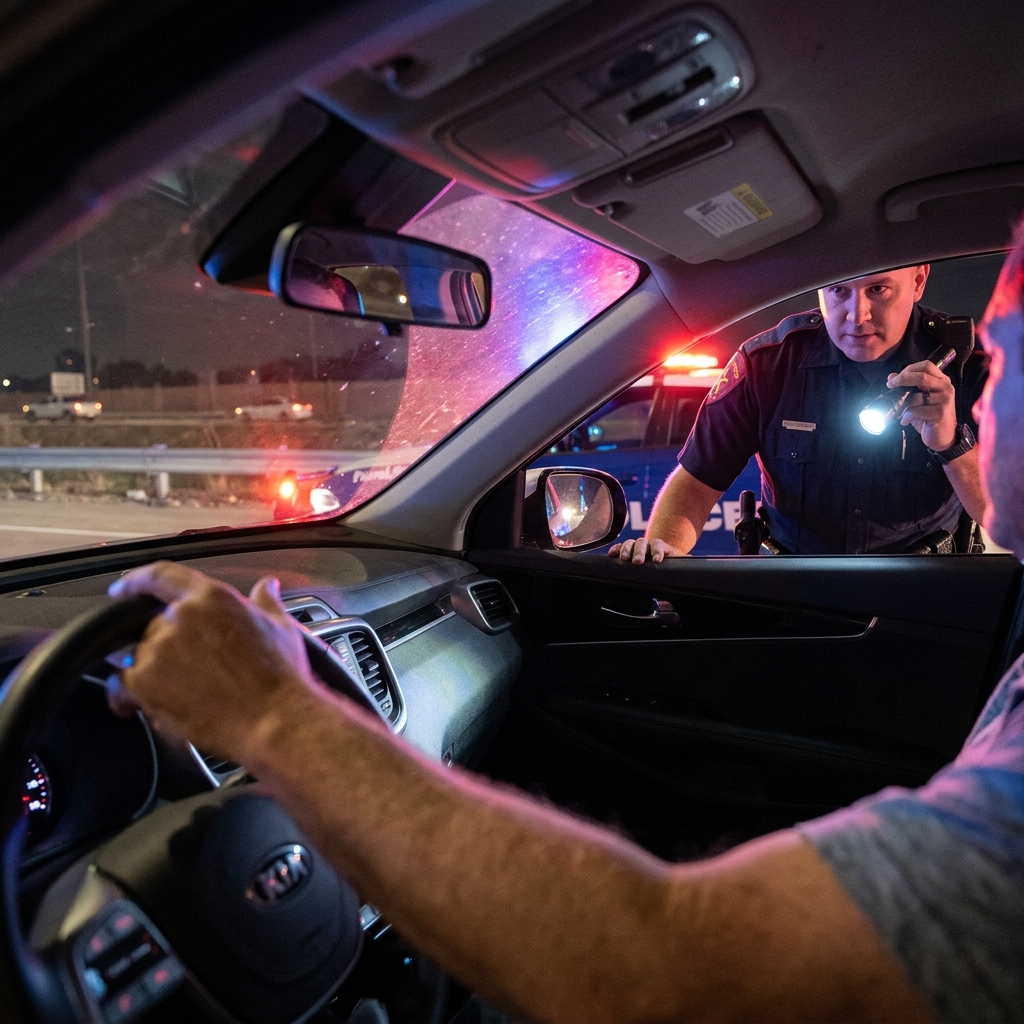
How to Handle a Texas DWI Stop Without Making the Situation Worse
A traffic stop on suspicion of driving while intoxicated can be stressful, but the choices made in those first few minutes often matter later. In Texas, drivers are generally required to provide basic identification and vehicle documents, but they do not have to volunteer damaging information or make the officer’s job easier by guessing at answers. A calm, measured response can help you avoid unnecessary complications while preserving your legal options.
This article explains the practical steps to take during a DWI stop in Texas, the boundaries of cooperation, and the legal issues that often follow an arrest. It is designed to help readers understand the process in plain language, not to replace advice from a licensed attorney.
Start With Safety and Controlled Movement
The first priority is to make the stop look orderly and non-threatening. Signal promptly, pull over at a safe location, and keep your hands where the officer can see them. Sudden movements, reaching into the passenger seat, or searching through the vehicle before the officer approaches can create tension and may make the encounter more difficult.
- Slow down and use your turn signal to show that you are complying.
- Stop in a well-lit area if one is available and safe.
- Keep both hands visible on the steering wheel until instructed otherwise.
- Wait for the officer to give directions before reaching for documents.
These actions do not prove anything about impairment, but they do reduce the chance that the interaction becomes more confrontational than necessary.
Provide the Documents You Are Required to Show
During a lawful traffic stop, an officer will usually ask for your driver’s license, proof of insurance, and vehicle registration. Those are the basic items you should be ready to provide. If they are stored in the glove box, center console, or another compartment, tell the officer before reaching for them so your movement is not mistaken for anything suspicious.
You generally do not have to explain where you were, how much you drank, or whether you feel intoxicated. That kind of conversation can quickly create evidence that may be used later. The safest approach is to keep your responses short and limited to what is required.
| Request | Typical response | Why it matters |
|---|---|---|
| Driver’s license | Provide it when asked | Required identifying information |
| Registration | Provide it when asked | Part of routine traffic-stop procedure |
| Proof of insurance | Provide it when asked | Required under Texas driving rules |
| Questions about drinking | Politely decline to answer | Answers may be used as evidence |
Keep Your Conversation Brief and Neutral
People often try to talk their way out of a stop by being overly friendly or overly explanatory. That approach usually does not help. An officer investigating possible intoxication may ask direct questions designed to get admissions, such as when you had your last drink or whether you have taken any medication. A short, respectful response is usually better than a long explanation.
Useful phrasing may include:
- “I prefer not to answer questions without a lawyer.”
- “I’m going to remain silent.”
- “I will provide my documents, but I do not want to discuss my evening.”
The point is not to be rude. The point is to avoid volunteering statements that could be interpreted out of context later.
Understand the Difference Between Cooperation and Waiving Rights
Cooperating with basic lawful instructions is not the same thing as giving up your constitutional protections. You can be polite, remain still, and follow directions while still declining to answer investigative questions. That distinction matters because officers often view a calm, limited response as less suspicious than a nervous attempt to over-explain.
At a Texas DWI stop, you should focus on what is required and avoid offering extra information. The more you say, the more opportunities there are for inconsistency, misunderstanding, or admissions that can be used against you.
Field Sobriety Tests Are Not the Same as License and Registration Checks
Roadside sobriety exercises are often used to build probable cause for an arrest, but they are not the same as showing your license or insurance. Common exercises include walking heel-to-toe, standing on one leg, and following an object with your eyes. These tests can be affected by nerves, weather, footwear, fatigue, medical conditions, or balance issues that have nothing to do with alcohol or drugs.
Because the results can be subjective, many drivers choose to decline these exercises. A polite refusal is often preferable to attempting a test under poor lighting, on a sloped shoulder, or while dealing with an injury or disability. However, the legal consequences of refusing can vary depending on the stage of the stop and the exact request being made.
It is important to distinguish between roadside exercises and formal chemical testing after arrest. They are treated differently under Texas law, and the consequences are not identical.
What Happens If You Are Arrested
If the officer believes there is enough evidence of impairment, an arrest may follow. Once that happens, the encounter changes from a traffic stop to a criminal case, and the questions become more serious. You should stop trying to persuade the officer of your innocence and shift to protecting your legal position.
After an arrest, you may be taken to a station or medical facility for testing. From that point forward, every decision can affect both the criminal case and your driver’s license status. Staying calm and avoiding arguments is essential.
- Do not resist, even if you think the arrest is unfair.
- Do not make emotional statements about having “only had one drink.”
- Do not argue about whether the officer was right to stop you.
- Ask for an attorney as soon as practical.
Texas Implied Consent Rules Can Affect Your License
Texas uses an implied consent framework for chemical testing after a lawful arrest. In practical terms, this means that driving in Texas comes with legal consequences if you refuse a post-arrest breath or blood test. Refusal does not automatically end the case, but it can trigger a separate administrative process involving your driver’s license.
This is one reason timing matters so much. A person may have a defense to the criminal charge while still facing an administrative suspension. The two tracks are related but not identical, and both deserve attention after a DWI arrest.
If a chemical test is requested after arrest, the driver should understand that the decision may carry immediate and long-term consequences. An attorney can explain whether a refusal or a test result is more damaging in a particular case.
Why Written Notes and Records Matter After the Stop
As soon as it is safe, write down everything you remember about the stop. Details fade quickly, especially after a frightening arrest. A short timeline can help a defense lawyer identify whether the stop was lawful, whether the officer’s observations were accurate, and whether any testing procedure was flawed.
Useful details include the following:
- The exact location of the stop
- The time of day and weather conditions
- What the officer said before and after the stop
- Whether any tests were offered or refused
- Whether you had medical conditions, injuries, or footwear issues
- Any witnesses who saw the stop or your condition beforehand
Receipts, ride-share records, text messages, and phone location data may also help reconstruct the evening. Even small details can become important later.
When to Call a DWI Lawyer
Legal help should be sought quickly after an arrest, and sometimes even after a roadside stop if the situation is uncertain. A lawyer can look at whether the officer had a lawful reason to stop the vehicle, whether the questioning crossed the line, and whether field tests or chemical tests were handled properly. That review can matter both in court and in any administrative license proceeding.
Early legal advice is especially important because deadlines can arrive fast. In Texas, some license-related steps must be taken quickly, and waiting too long can limit your options. A lawyer can also help you avoid common mistakes, such as making calls or statements that later create new evidence.
Common Mistakes That Can Hurt Your Case
Many DWI cases become harder to defend because of what happens during the stop itself. People often think that being extra cooperative means being extra talkative, but that can backfire. Others assume that refusing to speak will seem suspicious, so they overcompensate by explaining too much.
Some of the most common mistakes include:
- Admitting to drinking before the officer has asked a proper question
- Arguing with the officer instead of staying calm
- Making quick, unexplained movements inside the car
- Performing roadside exercises without understanding the risks
- Ignoring paperwork or deadlines after an arrest
None of these mistakes automatically decide a case, but each one can create avoidable problems.
Frequently Asked Questions
Do I have to answer questions about where I was or what I drank?
No. You generally must provide identifying and vehicle documents, but you do not have to discuss your drinking history, your route, or your activities. A respectful refusal is usually the safest choice.
Can I refuse roadside sobriety tests in Texas?
In many situations, drivers choose to decline field sobriety exercises because the tests are subjective and can be influenced by many factors unrelated to intoxication. The practical and legal effects of refusal can depend on the stage of the stop and the request being made.
What should I do if I am arrested?
Stay calm, do not resist, and ask to speak with a lawyer. Avoid discussing the facts of the stop with law enforcement until you have legal advice.
Will refusing a breath or blood test end the case?
No. Refusal does not automatically end a DWI case, but it can create separate license consequences and may be used as part of the overall evidence picture.
Should I write down what happened after the stop?
Yes. A detailed note made soon after the incident can help preserve facts that may be important to your defense.
A Practical Mindset for a Difficult Encounter
A Texas DWI stop is not a situation to improvise through. The safest strategy is usually to remain calm, limit your words, comply with clear lawful instructions, and protect your right to speak with counsel. The goal is not to win the roadside conversation; it is to avoid giving away information that can be used later.
If the stop leads to an arrest, the next phase becomes a legal process with deadlines, evidence, and decisions that should be handled carefully. A prompt review of the stop, the testing, and the paperwork can make a significant difference in how the case unfolds.
References
- Impaired driving and penalties – DUI/DWI — Texas Department of Transportation. 2026-07-10. https://www.txdot.gov/safety/driving-laws/impaired-driving.html
- Driving while intoxicated (DWI) — Texas Department of Public Safety. 2026-07-10. https://www.dps.texas.gov/section/driver-license/driving-while-intoxicated-dwi
- Texas Transportation Code, Chapter 724 — Texas Legislature Online. 2026-07-10. https://statutes.capitol.texas.gov/Docs/TN/htm/TN.724.htm
- Texas Transportation Code, Chapter 542 — Texas Legislature Online. 2026-07-10. https://statutes.capitol.texas.gov/Docs/TN/htm/TN.542.htm
- Driving While Intoxicated — Texas State Law Library. 2026-07-10. https://guides.sll.texas.gov/driving-while-intoxicated
Similar Articles








Read full bio of medha deb




