Probate in Colorado is the court-supervised process for transferring a deceased person’s property, paying legitimate debts, and ultimately closing the estate. A Colorado court appoints a personal representative (often called an executor) to gather assets, handle obligations, and distribute what remains to heirs or beneficiaries.
Colorado law offers several distinct paths to complete this process. Choosing the right path depends mainly on the value and type of assets, whether there is a valid will, and whether anyone is contesting the estate administration.
Big Picture: When Probate Is Required in Colorado
Not every estate must go through a full probate court case. Whether probate is required depends on the value of the decedent’s probate assets and whether they owned any real property at death.
Generally, a Colorado probate case is needed when:
- The person who died owned real estate titled solely in their name, such as a house or vacant land, and it is not held in a trust or joint tenancy.
- The person had more than a threshold amount in probate personal property (such as bank accounts without payable-on-death designations or vehicles titled only in their name).
Colorado also recognizes situations in which probate is not required, most commonly when the estate is small enough to use a small estate affidavit or when most assets are non-probate assets like joint tenancy property or trust assets.
Colorado’s Main Probate Routes
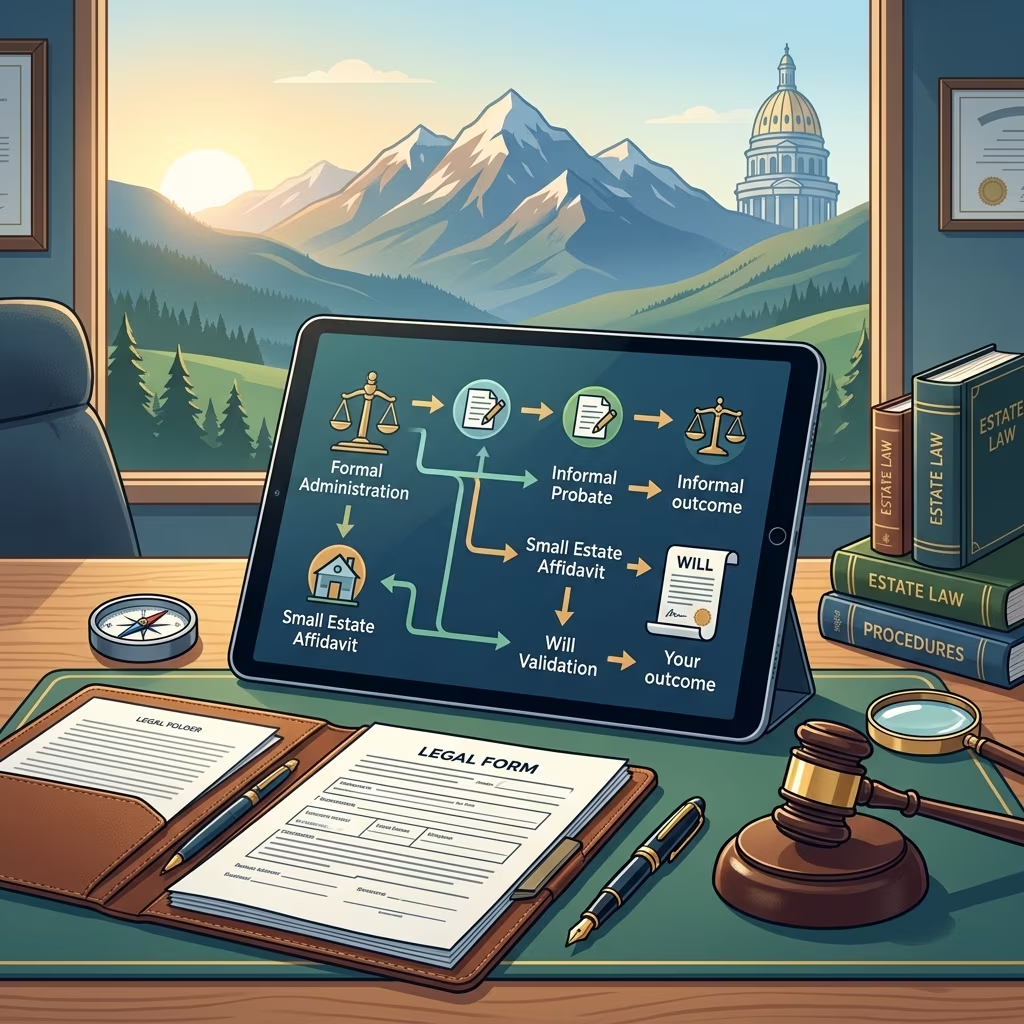
Colorado statutes and court practice recognize three primary ways to administer probate assets:
- Small estate collection by affidavit (for qualifying low-value estates with no real property).
- Informal probate (for uncontested, straightforward estates).
- Formal probate (for contested estates, unclear or questionable wills, or complicated administration).
All three paths share the same underlying goal—proper transfer of property and protection of creditors and heirs—but the level of court involvement varies significantly.
Probate Assets vs. Non-Probate Assets
Before deciding which probate path applies, it is critical to understand which assets are actually subject to probate.
What Counts as Probate Assets?
Probate assets are items owned solely in the decedent’s name without a designated beneficiary or survivorship feature.
- Real estate titled only to the decedent (home, rental property, vacant land).
- Individual bank accounts without payable-on-death (POD) beneficiaries.
- Vehicles registered only in the decedent’s name.
- Personal property such as furniture, jewelry, collections, and business interests without succession agreements.
Non-Probate Assets That Bypass the Court
Non-probate assets pass automatically according to contract or title and are usually not administered through the probate case.
- Joint tenancy property with right of survivorship (real estate or bank accounts held with another person).
- Assets in a properly funded revocable or irrevocable trust.
- Life insurance proceeds with a named beneficiary.
- Retirement accounts and payable-on-death or transfer-on-death designations.
When evaluating which probate route applies, only probate assets count toward the dollar thresholds for small estate procedures.
Small Estate Affidavit: Simplified Transfers
Colorado law allows a streamlined method to collect probate assets when the estate is below a specific value and contains no real property. This procedure is often called the small estate affidavit route.
Key Eligibility Criteria
While dollar limits adjust over time, Colorado guidance has used thresholds such as $50,000 in earlier materials and around $74,000 for more recent years. The core legal principle is consistent: when probate assets are under a statutory cap and there is no real property, heirs can avoid opening a formal probate case.
To use a small estate affidavit, all of the following must be true:
- Total probate assets are below the current statutory limit for the year of death.
- The decedent did not own any real property that requires probate transfer.
- The heir or devisee signing the affidavit swears they are entitled to receive the assets and will share them with other entitled recipients.
How the Small Estate Affidavit Works
This procedure does not require opening a probate estate with the court. Instead, an heir or devisee completes a sworn statement and presents it to the financial institution or third party holding the asset.
Typical steps include:
- Identify all probate assets and verify total value is under the threshold.
- Prepare and sign the small estate affidavit, including required statements under Colorado law.
- Provide a death certificate and the affidavit to banks or other asset holders.
- Collect assets and distribute them among heirs or devisees according to the will or intestacy rules.
This option is generally faster, cheaper, and involves fewer formalities than informal or formal probate. However, it places significant responsibility on the person signing the affidavit to handle distributions correctly.
Informal Probate: Default Path for Uncontested Estates
Informal probate is the most common probate process in Colorado for both testate estates (with a will) and intestate estates (without a will). It is designed for situations where there is a valid will or straightforward intestacy and no anticipated contests over who inherits or who serves as personal representative.
When Informal Probate Is Appropriate
Informal probate is typically suitable when:
- There is a clearly valid will, or intestacy is obvious.
- No one is challenging the will, the heirs, or the personal representative’s appointment.
- All heirs and beneficiaries can be identified and notified.
- The estate is not expected to involve complex litigation or disputed asset ownership.
In informal probate, the court’s role is limited but important. The registrar reviews paperwork, appoints the personal representative, and provides a forum to hold that person accountable if necessary.
Core Steps in an Informal Probate Case
Although informal probate is streamlined compared to formal proceedings, it still follows a structured process in Colorado district court.
| Step | Purpose |
|---|---|
| Open the estate | File an application for informal probate and appointment of a personal representative, attaching the original will (if any) and a death certificate. |
| Issue Letters | The court registrar, if satisfied, issues Letters Testamentary (with a will) or Letters of Administration (without a will), granting legal authority to the personal representative. |
| Notify interested persons | Heirs, devisees, and creditors are notified of the appointment through mail and, when required, publication. |
| Inventory and manage assets | The personal representative identifies, safeguards, and values estate property; maintains insurance; and may sell assets as appropriate. |
| Pay debts and taxes | Valid administration expenses and creditor claims are paid in statutory priority order, along with applicable tax filings. |
| Distribute property | Remaining assets are distributed to heirs or devisees according to the will or Colorado intestacy law, with receipts and releases documenting transfers. |
| Close the estate | After administration is complete, the personal representative files closing documents; the court issues a decree of final discharge, and the estate is closed. |
Informal probate generally moves faster than formal probate because hearings are not automatically required and court supervision is lighter.
Formal Probate: Handling Disputes and Complexities
Formal probate is reserved for contested or problematic estates. The court’s involvement is more intensive, often requiring hearings, formal notices, and explicit judicial decisions on key issues.
Situations That May Require Formal Probate
Colorado courts may require or parties may request formal probate when:
- The validity of a will is disputed (e.g., allegations of undue influence or lack of capacity).
- The will is unclear, incomplete, or potentially invalid.
- There are conflicts over who should inherit assets.
- Heirs or beneficiaries disagree about who should serve as personal representative.
- Significant challenges exist in identifying heirs, resolving property title issues, or addressing creditor claims.
In formal probate, the court may require the personal representative to seek approval for major transactions, such as selling real estate or settling large disputes, rather than acting entirely on their own discretion.
Features of Formal Probate Proceedings
Compared to informal probate, formal proceedings involve:
- Mandatory hearings on contested issues, including admission of the will and appointment of the personal representative.
- More detailed notice requirements to interested persons.
- Closer court oversight, which may include supervised administration.
Because of the added complexity and potential for litigation, formal probate often takes longer and costs more. However, it provides a structured forum for resolving disputes about the decedent’s intentions and the proper distribution of the estate.
Typical Timeline Considerations
Colorado materials indicate that both informal and formal probates must remain open for at least six months, although full administration can take much longer depending on the size and complexity of the estate.
Factors that influence the duration of a probate case include:
- Time needed to identify and value assets, especially real estate and business interests.
- Number and nature of creditor claims.
- Tax filing requirements and potential audits.
- Disputes among heirs or beneficiaries.
- Court scheduling for hearings in formal cases.
Practical Tips for Personal Representatives and Heirs
Whether you are considering a small estate affidavit, informal probate, or formal probate, several practical steps can make the process smoother.
For Personal Representatives
- Gather documents early: Obtain multiple certified death certificates and locate the original will and any codicils.
- Secure property promptly: Change locks if needed, maintain insurance, and protect valuables to prevent loss or damage.
- Keep detailed records: Track all receipts, payments, and distributions; well-organized records are essential for court filings and for accountability to heirs.
- Respect creditor priority: Pay administration expenses and creditor claims in the order required by Colorado law to avoid personal liability.
- Delay distributions until obligations are clear: Making distributions before confirming that debts and taxes are covered can create serious problems if funds must be reclaimed later.
For Heirs and Beneficiaries
- Clarify asset ownership: Distinguish probate assets from non-probate assets; this can affect whether a probate case is necessary and how long administration may take.
- Communicate expectations: Open communication with the personal representative can reduce misunderstandings and potential conflicts.
- Review notices carefully: Pay attention to mailed or published notices; they may include deadlines to contest a will or assert rights under Colorado law.
- Seek legal advice if disputes arise: When disagreements become serious, formal probate and legal representation may be necessary to protect your interests.
FAQs About Colorado Probate Types
Do all estates in Colorado need probate?
No. Estates composed mainly of non-probate assets, like joint tenancy property, trust assets, and accounts with designated beneficiaries, may not need a probate case. Additionally, estates under the statutory small estate threshold with no real property can often be handled with a small estate affidavit instead of opening probate.
What is the difference between informal and formal probate?
Informal probate is used for uncontested, straightforward estates where the will is valid or intestacy is clear and no disputes are expected. It involves limited court supervision and typically no hearings. Formal probate, by contrast, is used for contested or complex estates and requires more court involvement, hearings, and judicial decisions on disputed issues.
Can I switch from informal to formal probate if a dispute arises?
Yes. If a dispute over the will, heirs, or personal representative emerges during an informal case, interested persons may ask the court to move issues into formal proceedings. This allows the court to hold hearings and make rulings to resolve the conflict.
How long does an informal probate usually take?
Informal probate must generally stay open at least six months, but many estates take longer to administer. Complex assets, creditor issues, or tax questions can extend the timeline significantly.
What happens at the end of a Colorado probate case?
Once assets have been collected, debts and taxes paid, and property distributed, the personal representative files closing documents with the court. The court may issue a decree of final discharge, and after obtaining a certified copy, the personal representative’s duties end and the estate is officially closed.
References
- Probate in Colorado Flyer — Colorado Bar Association. 2022-01-01. https://www.cobar.org/Portals/COBAR/Repository/Front%20Desk/Probate%20in%20Colorado%20Flyer.pdf
- Probate in Colorado — Denver Bar Association. 2019-01-01. https://www.denbar.org/Public/Public-Legal-Information/Probate-in-Colorado
- Probate in CO (USAFA Guide) — United States Air Force Academy Judge Advocate. 2015-10-30. https://www.usafa.af.mil/Portals/21/documents/Leadership/JudgeAdvocate/Probate%20in%20CO.pdf
- What Happens in Colorado Probate Court? A Step-by-Step Guide — Colorado Estate Plan. 2023-05-01. https://coloradoestateplan.com/what-happens-in-probate-court/
- Probate with No Will — Colorado Judicial Legal Help Center. 2022-06-01. https://lawhelp.colorado.gov/probate-with-no-will
- Assets That Go Through Probate in CO — W.B. Moore Law. 2023-04-01. https://wbmoorelaw.com/assets-that-go-through-probate-in-co/
- Colorado Informal Probate — McDonough Law Group. 2023-03-01. https://mcdonoughlawgroup.com/colorado-informal-probate/