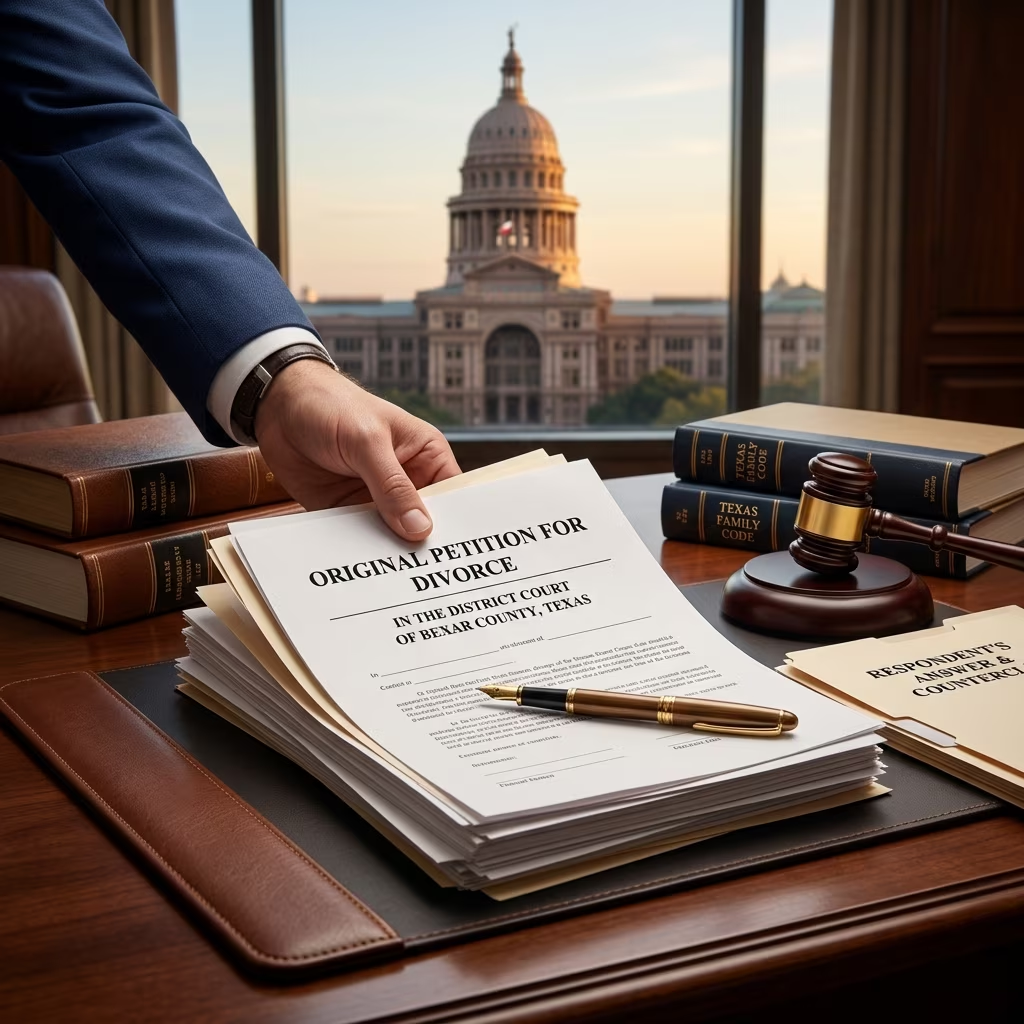
In Texas, spouses often wonder whether it truly matters who starts the divorce case. The short answer is: filing first can create practical and strategic advantages, but it does not guarantee a better final outcome. Judges base decisions on Texas law and the evidence presented, not on which spouse was the first to file.
This article explains how being the first to file can affect venue choice, timing, temporary orders, safety planning, and
Big Picture: What Filing First Can and Cannot Do
Texas courts treat both spouses as having equal rights to seek a divorce. Texas is a no-fault divorce state, meaning a judge can grant a divorce simply because one spouse believes the marriage cannot be preserved, without proving wrongdoing.
Still, initiating the case lets the filing spouse shape how the case begins. Understanding these benefits and limits can help you decide whether you should act quickly or focus first on preparation.
- Advantages of filing first
- May influence where the case is heard (venue within Texas).
- Allows you to frame the initial narrative in the petition.
- Can trigger standing orders or temporary orders that protect assets and children.
- Creates a clear timetable, including the mandatory waiting period.
- Limits of filing first
- Does not guarantee better custody or property division.
- Does not change the legal standards judges must apply.
- Both spouses will have a chance to respond and present their own evidence.
Residency Rules and Where You Can File in Texas
Before any spouse can file for divorce in Texas, the law imposes basic residency requirements. You can generally file if either spouse has lived in Texas for at least the last 6 months and in the county where the case is filed for at least 90 days.
If one spouse lives outside of Texas, a divorce can still be filed in the Texas county where the other spouse resides, provided the Texas residency requirements are met.
| Residency Requirement | What It Means Practically |
|---|---|
| 6 months in Texas | At least one spouse must have lived anywhere in Texas for the last six months before filing. |
| 90 days in a county | The filing spouse must choose a county where either spouse has lived for at least 90 days. |
| Spouse living out of state | You can still file in Texas in the county where the Texas-resident spouse lives, if that spouse meets the 6-month requirement. |
How Filing First Affects Venue and Convenience
When spouses live in different Texas counties, the first person to file typically chooses the county where the case begins. Texas law permits filing in the district court of the county where either party has lived for the last 90 days, assuming the 6-month state residency requirement is satisfied.
This choice can matter because local court procedures, dockets, and even standing orders differ by county. A convenient venue can reduce travel, make attending hearings easier, and provide faster access to local services like mediators or parenting classes.
- Impact of choosing venue by filing first
- You may avoid traveling long distances for hearings.
- You may benefit from a county with stronger standing orders protecting property and children.
- Familiarity with local courts and attorneys can improve coordination and reduce stress.
Mandatory Waiting Period: Timing Your Strategy
Texas imposes a minimum 60-day waiting period between filing the original divorce petition and finishing the divorce in most cases. This period gives spouses time to reconsider, negotiate, or prepare their financial and parenting plans.
The waiting period can be waived only in limited circumstances related to family violence. It may be waived if the non-filing spouse has been convicted or received deferred adjudication for family violence, or if there is an active protective or magistrate’s order in place because of family violence.
Filing first affects when this clock starts. For some spouses, especially those targeting specific financial or tax planning dates, the filing date can be part of a broader strategy.
Setting the Tone: The Petition and Initial Narrative
The spouse who files first drafts the Original Petition for Divorce. This document is the court’s initial view of the case. It usually states:
- The legal grounds for divorce (often no-fault grounds).
- Basic information about children, if any.
- Requests on property division, support, and conservatorship (custody).
- Any requests for temporary orders.
Being the first to file allows you to outline your preferences on key issues early. While the petition is not the last word in a case, it can shape early negotiations and temporary orders.
However, the non-filing spouse can file an answer and, if desired, a counter-petition presenting their own requests. Judges review both sides’ filings and ultimately base orders on evidence and the law, not on who raised the issue first.
Temporary Orders: Protection, Stability, and Why Timing Matters
Once a divorce is filed, many Texas courts issue standing orders or temporary orders to stabilize the situation. These orders can restrict certain financial moves, guide parental behavior, and prevent disruption to children while the case is pending.
Common features of standing or temporary orders include:
- Prohibiting the transfer or hiding of assets outside normal living expenses.
- Restricting changes to children’s schools or residences without agreement or court approval.
- Limiting harassment or disturbing the peace of the other spouse.
- Setting temporary schedules for possession and access to children.
Filing first can trigger these protections sooner. If you are concerned about sudden financial changes or disruptions to your children, initiating the case may help preserve stability and prevent unilateral actions.
Protection Orders, Safety Concerns, and Divorce
In cases involving threats or violence, divorce strategy intersects directly with protective orders. A protective order is a separate court order designed to protect individuals from family violence, harassment, or stalking.[10]
The process typically involves filing a petition for a protection order, describing recent incidents of violence or threats. If the court finds a clear and present danger, it may issue a temporary ex parte order, followed by a hearing within about two weeks where both parties can present evidence.
Protective orders can influence a Texas divorce, particularly regarding custody, visitation, and sometimes property division and support.[10] Courts may consider evidence of violence or harassment when deciding what arrangement is in the children’s best interest or whether certain financial protections are appropriate.
When filing for divorce, you must attach a copy of any protective order involving you, your spouse, or your children to your petition. This ensures the divorce court is aware of safety concerns and applicable restrictions.
Costs and Practical Burdens of Filing First
Being the first to file also means you are the spouse who pays the initial filing fee. Court costs for filing a divorce in Texas vary by county, but they are generally several hundred dollars. In some cases, you may also incur costs for service of process or early legal work.
Texas law allows a person who cannot afford court fees to request a waiver by filing an Affidavit of Inability to Pay Court Costs. If the court grants this request, the filing spouse may proceed without paying standard filing fees.
Does Filing First Improve Your Chances in Court?
From a legal standpoint, filing first does not create a presumption in your favor for child custody, property division, or support. Judges must follow Texas statutes and case law, and key decisions turn on evidence, not the order in which documents were filed.
Child-related decisions:
- Texas courts focus on the best interest of the child, considering factors like stability, caregiving history, safety, and each parent’s ability to meet the child’s needs.
- Evidence (school records, medical records, witness testimony) usually matters more than filing sequence.
Property and support decisions:
- Texas follows a community property approach, aiming for a just and right division of marital assets and debts.
- Factors such as earning power, health, and any evidence of waste or fraud can play roles in property and support decisions.[10]
- These issues are decided after evaluating financial disclosures and testimony, regardless of who filed first.
Strategic Reasons Some Spouses Choose to File First
While filing first does not guarantee a legal edge, there are practical reasons some spouses decide to initiate the process rather than waiting to be served with papers.
- Control over timing
Starting the case may allow you to coordinate with key dates such as the end of the school year or financial milestones. In some situations, the timing of divorce finalization can affect tax filings and long-term financial planning.
- Preparedness and documentation
Filing when you feel prepared—after gathering financial records, identifying assets, and consulting with counsel—may reduce surprises. This level of preparation is often more important than the mere fact of filing first.
- Safety and stability
When there is a risk of violence or sudden asset transfers, filing first may trigger protective mechanisms such as standing orders or protective orders, helping prevent harm or financial loss.[10]
Common Myths About Filing First in a Texas Divorce
Misunderstandings about divorce procedure can lead to unnecessary fear or rushed decisions. Below are some common myths and clarifications.
| Myth | Reality |
|---|---|
| “If I don’t file first, I’ll lose custody.” | Custody decisions are based on the child’s best interest and evidence, not on which spouse filed first. |
| “Filing first lets me keep more property automatically.” | Property division follows community property principles and case law. Judges aim for a fair division, independent of filing order.[10] |
| “My spouse can block the divorce if they refuse to cooperate.” | Texas is a no-fault state. If one spouse believes the marriage cannot continue, the court can grant a divorce even without mutual agreement. |
| “If I wasn’t first to file, the court will assume I’m at fault.” | Fault is not assumed from the filing sequence. Allegations of misconduct must be supported by evidence and are evaluated under Texas law. |
FAQs: Filing First in a Texas Divorce
1. Do I need my spouse’s permission to file for divorce in Texas?
No. In Texas, you do not need your spouse’s permission to start a divorce case. Because Texas is a no-fault state, a judge can grant a divorce if one spouse believes the marriage cannot be repaired, even if the other spouse disagrees.
2. Can filing first help protect my finances?
Filing can trigger standing or temporary orders that prevent both spouses from moving or hiding assets outside ordinary living expenses, which can reduce the risk of financial loss during the case. The benefit depends on your county’s specific rules and how quickly the court issues such orders.
3. Does filing first change child support or custody rules?
No. Child support, custody, and visitation are governed by statutory standards, including the best interest of the child. Judges review testimony, records, and sometimes expert evaluations, independent of which spouse filed first.
4. What if I live outside Texas but my spouse lives in Texas?
You can often still participate in a divorce filed in Texas. The case may be filed in the Texas county where your spouse has lived for at least 90 days, as long as they have lived in Texas for six months. You will receive notice and have an opportunity to respond.
5. Can I get fee waivers if I file first but can’t afford the costs?
Possibly. Texas law allows you to ask the court to waive court costs by filing an affidavit stating that you cannot pay. Whether the fee is waived depends on your financial situation and the court’s evaluation.
Key Takeaways for Deciding Whether to File First
In practice, filing first in a Texas divorce is mostly about timing, venue, safety, and strategy, not about automatic legal advantages. You may benefit from filing first if:
- You want to choose a convenient Texas county that meets residency rules.
- You need temporary protections for children or assets as soon as possible.
- You are dealing with family violence or harassment and need protective orders.[10]
- You have already prepared key financial and parenting information and are ready to start the process.
On the other hand, rushing to file before you understand your finances, legal options, and safety plan can be counterproductive. For many spouses, the best “advantage” comes from careful planning with professional guidance, regardless of who files first.
References
- Filing for Divorce with Children — TexasLawHelp.org. 2023-03-06. https://texaslawhelp.org/article/faqs-filing-a-divorce-with-children
- Filing for Divorce — Texas State Law Library. 2023-07-12. https://guides.sll.texas.gov/divorce/filing-for-divorce
- Filing for Divorce or Been Served with Divorce Papers — Lovein Ribman, PLLC. 2022-11-01. https://loveinribman.com/family-law-services/filing-for-divorce-or-been-served-with-divorce-papers/
- How Does a Protection Order Affect Your Texas Divorce? — GCR Law Office. 2023-08-15. https://www.gcrlawoffice.com/blog/2023/08/how-does-a-protection-order-affect-your-texas-divorce/
- Will a Protective Order Affect My Texas Divorce? — Pruett, Pruett & Reams. 2024-01-10. https://www.pkrfamilylaw.com/blog/2024/01/will-a-protective-order-affect-my-texas-divorce/
- Texas Divorce Timing: How Finalizing Before or After Year-End Impacts Finances — Naylor & Collins Family Law. 2023-12-05. https://nfamilylaw.com/filing-for-divorce-before-or-after-year-end-financial-and-tax-implications-for-texas-spouses/