
Key Steps After Receiving a Bankruptcy Notice
Understand what a bankruptcy notice means for you, how to protect your rights, and what actions you must take as a creditor or affected party.
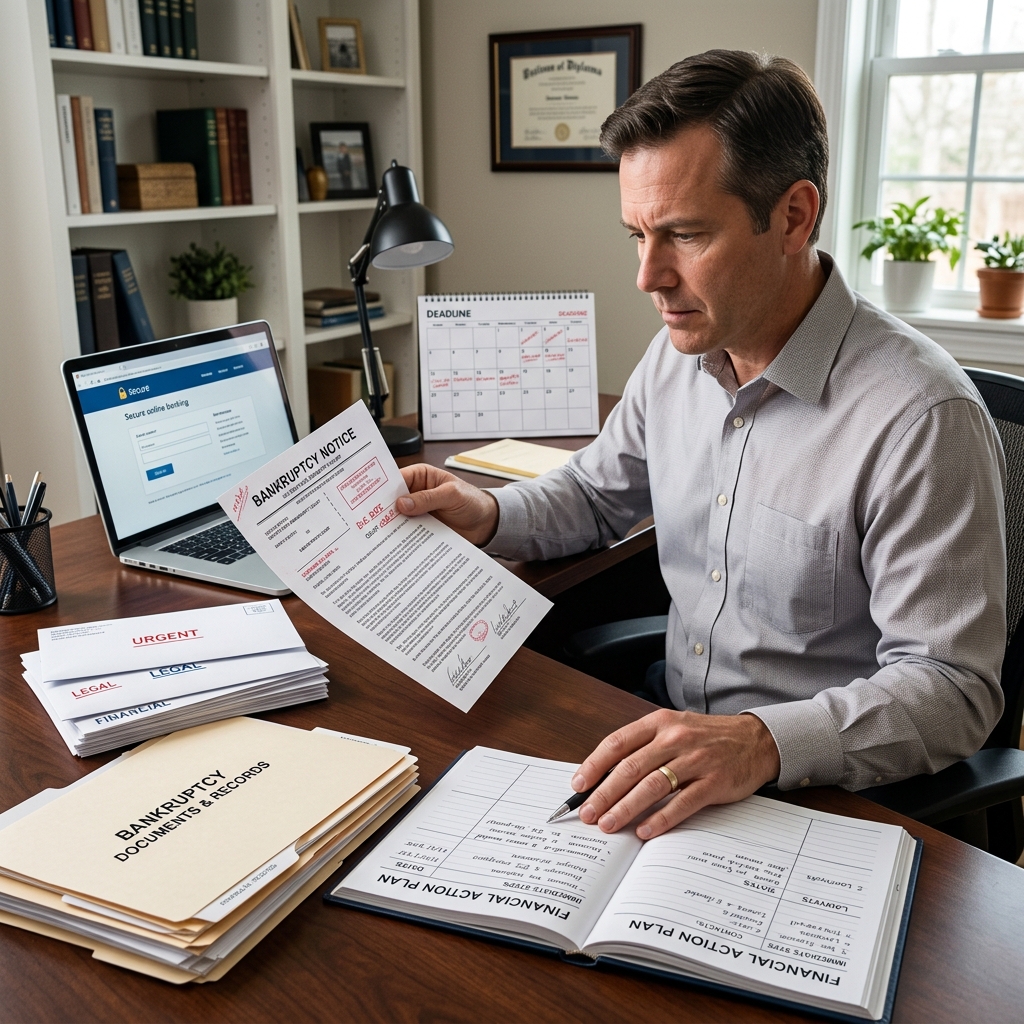
Receiving a bankruptcy notice can be unsettling, whether you are an individual, a business owner, or an organization that is owed money by the debtor. This document signals that a formal bankruptcy case has been filed and that the debtor is now under the protection of the bankruptcy court.[10] Understanding its legal implications and the steps you should take immediately is essential to protect your interests and remain compliant with the law.
This article explains, in clear and practical terms, what a bankruptcy notice means, what you must do—and must not do—once you receive it, and how to participate effectively in the bankruptcy process as a creditor or other affected party. While the focus is on general principles common in many jurisdictions, specific rules and deadlines can vary, so local legal advice remains important.
Understanding What a Bankruptcy Notice Really Means
A bankruptcy notice is typically sent by the bankruptcy court or by the debtor’s attorney to inform creditors and other parties that a bankruptcy petition has been filed. It usually includes crucial information such as:
- The debtor’s name and any known aliases
- The case number and the court where the case is filed
- The type of bankruptcy (for example, liquidation or reorganization)
- Deadlines for filing a proof of claim or objecting to certain requests[10]
- Contact information for the debtor’s attorney and, in many cases, the trustee
For creditors, the notice serves two main functions:
- It alerts you that the debtor is now subject to the jurisdiction of the bankruptcy court.
- It informs you that any efforts to collect a debt outside the bankruptcy process may now be restricted or prohibited by law.
In short, the bankruptcy notice is your gateway into the case. If you ignore it, you risk losing your opportunity to be paid through the court-supervised process.
Immediate Actions to Take When You Receive the Notice
The first hours and days after receiving a bankruptcy notice are critical. Taking deliberate, organized steps can make the rest of the process much easier.
1. Verify and Review the Notice Carefully
Begin by confirming that the notice is authentic and relevant to you. You can usually do this by contacting the clerk of the bankruptcy court listed on the notice and verifying the case number. Once confirmed, read the notice in full, paying particular attention to:
- Filing date of the bankruptcy case
- Deadlines for filing a proof of claim
- Deadlines for objecting to discharge or to the treatment of specific debts[10]
- Instructions regarding the automatic stay and future communications
2. Identify Your Relationship to the Debtor
It is not uncommon to receive a notice involving a name you do not immediately recognize. Review your internal records and determine:
- Whether the debtor is a customer, vendor, former employee, tenant, or another type of counterparty
- Any outstanding invoices, contracts, or claims you have involving the debtor
- Whether other departments or affiliates within your organization may also have exposure to this debtor
If your organization is large, notify your finance, legal, or compliance teams so that they can check for additional claims and coordinate a unified response.
3. Cease All Independent Collection Activity
One of the most important immediate obligations is to respect the automatic stay. In most bankruptcy systems, the filing of a case triggers a legal pause on virtually all collection efforts by creditors, including phone calls, letters, lawsuits, and enforcement of judgments. Attempting to collect outside the court process after the stay is in place can result in serious consequences.
Ensure that you:
- Stop sending demand letters or past-due notices to the debtor
- Pause collection calls and emails
- Notify any third-party collection agencies working on your behalf to discontinue activity immediately
Violating the automatic stay can expose you to sanctions, including fines or court orders requiring you to undo collection actions.[10]
Assessing What You Are Owed and the Nature of Your Claim
Once you have stabilized the situation and stopped collection efforts, turn to the substance of your claim. A structured assessment will help you communicate clearly with the court and trustee.
4. Calculate the Amount of Your Claim
Identify exactly how much the debtor owes you. Break down the claim into components such as:
- Principal amount due
- Accrued interest
- Late fees or penalties (if contractually authorized)
- Any court-ordered damages, if there is a judgment against the debtor
Gather documentation to support each part of the claim, including contracts, invoices, payment histories, and correspondence.
5. Determine the Type and Priority of Your Claim
Not all debts are treated equally in bankruptcy. Laws typically distinguish between:
- Secured claims – backed by collateral such as real estate, vehicles, or equipment
- Unsecured claims – not backed by collateral (e.g., trade payables, credit card debts)
- Priority unsecured claims – certain debts, such as some tax and wage claims, receive higher priority under statute
Understanding the category of your claim helps you evaluate the likelihood and timing of recovery. If you are uncertain, consulting legal counsel or a bankruptcy specialist can be helpful.
Table: Examples of Claim Types
| Claim Type | Common Examples | Typical Treatment in Bankruptcy |
|---|---|---|
| Secured claim | Mortgage on real property, equipment loan | Paid from collateral value; may be partially unsecured if collateral is insufficient |
| Priority unsecured claim | Certain tax debts, recent wages | Paid before general unsecured creditors under applicable law |
| General unsecured claim | Trade invoices, credit card balances | Paid from remaining funds; often receive partial payment |
Filing a Proof of Claim and Participating in the Case
To be considered for payment in most bankruptcy cases, creditors must file a proof of claim. This is a formal, court-approved document stating the amount of your claim and the basis for it.
6. Prepare and File a Proof of Claim
The bankruptcy notice usually explains whether and when proofs of claim may be filed and often includes instructions or forms. In many jurisdictions:
- Proofs of claim must be filed by a specific bar date (deadline), which is strictly enforced.[10]
- Claims filed within the prescribed window—commonly within several months of the filing date—are considered timely.
When you prepare your proof of claim:
- Use the official claim form provided by the court or trustee.
- Clearly state the total amount owed and identify any secured or priority status.
- Attach supporting documents such as contracts, invoices, and judgments.
- Ensure that the claim is signed by an authorized person and submitted in the manner required (electronic or paper).
Late or incomplete claims may be disallowed or subordinated, reducing or eliminating your recovery.
7. Monitor Case Developments and Court Communications
Once your claim is filed, your role does not end. Creditors usually receive notices of significant events in the case, such as the proposed repayment plan, asset sales, or hearings that may affect creditor rights. To protect your interests:
- Read every mailing or electronic notice from the court or trustee carefully.
- Keep your address and contact information up to date with the court to avoid missed notices.
- Consult counsel promptly if you receive a notice you do not understand or that appears to affect your claim.
Bankruptcy cases can involve complex motions and plans. Timely review and response can make a significant difference in outcome.
Respecting the Automatic Stay and the Discharge
Two major protections for debtors in bankruptcy are the automatic stay and the discharge. Both have direct implications for creditors.
8. Automatic Stay: What You Must Not Do
The automatic stay begins when the bankruptcy petition is filed and generally prohibits creditors from:
- Starting or continuing lawsuits to collect debts
- Enforcing judgments or liens against the debtor’s property
- Sending collection letters, emails, or making calls demanding payment
There are limited exceptions—for example, certain criminal proceedings or specific types of claims—but most ordinary debt collection efforts must stop. The stay remains in effect until the case is dismissed, closed, or a discharge is granted, unless the court grants a creditor relief from the stay.
9. Discharge: Long-Term Implications for Your Claim
At the end of a successful bankruptcy case, the debtor typically receives a discharge, which is a court order permanently eliminating the debtor’s personal liability for most pre-bankruptcy debts.[10] Once a discharge is entered:
- You may not attempt to collect a discharged debt from the debtor personally.
- The discharge acts as a permanent injunction, and violations can result in sanctions such as civil contempt and fines.[10]
- Secured creditors may still enforce rights against collateral, subject to court orders and applicable law.
If you believe your claim should not be discharged—for example, if it arises from fraud or other misconduct—you may need to file a specific action within the bankruptcy case, often called an adversary proceeding, by a court-set deadline.
When and Why to Seek Legal Advice
Bankruptcy law is technical and time-sensitive. While some small creditors manage basic tasks without formal representation, there are situations where professional advice is highly recommended.
10. Situations That Call for Legal Counsel
Consider consulting a bankruptcy lawyer or your organization’s legal department when:
- You hold a large or complex claim, or your exposure to the debtor is substantial.
- Your claim involves collateral or security interests (e.g., mortgages, equipment finance).
- You suspect the debtor engaged in fraud or other misconduct affecting your claim.
- You receive a notice about plan confirmation or asset sale that might significantly impact your recovery.
Legal counsel can help interpret notices, prepare proofs of claim, represent you in hearings, and advise on strategy, including whether to challenge dischargeability of a debt.
Practical Tips for Businesses and Institutions
For organizations that regularly deal with vendors, customers, or partners, establishing internal procedures can make responding to bankruptcy notices more efficient.
- Centralize receipt of legal mail: Ensure that legal or finance departments receive and log bankruptcy notices promptly.
- Coordinate across departments: Check whether other units have claims against the debtor to avoid fragmented responses.
- Maintain accurate records: Up-to-date contract and billing files make preparing proofs of claim faster and more accurate.
- Train key staff: Educate credit and collection teams about the automatic stay and the need to stop collection efforts when a bankruptcy notice arrives.
Frequently Asked Questions (FAQs)
Do I have to respond if I received a bankruptcy notice but the debtor owes me nothing?
If you are certain you have no claim, you typically do not need to file a proof of claim. However, it can be wise to notify your internal legal or finance team so they can confirm there are no overlooked exposures and track the case for institutional reasons.
What happens if I ignore the bankruptcy notice?
If you fail to review the notice and do not file a proof of claim, you may be excluded from any distributions made by the bankruptcy estate. You are still bound by the automatic stay and any discharge, meaning your ability to collect the debt outside the process may be permanently limited.[10]
Can I still talk directly to the debtor about payment?
Direct contact with the debtor to demand payment is generally prohibited after the case is filed because of the automatic stay. Communications should typically go through counsel, the trustee, or follow instructions provided in court notices. Unauthorized collection efforts may result in court sanctions.
How do I know if my claim is a priority claim?
Priority status is defined by statute and often includes certain tax debts or recent wages owed. Reviewing applicable law or consulting a legal professional is the safest way to determine whether your claim qualifies for priority treatment.
Will I definitely be paid if I file a proof of claim?
Filing a proof of claim preserves your right to be considered, but payment depends on factors such as the value of the debtor’s assets, the total amount of claims, and the priority of your claim. Many general unsecured creditors receive only partial payment, and in some cases, no distribution at all.[10]
References
- What happens when you receive a bankruptcy notice? — Justice Connect. 2023-03-01. https://justiceconnect.org.au/resources/receiving-a-bankruptcy-notice/
- You just received a bankruptcy notice. Now what? — Flaster Greenberg PC. 2019-09-10. https://www.flastergreenberg.com/newsroom-articles-You_just_received_a_bankruptcy_notice_Now_what.html
- What to Do If a Company Goes Bankrupt and Owes You Money — Allianz Trade. 2022-06-15. https://www.allianz-trade.com/en_US/insights/customer-bankruptcy.html
- Notice of Bankruptcy: What to Do — Harvard University, Office of the General Counsel. 2020-02-20. https://ogc.harvard.edu/book/notice-bankruptcy-what-do
- Bankruptcy Frequently Asked Questions — Internal Revenue Service. 2024-08-05. https://www.irs.gov/businesses/small-businesses-self-employed/bankruptcy-frequently-asked-questions
- Discharge in Bankruptcy – Bankruptcy Basics — United States Courts. 2023-01-10. https://www.uscourts.gov/court-programs/bankruptcy/bankruptcy-basics/discharge-bankruptcy-bankruptcy-basics
- What’s next for creditors after receiving a bankruptcy notice? — PAmLaw. 2023-12-01. https://www.pamlaw.com/blog/2023/12/whats-next-for-creditors-after-receiving-a-bankruptcy-notice/
Similar Articles








Read full bio of Sneha Tete




