
Understanding Supervised Probation in Criminal Cases
A clear, practical guide to how supervised probation works, what is required, and what happens if you violate the rules.
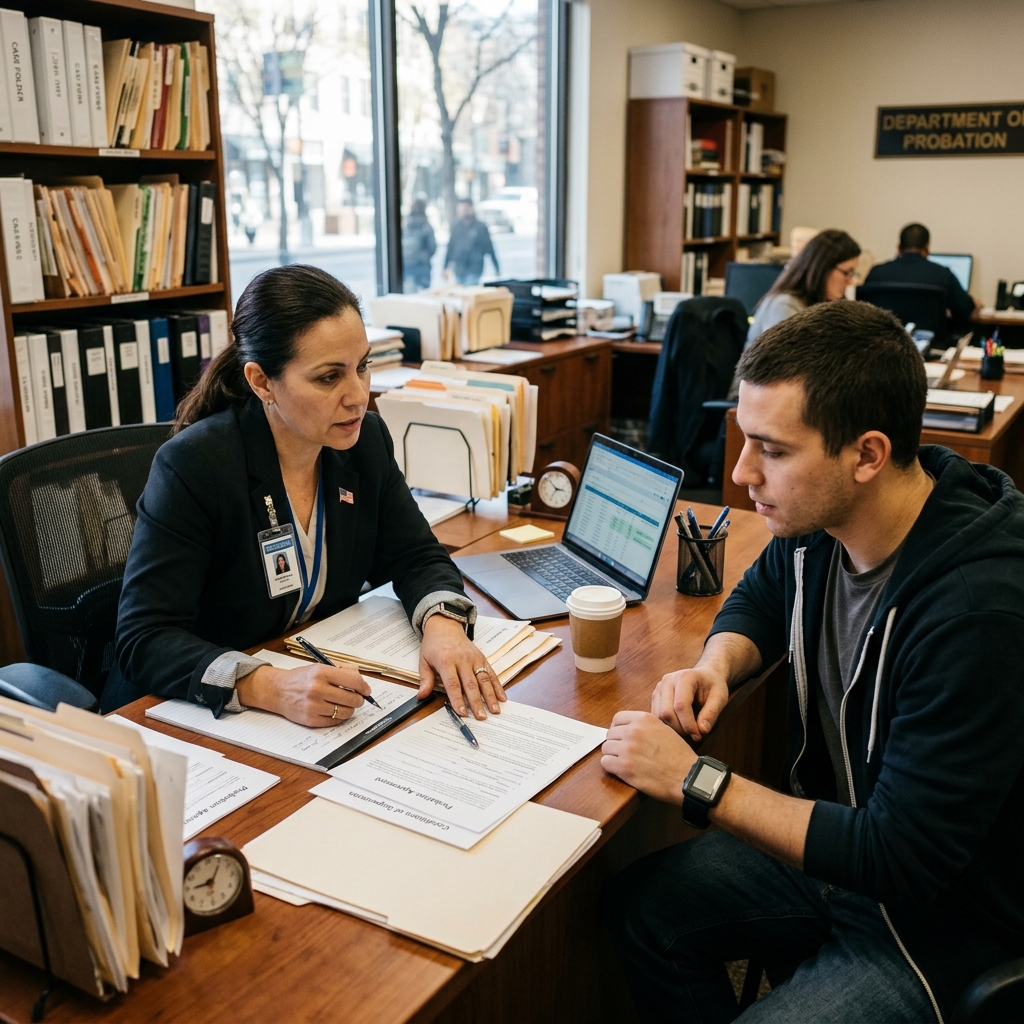
Supervised probation is a common alternative to jail or prison that allows a person convicted of a crime to live in the community under court-ordered supervision, rather than behind bars. It can be a valuable second chance—but it also comes with strict rules and serious consequences if those rules are broken.
This guide explains how supervised probation works, how it differs from unsupervised probation, what conditions are typically imposed, what a probation officer does, and what happens if probation is violated. It is written for defendants, families, and anyone trying to understand the basics of criminal probation.
What Is Supervised Probation?
In criminal law, probation is a court-ordered period of supervision in the community, often imposed instead of incarceration. When probation is supervised, the person must report to a probation officer and comply with conditions monitored by that officer.
Key points about supervised probation include:
- Alternative to jail or prison: The judge allows the person to remain in the community rather than sentence them to confinement.
- Ongoing court authority: The court retains power to enforce, modify, or revoke probation based on the person’s conduct.
- Mandatory conditions: The person must follow specific rules, such as reporting to an officer, obeying all laws, and completing treatment or community service.
- Risk of incarceration: If the person violates probation, the judge may impose the original jail or prison sentence or add other penalties.
Supervised probation is designed to balance two goals: protecting the community and helping the individual rehabilitate while staying employed, maintaining family ties, and accessing needed services.
Supervised vs. Unsupervised Probation
Courts sometimes use both supervised and unsupervised forms of probation, depending on the seriousness of the offense and the risk posed by the person. The core difference is whether a probation officer is actively involved.
| Feature | Supervised Probation | Unsupervised Probation |
|---|---|---|
| Primary oversight | Probation officer monitors compliance and reports to the court. | Defendant reports directly to the court or a contracted entity, with little or no officer involvement. |
| Typical use | More serious offenses or higher-risk individuals; often felonies or significant misdemeanors. | Low-level misdemeanors, first-time offenders, and cases where risk to the community is limited. |
| Conditions | Broader range of conditions (curfew, treatment, employment, testing). | Usually focused on obeying laws, paying fines, and meeting basic obligations. |
| Reporting | Regular meetings with a probation officer, plus home or workplace contacts. | Periodic court check-ins or filings; may have only initial or final review. |
| Consequences of violations | Officer can file a violation report; judge may revoke probation and impose incarceration. | Court can still impose sanctions, but monitoring may be less frequent. |
Although unsupervised probation may feel less restrictive, both types require strict compliance. A violation in either system can lead to new penalties and possible jail time.
Common Conditions of Supervised Probation
Conditions of supervised probation vary by jurisdiction, offense, and individual circumstances. However, there are standard requirements that appear across many state and federal systems.
Standard Rules That Apply in Most Cases
Courts usually impose a core set of conditions that every probationer must follow.
- Obey all laws: Any new criminal offense, even a minor one, can be treated as a probation violation.
- Regular reporting: The person must meet or communicate with the probation officer at intervals set by the court or the probation office.
- Stable residence: The person often must live at an approved address and notify the officer before moving.
- Travel restrictions: Leaving the judicial district, state, or country usually requires prior permission.
- No firearms or dangerous weapons: Many probation orders prohibit possessing or using weapons.
Behavioral and Lifestyle Conditions
To reduce risk and promote rehabilitation, judges often impose conditions targeting substance use, employment, and daily routines.
- Drug and alcohol testing: Random or scheduled tests help enforce rules against illegal drug use or excessive drinking.
- Treatment programs: The person may have to complete substance abuse treatment, mental health counseling, or anger management.
- Curfew and location limits: Some orders include a nighttime curfew or bans on visiting certain places, such as bars or specific neighborhoods.
- Electronic monitoring: In higher-risk cases, the court may require an ankle monitor or GPS device to track movement.
Financial and Restitution Obligations
Probation often requires the person to address financial responsibilities arising from the case.
- Payment of fines and fees: Court costs, supervision fees (in some jurisdictions), and statutory fines are common requirements.
- Restitution to victims: The person may be ordered to reimburse victims for losses linked to the crime.
- Maintaining employment or education: Keeping a job or pursuing schooling is often a condition, both to stabilize income and support rehabilitation.
Community Service and Special Conditions
Judges can tailor conditions to the specific case.
- Community service hours: Completing a set number of hours with approved organizations can be part of the sentence.
- No contact orders: In cases involving victims or co-defendants, the court may bar contact with certain individuals.
- Association limits: The person may be prohibited from associating with known criminals or gang members.
Because violating any condition can have serious consequences, probationers should clarify expectations with their officer and promptly address any difficulties in meeting these obligations.
Role of the Probation Officer
Probation officers are central to supervised probation. They serve as both monitors and sources of support.
Monitoring Compliance
The officer’s monitoring responsibilities typically include:
- Regular meetings: In-office visits, phone calls, or video conferences to review progress and discuss issues.
- Home and workplace visits: Confirming living arrangements, employment, and compliance with rules such as curfew.
- Testing and documentation: Arranging drug and alcohol tests, verifying participation in treatment, and reviewing financial payments.
- Incident reporting: If the officer believes conditions have been violated, they can submit a formal report or petition to the court.
Supporting Rehabilitation
Officers also help individuals adjust to life in the community and meet probation conditions.
- Needs assessment: Identifying barriers such as lack of housing, unemployment, or untreated mental health conditions.
- Resource referrals: Guiding people to job training, counseling, substance use treatment, or education programs.
- Problem-solving: Working with probationers to develop realistic plans for transportation, scheduling, and meeting obligations.
A constructive relationship with the probation officer often improves outcomes. When officers see consistent effort and honesty, they may support requests for reduced supervision or early termination where the law allows.
Probation Violations and Consequences
A probation violation occurs when the person fails to follow one or more conditions ordered by the court. Violations can be intentional or accidental, but both can lead to legal consequences.
Types of Violations
Courts and probation offices commonly distinguish between different kinds of violations:
- New criminal offenses: Committing a new crime while on probation, such as theft or assault.
- Technical violations: Breaking rules that do not involve a new crime—for example, missing a meeting, failing a drug test, or leaving the district without permission.
- Failure to complete conditions: Not finishing community service, not attending required treatment, or not paying ordered fines or restitution.
How Violations Are Handled
When a probation officer believes a violation occurred, they may file a report or petition with the court explaining the alleged conduct.
- The court schedules a violation hearing, and the person must appear, often with their lawyer.
- The judge reviews evidence from the officer, the defendant, and any witnesses.
- If the judge finds a violation, they decide on appropriate sanctions under the law.
Possible Outcomes
After finding a violation, the judge typically has several options.
- Continue probation: The person remains on supervision, sometimes with a warning or minor adjustments.
- Modify conditions: The court can add or change requirements—for example, stricter curfews, more intensive treatment, or extended supervision.
- Revoke probation: The judge can revoke probation and impose all or part of the original jail or prison sentence.
Because the stakes are high, anyone facing a possible probation violation should consult an attorney to understand their rights and options.
Benefits and Risks of Supervised Probation
Supervised probation has both advantages and challenges. Understanding these can help individuals make informed decisions when probation is offered as part of a plea or sentencing.
Potential Benefits
- Avoiding incarceration: The most significant benefit is remaining in the community rather than serving time in jail or prison.
- Maintaining employment and family ties: Probation allows individuals to keep working, care for family members, and participate in community life.
- Access to services: Through the probation officer, individuals may receive help connecting to treatment, education, and job resources.
- Opportunity for progress: Good performance on probation can sometimes lead to reduced supervision or early termination.
Key Risks and Responsibilities
- Strict compliance requirements: Failing to meet obligations—even for reasons like transportation problems—can still be treated as a violation.
- Ongoing court oversight: Life for a person on probation remains highly regulated, with limited privacy and freedom.
- Risk of incarceration upon violation: Serious or repeated violations may result in jail or prison.
When weighing probation against incarceration, it is important to discuss the specific conditions, risks, and legal consequences with a qualified criminal defense lawyer.
Frequently Asked Questions (FAQs)
How long does supervised probation usually last?
The length of supervised probation depends on the offense and jurisdiction. Misdemeanor probation may last a year or two, while felony probation can extend for several years. Federal probation terms are governed by statute and the U.S. Sentencing Guidelines, and judges may shorten or extend supervision within legal limits.
Can supervised probation be ended early?
In some systems, if a person has complied with all conditions, paid fines and restitution, and demonstrated sustained stability, a judge may consider ending probation early. Early termination is not guaranteed and usually requires a formal request, often supported by the probation officer.
What happens if I miss a meeting with my probation officer?
Missing a scheduled meeting can be treated as a technical violation. The officer may reschedule, issue a warning, or report the missed appointment to the court, depending on the circumstances and overall compliance history. Communicating promptly and honestly about any problems is critical.
Do all probationers have to wear electronic ankle monitors?
No. Electronic monitoring is typically reserved for higher-risk cases or situations where the court wants close tracking of movement, such as strict home confinement or geographic restrictions. Many probationers comply with supervision rules without any electronic device.
Should I talk to a lawyer about my supervised probation?
Legal advice is important whenever a person is facing criminal charges, entering a plea, or dealing with potential probation violations. A criminal defense lawyer can explain the consequences of probation terms, negotiate conditions, and represent the person in any violation hearings.
References
- Supervised Probation in Maryland — Lewicky, O’Connor, Hunt, & Meiser. 2022-03-15. https://lohmlaw.com/blog/supervised-probation-in-maryland/
- Supervised vs Unsupervised Probation — LegalMatch. 2023-06-01. https://www.legalmatch.com/law-library/article/what-is-supervised-probation.html
- Probation — U.S. Courts, Probation and Pretrial Services. 2021-09-01. https://www.uscourts.gov/about-federal-courts/probation-and-pretrial-services/post-conviction-supervision/overview-probation-and-supervised-release-conditions
- Probation & Supervised Release — Federal Public Defender, Western District of Pennsylvania. 2020-10-01. https://paw.fd.org/probation-supervised-release
- Probation Definition, Rules & Types — Study.com. 2019-05-20. https://study.com/academy/lesson/video/what-is-probation-definition-rules-types.html
Similar Articles








Read full bio of Sneha Tete




