
DUI Stop In California: Your Rights And 6 Smart Steps Explained
Learn your rights and smart steps to take if you are stopped on suspicion of DUI anywhere in California.
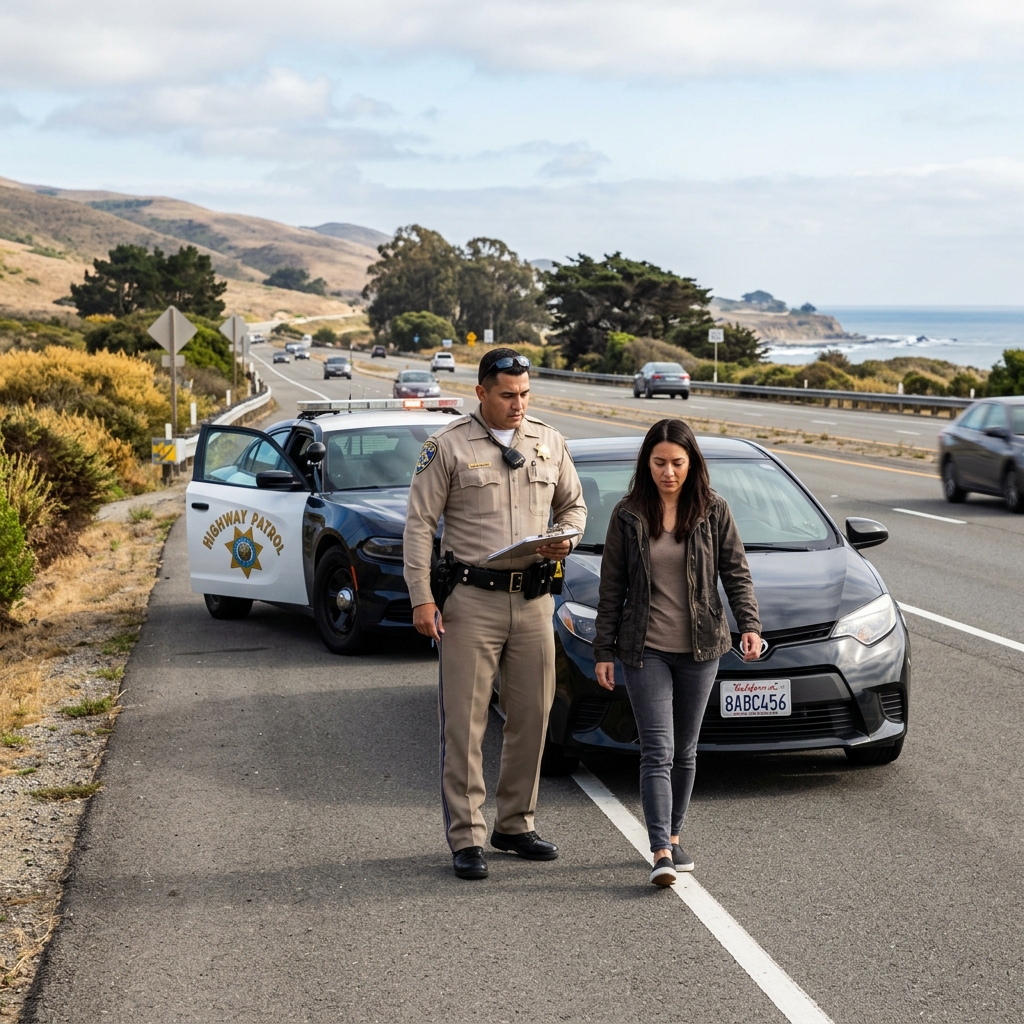
Being stopped on suspicion of driving under the influence (DUI) in California can be stressful, confusing, and potentially life-changing. How you respond in the first few minutes of the encounter can significantly affect whether you are arrested, what evidence the police collect, and the strength of any future case against you.[10] This guide explains, in practical terms, what to expect during a DUI stop, what you must legally do, what you can decline, and how to protect both your legal rights and your driving privilege.
Understanding When Police Can Stop You
Police officers in California cannot pull drivers over at random. Under the U.S. and California constitutions, an officer generally needs reasonable suspicion that a traffic violation or other criminal activity has occurred to stop a vehicle. Reasonable suspicion can arise from behavior such as speeding, weaving within a lane, running a red light, or driving with a broken taillight.
There is one important exception: DUI checkpoints. California allows sobriety checkpoints, where vehicles can be stopped without individualized suspicion if the checkpoint is conducted according to strict constitutional and statutory requirements. At these checkpoints, every driver or a neutral sample of drivers is briefly detained so officers can look for signs of intoxication.
| Reason for Stop | Examples | Legal Standard |
|---|---|---|
| Traffic violation | Speeding, unsafe lane changes, failure to signal | Reasonable suspicion of a Vehicle Code violation |
| Driving behavior suggesting impairment | Drifting between lanes, very slow driving, delayed responses to signals | Reasonable suspicion of DUI or unsafe driving[10] |
| Equipment defect | Broken headlight, missing license plate, damaged windshield | Reasonable suspicion of equipment violation |
| DUI checkpoint | Scheduled sobriety checkpoint with cones and signage | Constitutionally valid checkpoint plan; no individual suspicion required |
First Moments of the Stop: Safety and Composure
When you see flashing lights behind you, the officer is already observing how you react. Your goal is to keep the situation calm, safe, and uneventful.
- Pull over promptly and safely: Signal, slow down, and move to the right as soon as it is safe. Avoid sudden swerves or abrupt braking.
- Choose a safe location: If possible, stop on a wide shoulder, near street lighting, or in a parking lot where the officer can approach your vehicle easily.
- Remain inside the vehicle unless instructed: Keep your seatbelt fastened and your hands visible on the steering wheel.
- Stay calm and respectful: Officers pay attention to nervousness, agitation, and aggressive behavior. A composed manner can reduce tension.[10]
These steps are not just about courtesy; they demonstrate that you are alert, cooperative, and not an immediate safety risk, which can influence how the officer proceeds.
Your Core Legal Obligations During a DUI Stop
While you have important constitutional rights, you also have specific legal duties when stopped in California.
Documents You Must Provide
During any lawful traffic stop, you are required to identify yourself and to provide certain documents upon request.[10]
- Driver’s license
- Vehicle registration
- Proof of insurance[10]
Refusing to provide these documents can lead to additional charges or enforcement actions unrelated to DUI.
Basic Cooperation vs. Self-Incrimination
You are expected to follow reasonable instructions related to safety and the conduct of the stop, such as stepping out of the vehicle if directed.[10] However, you are not required to provide information that could incriminate you beyond your identifying details and required documents.[10]
Key Rights You Have During a DUI Stop
California drivers retain important constitutional protections even when suspected of DUI. Knowing these rights helps you avoid unintentionally providing damaging evidence.
Right to Remain Silent
You have the right to remain silent during a traffic stop, aside from stating basic identifying information and providing required documents.[10] Officers commonly ask questions such as:
- “Where are you coming from?”
- “Have you had anything to drink tonight?”
- “How much have you had to drink?”
- “Where are you headed?”
You do not have to answer these questions. Anything you say can be recorded and later used as evidence of impairment or admission of drinking. A calm, lawful way to decline is:
- “I prefer not to answer any questions.”
- “I would like to speak with an attorney before answering questions.”
Right to Decline Field Sobriety Tests (Pre-Arrest)
Field sobriety tests (FSTs) are physical and coordination tests used to gauge possible impairment, such as the walk-and-turn or one-leg stand. In California, you are generally not required to perform field sobriety tests before you are placed under arrest.[10]
Important points about FSTs:
- They are voluntary in the pre-arrest phase.
- They are inherently subjective; performance can be affected by age, injuries, nerves, or uneven surfaces.[10]
- Results often become a major part of the officer’s report and prosecution evidence.
Politely declining FSTs (e.g., “I do not wish to perform field sobriety tests”) is lawful and may prevent the creation of additional evidence that could be interpreted against you.[10]
Right to Decline Preliminary Breath Testing Before Arrest
At roadside stops, officers sometimes use small devices for a preliminary alcohol screening (PAS) or portable breath tests. If you are not yet under arrest, you typically may decline a PAS test in California.
However, there are important exceptions for drivers under 21 or drivers on DUI probation, who may face separate requirements or consequences under California law. For adult drivers not on probation, the PAS is usually optional before arrest, and declining may reduce the amount of evidence collected at the scene.
California’s Legal Limits and Implied Consent
Blood Alcohol Concentration (BAC) Limits
California law sets specific BAC thresholds at which driving becomes illegal.
- 0.08% or higher for drivers age 21 or older.
- 0.01% or higher for drivers under 21.
- 0.01% or higher at any age if on DUI probation.
- 0.04% or higher for commercial drivers and certain passenger-for-hire drivers.
Law enforcement may suspect DUI even if your BAC is below these thresholds if drugs or combined substances impair your ability to drive safely.
Implied Consent After Arrest
California’s implied consent law means that by holding a driver’s license, you agree to submit to a chemical test (breath or blood) if you are lawfully arrested on suspicion of DUI.[10] This is different from a voluntary roadside PAS test.
Once arrested:
- You must choose between a breath test or a blood test if both are reasonably available.[10]
- Refusal to submit to the post-arrest chemical test can result in an automatic license suspension, typically for at least one year for a first offense.[10]
- The refusal itself can be used as evidence in court and may lead to enhanced penalties.
What Officers Look For During a DUI Stop
Officers are trained to look for objective signs of possible intoxication.[10] Common indicators include:
- Smell of alcohol or marijuana inside the vehicle
- Slurred speech or difficulty following instructions[10]
- Red, watery, or glassy eyes[10]
- Difficulty locating license or registration
- Slow or fumbling movements
- Open containers of alcohol in plain view
These observations are typically documented in the officer’s report and may support further investigation, field testing, or arrest.
Step-by-Step Strategy: Smart Choices During the Stop
Although every situation is unique, the following general approach helps many drivers minimize unnecessary risk:
- Be polite and non-confrontational: Avoid arguing with the officer, raising your voice, or making sudden movements.
- Provide required documents promptly: Have your license, registration, and insurance ready when requested.[10]
- Limit verbal statements: Do not volunteer information about drinking, drug use, or where you were earlier in the evening.[10]
- Consider declining FSTs and voluntary PAS tests pre-arrest: This may reduce the amount of subjective evidence collected.[10]
- Comply with post-arrest chemical testing: Once arrested, a lawful chemical test is mandatory; refusal may cause severe license consequences.[10]
- Avoid consenting to vehicle searches: Unless officers have a separate legal basis, you generally are not required to consent to a search of your vehicle.
DUI Checkpoints: Special Rules and Practical Tips
What Officers Can Ask at Checkpoints
At DUI checkpoints, officers typically ask for your driver’s license, registration, and proof of insurance. They may briefly observe you for signs of impairment, such as odor of alcohol, slurred speech, or visible containers.
What You Are Not Required to Do
Even at checkpoints, you are not required to:
- Answer questions about where you came from or whether you have been drinking.
- Consent to field sobriety tests prior to arrest.
- Consent to a roadside PAS test if you are not under arrest and are not subject to special probation or under-21 rules.
Can You Legally Avoid a Checkpoint?
California law does not prohibit drivers from lawfully choosing another route to avoid a checkpoint. It is legal to turn around or take a different road as long as you obey traffic laws, such as avoiding illegal U-turns or dangerous maneuvers. Driving erratically or violating traffic rules while trying to avoid a checkpoint can itself justify a separate stop.
After a DUI Arrest: Immediate Administrative Consequences
If the officer decides to arrest you, a separate legal process begins in addition to any criminal charges. The Department of Motor Vehicles (DMV) can impose administrative license suspensions even before your court case is resolved.
License Suspension and DMV Hearings
In many cases, an arrest for DUI triggers an immediate, temporary suspension of your driving privilege. For alleged chemical test refusals or certain BAC levels, California law provides for:
- At least a one-year suspension for a first offense refusal.
- Longer revocations for repeat offenses, such as two years for a second offense and more severe consequences for third or subsequent offenses.
Drivers typically have a short window of time to request a DMV hearing to challenge the suspension; in many cases this period is 10 calendar days from the date of arrest. Missing this deadline can cause the automatic suspension to go into effect even if your criminal case is later reduced or dismissed.
Practical FAQs: California DUI Stops
FAQ 1: Do I have to tell the officer how much I drank?
Short answer: No. You must provide your identification and required documents, but you have the right to remain silent regarding your drinking or drug use.[10] Any admission can be used later as evidence of impairment.
FAQ 2: Can I refuse all breath tests?
Short answer: You may refuse a pre-arrest PAS test in many situations, but you generally cannot lawfully refuse a post-arrest chemical test without facing automatic license suspension and other penalties.[10]
FAQ 3: Am I required to do field sobriety tests?
Short answer: Before arrest, field sobriety tests are usually voluntary in California, and you may decline them.[10] After arrest, officers may rely on chemical testing instead of further FSTs.
FAQ 4: What if the stop itself was illegal?
Short answer: If an officer lacked reasonable suspicion or the checkpoint did not comply with legal standards, a defense attorney may challenge the stop in court, potentially seeking to suppress evidence under California law. This requires a detailed legal motion and is not something you argue roadside.
FAQ 5: When should I contact a lawyer?
Short answer: As soon as possible after release from custody or receiving a citation. The tight DMV hearing deadlines and the complexity of DUI law make early legal advice critical.[10]
Summary: Core Principles to Remember
During a DUI stop in California, your choices should reflect three core principles:
- Safety first: Pull over safely, remain calm, and follow lawful instructions related to safety.
- Protect your rights: Provide required documents, but exercise your right to remain silent, and consider declining voluntary field and preliminary breath tests before arrest.[10]
- Plan for next steps: If arrested, comply with required chemical testing, note any deadlines for DMV hearings, and seek legal counsel promptly.[10]
Understanding these rules in advance helps you navigate a DUI stop with clarity, reduces the chance of avoidable mistakes, and positions you to better defend yourself if charges arise.
References
- California Driver Handbook: Alcohol and Drugs — California Department of Motor Vehicles. 2023-01-01. https://www.dmv.ca.gov/portal/handbook/california-driver-handbook/alcohol-and-drugs/
- Driving Under the Influence (DUI) — California Department of Motor Vehicles. 2023-01-01. https://www.dmv.ca.gov/portal/driver-education-and-safety/dmv-safety-guidelines-actions/driving-under-the-influence/
- DUI Arrest Process in California — Wilber Law Offices, P.C. 2024-06-01. https://www.wilberlawoffices.com/practice-areas/dui-attorney/dui-arrest-process/
- DUI Defense Guide — Knight Law. 2024-05-01. https://knightjustice.com/dui-defense-guide/
- What Are Your Rights During a Traffic Stop in California When Suspected of DUI? — My Rights Law Group. 2023-09-01. https://www.myrightslawgroup.com/blog/rights-during-dui-traffic-stop-california/
- DUI Checkpoints in California: What Are Your Rights? — Mayr Law Firm. 2023-03-01. https://mayrlawfirm.com/blog/dui-checkpoints-in-california-what-are-your-rights/
- What Every Driver in California Needs to Know About DUI Stops and Arrests — Strongest Defense. 2026-05-01. https://strongestdefense.com/2026/05/what-every-driver-in-california-needs-to-know-about-dui-stops-and-arrests/
Similar Articles








Read full bio of Sneha Tete




