
Domestic Partnership In DC: Registration, Rights, And Benefits
Understand how DC domestic partnerships are formed, what benefits they can provide, and how they end.
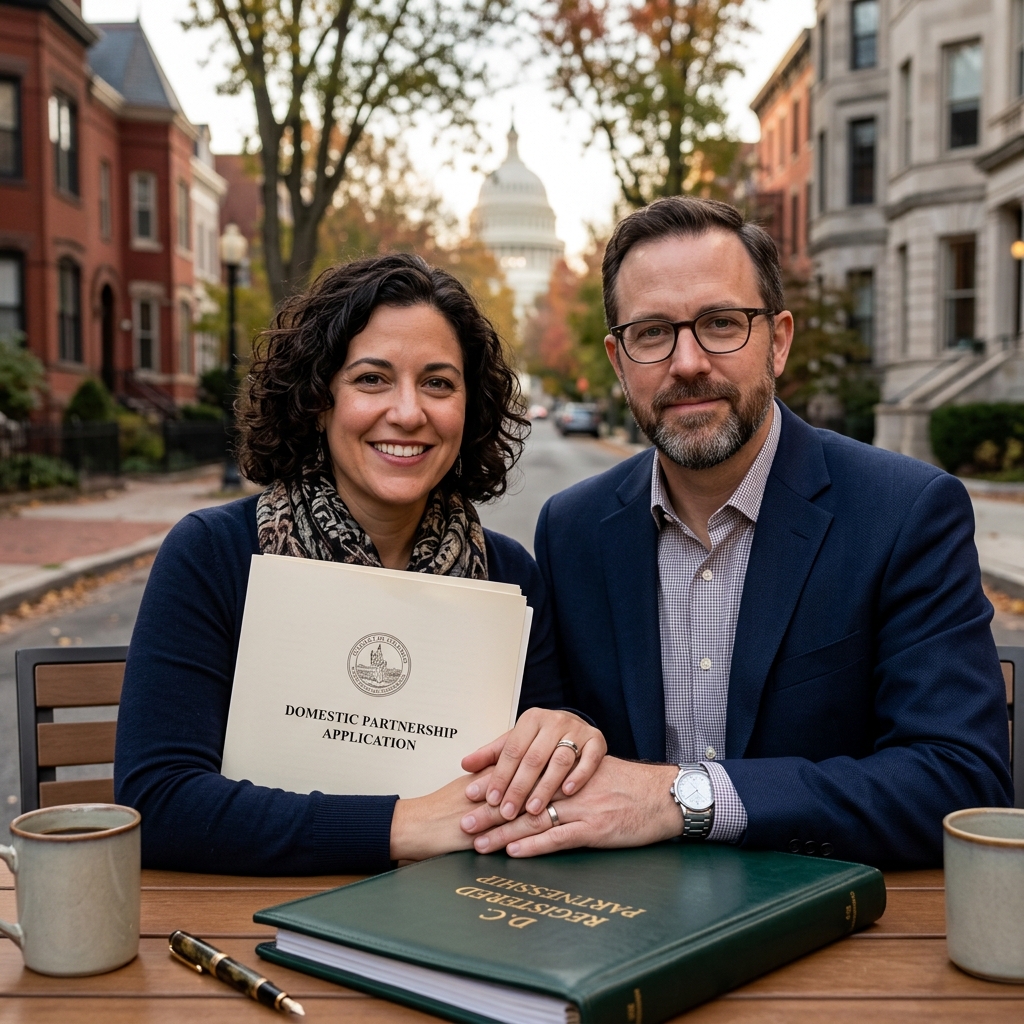
Washington, DC allows eligible couples to register as domestic partners, creating a legal relationship that can support access to certain benefits and rights under District law. The rules focus on shared residence, legal capacity, and a commitment to the relationship, and the registration process must be completed through DC Vital Records.
What a domestic partnership means in DC
In the District, a domestic partnership is not simply a private agreement between two people. It is a formally recognized status that comes from filing the required declaration with the Mayor, which helps establish the relationship for benefit eligibility under the DC Code. The law applies to unmarried couples of the same sex or different sexes, so long as they meet the statutory requirements.
This status is often used by couples who want some legal recognition without marrying. The legal effects can matter for public records, insurance eligibility, and other local rights tied to the partnership.
Who can register
To qualify, both people must meet several basic conditions. They must be at least 18 years old, competent to contract, unmarried, not already in another domestic partnership, and committed to one another. DC also requires the couple to share a mutual, permanent residence.
- Both applicants must be adults.
- Both must have legal capacity to enter the relationship.
- Neither partner can be married to someone else.
- Neither partner can already be in another domestic partnership.
- The couple must live together at the same residence.
How to prove a shared home
One of the most important parts of the application is proof that the partners live together. DC accepts documents such as a lease, mortgage, or deed showing both names. If both identification documents already show the same home address, an affidavit signed within the previous six months may be used instead.
This residence requirement helps distinguish a registered domestic partnership from a purely personal relationship. It also creates a clear standard for the city when determining whether the couple qualifies.
The registration process
Both partners must appear in person when applying at DC Vital Records. The office accepts the declaration, supporting documents, and required fee. A formal interview is not always required, but the Registrar may ask questions under oath if needed to verify the information on the application.
DC Health explains that applicants may need to present identification in a manner that allows the office kiosk or staff to authenticate their identity. If the system cannot verify identity electronically, applicants may have to provide multiple forms of identification. The exact documentation depends on the authentication result and the identification list in effect at the office.
The District also notes that notarized forms may be dropped off without an appointment if the partnership affidavit has already been notarized elsewhere, although both applicants still need to be present when submitting the completed materials.
Why couples register
Registering as domestic partners can open the door to certain benefits under District law. According to DC sources, registration can help establish eligibility for health care coverage for a partner under some employment-related benefits programs.
More broadly, domestic partnership laws are designed to provide a legal framework for couples who share a household and life together but are not married. In practice, the value of registration often depends on the specific benefit, employer policy, or District program involved.
| Topic | What it means in DC |
|---|---|
| Eligibility | Adults who are unmarried, competent, not in another partnership, and living together |
| Registration | In-person filing with DC Vital Records |
| Proof of residence | Lease, mortgage, deed, or qualifying affidavit |
| Possible benefit use | May support access to local benefits, including certain health coverage rules |
Rights and practical effects
The rights connected to a domestic partnership in Washington, DC are not identical to the rights of marriage, but they can still be meaningful. DC law and related guidance describe the partnership as a basis for benefits under specified provisions, and public records rules make most declaration information open to inspection except for address information.
Because many of the consequences depend on the exact benefit or administrative program, partners should not assume that every marital right automatically applies. Some employers, agencies, or institutions may recognize the relationship for one purpose but not another.
- Some benefits may be tied to local employment or insurance policies.
- Recordkeeping rules can make the declaration accessible as a public record, with address information protected.
- The partnership can be amended after registration to update certain details.
Amending the partnership record
DC allows amendments to a domestic partnership record for specific changes. A registered partnership may be amended to add a partner’s dependent child, update an address, or record a legal name change for either partner. This makes the registration record more flexible when household details change.
That flexibility matters because life circumstances often change after registration. Rather than filing a completely new declaration, partners can adjust the record through the city’s amendment process when permitted.
How a partnership ends
A domestic partnership in DC does not continue forever unless the law says otherwise. Either partner may end the relationship by filing a termination statement signed by both partners, confirming the intent to terminate. Under the DC Code, the partnership is then considered terminated six months after the statement is filed.
There are also situations in which the partnership ends automatically. If the partners marry each other, or if one partner dies, the domestic partnership ends without the ordinary waiting period. Abandonment can also support immediate termination when the facts fit the statutory rule.
- Termination may be filed by either partner.
- A signed termination statement is required.
- Ordinary termination takes effect after six months.
- Marriage to each other or death of a partner ends the partnership automatically.
Termination based on abandonment
DC law recognizes abandonment as a special ground for ending the relationship sooner. A partner may seek termination when the other partner has left the shared residence for six months before the filing, or when the partners have had no contact for at least six months. In those situations, the termination can become effective as soon as the statement is filed.
This rule is important because it gives a practical path forward when one person has effectively disappeared from the relationship and the household. It also helps ensure the record reflects the real status of the partnership rather than a relationship that exists only on paper.
Domestic partnership versus marriage
Domestic partnership is sometimes compared with marriage because both can create legal recognition for a couple. But they are not the same. Domestic partnership is generally narrower, and the benefits vary by jurisdiction or employer policy. By contrast, marriage usually carries a broader range of legal consequences.
For example, some sources note that domestic partners may receive hospital visitation or family leave benefits in certain settings, yet they may not automatically receive the same inheritance, parental, or federal benefits that married spouses receive.
| Feature | Domestic partnership | Marriage |
|---|---|---|
| Local legal recognition | Yes, if registered and eligible | Yes |
| Benefit scope | Varies by law or employer | Usually broader |
| Federal treatment | Often limited | Generally recognized under federal law |
| Relationship ending | Termination filing or automatic events | Divorce or annulment |
Common questions about DC domestic partnerships
Do both people need to appear in person?
Yes. DC Health states that both applicants must be present in person to register the domestic partnership.
Can people who live outside DC register?
Yes. DC guidance indicates that both residents and non-residents may register if they satisfy the registration rules.
Does the city keep the declaration private?
Not entirely. Under the DC Code, information in the declaration is generally open to inspection as a public record, except for address information.
Can the partnership be changed later?
Yes. DC allows amendments for certain changes, including a dependent child, address updates, and legal name changes.
What happens if the partners later marry each other?
The domestic partnership ends automatically if the partners marry one another.
What to consider before registering
Before filing, couples should confirm that they meet the residence requirement and have the correct identity documents. They should also think about whether registration will actually help them with the benefits they want, since the value of the status depends on the program or policy involved.
It is also wise to understand how the partnership ends, since termination is not always immediate and may require a formal filing unless marriage, death, or abandonment applies. A careful review of the city’s rules can help avoid delays or misunderstandings later.
When legal advice may help
Although the registration process itself is administrative, legal questions can arise around eligibility, benefit disputes, record corrections, or termination. Couples facing a disagreement about residency proof, abandonment, or the effect of the partnership on property or benefits may benefit from speaking with a family law attorney familiar with DC rules.
References
- § 32–702. Domestic partnership registration and termination — Council of the District of Columbia. 2026-07-10. https://code.dccouncil.gov/us/dc/council/code/sections/32-702
- Domestic Partnership — DC Health. 2026-07-10. https://dchealth.dc.gov/service/domestic-partnership
- Domestic Partnership Laws | Amending | Benefits — Divorce Firm. 2026-07-10. https://divorcefirm.net/dc-domestic-partnership-laws/
- Domestic partner certification — DC.gov. 2026-07-10. https://oea.dc.gov/sites/default/files/dc/sites/dchr/publication/attachments/domestic%20partner%20certification.pdf
- Domestic partnerships basics — Washington Law Help. 2026-07-10. https://www.washingtonlawhelp.org/en/registered-domestic-partnerships-basics
- Domestic partnership vs. marriage — MetLife. 2026-07-10. https://www.metlife.com/stories/legal/domestic-partnership-vs-marriage/
Similar Articles








Read full bio of Sneha Tete


