
Reporting a Car Accident to Your Insurance Company
Learn how, when, and why to report an auto accident to your insurer so you protect your rights, coverage, and financial security.
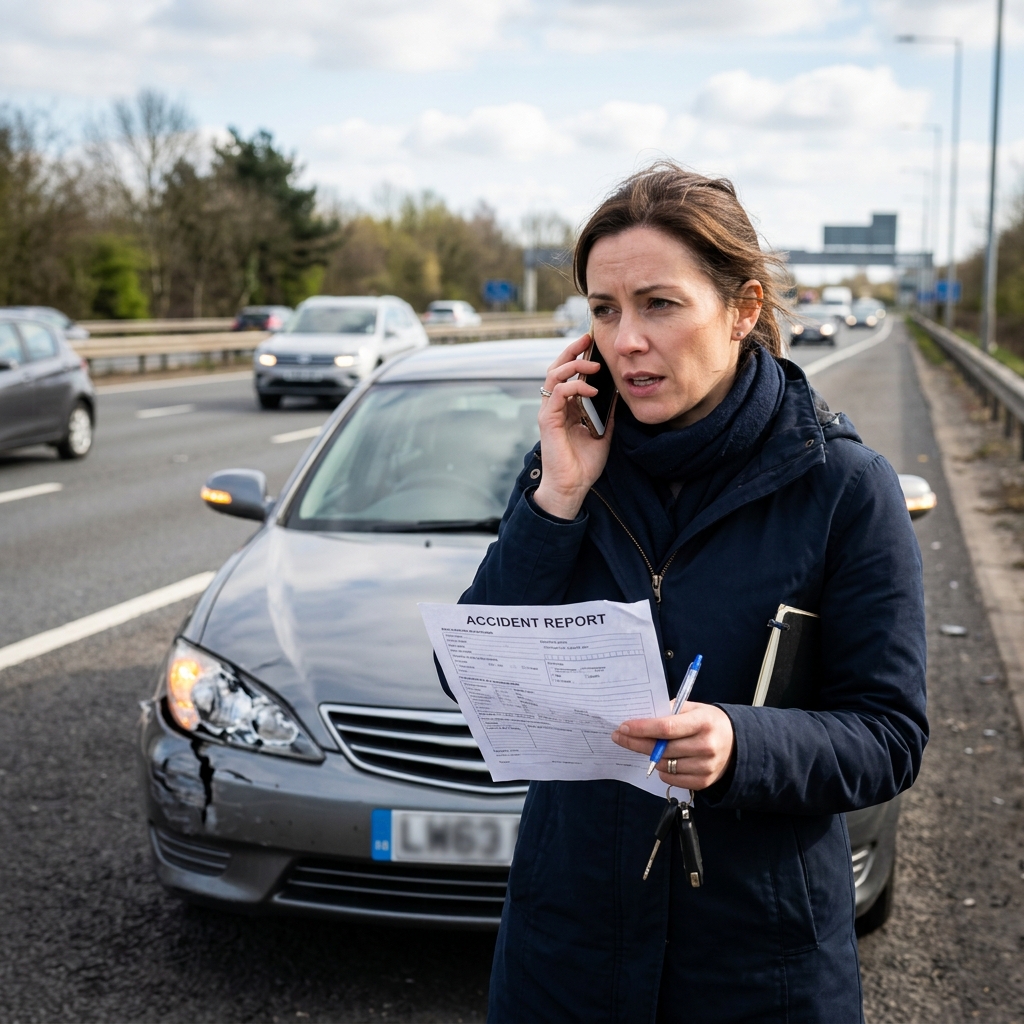
After a car accident, handling the claim with your insurance company is just as important as getting medical help and talking to the police. How and when you report the crash can determine whether your claim is paid, how much you receive, and whether your policy stays in good standing. This guide explains what to do from the moment the collision happens through final settlement, using clear, practical steps you can follow.
Why Reporting an Accident Matters
Auto insurance is designed to protect you from financial loss when a crash occurs, but insurers rely on prompt and accurate reports to investigate claims and apply coverage correctly. Failing to report, delaying too long, or giving incomplete information can cause serious problems.
- Coverage decisions: Your insurer uses your report to decide what parts of your policy apply, such as liability, collision, or medical payments.
- Legal protection: Timely reporting helps your insurer defend you if a claim or lawsuit is filed against you.
- Compliance with the policy: Most auto policies require that you notify the company of any accident “promptly” or “within a reasonable time.”
- State law requirements: In some states, you also must report certain crashes to a motor vehicle agency, especially when injuries or substantial property damage are involved.
In short, reporting the accident is not optional; it is a core part of using your insurance coverage properly and protecting yourself from future disputes.
First Steps at the Scene Before You Call Insurance
Although this article focuses on insurance reporting, what you do at the scene affects the strength of your claim. Authorities and insurers consistently recommend a set of basic safety and documentation steps.
1. Protect life and safety
- Check yourself and others for injuries and call emergency services (911) if anyone may be hurt.
- Move vehicles out of traffic if the crash is minor and it is safe to do so; otherwise, stay put and use hazard lights, cones, or flares if available.
2. Contact law enforcement when appropriate
- Call the police, even for minor collisions, because a formal report is often very helpful later.
- Follow the officer’s instructions, answer questions truthfully, and avoid guessing about what you do not know.
3. Gather information you will need for your insurance report
Insurers depend heavily on the information you collect immediately after the crash.
- Names, addresses, and phone numbers of all drivers, passengers, and witnesses.
- Driver’s license numbers, license plate numbers, and vehicle identification numbers when possible.
- Insurance companies and policy numbers for other involved drivers.
- Location of the accident, time, weather, and road conditions.
- Photos of vehicle damage, skid marks, traffic signs, and any visible injuries, if it is safe to take them.
Importantly, avoid admitting fault, apologizing, or speculating about who caused the crash. Many state consumer guides warn that such statements may be used against you later during claim evaluation.
When You Should Report the Accident to Your Insurer
Most insurers recommend reporting the accident as soon as reasonably possible, often within 24 hours if you can safely do so.[10] Consumer guides from state regulators emphasize “immediate” notification to prevent coverage disputes.
Timing considerations
- Emergencies first: Address medical needs and contact law enforcement before making the insurance call.
- As soon as it is safe: Once you are in a safe place and have basic details, you can contact your insurer from home, a hospital, or another secure location.[10]
- Within policy deadlines: Some benefits, such as certain personal injury protections, may have legal deadlines for notifying the insurer. Check your policy or ask your agent about any specific time limits.
Even if the damage seems minor or you think the other driver will pay out of pocket, it is still generally wise to notify your insurer. Hidden injuries and repair costs often appear days later, and failing to report early may complicate later claims.
How to Report: Channels and What Insurers Expect
Insurers provide multiple ways to report a crash so you can choose what works best for you.[10]
- Calling your agent or a dedicated claims phone line.
- Using the insurance company’s mobile app to start a claim from the scene or shortly afterward.
- Submitting an online claim form through the insurer’s secure website.[10]
When you start the report, be prepared to give factual information rather than opinions or speculation. The representative or adjuster will usually ask you a structured series of questions.
Key information to have ready
| Information Category | Examples |
|---|---|
| Your policy details | Policy number, name on the policy, vehicle insured |
| Accident basics | Date, time, exact location, number of vehicles involved |
| People involved | Drivers, passengers, pedestrians, and their contact information |
| Damage description | Visible damage to each vehicle, any property damage, preliminary repair estimates if available |
| Injuries | Who was injured, type of injury, whether ambulance or medical care was used |
| Police involvement | Whether officers came, report number if known, agency that responded |
Sharing photos and, later, a copy of the police report can help the insurer evaluate the claim more efficiently and may reduce disputes about what happened.
Understanding the Claims Process After You Report
Reporting the accident starts, but does not finish, the claims process. Once your report is received, insurers typically follow a standard sequence of steps explained in consumer and company guides.
1. Claim setup
- The insurer assigns a claim number and usually a claims adjuster who will be your primary contact.
- You may receive a confirmation email or letter summarizing what you reported.
2. Investigation
- The adjuster reviews your statement, photos, police report, and any witness accounts.
- They may inspect the vehicle in person or through photos to estimate repair costs.
- In more complex cases, the adjuster may ask for recorded interviews or additional documentation about medical treatment and work loss.
3. Coverage analysis
- The insurer compares the facts of the accident to your policy language to decide what coverages apply (liability, collision, comprehensive, medical payments, personal injury protection, etc.).
- State law may control what benefits are available and how fault affects payment, especially in no-fault systems.
4. Payment decisions and settlement
- For vehicle damage, you may be offered repairs at approved shops or a cash settlement based on estimates.
- For injuries, payment may cover medical bills, certain wage losses, and other benefits depending on your coverage and local law.
- The insurer will explain any deductible and how it affects the amount you receive.
Throughout this process, cooperation is important. State regulatory guidance encourages policyholders to respond promptly to adjuster requests, while also keeping copies of everything they submit.
Reporting to Government Agencies and DMV Requirements
Reporting the accident to your insurer is not always the only requirement. In many states, serious accidents must also be reported to a motor vehicle department or similar agency when injury or significant property damage occurs.
- For example, California requires a report to its Department of Motor Vehicles within a short time frame when damage exceeds a specific dollar amount or injuries are involved.
- Other states have comparable reporting forms available through police departments, highway safety offices, or DMV websites.
Insurers sometimes remind policyholders of these obligations, but ultimately it is the driver’s legal responsibility to follow state rules. Check your state’s official transportation or motor vehicle authority site for exact thresholds and deadlines.
Common Mistakes to Avoid When Reporting the Accident
Even careful drivers make errors during the stress of a collision. Knowing what to avoid can help you preserve your rights and keep your claim on track.
- Delaying the report: Waiting days or weeks to tell your insurer about the crash can lead to questions about the accuracy of your account and may violate policy conditions.
- Admitting fault prematurely: Claim professionals and government guides warn against saying “It was my fault” or apologizing, because fault is often more complex than it appears.
- Not calling the police: Without a police report, establishing what happened can be harder, especially if stories change later.
- Failing to document the scene: Not taking photos or collecting contact information weakens your ability to prove what occurred.
- Discussing details with other parties: Experts advise limiting detailed discussion of the accident to law enforcement, your insurer, and any attorney you hire.
If you realize after the fact that you made one of these mistakes, you should still report the accident and provide the most accurate information you can. Honesty and prompt correction of errors usually work in your favor.
Special Situations: Hit-and-Run, Not-at-Fault, and Minor Crashes
Hit-and-run accidents
In a hit-and-run, reporting quickly is especially critical. Many policies require that you notify both the police and your insurer within a short period to maintain certain coverage options.
- Call the police from the scene if possible and provide any details you remember about the fleeing vehicle.
- Take photos of your damage and surroundings.
- Report to your insurer as soon as you are able, emphasizing that the other driver left the scene.
Accidents where you believe you are not at fault
Even if you think the other driver caused the crash, you should still report it to your own insurer. In some states, you may need to file certain claims with your own company first, and then pursue recovery from the at-fault driver’s insurer.
- Obtain a copy of the police report and verify that it correctly reflects the circumstances and fault assignment, if any.
- Document medical care, missed work, and any long-term impacts so your insurer can evaluate personal injury benefits.
Minor collisions and parking lot accidents
For small dents or scrapes, drivers sometimes consider paying out of pocket instead of reporting. However, undiscovered injuries and additional repair costs are common. Reporting ensures that your insurer is aware of the incident and can respond appropriately if the situation turns out to be more serious than it first appeared.[10]
Your Rights and Responsibilities as a Policyholder
When you report an accident, you have both obligations under your policy and important rights under state law.
Typical responsibilities
- Notify promptly: Inform the insurer of the accident within a reasonable time frame, according to your policy.
- Provide truthful information: Give honest, complete details and correct any mistakes once discovered.
- Cooperate with investigation: Respond to adjuster requests for documentation and inspections.
Key rights
- Explanation of coverage decisions: You are entitled to understand how the insurer interpreted your policy and why it accepted or denied particular parts of the claim.
- Access to state complaint processes: If you disagree with how your claim was handled, state insurance departments maintain complaint systems and resources for consumers.
- Option to seek legal advice: You may consult an attorney, especially in serious injury or disputed liability cases, to protect your interests.
Reading your policy and any claim-related letters carefully will help you understand what the insurer expects from you and what you can reasonably expect from them.
Frequently Asked Questions (FAQ)
Do I always have to report an accident to my insurance company?
Most policies require me to report any accident that could involve coverage, even if damages are small. Official consumer guides advise immediate notification to avoid future coverage disagreements. If you are unsure, it is safer to report and ask the insurer how they wish to proceed.
What if I don’t have all the information yet?
You can still report the accident with the details you know and explain that some information, such as repair estimates or medical reports, will follow later. Insurers expect that certain facts become available over time and will often allow you to supplement the claim.
Will my premium automatically go up if I report a crash?
Premium changes depend on many factors, including fault, claim severity, your driving record, and state rules. Reporting an accident does not guarantee a rate increase; however, an at-fault crash or multiple claims may lead to higher costs at renewal. Insurers must follow state regulations when adjusting rates.
Should I talk to the other driver’s insurance company?
In some cases, the other driver’s insurer may contact you for information. You should be truthful but cautious, and you may wish to speak with your own insurer or an attorney first, especially in serious or disputed cases. Never feel pressured to agree to a quick settlement if you do not fully understand its consequences.
What if the police did not come to the scene?
If officers were not available or did not respond, you should still document the accident thoroughly with photos and written notes. Some states provide self-reporting forms through motor vehicle agencies that you can fill out later to create an official record. Your insurer will rely heavily on your documentation in these situations.
References
- So You’ve Had an Accident, What’s Next? — California Department of Insurance. 2023-06-01. https://www.insurance.ca.gov/01-consumers/105-type/95-guides/01-auto/hadaccident.cfm
- What to Do After a Car Accident — State Farm. 2024-04-15. https://www.statefarm.com/claims/auto/how-to-handle-an-accident
- What to Do After a Car Accident — Progressive. 2024-02-20. https://www.progressive.com/answers/what-to-do-after-car-accident/
- What to do after a car accident — Liberty Mutual Insurance. 2023-11-10. https://www.libertymutual.com/insurance-resources/auto/after-a-car-accident
- Involved in a Crash? — Florida Highway Safety and Motor Vehicles. 2024-01-05. https://www.flhsmv.gov/insurance/involved-in-a-crash/
- What To Do After an Automobile Accident — AlabamaLegalHelp.org. 2022-09-01. https://www.alabamalegalhelp.org/resource/what-to-do-after-an-automobile-accident
- Car Accident Not At-Fault In Michigan: What You Need To Know — Michigan Auto Law. 2026-07-01. https://www.michiganautolaw.com/blog/2026/07/01/car-accident-not-at-fault/
Similar Articles








Read full bio of medha deb




