
Driving Without a License in Illinois: Laws, Penalties, and Legal Options
Understand Illinois rules, penalties, and defenses if you are caught driving without a valid driver’s license or on a suspended or revoked license.
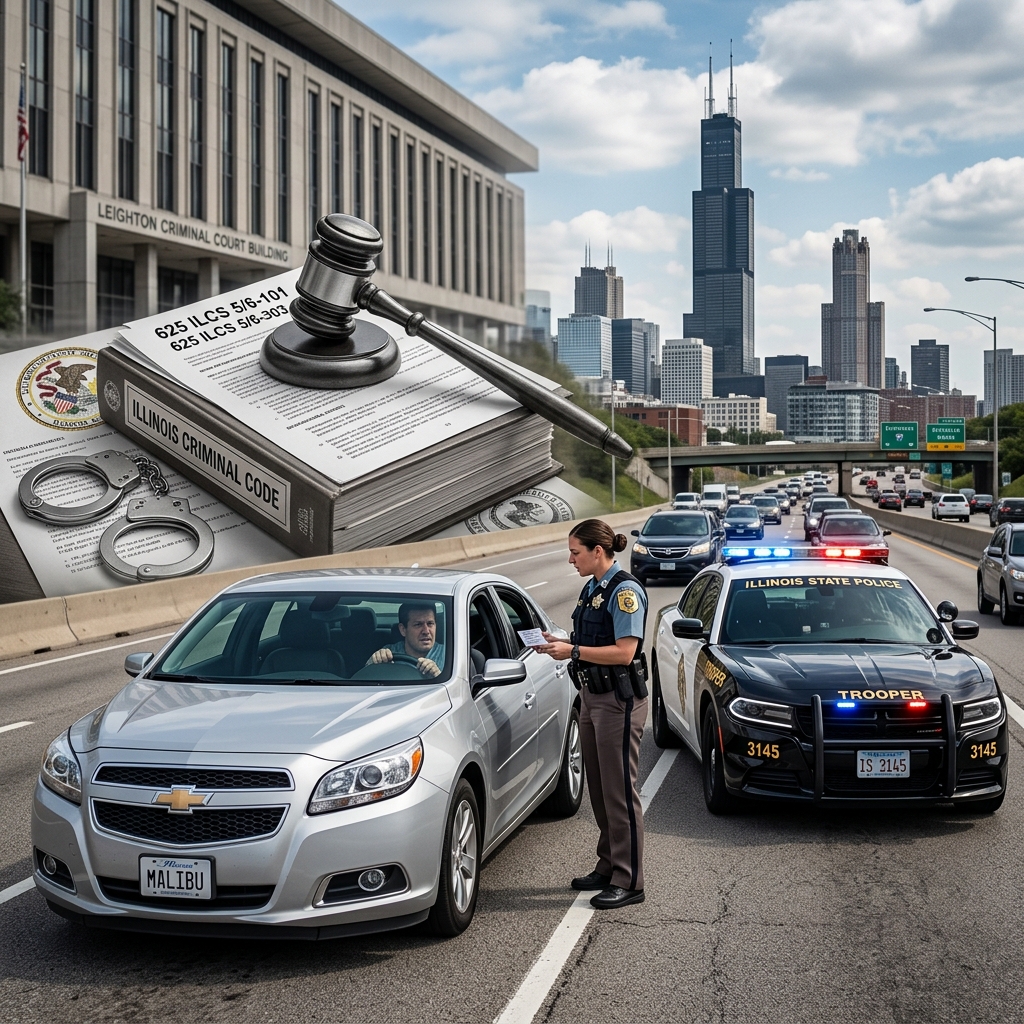
Driving in Illinois is a privilege, not a right, and that privilege is conditioned on holding a valid driver’s license and obeying state traffic laws. Illinois treats driving without a license, or driving while your license is suspended or revoked, as a criminal offense rather than a mere traffic infraction, and the consequences can include steep fines, jail time, and long-term impacts on your driving record and insurance premiums.
Overview of Illinois Licensing Requirements
Illinois law requires almost all drivers operating a motor vehicle on public roads to hold a valid driver’s license or permit issued by the Illinois Secretary of State. The basic idea is simple: if you are behind the wheel, the state expects that you have demonstrated minimum driving competence, complied with age and testing requirements, and maintained lawful driving privileges.
Key features of licensing requirements include:
- Valid license or permit: You must have a valid, current license or learner’s permit authorized for the type of vehicle you are driving.
- Graduated driver’s license for teens: Illinois uses a graduated driver’s license (GDL) system for drivers under 18, with strict rules about permits, supervision, and eligibility.
- Prohibition on unlicensed driving: Operating a vehicle without ever having been licensed, with an expired license, or with a suspended or revoked license violates Illinois law and can trigger criminal charges.
Common Situations That Lead to Unlicensed Driving
People end up driving without valid privileges for a variety of reasons. The law does not distinguish much between intentional and unintentional violations, so understanding how problems arise is important.
- Never licensed: Driving without ever having been issued a license or permit.
- Expired license: Continuing to drive after your license has expired, often due to missed renewal deadlines.
- Suspended license: Driving during a period when your license is temporarily withdrawn for reasons such as unpaid fines, too many moving violations, or insurance issues.
- Revoked license: Driving after your license has been revoked, often following serious offenses like DUI or leaving the scene of an accident.
- Underage permit violations: Teens driving without a required permit or before meeting GDL prerequisites, which can delay or block later licensing.
Key Illinois Laws Governing Unlicensed Driving
Several Illinois statutes and regulations govern driving without a license and driving on suspended or revoked privileges. The most important include:
| Legal Citation | Subject | Main Effect |
|---|---|---|
| 625 ILCS 5/6-101 | Driving without a valid license | Requires a valid license or permit to operate a motor vehicle; violations often charged as misdemeanors. |
| 625 ILCS 5/6-303 | Driving on suspended/revoked license | Criminalizes driving while license or permit is suspended or revoked; repeated or serious violations may be felonies. |
| 92 Ill. Admin. Code § 1040.25 | Administrative suspensions and revocations | Sets mandatory suspension/revocation periods for convictions of driving without a valid license. |
| GDL rules (Secretary of State) | Teen driver eligibility | Restricts driving without permits and can delay licensing for teens who violate rules. |
Criminal Classifications and Penalties
Illinois distinguishes between driving without ever having a license, driving with an invalid or expired license, and driving while suspended or revoked. The severity of the charge and punishment depends largely on the driver’s history and the reason for any suspension or revocation.
Driving Without a Valid License (Not Suspended or Revoked)
When a person drives without having been issued a license, or drives with a license that is invalid or expired but not formally suspended or revoked, the offense is typically treated as a misdemeanor.
- Typical classification: Often charged as a Class B misdemeanor for a first offense.
- Potential penalties:
- Fines that may reach up to several thousand dollars.
- Possible jail time; a Class B misdemeanor in Illinois may carry up to six months of incarceration.
- Court supervision or community service in some cases, instead of or in addition to jail.
- Escalation: In some situations, such as when a driver fails to renew a license after certain revocation periods, the offense can be treated more harshly and may be charged as a Class A misdemeanor, with exposure to longer jail time and higher fines.
Driving While License is Suspended or Revoked
Driving on a suspended or revoked license is significantly more serious. Illinois law treats these violations as criminal offenses with enhanced penalties, especially when the suspension or revocation stems from dangerous behavior such as DUI.
- Suspension or revocation for moving violations or unpaid fines:
- Often charged as a Class A misdemeanor.
- Possible jail sentence of up to 364 days and fines up to $2,500.
- Additional consequences like mandated community service, and potential vehicle immobilization for repeat offenses.
- Suspension or revocation after DUI or leaving the scene of an accident:
- First violation usually a Class A misdemeanor with similar maximum jail and fine exposure.
- Mandatory minimum punishment such as 10 days in jail or a set number of community service hours.
- Subsequent violations often escalate to a Class 4 felony, with potential prison sentences up to three years and maximum fines up to $25,000.
For repeat or aggravated violations, higher felony classes (Class 2 or Class 1) may apply, bringing longer potential prison terms. Felony convictions also carry lasting collateral consequences such as difficulty finding employment, housing, and professional licensing.
Administrative Suspensions and Revocations
In addition to criminal penalties ordered by a court, the Illinois Secretary of State imposes administrative suspensions or revocations when a person is convicted of driving without a valid license. These actions affect the ability to obtain or reinstate driving privileges independent of criminal sentencing.
Under the Illinois Administrative Code, the state uses a structured system based on the number of convictions:
| Number of Convictions for Driving Without a Valid License | Administrative Action on Driving Privileges |
|---|---|
| 1st | 2‑month license suspension |
| 2nd | 4‑month license suspension |
| 3rd | 6‑month license suspension |
| 4th | 12‑month license suspension |
| 5th or more | License revocation |
These sanctions apply even if the person has never formally held a license; in that case, suspensions and revocations are recorded against the individual’s driving record, preventing issuance of a license in the future until the administrative action is resolved.
Additional Consequences Beyond Fines and Jail
Criminal and administrative penalties are only part of the picture. Driving without a license can trigger several other serious consequences that affect everyday life and financial stability.
- Vehicle impoundment: Law enforcement may tow and impound your vehicle, particularly if you are also uninsured or your license is suspended or revoked.
- Higher insurance premiums: Insurers often treat unlicensed driving and serious traffic crimes as high-risk behavior, leading to increased premiums or denial of coverage.
- Difficulty obtaining or reinstating a license: Repeated convictions and administrative actions can significantly delay or prevent future licensing, sometimes for years.
- Criminal record: Misdemeanor or felony convictions create a record that can be discovered in background checks for employment, housing, and professional licensing.
Special Rules for Teen Drivers and the GDL System
Illinois has specific rules for teen drivers under the Graduated Driver’s License (GDL) program. The program is designed to reduce crashes by gradually exposing young drivers to more complex driving situations.
- Driving without a permit: A teen who is caught driving without a required permit may be ineligible to obtain a full driver’s license until age 18.
- Unresolved traffic citations: Teens with unresolved traffic tickets or violations may be barred from licensing until those matters are cleared.
- Long-term implications: Early violations can delay access to a license, affect insurance rates, and create a record that follows the teen into adulthood.
What to Expect If You Are Stopped Without a License
When a driver is stopped by law enforcement and cannot produce a valid license, several things typically occur:
- Verification of identity and status: The officer will check the driver’s identity and the status of any existing license or permit through state records.
- Issuance of citation or arrest: Depending on circumstances, officers may issue a citation, require the driver to appear in court, or make an arrest on the spot, especially if the license is suspended or revoked.
- Vehicle towing and impoundment: If no licensed driver is available to safely remove the vehicle, the car may be towed and stored in an impound lot.
- Court proceedings: The driver will later appear in court to answer the charges, where the judge may impose criminal penalties and collateral orders such as community service or supervision.
Legal Options and Possible Defenses
Although driving without a license is a strict offense, there are situations where legal counsel can help reduce or challenge penalties. Each case is fact-specific, so the following are general possibilities rather than guaranteed outcomes.
- License was valid but not in possession: If you were licensed but did not have the physical card with you, you may show proof of a valid license to the court, potentially reducing the severity of consequences.
- Administrative error: Occasionally, records may incorrectly show a suspension or revocation. Official documentation can help correct such errors.
- Compliance before court: Sometimes obtaining a valid license before the court date, paying outstanding fines, or securing required insurance can help argue for more lenient sentencing such as supervision instead of jail.
- Plea negotiations: Lawyers may negotiate with prosecutors to amend charges, reduce counts, or recommend lesser sentences in appropriate circumstances.
Because driving without a license or on a suspended or revoked license can carry both criminal and administrative consequences, consulting a qualified Illinois traffic or criminal defense attorney is strongly recommended to understand your options and obligations.
Practical Steps to Protect Your Driving Privileges
Preventing unlicensed driving is easier than dealing with the fallout after a citation or arrest. The following practices can help protect your record and maintain lawful driving status:
- Track renewal dates: Note your license expiration date and allow time to renew before it lapses.
- Resolve tickets promptly: Pay fines, attend required traffic school, or contest tickets by deadlines to avoid suspensions stemming from unpaid judgments.
- Maintain insurance: Keep required minimum insurance coverage, since lapses can lead to administrative actions that affect your license and vehicle.
- Follow GDL rules: If you are a teen driver or parent of one, understand and comply with permit and supervised driving rules to avoid delayed licensing.
- Seek legal advice early: If you receive notice of a pending suspension or revocation, talk to an attorney before you drive. Early action can sometimes limit the severity of penalties.
Frequently Asked Questions (FAQs)
Is driving without a license in Illinois just a traffic ticket?
No. Driving without a license in Illinois is generally treated as a criminal misdemeanor, not a simple infraction. Depending on the circumstances, it may be charged as a Class B or Class A misdemeanor, and driving on a suspended or revoked license can rise to a felony level.
Can I go to jail for a first offense of driving without a license?
Yes, jail is legally possible even for a first offense. A Class B misdemeanor can carry up to six months in jail, and more serious forms of unlicensed driving may expose you to up to 364 days in jail as a Class A misdemeanor. Actual sentencing depends on your record and case details.
Will my license be suspended even if I never had one?
Yes. Illinois can record a suspension or revocation against your driving record even if you have never been issued a license, which prevents you from obtaining a license in the future until the suspension or revocation is cleared.
What happens if I drive on a license suspended for DUI?
Driving on a license that was suspended or revoked due to DUI is treated especially harshly. First violations are usually Class A misdemeanors with mandatory minimum penalties, and repeat violations can be charged as felonies, with potential prison time and large fines.
Can teens lose the chance to get a license for driving without a permit?
Yes. Under Illinois’s GDL rules, a teen caught driving without a required permit may be ineligible to obtain a driver’s license until age 18, and unresolved traffic issues can delay licensing further.
Do I need a lawyer if I’m charged with driving without a license?
Because the charge is criminal and can carry jail time, fines, and long-term impacts on your driving record, consulting a lawyer is highly advisable. An attorney can explain the charges, evaluate potential defenses, and help you navigate both court proceedings and any administrative licensing issues.
References
- Driving Without a Valid License Illinois — The Davis Law Group, P.C. 2023-06-01. https://www.illinoisdriverslicensereinstatementlawyer.com/practice-areas/traffic-ticket-defense/driving-without-a-valid-license/
- Top 5 Risks of Driving Without a License in Chicago — Insure on the Spot. 2022-09-10. https://www.insureonthespot.com/risks-driving-without-a-license-chicago/
- The Consequences of Driving Without a License in Illinois — Illinois Vehicle. 2023-03-15. https://www.illinoisvehicle.com/about-us/blog/consequences-driving-without-license-illinois
- Driving Without a License in Illinois — O’Meara Law. 2022-11-20. https://chicagocriminaldefenselawyer.com/practice-areas/traffic-violations/driving-suspended-license/
- Suspension or Revocation for Driving Without a Valid Driver’s License — Illinois Administrative Code, 92 Ill. Admin. Code § 1040.25. 2009-01-22. https://www.law.cornell.edu/regulations/illinois/Ill-Admin-Code-tit-92-SS-1040.25
- Graduated Driver’s License — Illinois Secretary of State. 2023-05-01. https://www.ilsos.gov/departments/drivers/teen-driver-safety/gdl.html
Similar Articles








Read full bio of medha deb


