
Video Evidence For Personal Injury Cases: Expert Guide In 2025
Unlock the potential of video footage to strengthen personal injury cases, from admissibility rules to strategic advantages in court.
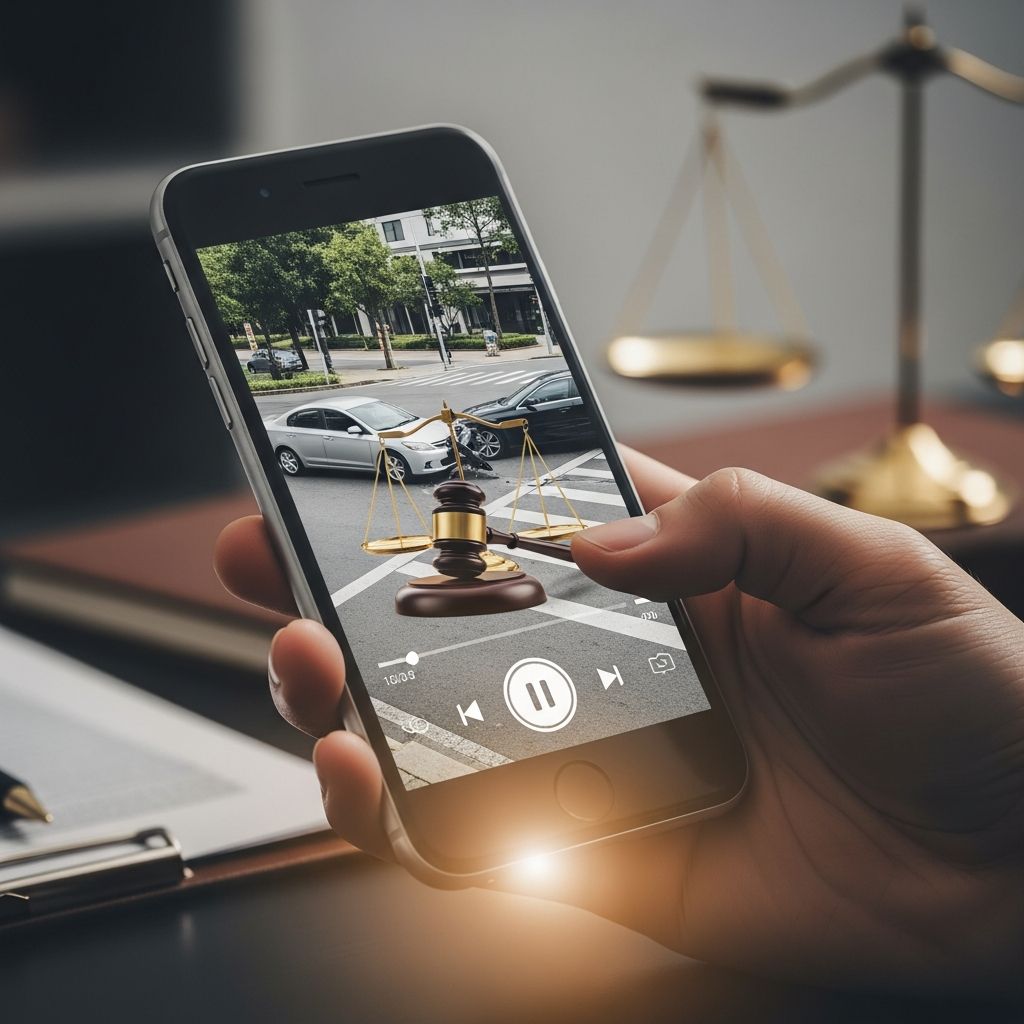
Video recordings have emerged as one of the most compelling tools in personal injury litigation, offering juries and judges a direct window into the events of an accident and its aftermath. Unlike witness testimonies that can be subjective or inconsistent, footage provides an unfiltered visual record that can establish fault, demonstrate the extent of harm, and quantify daily life impacts with undeniable clarity. This article delves into the strategic use of such evidence, examining its sources, legal hurdles for courtroom acceptance, potential pitfalls, and best practices for maximizing its impact in claims.
Everyday Sources of Crucial Video Footage
Modern environments are saturated with recording devices, turning ordinary locations into potential goldmines for injury case evidence. Security systems in retail spaces, office buildings, and residential complexes often capture slip-and-fall incidents or pedestrian collisions with precision. Traffic intersections equipped with municipal cameras or private business surveillance can document vehicle maneuvers leading to crashes, revealing speed violations or failure-to-yield scenarios.
Personal devices contribute significantly too. Smartphone videos taken by bystanders immediately after an event can show a victim’s disorientation, visible wounds, or attempts to seek help, corroborating medical reports. Dash cams installed in millions of vehicles worldwide have become routine in auto accident disputes, providing first-person perspectives on road conditions, braking patterns, and collision dynamics. Even less obvious sources like ride-share apps’ telematics data or home doorbells with video functions can yield footage proving negligence in delivery mishaps or property intrusions.
- Retail and premises surveillance: Captures slips on wet floors or inadequate warnings.
- Traffic cams and dash cams: Illustrates reckless driving or right-of-way violations.
- Bystander cell phones: Records immediate post-accident chaos and victim distress.
- Private investigators’ recordings: Often used by insurers to counter injury severity claims.
Attorneys must act swiftly to identify and preserve these assets, as storage policies typically overwrite footage after 30 days.
Legal Standards for Admissibility in Court
Not every video clip sails into trial unchallenged; courts enforce rigorous criteria to ensure fairness and reliability. Under rules like Federal Rule of Evidence 401, footage must be relevant, meaning it logically connects to disputed facts such as liability or damage extent. A clip showing normal activity years prior to an injury might be irrelevant unless it directly counters a pre-existing condition claim.
Authentication forms the bedrock, requiring proof that the video accurately depicts the scene without tampering. This demands testimony from the operator, timestamp verification, or metadata analysis confirming originality. Hearsay rules scrutinize embedded audio; excited utterances like a driver’s post-crash admission of distraction may qualify as exceptions, but casual commentary often gets redacted. The Best Evidence Rule prioritizes originals, though verified duplicates suffice if chain-of-custody is intact.
| Admissibility Factor | Description | Common Challenges |
|---|---|---|
| Relevance | Makes a key fact more probable | Too remote in time or tangential |
| Authentication | Proves footage is genuine | Altered metadata or unclear source |
| Hearsay Exception | Allows qualifying statements | Out-of-court opinions |
| Foundation | Establishes time/place accuracy | Missing witness testimony |
Judges may exclude improperly obtained videos, such as those from illegal trespass or privacy invasions. In personal injury contexts, defense surveillance—hired investigators filming claimants—must navigate similar scrutiny, with plaintiffs able to move for suppression if intrusive.
Strategic Advantages: Proving Liability and Damages
Footage excels at dismantling defenses built on ‘he said, she said’ narratives. In vehicle collisions, it visualizes critical seconds: a red-light runner’s approach, pedestrian jaywalking disputes, or distracted texting at the wheel. Juries, wired for visual processing, grasp negligence instantaneously from slowed-down replays showing failure to brake or swerve.
Beyond fault, videos humanize damages. Post-accident clips of limping, grimacing through therapy, or struggling with household tasks evoke empathy far beyond charts and x-rays. Before-and-after contrasts—fluid pre-injury movement versus labored recovery—bolster causation arguments against pre-existing injury accusations. In premises cases, footage timestamps spills or unaddressed hazards, pinning responsibility on property owners.
Quantitative edges emerge too. Speed estimates from frame analysis, weather overlays, and reaction times derived from high-res sources strengthen expert reconstructions. Insurance adjusters prioritize video hunts early, knowing it can shortcut negotiations or force admissions.
Defense Tactics: Countering with Surveillance Videos
Insurers deploy private investigators routinely, capturing claimants lifting weights, jogging, or vacationing to contradict disability claims. Courts admit such evidence if relevant to credibility, like debunking total immobility assertions with footage of grocery hauling. However, selective editing or outdated clips invite cross-examination; attorneys challenge by demanding full context or proving footage predates the injury.
Strategic deposition responses matter: vague injury descriptions leave room for interpretation, while precise limitations (e.g., ‘pain flares unpredictably’) blunt short-clip attacks. Judges weigh intrusiveness; peeping into homes or tailing excessively may bar footage.
Preservation and Investigation Best Practices
Time is the enemy—contact property owners, municipalities, and carriers via certified letters demanding retention immediately post-incident. Public records requests unearth traffic cams, while apps like traffic light databases pinpoint sources. Client education prevents self-sabotage: advise against performative limping on video calls or social media.
Legal teams authenticate proactively, securing affidavits and metadata dumps. Experts enhance clarity via stabilization or annotation without altering content. In high-stakes suits, subpoena power compels reluctant holders.
Real-World Case Studies and Lessons
Consider a parking lot collision: dash cam footage revealed the at-fault driver’s phone use, securing a $250,000 settlement pre-trial. A slip-and-fall plaintiff used store CCTV showing ignored spill warnings, overcoming ‘open and obvious’ defenses for full damages. Conversely, a defense video of a claimant dancing weeks post-crash halved the verdict, underscoring consistency’s value.
These illustrate video’s dual edges: plaintiffs wield it for truth, defendants for doubt. Success hinges on rapid action and evidentiary hygiene.
Frequently Asked Questions
Can any video from my phone be used in court?
Yes, if authenticated as unaltered and relevant, bystander or personal smartphone footage often proves pivotal, especially showing immediate aftermath.
How soon must I request surveillance footage?
Immediately—most systems overwrite after 7-30 days, so notify owners via written demand to preserve.
What if the video was edited?
Edits risk exclusion unless for brevity with full disclosure; originals or certified copies are preferred.
Does insurance video always hurt my case?
Not if contextualized—fluctuating symptoms or light activities don’t negate severe limitations; challenge legality.
Are dash cam videos admissible everywhere?
Generally yes, with authentication; they provide unbiased accident mechanics across jurisdictions.
Conclusion: Harnessing Video for Justice
Video evidence reshapes personal injury battles, bridging gaps between words and reality. By sourcing diligently, navigating admissibility adeptly, and countering defenses astutely, claimants amplify their narratives’ potency. Consult experienced counsel to transform raw footage into courtroom leverage.
References
- Using Video Evidence in a Personal Injury Case: What Makes It Admissible — Brandon J. Broderick, Attorney & Associates. 2023. https://www.brandonjbroderick.com/using-video-evidence-personal-injury-case-what-makes-it-admissible
- Video evidence: Finding it, securing it and getting it admitted — Advocate Magazine. 2015-10-01. https://www.advocatemagazine.com/article/2015-october/video-evidence-finding-it-securing-it-and-getting-it-admitted-2
- Video Footage & Your Personal Injury Case — May Herr & Grosh LLP. 2024. https://www.mhglawfirm.com/blog/can-video-footage-make-or-break-your-personal-injury-case/
- How Courts Treat Surveillance Evidence in Personal Injury Lawsuits — Clark Fountain. 2023. https://www.clarkfountain.com/blog/how-courts-treat-surveillance-evidence-in-personal-injury-lawsuits/
- How Can Surveillance Footage Impact Your Personal Injury Case? — Rubin, Glickman, Steinberg & Gifford P.C. 2025-08-10. https://www.rgsglaw.com/surveillance-footage-impact-injury-case/
Similar Articles








Read full bio of medha deb




